


10 Jan India–Oman CEPA: A Strategic Trade Pact for Jobs, Exports and Regional Integration
This article covers “Daily Current Affairs” and From India–Oman CEPA: A Strategic Trade Pact for Jobs, Exports and Regional Integration
SYLLABUS MAPPING
GS– 2 – International Relations – India–Oman CEPA: A Strategic Trade Pact for Jobs, Exports and Regional Integration
FOR PRELIMS
Briefly explain the main features of the India–Oman Comprehensive Economic Partnership Agreement
FOR MAINS
Why is Oman important in India’s West Asia policy? Explain in the context of the India–Oman CEPA.
Why in the News?
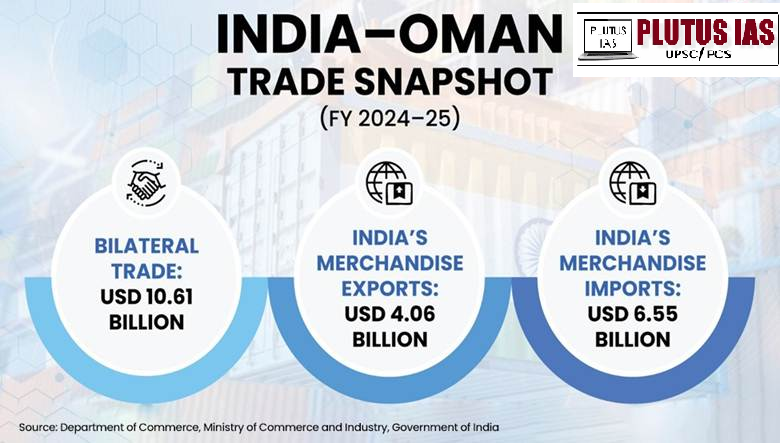
India and Oman have signed a Comprehensive Economic Partnership Agreement (CEPA) providing near-universal duty-free access for Indian exports, deeper services liberalisation, and enhanced professional mobility. The agreement aims to boost bilateral trade beyond USD 10.6 billion, strengthen MSMEs, generate employment, and deepen India’s economic footprint in the Gulf region.
Strategic Context of the India–Oman CEPA
New-Generation Trade Architecture : The India–Oman CEPA represents a shift from tariff-centric FTAs to comprehensive economic integration. It simultaneously covers goods, services, investment, mobility, and regulatory cooperation, providing predictability and legal certainty to businesses while aligning with India’s evolving trade strategy.
Gulf-Centric Economic Engagement : Oman occupies a strategic position in India’s West Asia policy. The CEPA strengthens India’s economic footprint in the Gulf by complementing energy ties with trade, logistics, manufacturing, and services cooperation, reinforcing India’s role as a trusted long-term partner.
Trade Growth as the Trigger : Bilateral trade reaching USD 10.61 billion in FY 2024–25 demonstrated both scale and momentum. Rising merchandise and services trade created a strong rationale for institutionalising economic engagement through a comprehensive, rules-based partnership.
Complementary Economic Structures : India’s diversified manufacturing and services base complements Oman’s import-dependent market and diversification agenda. This structural compatibility ensures mutual gains, with India supplying competitively priced goods and skills while Oman provides stable market access.
Alignment with India’s Trade Doctrine : The CEPA reflects India’s calibrated liberalisation approach—opening export opportunities while protecting sensitive sectors. It aligns with the twin objectives of export-led growth and domestic capacity-building under Atmanirbhar Bharat.
Market Access in Goods: Export Expansion with Safeguards
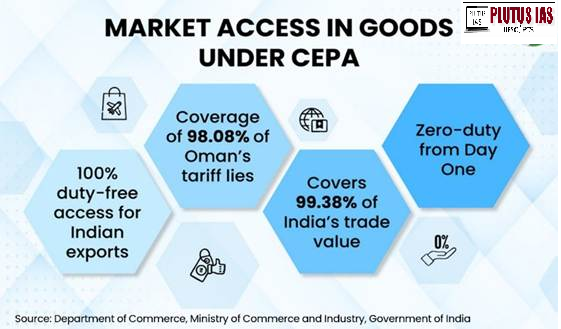
Near-Universal Duty-Free Access : India secures 100% duty-free access in Oman across 98.08% of tariff lines, covering 99.38% of export value. Immediate implementation from Day One provides certainty and enhances price competitiveness for Indian exporters.
Boost to Price Competitiveness : Exports earlier facing duties up to 5%—worth around USD 3.64 billion—now gain a clear cost advantage. This improves margins, supports market penetration, and strengthens India’s position against non-FTA competitors.
India’s Calibrated Market Offer : India liberalises 77.79% of tariff lines, covering 94.81% of imports from Oman. Simultaneously, an exclusion list protects sensitive sectors, ensuring trade openness does not undermine domestic manufacturing or farmer interests.
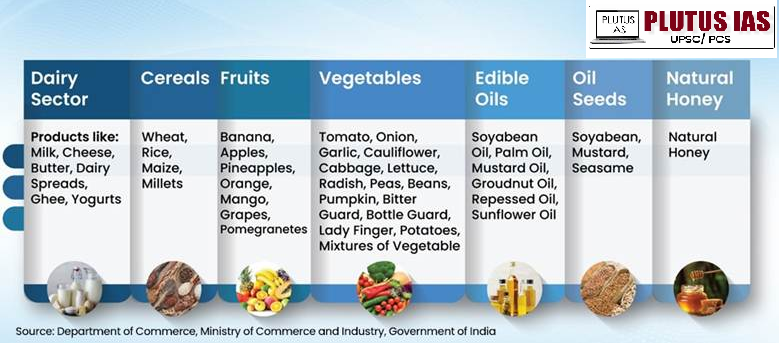
Protection of Sensitive Sectors : Key sectors such as dairy, cereals, edible oils, petroleum products, textiles, footwear, and certain chemicals are excluded. This safeguard mechanism balances external openness with internal economic stability and employment protection.
Support for MSMEs and Regions : By focusing liberalisation on competitive sectors, the CEPA benefits MSME-driven clusters across states. Enhanced exports strengthen regional economies, improve capacity utilisation, and promote geographically inclusive growth.
Sectoral Impact on Manufacturing and Agriculture
Engineering Goods as Growth Drivers : Zero-duty access for machinery, automobiles, iron and steel, and electrical equipment enhances competitiveness. Engineering exports are projected to rise to USD 1.3–1.6 billion by 2030, benefiting MSMEs and infrastructure-linked industries.
Pharmaceuticals and Regulatory Ease : Fast-tracking approvals for products cleared by USFDA, EMA, and other stringent regulators reduces approval timelines and costs. Acceptance of GMP certifications improves supply reliability and positions India as a key pharma partner.
Agriculture and Processed Food Gains : Duty-free access strengthens India’s leadership in products like eggs, biscuits, butter, meat, and condiments. Rising exports support farmers, food processors, and allied activities while maintaining safeguards for core food security items.
Marine Products and Coastal Employment : Immediate duty-free access for seafood improves competitiveness of shrimp and fish exports. Given the labour-intensive nature of the sector, export growth directly supports coastal livelihoods and processing industries.
Textiles, Plastics, and Gems & Jewellery : Elimination of 5% tariffs boosts labour-intensive sectors. Textile clusters, plastics MSMEs, and jewellery hubs gain export momentum, supporting employment generation and value-added manufacturing across multiple Indian states.
Services Trade and Professional Mobility
Expanding Services Footprint : Oman offers market access in 127 service sub-sectors with FTA-plus commitments. Key beneficiaries include IT, professional services, health, education, tourism, and business services where India enjoys comparative advantage.
Enhanced Intra-Corporate Mobility : The ICT ceiling is raised from 20% to 50%, enabling Indian firms to deploy managerial and specialist staff. This improves operational flexibility for Indian companies operating in Oman.
Defined Professional Categories : For the first time in an FTA, Oman commits to specific professional categories such as engineers, doctors, accountants, IT professionals, and consultants. This reduces uncertainty and improves employment prospects for skilled Indians.
Non-Services Mobility Provision : A unique provision extends mobility assurances to manufacturing and non-services sectors. It provides legal clarity for Indian industrial workers, supporting joint ventures and investments amid Omanisation policies.
Social Security Cooperation Prospects : Future negotiations on a Social Security Agreement aim to prevent dual contributions and ensure portability of benefits, improving welfare and cost-efficiency for Indian workers and employers abroad.
Regulatory Cooperation: TBT and SPS Provisions
Understanding TBT Measures : Technical Barriers to Trade (TBT) refer to standards, technical regulations, and conformity assessment procedures. The CEPA ensures these are non-discriminatory and aligned with international norms to avoid unnecessary trade obstacles.
SPS Measures and Food Safety : Sanitary and Phytosanitary (SPS) measures govern food safety and animal and plant health. The agreement promotes transparency, science-based regulation, and cooperation to facilitate agricultural and food exports.
Mutual Recognition of Certifications : Mandatory acceptance of certificates issued by India’s Export Inspection Council reduces redundant testing at Omani ports. This lowers transaction costs and improves clearance timelines for exporters.
Priority Sector Harmonisation : Pharmaceuticals benefit from acceptance of GMP inspections and fast-track approvals. Halal and organic products gain from recognition of certification systems, reducing duplication and easing market entry.
Predictability for Exporters : Regulatory cooperation enhances trust, reduces compliance uncertainty, and provides long-term stability. This predictability is crucial for investment decisions and sustained participation in cross-border value chains.
Employment, Regional Gains and Strategic Outcomes
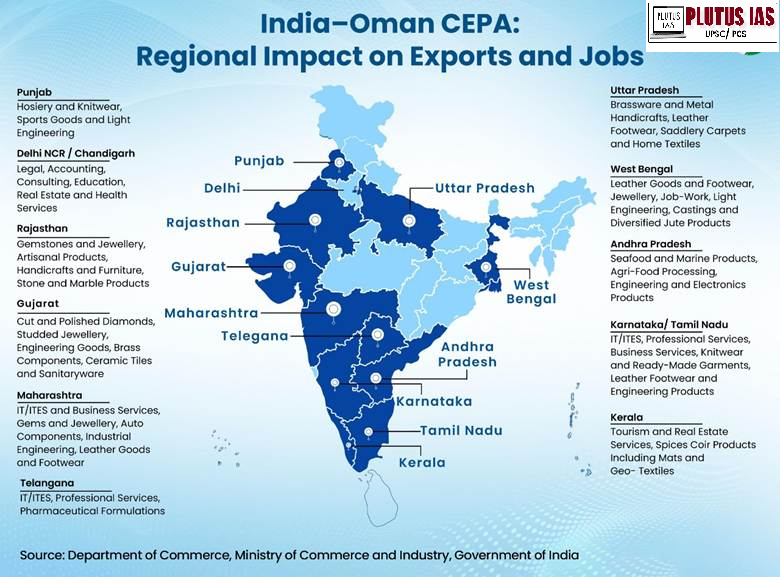
Labour-Intensive Sector Benefits : Textiles, food processing, marine products, leather, gems and jewellery, and light engineering gain from improved market access. These sectors have high employment elasticity, translating export growth into job creation.
State-Wise Export Opportunities : Agricultural and industrial gains are spread across states such as Uttar Pradesh, Punjab, Gujarat, Tamil Nadu, Maharashtra, Andhra Pradesh, and the North-East, ensuring geographically balanced economic benefits.
MSME-Led Inclusive Growth : Preferential access levels the playing field for MSMEs against larger global competitors. Improved scale, better capacity utilisation, and integration into regional supply chains strengthen MSME resilience.
Gateway to GCC and Africa : Oman’s ports—Sohar, Duqm, and Salalah—position it as a logistics hub. Indian exporters can leverage Oman to access wider GCC and East African markets.
Long-Term Strategic Partnership : The CEPA deepens India–Oman relations beyond trade, fostering trust, economic interdependence, and regional stability. It reinforces India’s vision of resilient supply chains and sustainable, rules-based global economic engagement.
Key Agricultural Gains by State
| Product | Major Beneficiary States |
|---|---|
| Meat | Uttar Pradesh, Punjab, Haryana, Andhra Pradesh, Maharashtra, Bihar |
| Eggs | Tamil Nadu, Andhra Pradesh, Telangana, Maharashtra |
| Sweet Biscuits | Andhra Pradesh, Telangana, Punjab, Uttar Pradesh |
| Butter | Gujarat, Uttar Pradesh, Maharashtra, Punjab |
| Sugar Confectionery | Karnataka, Uttar Pradesh, Maharashtra |
| Potatoes (Prepared/Preserved) | Gujarat, Uttar Pradesh, West Bengal, Punjab, Maharashtra |
| Honey | Punjab, Haryana, Uttar Pradesh, West Bengal, Rajasthan, North Eastern Region |
Conclusion
Overall, the India–Oman CEPA marks a balanced and forward-looking trade partnership that expands India’s export opportunities while safeguarding sensitive sectors. By boosting agriculture, manufacturing, services, and MSME participation, it strengthens employment generation, regional growth, and India’s long-term economic integration with the Gulf region.
link: Best ias coaching in delhi Best ias coaching in delhi
Prelims question:
Q. “Trade agreements today are instruments of strategic partnership rather than mere tariff arrangements.” Discuss this statement in the context of the India–Oman Comprehensive Economic Partnership Agreement (CEPA). (250 words)

- PRAGATI: A Decade of Cooperative, Outcome-Driven Governance - January 15, 2026
- Iran’s Large-Scale Protests: Political Stability, Public Dissent and Regional Implications - January 14, 2026
- India–Oman CEPA: A Strategic Trade Pact for Jobs, Exports and Regional Integration - January 10, 2026

No Comments