


07 Aug SEBI Simplifies Market Intermediary Inspections: Key UPSC Insights
✎ SEBI’s reforms aim to modernize inspections for market integrity and investor trust.
Relevance for UPSC & State PCS: Economy
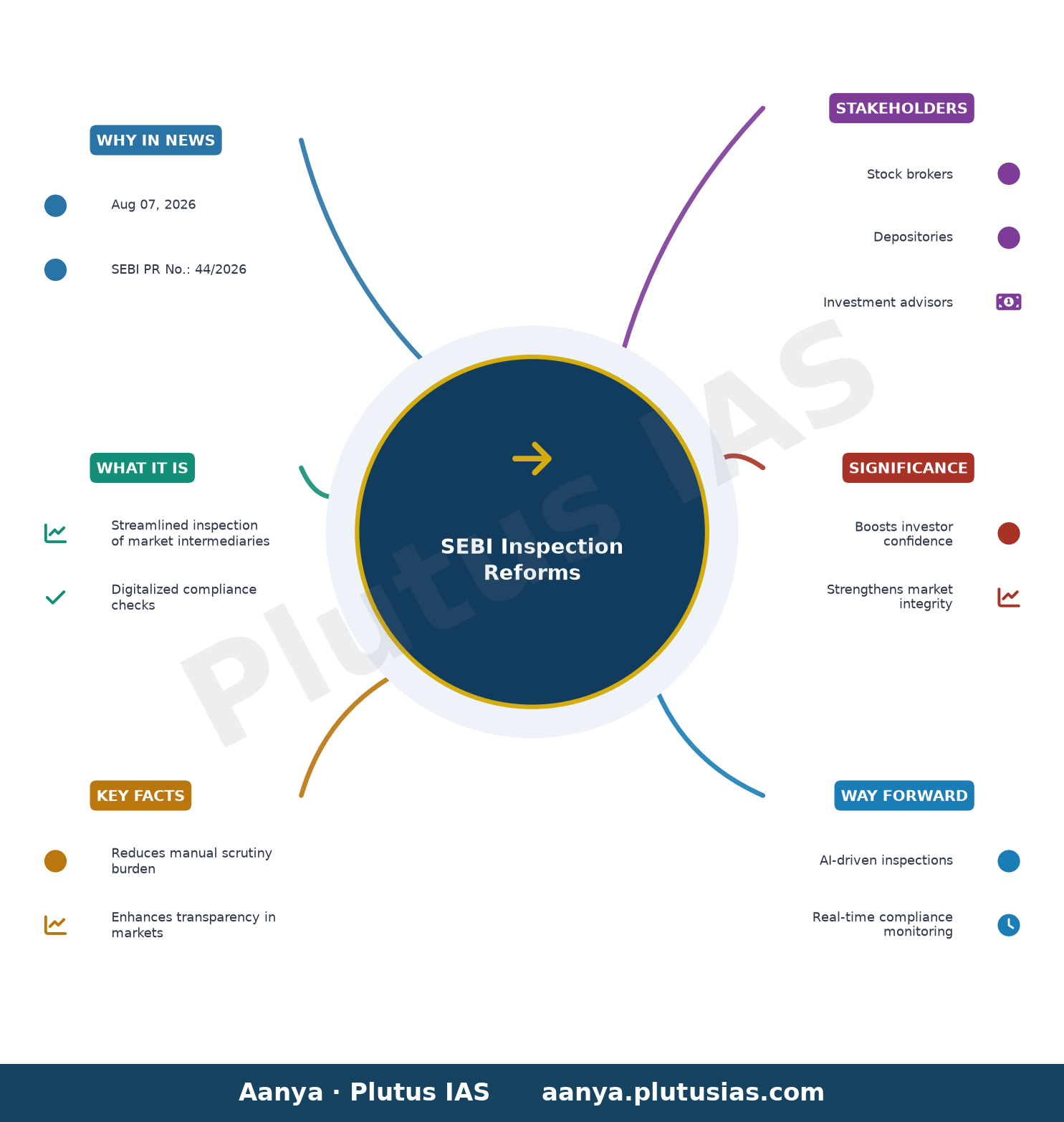
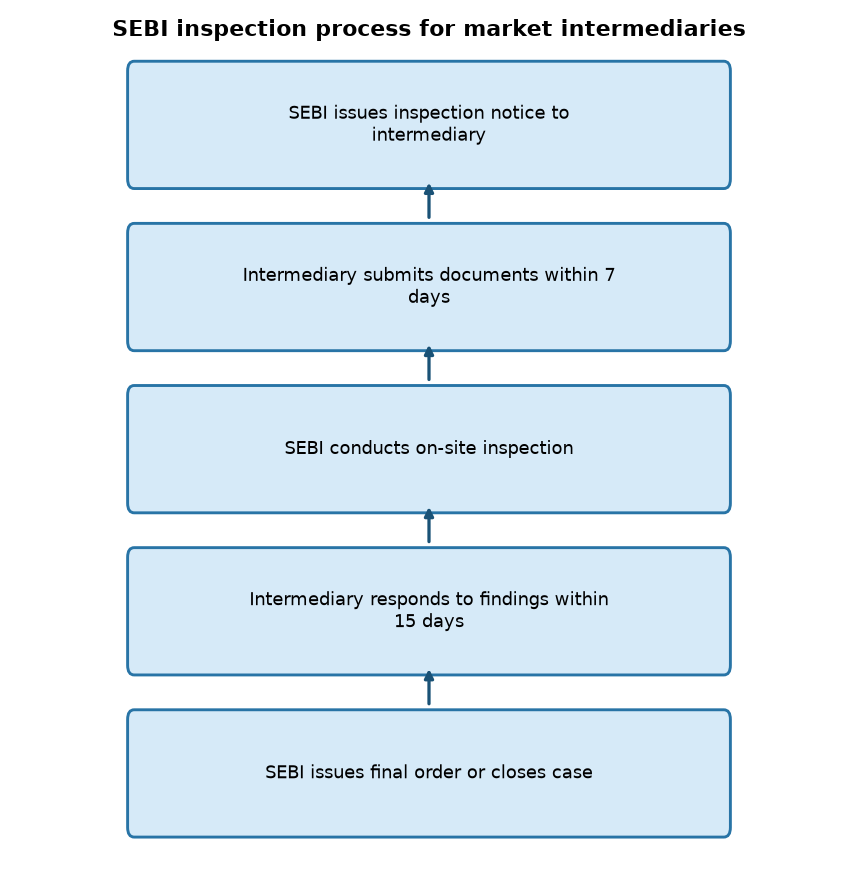
The Securities and Exchange Board of India (SEBI) has recently announced a significant overhaul in its inspection framework for market intermediaries, aiming to enhance efficiency and reduce compliance burdens while maintaining regulatory rigor. In a press release dated August 7, 2026, SEBI introduced a risk-based inspection approach, prioritizing entities based on their risk profiles rather than conducting routine checks across the board. This move is part of SEBI’s broader strategy to align with global best practices while ensuring market integrity and investor protection. By focusing on high-risk intermediaries, the regulator seeks to allocate resources more effectively, thereby streamlining operations without compromising oversight.
For UPSC and State PCS aspirants, this development holds substantial relevance as it reflects the evolving nature of financial regulation in India. Questions on SEBI’s functions, its role in capital market regulation, and the impact of such reforms on market efficiency are common in both prelims and mains examinations. Understanding the rationale behind SEBI’s risk-based inspection—such as reducing systemic risks, enhancing transparency, and promoting ease of doing business—can provide critical insights for answering questions related to financial governance and regulatory frameworks. Additionally, this reform underscores the importance of adaptive regulatory mechanisms in a dynamic economic environment, a theme often tested in governance and economic policy sections of the UPSC syllabus.
The streamlined inspection process is expected to benefit market intermediaries, including brokers, investment advisors, and mutual fund distributors, by reducing unnecessary compliance costs and time delays. SEBI’s initiative also aligns with its broader objective of fostering a more investor-friendly ecosystem, which could be a potential topic for essay or interview discussions in competitive exams. Aspirants should note how such reforms contribute to India’s goal of becoming a global financial hub, a recurring theme in discussions on economic diplomacy and financial sector reforms. Furthermore, the shift towards risk-based inspections highlights the increasing use of technology and data analytics in regulatory oversight, a trend that candidates should be aware of for questions on digital governance and fintech.
From a State PCS perspective, this reform could have indirect implications for state-level financial institutions and intermediaries operating within their jurisdictions. Questions on how SEBI’s policies influence local financial markets or the role of state governments in supporting such reforms may appear in state-specific exams. Aspirants should also consider the potential impact on retail investors, as streamlined inspections could lead to faster dispute resolution and improved service quality from intermediaries. For both UPSC and State PCS candidates, staying updated on SEBI’s regulatory changes is essential, as they often serve as case studies in questions related to economic reforms, financial inclusion, and investor protection.
Source: SEBI
Practice Questions
Q1. What is the primary objective of SEBI’s recent initiative to streamline the inspection of market intermediaries?
- To increase the number of market intermediaries in the stock market
- To reduce the regulatory burden on market intermediaries while enhancing oversight efficiency
- To eliminate all intermediaries from the stock market
- To merge all market intermediaries into a single entity
Answer
To reduce the regulatory burden on market intermediaries while enhancing oversight efficiency — SEBI’s move to streamline inspections aims to improve the efficiency of regulatory oversight while reducing unnecessary compliance burdens on market intermediaries, ensuring a balanced approach to market regulation.
Q2. Which regulatory body announced the streamlining of inspections for market intermediaries?
- Reserve Bank of India (RBI)
- Securities and Exchange Board of India (SEBI)
- Insurance Regulatory and Development Authority of India (IRDAI)
- Pension Fund Regulatory and Development Authority (PFRDA)
Answer
Securities and Exchange Board of India (SEBI) — The Securities and Exchange Board of India (SEBI) is the regulatory authority responsible for overseeing the securities market in India and announced the streamlining of inspections for market intermediaries.
Generated by AanyaAi for educational purpose.

- आईआईडब्ल्यूडब्ल्यू 2026: जल सुरक्षा के लिए नवाचार, जलवायु-लचीलेपन और डिजिटल समाधान - September 24, 2026
- IIWW 2026: AI & Climate-Resilient Water Solutions for UPSC Mains - September 24, 2026
- राजस्थान पंचायत चुनाव 2026: सरपंच-वार्ड पदों की आरक्षण लॉटरी आज, जानिए आरक्षण तय करने की प्रक्रिया - September 24, 2026

No Comments