


10 Aug National Deworming Day 2026: Key Facts for UPSC & State PCS Aspirants
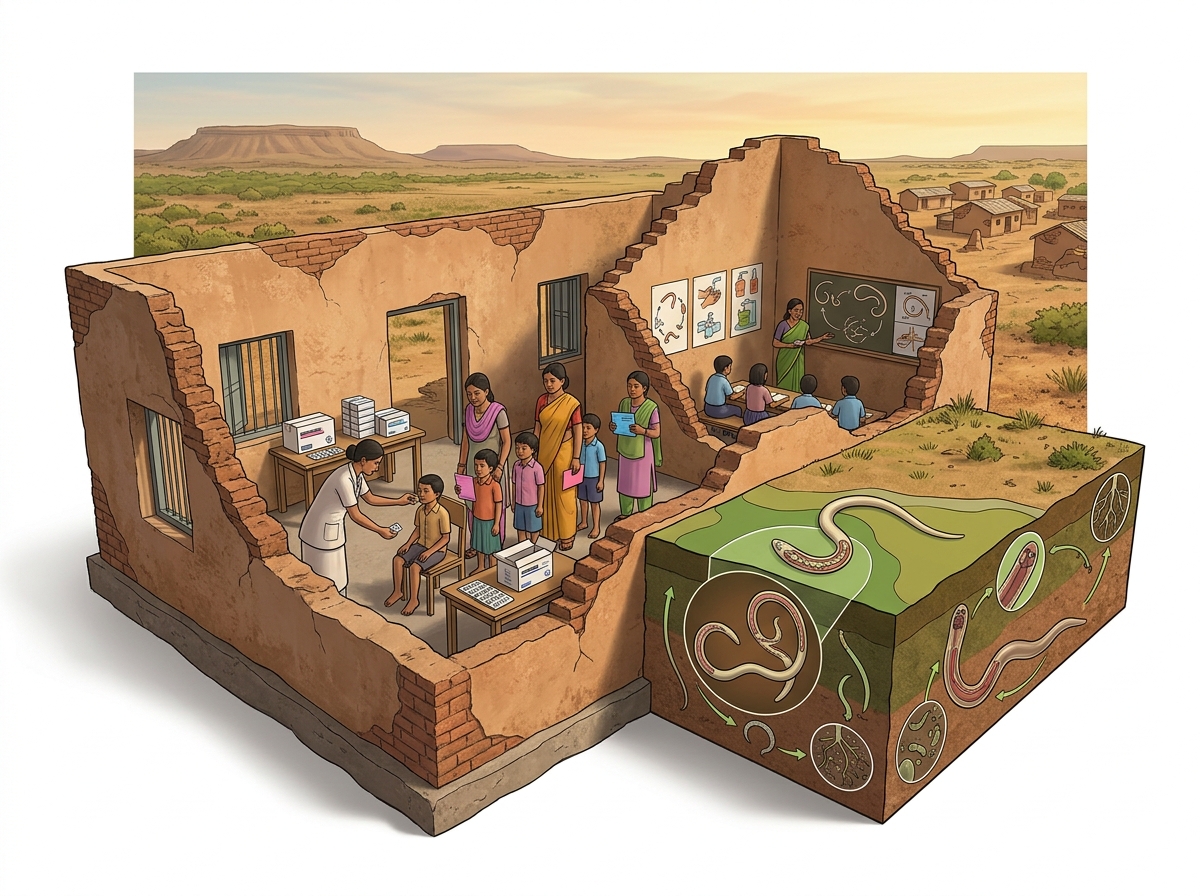
Albendazole tabletsSoil-transmitted helminthiasisMass drug administration✎ National Deworming Day (NDD) is a bi-annual mass drug administration programme in India that targets soil-transmitted helminthiasis (STH) in children aged 1–19 years through Albendazole, with a focus on school and anganwadi…
Subject Relevance — Where This Topic Fits
- GS Paper II — Health, Human Resource Development | GS Paper III — Issues relating to Poverty and Hunger, Health
- Prelims: Soil-transmitted helminthiasis (STH), Albendazole, National Deworming Day (NDD), Yadgir district, RCH Division, anganwadi centres, Integrated Child Development Services (ICDS), Mop-up phase, deworming tablets, helminthic infections, public health programmes, school health programmes
- Essay: Health as a determinant of human capital formation in developing economies, The role of preventive healthcare in achieving Sustainable Development Goals (SDGs)
Quick Revision: National Deworming Day (NDD) is a bi-annual mass drug administration programme in India that targets soil-transmitted helminthiasis (STH) in children aged 1–19 years through Albendazole, with a focus on school and anganwadi centres to ensure universal coverage.
Why is this in the news?
The National Deworming Day (NDD) drive was launched in Yadgir district, Karnataka, on August 10, 2026, as part of a nationwide campaign to administer Albendazole tablets to children and adolescents aged 1 to 19 years. This initiative, conducted jointly by the District Health and Family Welfare Department and the District Reproductive and Child Health (RCH) Division, highlights the ongoing efforts to control soil-transmitted helminthiasis (STH) through mass drug administration, particularly in endemic regions. The campaign underscores the intersection of preventive healthcare, nutrition, and public health governance in addressing parasitic infections among vulnerable populations.
Background
- Soil-transmitted helminthiasis (STH) is a neglected tropical disease caused by parasitic worms such as roundworm (*Ascaris lumbricoides*), hookworm (*Necator americanus* and *Ancylostoma duodenale*), and whipworm (*Trichuris trichiura*), which thrive in areas with poor sanitation and hygiene.
- Helminthic infections disproportionately affect children in low- and middle-income countries, leading to malnutrition, anaemia, impaired cognitive development, and reduced school attendance.
- The World Health Organization (WHO) estimates that over 1.5 billion people worldwide are infected with STH, with the highest burden in sub-Saharan Africa and South Asia, including India.
- In India, STH is endemic in several states, particularly in regions with high population density, inadequate sanitation, and limited access to clean water.
- The Government of India launched the National Deworming Day (NDD) in 2015 as a flagship programme under the National Health Mission (NHM) to address the high prevalence of STH among school-going and pre-school children.
What is the National Deworming Day (NDD) initiative?
- National Deworming Day (NDD) is a public health programme implemented by the Ministry of Health and Family Welfare, Government of India, to combat soil-transmitted helminthiasis (STH) through mass drug administration.
- The initiative targets children and adolescents aged 1 to 19 years, including those in schools, anganwadi centres, and out-of-school populations, to ensure comprehensive coverage.
- Albendazole, a broad-spectrum anthelmintic drug, is administered as a single oral dose to eliminate parasitic worms from the gastrointestinal tract, thereby reducing worm load and associated health complications.
- The programme is conducted bi-annually to maintain low worm prevalence and prevent reinfection.
- NDD is implemented in collaboration with the Department of School Education and Literacy, the Integrated Child Development Services (ICDS), and local health authorities to ensure multi-sectoral coordination.
- The campaign includes a ‘mop-up’ phase, where health workers revisit areas with low coverage to achieve universal coverage and address missed cases.
- The initiative is supported by the World Health Organization (WHO) and aligns with the WHO’s global strategy for the control of neglected tropical diseases (NTDs).
- Public awareness campaigns are integral to NDD, emphasizing the importance of hygiene practices such as handwashing, safe sanitation, and regular nail trimming to sustain the benefits of deworming.
Key Features
| Feature | Significance |
|---|---|
| Target Population | Covers all children and adolescents aged 1 to 19 years, including out-of-school children, ensuring equitable health coverage across demographic segments. |
| Dosage Protocol | Age-specific administration of Albendazole: half-tablet for 1-2 years, full tablet for 2-19 years, standardised for efficacy and safety. |
| Multi-Sectoral Implementation | Involves government, aided, and private educational institutions, anganwadis, and technical colleges, ensuring high reach and accessibility. |
| Hygiene Integration | Mandates concurrent public health education on handwashing, nail-trimming, and sanitation to enhance the efficacy of deworming and prevent reinfection. |
| Follow-up Mechanism | Includes a structured ‘mop-up’ phase (August 10-17) to achieve universal coverage and address missed cases, ensuring programme completeness. |
Why it Matters
Public Health Impact
- Reduces prevalence of soil-transmitted helminthiasis (STH), a Neglected Tropical Disease (NTD) that impairs nutrient absorption, cognitive development, and physical growth in children.
- Contributes to lowering anaemia rates, particularly in socio-economically vulnerable populations, by mitigating chronic worm-induced blood loss.
- Supports the achievement of Sustainable Development Goal 3 (Good Health and Well-being) by addressing a preventable yet widespread childhood health challenge.
Governance and Delivery
- Demonstrates a coordinated, multi-departmental approach between health and women-and-child development sectors, aligning with the Ayushman Bharat Health and Wellness Centres framework.
- Leverages existing institutional infrastructure (anganwadis, schools) to deliver health services, reducing logistical overheads and enhancing scalability.
- Strengthens primary healthcare delivery through community-based interventions, aligning with the National Health Mission’s (NHM) strategic priorities.
Socio-Economic Benefits
- Enhances school attendance and learning outcomes by reducing absenteeism caused by worm-related morbidity, indirectly supporting human capital formation.
- Lowers long-term healthcare costs by preventing complications such as malnutrition, stunting, and impaired cognitive development linked to chronic STH infections.
- Promotes inter-generational health benefits, as deworming in children also reduces transmission within households and communities.
Challenges
1. Coverage Gaps and Reach
- Ensuring 100% coverage of out-of-school children and marginalised groups, who may lack access to institutional platforms like anganwadis or schools.
- Addressing logistical challenges in remote or hilly terrains, where transportation and cold-chain maintenance for Albendazole distribution may be difficult.
UPSC Link: GS2: Health & Education – Access & Equity
2. Behavioural and Cultural Barriers
- Overcoming parental scepticism or misconceptions about deworming, particularly in communities with low health literacy or traditional beliefs about illness causation.
- Ensuring sustained adoption of hygiene practices post-intervention to prevent reinfection, which requires continuous community engagement and education.
UPSC Link: GS2: Health – Behaviour Change Communication
3. Monitoring and Evaluation
- Accurate tracking of coverage rates, especially in districts with high population density or transient populations, to avoid underreporting or overestimation.
- Evaluating the long-term impact of deworming on health and educational outcomes, which necessitates robust data systems and follow-up studies.
UPSC Link: GS2: Health – Monitoring & Evaluation
4. Supply Chain and Logistics
- Maintaining an uninterrupted supply of Albendazole tablets, particularly during peak campaign periods, to prevent stock-outs in high-demand areas.
- Ensuring the quality and safety of distributed drugs, including adherence to storage guidelines (e.g., temperature control) to preserve efficacy.
UPSC Link: GS2: Health – Supply Chain Management
Challenges — UPSC Perspective
| Issue | Concern |
|---|---|
| Geographical Accessibility | Difficulty in reaching remote or underserved areas due to terrain, infrastructure gaps, or lack of transportation. |
| Behavioural Resistance | Low acceptance of deworming medication among parents or caregivers due to misinformation or cultural beliefs. |
| Data Discrepancies | Inaccurate reporting of coverage rates due to incomplete enumeration of target populations or double-counting. |
| Hygiene Maintenance | Sustaining behavioural changes (e.g., handwashing, sanitation) post-campaign to prevent reinfection. |
| Resource Constraints | Limited availability of trained health workers or volunteers to administer tablets and conduct follow-up activities. |
Government Initiatives — Must-Memorise for Prelims
- National Deworming Day (NDD)
- National Health Mission (NHM)
Way Forward
- Strengthen intersectoral coordination between health, education, and women-and-child development departments to streamline implementation and reduce duplication.
- Enhance community mobilisation through awareness campaigns in local languages, leveraging ASHA workers, anganwadi workers, and school teachers to address misconceptions.
- Develop real-time digital dashboards for tracking coverage, stock levels, and adverse events, enabling data-driven decision-making and rapid response.
- Integrate deworming with other child health initiatives (e.g., Vitamin A supplementation, immunisation drives) to maximise efficiency and outreach.
- Conduct post-campaign surveys to assess coverage gaps, particularly among out-of-school children and marginalised groups, and design targeted follow-up strategies.
- Invest in capacity-building for frontline workers on deworming protocols, adverse event management, and hygiene promotion to improve service quality.
- Promote public-private partnerships with NGOs and corporate entities to sponsor supplementary activities (e.g., sanitation drives, hygiene kits) in underserved areas.
UPSC Value Addition
Keywords for Mains Answer-Writing
National Deworming Day · Albendazole · Soil-transmitted helminthiasis · Public Health Programme · Ayushman Bharat · Rashtriya Bal Swasthya Karyakram · Child Health · Nutritional anaemia · Health and Family Welfare Department · District RCH Division · Worm infestation · Hygiene promotion · Mop-up phase · Out-of-school children · Anganwadi centres
Concept Flow
Soil-transmitted helminthiasis (STH) transmission → Chronic infection in children → Nutritional deficiencies and impaired cognitive development → National Deworming Day (NDD) intervention → NDD launch → Mass administration of Albendazole to target population → Concurrent hygiene education → Reduction in STH prevalence → Improved child health outcomes → Enhanced school attendance and learning → Long-term human capital development → Sustained behavioural change → Prevention of reinfection → Cumulative public health impact over time → Monitoring and evaluation → Data-driven adjustments → Scalability to other districts/states → Integration with primary healthcare systems → Alignment with Ayushman Bharat and NHM objectives → Strengthened health infrastructure
Prelims Practice Questions
Q1. Consider the following statements regarding the National Deworming Day (NDD) in India:
1. NDD is a biannual campaign targeting children and adolescents aged 1 to 19 years.
2. Albendazole tablets are administered only to school-going children under the NDD.
3. The campaign includes a mop-up phase to cover out-of-school children.
4. NDD is implemented by the Ministry of Women and Child Development exclusively.
How many of the above statements are correct?
- Only one
- Only two
- Only three
- All four
Answer: Only three — Statements 1 and 3 are correct as NDD is a biannual campaign and includes a mop-up phase. Statement 2 is incorrect because Albendazole is administered to all children aged 1–19, including out-of-school children at anganwadis. Statement 4 is incorrect because NDD is implemented by the Ministry of Health and Family Welfare, not the Ministry of Women and Child Development.
Q2. Assertion (A): The administration of Albendazole tablets under the National Deworming Day is intended to prevent soil-transmitted helminthiasis.
Reason (R): Soil-transmitted helminthiasis is a major cause of nutritional anaemia and impaired cognitive development in children.
Options:
A. Both A and R are true, and R is the correct explanation of A.
B. Both A and R are true, but R is NOT the correct explanation of A.
C. A is true, but R is false.
D. A is false, but R is true.
Answer: ? — Both the Assertion (A) and Reason (R) are true. Albendazole is administered to prevent soil-transmitted helminthiasis, which is indeed a significant cause of nutritional anaemia and impaired cognitive development in children. The Reason (R) correctly explains the Assertion (A).
Q3. Match the following pairs related to the National Deworming Day (NDD) drive:
Column I
1. Albendazole dosage for age 1–2 years
2. Agency implementing NDD
3. Mop-up phase duration
4. Target age group
Column II
A. Ministry of Health and Family Welfare
B. 1 to 19 years
C. Half tablet
D. August 10 to 17
- 1-C, 2-A, 3-D, 4-B
- 1-A, 2-B, 3-C, 4-D
- 1-D, 2-C, 3-B, 4-A
- 1-B, 2-D, 3-A, 3-C
Answer: 1-C, 2-A, 3-D, 4-B — The correct match is: 1-C (Half tablet for age 1–2 years), 2-A (Ministry of Health and Family Welfare implements NDD), 3-D (Mop-up phase from August 10 to 17), 4-B (Target age group is 1 to 19 years).
Mains Practice Question
✍ The National Deworming Day (NDD) is a flagship public health initiative aimed at addressing the burden of soil-transmitted helminthiasis among children and adolescents. Critically examine the rationale, implementation mechanisms, and challenges associated with this programme. Also, analyse its alignment with broader child health strategies under Ayushman Bharat. (15 Marks)
Approach: MODEL-ANSWER SKELETON:
1. **Rationale for NDD**:
– Soil-transmitted helminthiasis (STH) as a neglected tropical disease; link to nutritional anaemia, impaired cognitive development, and stunting in children.
– Global and national prevalence data (e.g., WHO estimates, NFHS-5 findings on anaemia in children).
– Cost-effectiveness of mass drug administration (MDA) with Albendazole.
2. **Implementation Mechanisms**:
– **Target Population**: Children and adolescents aged 1–19 years, including out-of-school children via anganwadis.
– **Dosage Protocol**: Half tablet for 1–2 years, full tablet for 2–19 years; integration with schools, anganwadis, and technical institutions.
– **Phased Approach**: Annual and biannual cycles with a mop-up phase (as seen in the Yadgir example).
– **Convergence**: Role of District Health and Family Welfare Department, District RCH Division, and anganwadi workers.
3. **Challenges**:
– **Coverage Gaps**: Accessibility in remote or conflict-prone areas; ensuring 100% coverage in the mop-up phase.
– **Compliance and Awareness**: Low awareness among parents/guardians; myths and misconceptions about deworming.
– **Logistical Issues**: Supply chain management, storage of Albendazole, and training of frontline workers.
– **Monitoring and Evaluation**: Lack of robust data systems to track coverage and outcomes.
4. **Alignment with Ayushman Bharat**:
– **Ayushman Bharat Health and Wellness Centres (AB-HWCs)**: Potential for integrating NDD with routine health check-ups under Rashtriya Bal Swasthya Karyakram (RBSK).
– **Preventive Healthcare**: Emphasis on preventive measures (e.g., hygiene promotion, handwashing) as part of the Ayushman Bharat framework.
– **Inter-Sectoral Coordination**: Linkages with the Integrated Child Development Services (ICDS) and school health programmes.
5. **Way Forward**:
– Strengthening community engagement and IEC (Information, Education, Communication) campaigns.
– Leveraging digital tools (e.g., CoWIN, Arogya Setu) for tracking and reminders.
– Ensuring sustained funding and political commitment for scalability.
**Balanced View**: Acknowledge successes (e.g., high coverage in some states) while highlighting persistent challenges (e.g., equity gaps, sustainability).
Source: The Hindu
Generated by AanyaAi for educational purpose.

- KWML’s Feasibility Reports for Water Metro in 18 Cities: UPSC & PCS Insights - October 3, 2026
- ओडिशा में वन्यजीव अनुसंधान अनुदान कार्यक्रम शुरू, सिमिलिपाल में 300 कैमरे और बढ़ेंगे - October 3, 2026
- India Summons Pakistan High Commission Official Over Violation - October 3, 2026

No Comments