


24 Aug DR Congo Receives 70,000 Ebola Vaccine Doses Amid Bundibugyo Outbreak
✎ The Ervebo vaccine, developed for the Zaire ebolavirus, is being deployed in the DRC’s Bundibugyo outbreak under the ICG’s vaccine stockpile mechanism, with its efficacy against the Bundibugyo strain pending clinical trial…
Subject Relevance — Where This Topic Fits
- GS Paper II — International Relations (Global Health Governance, WHO, UN Agencies) | GS Paper III — Science and Technology (Health Research, Vaccines, Epidemiology)
- Prelims: Ebola virus disease (EVD), Ervebo vaccine, Bundibugyo ebolavirus, International Coordinating Group on Vaccine Provision (ICG), Zaire ebolavirus, WHO’s role in global health emergencies, Public health emergencies of international concern (PHEIC), Vaccine stockpiles, Epidemiological surveillance, Conflict and health systems
- Essay: Global solidarity in addressing pandemics: A case study of the Ebola response, The intersection of conflict, governance, and public health: Lessons from the DRC
Quick Revision: The Ervebo vaccine, developed for the Zaire ebolavirus, is being deployed in the DRC’s Bundibugyo outbreak under the ICG’s vaccine stockpile mechanism, with its efficacy against the Bundibugyo strain pending clinical trial results.
Why is this in the news?
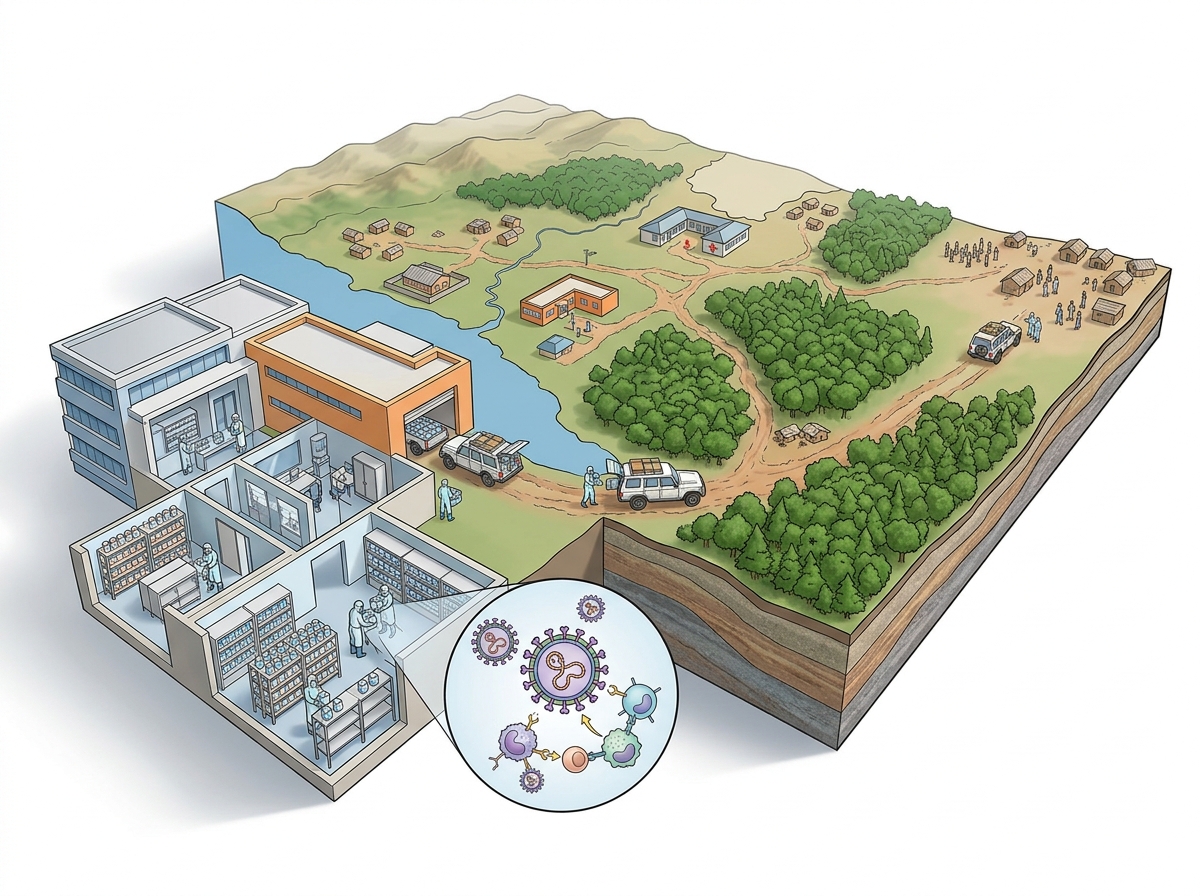
The Democratic Republic of the Congo (DRC) has received 70,000 doses of the Ervebo vaccine to combat the ongoing Ebola Bundibugyo outbreak, marking a critical intervention in a crisis exacerbated by armed conflict and institutional fragility. The deployment underscores the role of global health governance mechanisms, such as the International Coordinating Group (ICG) on Vaccine Provision, in facilitating rapid vaccine allocation during outbreaks. However, the efficacy of the Ervebo vaccine against the Bundibugyo strain remains unconfirmed, necessitating clinical trials and raising questions about vaccine adaptability in emerging viral variants.
Background
- The Ebola virus disease (EVD) is a severe, often fatal illness caused by the Ebola virus, with a case fatality rate ranging from 25% to 90% depending on the strain and healthcare response.
- The Zaire ebolavirus strain, responsible for the 2014–2016 West African Ebola epidemic, led to over 11,000 deaths and prompted the accelerated development of the Ervebo vaccine, the first licensed Ebola vaccine.
- The Bundibugyo ebolavirus strain, first identified in Uganda in 2007, has a lower case fatality rate (~30–50%) but remains a significant public health concern due to its potential for rapid spread and lack of targeted vaccines.
- The DRC has experienced recurrent Ebola outbreaks since 1976, with the eastern regions being particularly vulnerable due to dense populations, porous borders, and prolonged conflict involving multiple armed groups.
- The International Coordinating Group (ICG) on Vaccine Provision, established in 1997, manages global vaccine stockpiles for diseases like Ebola, meningitis, and yellow fever, facilitating equitable distribution during outbreaks.
What is the Ervebo Vaccine and the Ebola Bundibugyo Outbreak?
- The Ervebo vaccine is a recombinant vesicular stomatitis virus-based (rVSV) vaccine developed by Merck & Co. to target the Zaire ebolavirus strain. It received WHO prequalification in 2019 and is the first licensed Ebola vaccine.
- The vaccine employs a live, attenuated vesicular stomatitis virus (VSV) vector engineered to express the glycoprotein of the Zaire ebolavirus, inducing an immune response without causing disease.
- Clinical trials in Guinea (2015) and the DRC (2018–2020) demonstrated high efficacy (~97.5%) against the Zaire strain, with rapid protection observed within 10 days of vaccination.
- The Bundibugyo ebolavirus strain, while genetically distinct from the Zaire strain, shares structural similarities in its glycoprotein, prompting scientific inquiry into potential cross-protection by the Ervebo vaccine.
- The current outbreak in the DRC, declared on 15 May 2026, has resulted in over 5,000 cases and 2,325 deaths as of August 2026, making it the deadliest outbreak on record.
- The ICG’s allocation of 70,000 doses includes 50,000 for frontline health workers and 20,000 for clinical trials to assess efficacy against the Bundibugyo strain, with preliminary data suggesting partial protection.
- The outbreak’s spread is exacerbated by armed conflict in eastern DRC, which has disrupted healthcare infrastructure, displaced populations, and impeded contact tracing and safe burial practices.
- The WHO and global partners are leveraging the ICG’s vaccine stockpile mechanism to ensure rapid, equitable distribution, reflecting the principles of global health security and solidarity.
Key Features
| Feature | Significance |
|---|---|
| Ervebo Vaccine | A recombinant vesicular stomatitis virus-based vaccine (rVSV-ZEBOV) approved for the Zaire ebolavirus strain, now being deployed against the Bundibugyo strain due to potential cross-protection based on preliminary data. |
| International Coordinating Group (ICG) on Vaccine Provision | A global mechanism co-led by WHO, UNICEF, Gavi, and the International Federation of Red Cross and Red Crescent Societies, responsible for equitable allocation of emergency vaccine supplies during outbreaks. |
| Clinical Trial Allocation | 20,000 doses reserved for a clinical trial to assess Ervebo’s efficacy against the Bundibugyo strain, while 50,000 doses are earmarked for frontline healthcare workers in high-risk zones. |
| Conflict-Induced Disruptions | Armed conflict in eastern DRC, particularly involving the M23 group, has impeded public health responses by restricting access to affected areas, damaging health infrastructure, and displacing populations, thereby exacerbating disease transmission. |
| Cross-Border Surveillance Challenges | The transnational nature of the outbreak necessitates coordinated regional surveillance and response mechanisms, which are complicated by ongoing insecurity and the absence of a unified health authority in conflict zones. |
Why it Matters
Public Health Governance
- Demonstrates the role of global vaccine stockpiles and rapid deployment mechanisms in mitigating emerging infectious disease threats, particularly in resource-constrained settings.
- Highlights the necessity of adaptive public health strategies, including clinical trials during outbreaks, to address novel pathogen variants.
- Underscores the importance of international cooperation in pandemic preparedness and response, as evidenced by the ICG’s coordination role.
Conflict and Health Systems
- Illustrates the severe impact of armed conflict on healthcare delivery, including the destruction of health facilities, displacement of populations, and obstruction of humanitarian access.
- Reveals the fragmentation of health governance in conflict zones, where non-state actors may establish parallel health administrations, complicating coordinated disease control efforts.
Vaccine Diplomacy and Equity
- Showcases the global solidarity mechanism for equitable vaccine distribution, prioritising frontline workers and vulnerable populations in low-resource settings.
- Raises questions about the ethical and logistical challenges of deploying vaccines in conflict-affected regions, including informed consent and safety monitoring.
Scientific Uncertainty and Innovation
- Emphasises the need for rapid, real-time research to evaluate vaccine efficacy against emerging pathogen strains during active outbreaks.
- Demonstrates the interplay between public health emergencies and scientific innovation, where preliminary data must guide urgent policy decisions.
Challenges
1. Access Constraints in Conflict Zones
- Armed groups in eastern DRC have restricted movement of health teams, preventing the delivery of vaccines, medicines, and supplies to affected populations.
- Destruction or closure of health facilities has disrupted routine immunisation and outbreak response activities, leading to secondary disease outbreaks.
- Displacement of civilians has overwhelmed local health systems and hindered contact tracing and safe burial practices.
UPSC Link: GS2: Role of non-state actors in governance and public health
2. Vaccine Efficacy Uncertainty
- The Ervebo vaccine’s efficacy against the Bundibugyo strain remains unproven, necessitating a clinical trial mid-outbreak, which poses ethical and logistical challenges.
- Limited data on cross-protection between Ebola virus strains increases the risk of deploying an ineffective vaccine, potentially undermining public trust in immunisation programmes.
- The urgency of the outbreak may compel policymakers to rely on preliminary data, raising concerns about the robustness of decision-making under uncertainty.
UPSC Link: GS3: Science and Technology in Public Health
3. Coordination Among Multiple Actors
- The presence of non-state armed groups with parallel health administrations complicates the establishment of a unified outbreak response strategy.
- International agencies must coordinate with local authorities, non-state actors, and humanitarian organisations, increasing the complexity of logistics and communication.
- The absence of a single health authority in conflict zones delays decision-making and resource allocation, exacerbating the outbreak.
UPSC Link: GS2: Multi-stakeholder governance in health emergencies
4. Health System Resilience
- Chronic underfunding and weak infrastructure in DRC’s health system have been exacerbated by the conflict, limiting the capacity to respond to simultaneous health crises.
- The outbreak has diverted resources from other critical health services, including maternal and child health, nutrition, and routine immunisation, leading to indirect mortality.
- Health workforce shortages, including the infection and death of over 160 healthcare workers, have further weakened the system’s ability to respond.
UPSC Link: GS2: Health infrastructure and service delivery
5. Ethical and Logistical Considerations in Vaccine Deployment
- Deploying vaccines in conflict zones requires careful consideration of informed consent, especially for vulnerable populations such as displaced persons and children.
- Monitoring and reporting adverse events following immunisation (AEFI) is challenging in areas with limited healthcare access and surveillance systems.
- The allocation of vaccines between clinical trial participants and frontline workers raises ethical questions about equity and prioritisation.
UPSC Link: GS4: Ethics in public health interventions
Challenges — UPSC Perspective
| Issue | Concern |
|---|---|
| Conflict-induced access restrictions | Prevents delivery of vaccines and medical supplies to affected populations, exacerbating outbreak spread. |
| Unproven vaccine efficacy | Lack of data on Ervebo’s effectiveness against Bundibugyo strain necessitates a mid-outbreak clinical trial, delaying definitive protection. |
| Fragmented health governance | Parallel health administrations by non-state actors complicate coordinated outbreak response and resource allocation. |
| Health workforce vulnerability | High infection and mortality rates among healthcare workers reduce the system’s capacity to respond and increase transmission risk. |
| Logistical and ethical constraints | Challenges in obtaining informed consent, monitoring adverse events, and ensuring equitable vaccine distribution in conflict zones. |
| Resource diversion | Outbreak response diverts funds and personnel from other critical health services, leading to indirect mortality and morbidity. |
Way Forward
- Prioritise the establishment of humanitarian corridors in conflict zones to enable unimpeded access for health teams and supply delivery, in coordination with all armed groups and international agencies.
- Accelerate the clinical trial for Ervebo’s efficacy against the Bundibugyo strain, leveraging WHO’s Global Outbreak Alert and Response Network (GOARN) for rapid data collection and analysis.
- Strengthen cross-border surveillance and information-sharing mechanisms with neighbouring countries to detect and contain potential spill-over of the Bundibugyo strain.
- Invest in the resilience of local health systems by restoring damaged infrastructure, deploying mobile health units, and training community health workers in conflict-affected areas.
- Enhance the protection of healthcare workers through the provision of personal protective equipment (PPE), hazard allowances, and psychological support, while ensuring safe working conditions.
- Develop contingency plans for equitable vaccine allocation, addressing ethical dilemmas such as prioritising frontline workers versus clinical trial participants in high-risk zones.
- Promote regional and global solidarity by expanding the ICG’s vaccine stockpile and ensuring predictable funding for emergency vaccine deployment in low-resource settings.
- Integrate conflict-sensitive public health approaches into outbreak response strategies, recognising the role of non-state actors in health governance and leveraging their influence for community engagement.
UPSC Value Addition
Keywords for Mains Answer-Writing
Ebola virus disease · Ervebo vaccine · International Coordinating Group on Vaccine Provision · Bundibugyo ebolavirus · Zaire ebolavirus · global health security · vaccine equity · WHO emergency response · public health emergencies · vaccine trials · armed conflict and health · vaccine hesitancy · disease surveillance · vaccine stockpile · international cooperation in health
Concept Flow
Emergence of Bundibugyo Ebola strain in DRC → Rapid escalation of cases and deaths due to weak health infrastructure → Declaration of public health emergency → Request for vaccine doses from global stockpile → ICG approval and allocation of Ervebo doses → Deployment challenges due to conflict-induced access restrictions → Fragmentation of health governance by non-state actors → Need for clinical trial to assess vaccine efficacy → Ethical and logistical constraints in vaccine deployment → Escalation of outbreak with potential regional spread → Urgent need for coordinated, conflict-sensitive public health response.
Prelims Practice Questions
Q1. Consider the following statements regarding the Ervebo vaccine:
1. The Ervebo vaccine was developed to target the Zaire ebolavirus strain.
2. The vaccine has been approved for use against the Bundibugyo ebolavirus strain without clinical trials.
3. The International Coordinating Group (ICG) manages the global Ebola vaccine stockpile.
4. The vaccine is administered intramuscularly and has shown severe side effects in clinical trials.
How many of the above statements are correct?
- Only one
- Only two
- Only three
- All
Answer: Only three — Statements 1 and 3 are correct. Statement 2 is incorrect as the vaccine’s efficacy against Bundibugyo strain is still under clinical trial. Statement 4 is incorrect as severe side effects from the Ervebo vaccine are very rare according to clinical trials.
Q2. Assertion (A): The International Coordinating Group (ICG) on Vaccine Provision allocates emergency vaccine supplies during major outbreaks.
Reason (R): The ICG operates under the aegis of the World Health Organization (WHO) to ensure equitable access to vaccines globally.
In the context of the above two statements, which one of the following is correct?
- Both A and R are true, and R is the correct explanation of A.
- Both A and R are true, but R is NOT the correct explanation of A.
- A is true, but R is false.
- A is false, but R is true.
Answer: Both A and R are true, but R is NOT the correct explanation of A. — Both the assertion and reason are true. The ICG indeed allocates emergency vaccine supplies during outbreaks, and it operates under WHO to ensure global vaccine equity.
Mains Practice Question
✍ The deployment of the Ervebo vaccine in response to the Bundibugyo Ebola outbreak in the Democratic Republic of the Congo underscores the interplay between vaccine development, global health governance, and public health emergencies. Critically examine the challenges and limitations in leveraging existing vaccines for emerging viral strains, with reference to the role of international institutions like the WHO and the ICG. (15 Marks)
Approach: MODEL-ANSWER SKELETON:
1. Introduction (2 marks): Define Ebola virus disease (EVD) and its strains (Zaire, Bundibugyo, Sudan, Taï Forest). Briefly introduce the Ervebo vaccine—its development, approval (2019 by WHO), and mechanism (recombinant vesicular stomatitis virus-based).
2. Global Health Governance (3 marks):
– Role of WHO: Norm-setting, outbreak response, and coordination.
– International Coordinating Group (ICG) on Vaccine Provision: Manages global stockpiles (Ebola, cholera, meningitis, yellow fever), allocates doses during emergencies.
– Vaccine equity: WHO’s 100 Days Mission to respond to outbreaks within 100 days.
3. Challenges in Vaccine Deployment (5 marks):
– Strain specificity: Ervebo targets Zaire ebolavirus; efficacy against Bundibugyo is unproven (clinical trials ongoing).
– Logistical constraints: Conflict zones in eastern DRC hinder vaccine delivery, cold-chain requirements, and healthcare infrastructure collapse.
– Vaccine hesitancy: Historical mistrust in conflict-affected regions, misinformation, and cultural practices (e.g., burial rites) complicate uptake.
– Armed conflict: M23 and other groups disrupt disease surveillance, safe burials, and healthcare access.
4. Limitations of Existing Frameworks (3 marks):
– Stockpile limitations: 70,000 doses for Bundibugyo outbreak (20,000 for trials, 50,000 for frontline workers) highlight finite resources.
– Regulatory hurdles: Need for rapid but rigorous clinical trials to assess cross-strain efficacy.
– Coordination gaps: Overlap between WHO, ICG, and national governments; need for integrated response mechanisms.
5. Way Forward (2 marks):
– Investment in pan-ebolavirus vaccines (e.g., candidates targeting glycoprotein of multiple strains).
– Strengthening local health systems in conflict zones (e.g., community engagement, mobile clinics).
– Enhancing global stockpiles and rapid-response funding mechanisms.
Balance: Acknowledge WHO/ICG’s role as critical but highlight systemic gaps in adaptability, equity, and conflict resilience.
Source: news.un.org
Generated by AanyaAi for educational purpose.
Related guides on our sites
- How to prepare for GS paper 1 for UPSC CSE mains exam
- Best UPSC coaching for IFOS exam
- Best mentorship programme for upsc
- UPSC+BA degree

- स्वच्छ सागर सुरक्षित सागर 5.0: 15 लाख लोगों ने ली महासागर संरक्षण की शपथ, जानें पूरा विवरण - September 21, 2026
- 15 लाख लोगों ने ली महासागर संरक्षण की शपथ: स्वच्छ सागर सुरक्षित सागर 5.0 अभियान की सफलता - September 21, 2026
- आईसीआई अगस्त 2026: आधार वर्ष 2022-23 के साथ प्रमुख उद्योगों का प्रदर्शन एवं वृद्धि दर - September 21, 2026

No Comments