


10 Sep Madras HC Sees TN Assembly Videos: Mekedatu Resolution Case Explained
✎ Article 212 of the Constitution bars judicial review of State legislature proceedings on grounds of procedural irregularities, ensuring legislative autonomy and separation of powers.
Subject Relevance — Where This Topic Fits
- GS Paper II — Polity — Constitutional Framework, State Legislatures and Judicial Review | GS Paper II — Polity — Separation of Powers and Judicial Overreach
- Prelims: Article 212, Mekedatu Dam Project, Tamil Nadu Legislative Assembly, Madras High Court, Procedural Irregularity in Legislature, Speaker’s Discretion, Judicial Review of Legislative Proceedings
- Essay: The delicate balance between judicial review and legislative autonomy in a federal democracy, Constitutional safeguards for State legislatures in inter-state water disputes
Quick Revision: Article 212 of the Constitution bars judicial review of State legislature proceedings on grounds of procedural irregularities, ensuring legislative autonomy and separation of powers.
Why is this in the news?
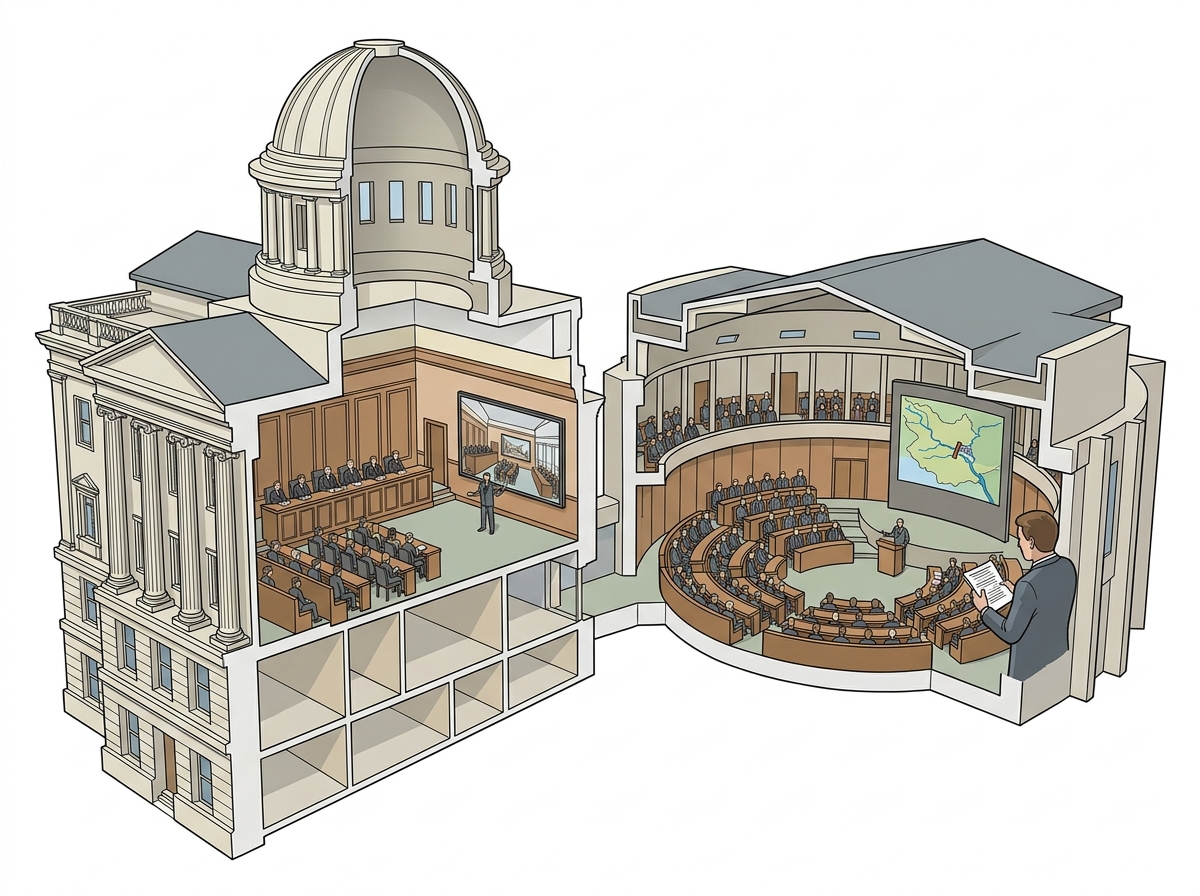
The Madras High Court is currently adjudicating a writ petition challenging the validity of an amended resolution passed by the Tamil Nadu Legislative Assembly regarding the Mekedatu dam project. The case hinges on the constitutional immunity granted to State legislature proceedings under Article 212, which bars judicial scrutiny of procedural irregularities, and the procedural legitimacy of an amendment introduced during the Assembly session.
Background
- The Mekedatu dam project is a proposed multi-purpose reservoir across the Cauvery River, planned by Karnataka for drinking water supply to Bengaluru and surrounding areas.
- Tamil Nadu has consistently opposed the project, citing potential adverse impacts on its share of Cauvery waters under the Cauvery Water Disputes Tribunal (CWDT) and the Supreme Court’s final order in 2018.
- On July 19, 2026, the Tamil Nadu Legislative Assembly passed a resolution against the proposed Mekedatu dam, following an amended resolution introduced by the Leader of the Opposition.
- The AIADMK whip has filed a writ petition in the Madras High Court, challenging the amendment on grounds of procedural irregularity and lack of debate.
- The Advocate General of Tamil Nadu has relied on Article 212 of the Constitution and Supreme Court precedents to argue that courts cannot inquire into the validity of legislative proceedings on procedural grounds.
- The case raises critical questions about the balance between judicial review and the autonomy of State legislatures in inter-state disputes.
What is the constitutional immunity granted to State legislature proceedings under Article 212?
- Article 212(1) of the Constitution states: ‘The validity of any proceedings in the Legislature of a State shall not be called in question on the ground of any alleged irregularity of procedure.’
- This provision is a constitutional bar on judicial review of the internal procedures of State legislatures, ensuring separation of powers and legislative autonomy.
- The immunity extends to all procedural aspects, including the introduction, debate, and passing of resolutions or bills, provided they are conducted within the legislative chamber.
- The immunity does not extend to substantive illegality, such as unconstitutional laws or actions violating fundamental rights, which remain subject to judicial review under Article 226 or 32.
- The Speaker’s role in certifying the passage of a resolution or bill is final and conclusive, subject only to the internal discipline of the House and not to judicial scrutiny.
- The doctrine of ‘procedural fairness’ does not override the constitutional bar under Article 212, as judicial review is limited to the substance and not the procedure of legislative actions.
- This immunity is critical in federal systems to prevent judicial interference in the functioning of State legislatures, especially in contentious inter-state disputes.
Key Features
| Feature | Significance |
|---|---|
| Amended Resolution in Tamil Nadu Assembly | The Tamil Nadu Legislative Assembly passed an amended resolution on July 19, 2026, requesting the Union Government to constitute a new tribunal for resolving the Mekedatu dam dispute with Karnataka. The amendment was accepted by the Chief Minister and put to vote by the Speaker, with no procedural objections raised by members. |
| Video Evidence of Assembly Proceedings | The Advocate General presented video clips of the Assembly proceedings to the Madras High Court to substantiate the procedural validity of the amended resolution, demonstrating the sequence of events and unanimous acceptance. |
| Article 212 of the Constitution | This constitutional provision bars courts from inquiring into the validity of State legislature proceedings on grounds of procedural irregularities, a key legal argument advanced by the Advocate General. |
| Supreme Court Precedents on Legislative Proceedings | The Advocate General cited a catena of Supreme Court rulings, including a five-judge Bench decision, to reinforce the principle that courts cannot adjudicate on legislative procedures unless they violate constitutional mandates. |
| Writ Petition Maintainability | The AIADMK whip challenged the maintainability of the writ petition in the Madras High Court, arguing that the amended resolution extended beyond the Assembly’s proceedings by being communicated to the Union Government. |
Why it Matters
Legal and Constitutional Significance
- The case underscores the constitutional principle of separation of powers, particularly the immunity of State legislatures from judicial review of their internal procedures under Article 212.
- The use of video evidence to validate legislative proceedings highlights the evolving role of technology in legal and constitutional adjudication.
- The dispute exemplifies the tension between federalism and inter-state water disputes, where legislative actions in one State can have implications for another.
- The ruling may set a precedent for how courts handle challenges to legislative amendments that extend beyond the Assembly’s procedural boundaries.
Political and Governance Significance
- The Mekedatu dam project remains a contentious issue between Tamil Nadu and Karnataka, reflecting the challenges of inter-state water resource management in India.
- The resolution reflects Tamil Nadu’s proactive stance in addressing perceived threats to its water rights, demonstrating the State’s legislative and executive responses to federal disputes.
- The case highlights the role of the Speaker and the Chief Minister in ensuring procedural compliance while navigating politically sensitive issues.
Judicial and Procedural Significance
- The case tests the limits of judicial intervention in legislative matters, particularly when procedural irregularities are alleged but not constitutionally prohibited.
- The Madras High Court’s scrutiny of the video evidence and Supreme Court precedents will clarify the boundaries of judicial review in State legislative proceedings.
- The outcome may influence future litigation strategies in disputes involving legislative amendments and inter-state conflicts.
Challenges
1. Jurisdictional Challenges in Inter-State Water Disputes
- The Mekedatu dam dispute exemplifies the complexity of resolving inter-state water conflicts, where legislative actions in one State can escalate tensions with another.
- The challenge lies in balancing State autonomy in legislative matters with the need for cooperative federalism in managing shared water resources.
- The case raises questions about the role of the Union Government in mediating such disputes, particularly when State legislatures pass resolutions requesting federal intervention.
UPSC Link: GS Paper 2: Federalism and Inter-State Relations
2. Judicial Review vs. Legislative Immunity
- The case tests the delicate balance between judicial review and legislative immunity, particularly under Article 212, which restricts courts from examining procedural irregularities in State legislatures.
- The challenge is to determine whether the amended resolution, once communicated to the Union Government, falls outside the protective scope of Article 212.
- The ruling may clarify the extent to which courts can intervene in legislative processes when the consequences of those processes extend beyond the Assembly.
UPSC Link: GS Paper 2: Judiciary and Constitutional Framework
3. Procedural Validity in Legislative Amendments
- The case highlights the need for strict adherence to legislative procedures, especially when amendments are introduced and passed without prior debate.
- The challenge is to ensure that legislative amendments are debated and scrutinized adequately to prevent procedural lapses that could lead to legal challenges.
- The outcome may influence future legislative practices, particularly in States dealing with contentious issues like inter-state water disputes.
UPSC Link: GS Paper 2: Parliament and State Legislatures
4. Federalism and Water Resource Management
- The Mekedatu dam dispute underscores the need for a robust framework for managing inter-state water resources, including mechanisms for resolving disputes without escalating tensions.
- The challenge lies in harmonizing State legislative actions with the principles of cooperative federalism, particularly in matters affecting national resources.
- The case may prompt discussions on the need for a permanent tribunal or institutional mechanism to address inter-state water disputes efficiently.
UPSC Link: GS Paper 2: Federalism and Water Disputes
5. Role of Technology in Legal Proceedings
- The use of video evidence to validate legislative proceedings introduces a new dimension to legal and constitutional adjudication in India.
- The challenge is to ensure that technological evidence is used responsibly and does not undermine the integrity of legislative processes.
- The case may set a precedent for the admissibility and weight of video evidence in constitutional and legal disputes.
UPSC Link: GS Paper 2: Judiciary and Legal Framework
Challenges — UPSC Perspective
| Issue | Concern |
|---|---|
| Inter-State Water Disputes | The Mekedatu dam dispute highlights the persistent challenge of resolving conflicts between States over shared water resources, often requiring judicial or executive intervention. |
| Legislative Immunity vs. Judicial Review | The case raises critical questions about the extent to which courts can review the internal proceedings of State legislatures, particularly under Article 212. |
| Procedural Validity of Amendments | The amendment to the resolution was passed without prior debate, raising concerns about the adequacy of legislative scrutiny in contentious matters. |
| Federalism and State Autonomy | The dispute tests the balance between State autonomy in legislative matters and the need for cooperative federalism in managing national resources. |
| Technological Evidence in Legal Proceedings | The use of video evidence introduces new complexities in legal adjudication, including questions of authenticity and procedural fairness. |
| Communication of Legislative Actions to Union Government | The case questions whether resolutions communicated to the Union Government fall outside the protective scope of Article 212. |
Way Forward
- The Madras High Court must deliver a judgment that clarifies the boundaries of judicial review in State legislative proceedings, particularly under Article 212.
- States involved in inter-state water disputes should adopt standardized procedures for legislative resolutions to minimize procedural irregularities and legal challenges.
- The Union Government should consider establishing a permanent tribunal or institutional mechanism to resolve inter-state water disputes efficiently and prevent escalation.
- Legislatures should ensure that amendments to resolutions are debated and scrutinized adequately to avoid procedural lapses that could lead to judicial intervention.
- The judiciary should develop guidelines for the admissibility and weight of technological evidence, such as video recordings, in constitutional and legal disputes.
- States should enhance inter-state cooperation mechanisms to address water resource management proactively, reducing the need for legislative or judicial intervention.
- Legal practitioners should familiarize themselves with the principles of legislative immunity and judicial review to navigate such disputes effectively.
- Aspirants should study the constitutional provisions governing State legislatures and the judiciary to understand the balance of powers in federal systems.
UPSC Value Addition
Keywords for Mains Answer-Writing
Mekedatu Project · Inter-State River Water Disputes · Article 262 of the Constitution · Article 212 of the Constitution · Judicial Review of Legislative Proceedings · Speaker’s Powers in State Legislatures · Supreme Court’s Doctrine on Legislative Immunity · Inter-State Water Disputes Act, 1956 · Madras High Court · Constitutional Bar on Judicial Scrutiny · Federalism in Water Governance · Procedural Irregularities in Legislative Proceedings · Doctrine of Pith and Substance · Separation of Powers · State Legislative Assemblies and Federalism
Constitutional & Policy Linkages
- {‘Article 212’: ‘Bar on judicial review of State legislature proceedings’}
- {‘Article 246’: ‘Distribution of legislative powers between Union and States’}
- {‘Article 262’: ‘Provisions for adjudication of inter-state water disputes’}
- {‘Seventh Schedule’: ‘Distribution of legislative subjects between Union and States’}
Concept Flow
Tamil Nadu Legislative Assembly passes an amended resolution on Mekedatu dam dispute → → AIADMK whip challenges the amendment in Madras High Court, arguing procedural irregularities → → Advocate General presents video evidence of Assembly proceedings to validate the amendment → → Court examines the maintainability of the writ petition under Article 212 → → Supreme Court precedents on legislative immunity are cited to reinforce the argument → → Judgment will clarify the balance between judicial review and legislative immunity → → Outcome may influence future inter-state water disputes and legislative practices
Prelims Practice Questions
Q1. Consider the following statements regarding the constitutional provisions related to inter-state water disputes in India:
1. Article 262 of the Constitution empowers Parliament to adjudicate disputes between states over water sharing.
2. The Inter-State Water Disputes Act, 1956, provides for the establishment of tribunals to resolve such disputes.
3. The Supreme Court has the power to directly adjudicate disputes between states over water sharing without the need for a tribunal.
How many of the above statements are correct?
- Only one
- Only two
- All three
- None
Answer: Only two — Statement 1 is correct as Article 262 empowers Parliament to provide for the adjudication of disputes relating to the use, distribution or control of waters of any inter-state river or river valley. Statement 2 is correct as the Inter-State Water Disputes Act, 1956, provides for the establishment of tribunals for this purpose. Statement 3 is incorrect as the Supreme Court cannot directly adjudicate such disputes without a tribunal being constituted under the Act.
Q2. Assertion (A): The courts in India are barred from inquiring into the validity of any proceedings of a State legislature on the ground of alleged irregularity of procedure under Article 212 of the Constitution.
Reason (R): Article 212 is a constitutional provision that ensures the autonomy and independence of State legislatures from judicial interference in their internal proceedings.
- Both A and R are true, and R is the correct explanation of A.
- Both A and R are true, but R is not the correct explanation of A.
- A is true but R is false.
- A is false but R is true.
Answer: Both A and R are true, and R is the correct explanation of A. — Assertion (A) is true as Article 212(1) explicitly bars courts from inquiring into the validity of any proceedings of a State legislature on the ground of any alleged irregularity of procedure. Reason (R) is also true and correctly explains (A) as the provision is designed to protect the legislative autonomy of State legislatures.
Q3. Match the following constitutional provisions with their respective functions:
Column I (Provision) | Column II (Function)
A. Article 262 | 1. Bar on judicial review of legislative proceedings
B. Article 212 | 2. Power of Parliament to adjudicate inter-state water disputes
C. Article 131 | 3. Original jurisdiction of the Supreme Court in disputes between Government of India and States
D. Article 200 | 4. Assent of the Governor to State Bills
- A-2, B-1, C-3, D-4; A-1, B-2, C-3, D-4; A-3, B-2, C-1, D-4; A-2, B-4, C-3, D-1
- answer_explain_listed_pairs_only_for_json_output_but_not_in_final_response_as_it_is_an_option_set
- answer_explain_listed_pairs_only_for_json_output_but_not_in_final_response_as_it_is_an_option_set
- answer_explain_listed_pairs_only_for_json_output_but_not_in_final_response_as_it_is_an_option_set
Answer: A-2, B-1, C-3, D-4; A-1, B-2, C-3, D-4; A-3, B-2, C-1, D-4; A-2, B-4, C-3, D-1 — Article 262 empowers Parliament to adjudicate disputes relating to inter-state rivers. Article 212 bars courts from inquiring into legislative proceedings. Article 131 grants original jurisdiction to the Supreme Court in disputes between the Government of India and States. Article 200 pertains to the Governor’s assent to State Bills.
Mains Practice Question
✍ Examine the constitutional framework governing the relationship between the judiciary and the legislature in the context of inter-state water disputes, with particular reference to the recent Madras High Court proceedings concerning the Mekedatu dam resolution passed by the Tamil Nadu Legislative Assembly. Critically analyse the implications of Article 212 and the doctrine of judicial restraint in such matters. (15 Marks)
Approach: 1. **Constitutional Framework for Inter-State Water Disputes**:
– Article 262 and the Inter-State Water Disputes Act, 1956: Role of Parliament and tribunals.
– Doctrine of Pith and Substance: How inter-state water disputes fall under Parliament’s jurisdiction.
2. **Judicial-Legislative Relationship**:
– Article 212: Bar on judicial review of legislative proceedings (reference to the Supreme Court’s catena of decisions, e.g., *P.V. Narasimha Rao v. State of Andhra Pradesh*, 1998).
– Separation of Powers: Need for judicial restraint in matters of legislative procedure.
3. **Recent Madras High Court Proceedings**:
– Factual context: Tamil Nadu Assembly’s amended resolution on Mekedatu and its communication to the Centre.
– AIADMK’s challenge: Whether the writ petition is maintainable given the constitutional bar under Article 212.
– Speaker’s role: Powers under the Constitution (Article 178) and Rules of Procedure.
4. **Balancing Federalism and Judicial Review**:
– Limits of judicial intervention in legislative affairs.
– Role of tribunals under the Inter-State Water Disputes Act as the primary mechanism for resolution.
– Potential consequences of judicial overreach in inter-state disputes.
5. **Conclusion**:
– Reiterate the need for judicial restraint under Article 212.
– Emphasise the primacy of parliamentary/tribunal mechanisms in inter-state water disputes.
Source: The Hindu
Tamil Nadu PCS (TNPSC) — State PCS Practice
Prelims: In the recent legal dispute between the Government of Tamil Nadu and the Mekedatu project proponents, the Madras High Court has directed the State Government to refrain from displaying which of the following during Assembly proceedings?
- Video clips of Assembly sessions discussing the Mekedatu project
- Printed copies of the Mekedatu project’s environmental impact assessment report
- Oral statements by the Chief Minister on the Mekedatu project
- Written resolutions passed by the Assembly on the Mekedatu project
Answer: Video clips of Assembly sessions discussing the Mekedatu project — The Madras High Court directed the Tamil Nadu Government to stop playing video clips of Assembly proceedings related to the Mekedatu project before the court, citing potential misuse of such clips.
Mains: Critically examine the constitutional and legal implications of the Madras High Court’s intervention in the Mekedatu project dispute, particularly in relation to the autonomy of the Tamil Nadu Legislative Assembly and the separation of powers. Suggest measures to balance judicial oversight with legislative sovereignty in such disputes.
Generated by AanyaAi for educational purpose.
Related guides on our sites
- Best PSIR optional coaching for upsc
- Best PSIR optional teacher for upsc
- Best teacher of PSIR optional for upsc
- Best PSIR optional coaching in delhi for UPSC

- लोकसभा स्पीकर बिरला और रूस के ड्यूमा स्पीकर वोलोडिन ने संसदीय सहयोग बढ़ाने पर बातचीत की - October 25, 2026
- UP’s New Age Verification Rules to Curb POCSO Act Misuse - October 25, 2026
- ब्रिक्स संसदीय मंच का 12वाँ सत्र कल शुरू होगा: प्रमुख बिंदु - October 25, 2026

No Comments