


13 Sep HC Orders Fresh Medical Assessment for NEET Candidate with Thalassemia
✎ Under the RPWD Act, 2016, thalassemia is a specified disability, and medical assessment boards must evaluate disability based on statutory categories, not solely functional or locomotor criteria.
Subject Relevance — Where This Topic Fits
- GS Paper II — Constitutional and Legal Framework for Persons with Disabilities | GS Paper III — Issues Relating to Inclusive Education and Health
- Prelims: Rights of Persons with Disabilities Act, 2016, National Eligibility cum Entrance Test (NEET), Medical Assessment Board, Benchmark Disability, Thalassemia Trait, Schedule to the RPWD Act, 2016
- Essay: The Role of Judiciary in Upholding Constitutional Rights of Marginalised Groups, Inclusive Education: Balancing Equity and Merit in Competitive Examinations
Quick Revision: Under the RPWD Act, 2016, thalassemia is a specified disability, and medical assessment boards must evaluate disability based on statutory categories, not solely functional or locomotor criteria.
Why is this in the news?
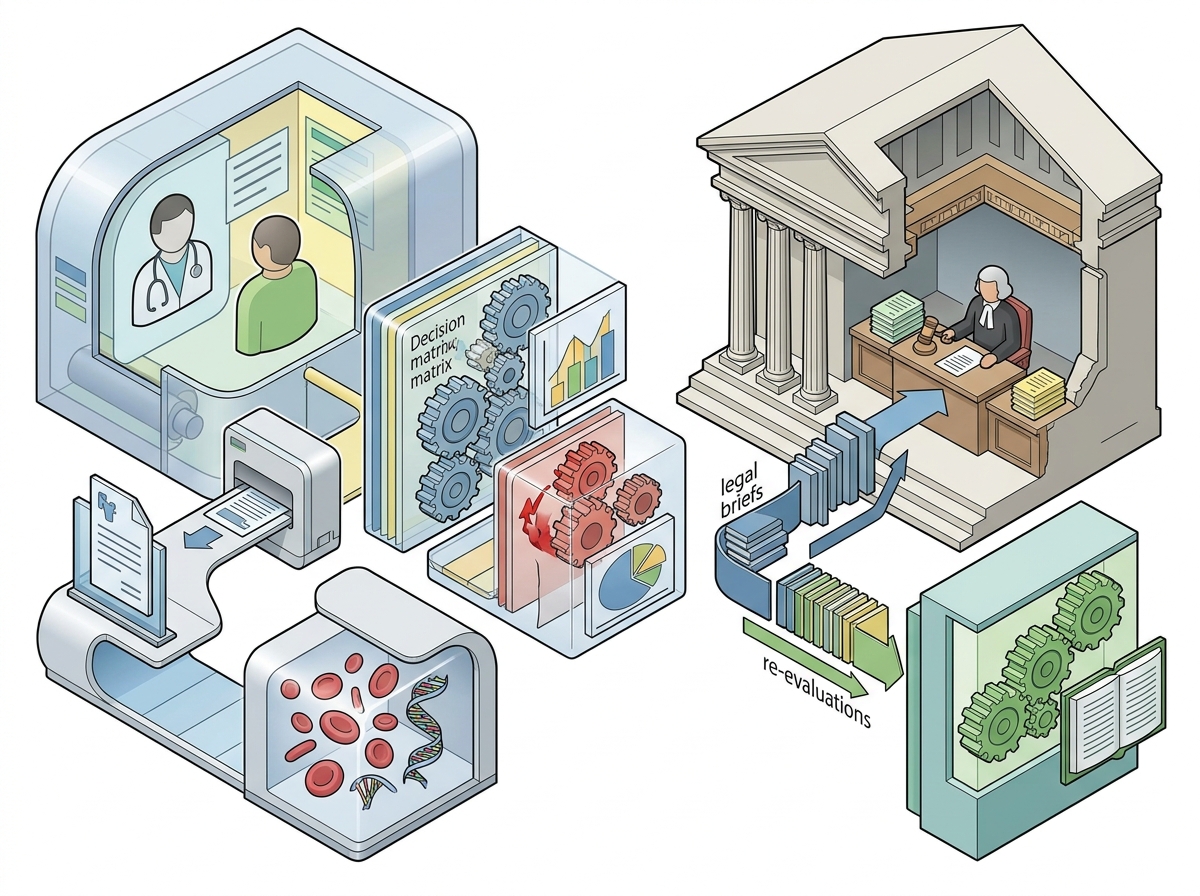
The Orissa High Court has set aside a Medical Assessment Board’s report denying disability status to a NEET candidate with Thalassemia Trait, directing the Directorate of Medical Education and Training (DMET) to constitute a fresh board within four days. The court held that the Board erred by confining its assessment to functional or locomotor disability, overlooking thalassemia’s statutory recognition as a specified disability under the Rights of Persons with Disabilities Act, 2016. This judgment underscores the judicial scrutiny of disability certification processes and their alignment with statutory provisions, particularly in the context of competitive examinations like NEET.
Background
- The Rights of Persons with Disabilities Act, 2016 (RPWD Act, 2016) replaced the Persons with Disabilities (Equal Opportunities, Protection of Rights and Full Participation) Act, 1995, expanding the definition of disability to include 21 specified conditions, including thalassemia.
- The RPWD Act, 2016 mandates that persons with benchmark disabilities (40% or more) are entitled to reservation, concessions, and other benefits in education and employment.
- The National Eligibility cum Entrance Test (NEET) is a national-level medical entrance examination conducted by the National Testing Agency (NTA) for admission to undergraduate medical courses.
- Candidates with disabilities appearing for NEET must submit a disability certificate issued by a competent medical authority, as per the RPWD Act, 2016.
- Medical Assessment Boards under state governments or institutions are tasked with evaluating the degree of disability for certification purposes.
- The Orissa High Court’s intervention highlights the tension between statutory recognition of disabilities and the functional assessment criteria employed by medical boards.
What is the Rights of Persons with Disabilities Act, 2016?
- Enacted to fulfill India’s obligations under the United Nations Convention on the Rights of Persons with Disabilities (UNCRPD), the RPWD Act, 2016 replaces the earlier 1995 Act.
- The Act defines disability broadly, covering 21 specified conditions, including physical, intellectual, mental, and blood disorders such as thalassemia.
- It introduces the concept of ‘benchmark disability’ (40% or more) for eligibility for reservation, concessions, and other benefits.
- The Act mandates the establishment of a Chief Commissioner for Persons with Disabilities and State Commissioners to monitor implementation.
- It requires the government to ensure accessibility in public buildings, transport, and information and communication technology.
- The Act also provides for the formulation of a National Fund and State Fund for the welfare of persons with disabilities.
- The Schedule to the Act lists specific disabilities, including ‘blood disorders’ such as thalassemia, sickle cell disease, and hemophilia.
- The Act empowers persons with disabilities to seek legal recourse for violations of their rights under the Act.
UPSC Value Addition
Keywords for Mains Answer-Writing
Rights of Persons with Disabilities Act, 2016 · specified disabilities · NEET eligibility criteria · medical assessment boards · disability certification process · Judicial review of administrative decisions · Right to Education and Health · Constitutional remedies under Article 226 · Medical Assessment Board procedures · Judicial activism in disability rights · Statutory interpretation of disability definitions · Judicial standards for disability assessment · Constitutional provisions for persons with disabilities · Judicial directions for expeditious redressal · Disability rights jurisprudence in India · Judicial review of executive actions
Prelims Practice Questions
Q1. Consider the following statements regarding the Rights of Persons with Disabilities Act, 2016:
1. The Act recognises thalassemia as a specified disability under the category of blood disorders.
2. The Act mandates that disability assessments must focus solely on locomotor or functional disabilities.
3. The Act provides for the constitution of Medical Assessment Boards to determine the percentage of disability.
4. The Act does not provide for judicial review of the decisions of Medical Assessment Boards.
How many of the above statements are correct?
- Only one
- Only two
- Only three
- All four
Answer: Only two — Statement 1 is correct as the Act explicitly includes thalassemia under the category of blood disorders in its Schedule. Statement 2 is incorrect because the Act recognises multiple categories of disabilities beyond locomotor or functional disabilities. Statement 3 is correct as the Act provides for the constitution of Medical Assessment Boards. Statement 4 is incorrect because the Act allows for judicial review under constitutional remedies.
Q2. Assertion (A): The Rights of Persons with Disabilities Act, 2016, recognises thalassemia as a specified disability.
Reason (R): The Act includes thalassemia under the category of blood disorders in its Schedule.
In the context of the above two statements, which one of the following is correct?
- Both A and R are true, and R is the correct explanation of A.
- Both A and R are true, but R is not the correct explanation of A.
- A is true, but R is false.
- A is false, but R is true.
Answer: Both A and R are true, and R is the correct explanation of A. — Both the Assertion and Reason are true, and the Reason correctly explains the Assertion. The Act explicitly includes thalassemia as a specified disability under the category of blood disorders in its Schedule.
Q3. Match the following columns:
Column I (Provisions of the Rights of Persons with Disabilities Act, 2016)
A. Constitution of Medical Assessment Boards
B. Recognition of specified disabilities
C. Judicial review of administrative decisions
D. Percentage of disability determination
Column II (Descriptions)
1. Schedule to the Act
2. Section 58
3. Section 56
4. Section 59
Select the correct match:
- A-3, B-1, C-2, D-4
- A-2, B-1, C-3, D-4
- A-4, B-1, C-2, D-3
- A-1, B-2, C-3, D-4
Answer: A-3, B-1, C-2, D-4 — A-3: Section 56 of the Act provides for the constitution of Medical Assessment Boards. B-1: The Schedule to the Act lists specified disabilities, including thalassemia. C-2: Section 58 provides for judicial review of administrative decisions. D-4: Section 59 deals with the determination of the percentage of disability.
Mains Practice Question
✍ The Medical Assessment Board’s interpretation of disability under the Rights of Persons with Disabilities Act, 2016, must align with the statutory scheme and constitutional guarantees. Critically examine the role of judicial review in ensuring this alignment, with reference to the recent Orissa High Court judgment in the NEET disability case. (15 Marks)
Approach: MODEL-ANSWER SKELETON:
1. **Statutory Framework and Constitutional Guarantees**:
– Briefly outline the Rights of Persons with Disabilities Act, 2016, and its Schedule, which includes thalassemia as a specified disability.
– Highlight constitutional provisions such as Articles 14 (equality), 15 (non-discrimination), and 21 (right to health and education) that underpin disability rights.
2. **Judicial Review and Administrative Actions**:
– Explain the scope of judicial review under Article 226 of the Constitution, which empowers High Courts to intervene in cases of administrative arbitrariness or violation of statutory provisions.
– Discuss the principles of judicial review: legality, procedural fairness, and substantive correctness.
3. **Analysis of the Orissa High Court Judgment**:
– Summarise the facts: Petitioner with thalassemia trait denied disability status by the Medical Assessment Board despite a certificate showing over 40% disability.
– Highlight the Court’s reasoning: The Board erred by confining assessment to functional/locomotor disability, overlooking the statutory recognition of thalassemia as a separate category.
– Emphasise the Court’s direction for a fresh assessment within four days, balancing the petitioner’s rights with the exigencies of NEET counselling.
4. **Judicial Activism vs. Administrative Discretion**:
– Discuss the balance between judicial activism (ensuring rights are not diluted) and administrative discretion (expert assessment of disability).
– Reference the Court’s emphasis on statutory interpretation over functional assessment, reinforcing the need for administrative bodies to adhere to the law.
5. **Broader Implications**:
– Explain how this judgment strengthens disability rights jurisprudence in India, ensuring that statutory schemes are not undermined by narrow administrative interpretations.
– Conclude with the importance of judicial review in safeguarding constitutional and statutory rights, particularly in time-sensitive scenarios like NEET counselling.
Source: orissapost.com
Generated by AanyaAi for educational purpose.
Related guides on our sites
- Current affairs for upsc 2026
- Best sociology optional coaching for upsc
- Which is best sociology optional coaching for upsc
- Best teacher of sociology optional for upsc

- मध्य प्रदेश में शुरू हुआ ‘भारतीय मातृभाषा अनुष्ठान’, मुख्यमंत्री मोहन यादव ने किया शुभारंभ - September 14, 2026
- MP CM to launch ‘Bharatiya Matrubhasha Anushthan’ at Bharat Bhavan on Hindi Diwas - September 14, 2026
- रत्न भंडार की गुप्त रिपोर्ट: सेवको में मिले-जुले प्रतिक्रियाएं, जानिए पूरा मामला - September 14, 2026

No Comments