


19 Sep Ukraine Receives €3.3 Billion EU Defence Fund: UPSC & PCS Security Analysis
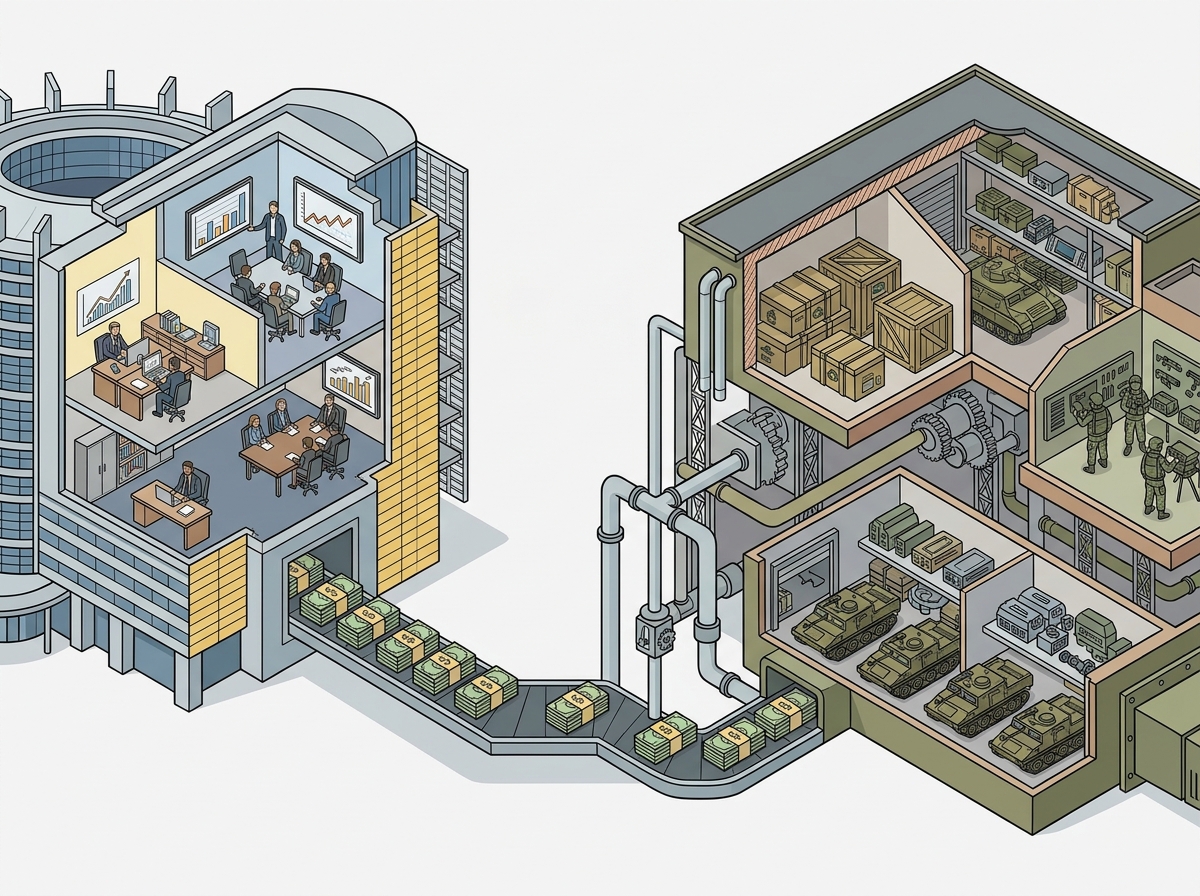
✎ The European Union’s disbursement of a 3.3-billion-euro tranche to Ukraine under the Ukraine Support Loan Mechanism highlights the evolving architecture of international financial assistance for conflict-affected regions.
Subject Relevance — Where This Topic Fits
- GS Paper II — International Relations — Regional and Global Groupings and Agreements involving India and/or affecting India’s interests | GS Paper II — International Relations — Effect of Policies and Politics of Developed and Developing Countries on India’s interests
- Prelims: Ukraine Support Loan Mechanism, European Peace Facility, SCALP missile, HIMARS, Neptune missile, Article 42(7) TEU, Macron Doctrine
- Essay: The role of international financial institutions in managing regional conflicts, Multilateralism in the 21st century: Challenges and opportunities
Why is this in the news?
The European Union’s disbursement of a 3.3-billion-euro tranche to Ukraine under the Ukraine Support Loan Mechanism highlights the evolving architecture of international financial assistance for conflict-affected regions. This development underscores the EU’s strategic use of economic instruments to support a partner state amid active hostilities, while also reflecting broader questions about the legal, ethical, and geopolitical dimensions of such interventions.
Background
- The Russia-Ukraine conflict, which escalated in February 2022 following Russia’s invasion, has prompted unprecedented levels of international support for Ukraine, including military, financial, and humanitarian assistance.
- The EU’s financial support is structured through instruments such as the European Peace Facility (EPF), which was established in 2021 to fund military and defence-related assistance to partner countries.
- The disbursement of the tranche follows earlier EU decisions to supply military equipment, including missiles and drones, to Ukraine, aligning with broader NATO and EU strategic objectives in Eastern Europe.
- The conflict has also triggered debates on the legality of third-party military assistance under international law, particularly in relation to the principle of non-intervention and the right to self-defence.
- The EU’s approach contrasts with traditional models of post-conflict reconstruction, as it integrates immediate defence financing with long-term budgetary support, reflecting a hybrid model of crisis management.
What is the Ukraine Support Loan Mechanism?
- The EPF allows the EU to bypass traditional budgetary constraints and provide rapid, flexible funding for military and defence purposes, including the purchase of lethal equipment such as missiles and drones.
- The mechanism is designed to complement direct military aid from individual EU member states, ensuring a coordinated and sustainable approach to supporting Ukraine’s defence capabilities.
- The EU’s financial assistance is structured as loans rather than grants, with repayment terms to be negotiated at a later stage, reflecting the EU’s emphasis on fiscal responsibility and long-term engagement.
- The mechanism is part of a broader EU strategy to strengthen Ukraine’s resilience and deterrence capabilities in the face of ongoing Russian aggression, while also signalling the EU’s commitment to upholding international law and sovereignty.
- The EU’s approach is influenced by the precedent set by the European Commission’s 2022 proposal for a €9 billion macro-financial assistance package for Ukraine, which was later expanded under the Ukraine Support Loan framework.
- The mechanism also serves as a model for future EU interventions in conflict zones, demonstrating the potential for financial instruments to play a central role in crisis management and post-conflict recovery.
Key Features
| Feature | Significance |
|---|---|
| EU Ukraine Support Loan Mechanism | A structured financial instrument enabling the EU to provide up to €45 billion in assistance to Ukraine in 2026, including defence and budgetary support, under a legally binding framework. |
| 3.3-billion-euro tranche disbursement | Direct transfer of funds to Ukraine’s defence sector, specifically for procurement of missiles and drones, enhancing operational capacity and sustaining long-term military preparedness. |
| SCALP missile component release | Authorisation for defence contractor MBDA to disclose classified details on British components of the SCALP missile, facilitating Ukraine’s indigenous assembly and deployment of long-range precision strike capabilities. |
| Russian countermeasures and warnings | Escalation of diplomatic protests and threats of retaliatory action, including targeting of British military facilities in Ukraine, underscoring the geopolitical risks of sustained arms transfers. |
| Infrastructure targeting in Ukraine | Systematic strikes on defence plants, logistics hubs, energy, and transport infrastructure, disrupting supply chains and civilian-military dual-use facilities critical to Ukraine’s war economy. |
Why it Matters
Geopolitical Implications
- The EU’s financial commitment reflects a sustained strategic partnership with Ukraine, reinforcing collective security frameworks in Eastern Europe amid ongoing conflict dynamics.
- The release of classified missile components by the UK exemplifies the deepening of defence-industrial cooperation, enabling Ukraine to enhance its long-range strike capabilities independently.
- Russia’s retaliatory rhetoric and threats highlight the escalatory risks of external military support, potentially prolonging the conflict and complicating diplomatic resolution efforts.
Economic and Industrial Impact
- The €3.3 billion tranche directly augments Ukraine’s defence procurement, supporting domestic and allied defence industries while stimulating high-technology manufacturing sectors.
- Disruptions to energy, transport, and industrial infrastructure in Ukraine pose long-term economic costs, including reduced industrial output and logistical bottlenecks affecting both civilian and military sectors.
- The targeting of drone manufacturing and storage facilities underscores the growing role of unmanned systems in modern warfare, with implications for global defence industrial bases.
Legal and Institutional Frameworks
- The EU’s support mechanism operates under a structured loan framework, ensuring fiscal discipline and transparency in disbursement, aligned with EU budgetary and fiscal rules.
- The classification and controlled release of missile components by the UK involve adherence to national security protocols, balancing operational transparency with strategic confidentiality.
Humanitarian and Strategic Trade-offs
- Sustained military assistance, while bolstering Ukraine’s defensive capabilities, risks exacerbating civilian casualties and infrastructure damage, particularly in urban and industrial zones.
- The targeting of civilian maritime assets (e.g., dry cargo ships, ferries) raises concerns about adherence to international humanitarian law and the protection of non-combatant infrastructure.
Challenges
1. Escalation of Geopolitical Tensions
- Risk of direct military confrontation between Russia and NATO-aligned states due to sustained arms transfers and perceived encroachment on Russian strategic interests.
- Potential for prolonged conflict, with attendant risks of regional destabilisation, refugee flows, and economic spillovers affecting neighbouring states.
- Erosion of diplomatic channels as both sides harden positions, complicating future peace negotiations or ceasefire agreements.
UPSC Link: GS-II: International Relations – Challenges to Peace and Security
2. Sustainability of Financial and Industrial Support
- Long-term fiscal burden on EU member states to maintain high levels of defence assistance, particularly amid competing domestic priorities and economic constraints.
- Dependence on external industrial supply chains for critical defence components, exposing vulnerabilities to disruptions in logistics and trade routes.
- Potential for over-reliance on foreign defence technologies, limiting Ukraine’s indigenous defence industrial capacity in the long run.
UPSC Link: GS-III: Indian Economy – Fiscal Policy and Resource Mobilisation
3. Protection of Civilian Infrastructure and Humanitarian Concerns
- Increased collateral damage to civilian infrastructure (energy, transport, healthcare) due to military strikes, exacerbating humanitarian crises and displacement.
- Violations of international humanitarian law (IHL) through indiscriminate targeting of dual-use facilities, raising accountability and legal challenges under Geneva Conventions.
- Challenges in delivering humanitarian aid amid active conflict zones, with risks to aid workers and supply routes.
UPSC Link: GS-II: International Relations – Humanitarian Law and Ethics
4. Defence Industrial and Technological Dependence
- Ukraine’s reliance on foreign-sourced components for advanced weaponry (e.g., missiles, drones) may limit its strategic autonomy and self-sufficiency in defence production.
- Potential for technology transfer restrictions or supply chain disruptions, particularly from states with divergent geopolitical interests.
- Need for investment in domestic R&D and manufacturing to reduce long-term dependence on external defence suppliers.
UPSC Link: GS-III: Science and Technology – Defence Technology and Indigenous Development
5. Legal and Ethical Dilemmas in Arms Transfers
- Ethical considerations surrounding the provision of lethal military aid, including the risk of exacerbating civilian harm and prolonging conflict.
- Compliance with international arms control regimes (e.g., Arms Trade Treaty) and national export control laws governing the transfer of sensitive defence technologies.
- Accountability mechanisms for states and entities facilitating arms transfers, particularly in cases of potential violations of IHL.
UPSC Link: GS-II: International Relations – Arms Control and Disarmament
Challenges — UPSC Perspective
| Issue | Concern |
|---|---|
| Geopolitical Escalation | Risk of direct or indirect military confrontation between Russia and NATO-aligned states due to sustained arms transfers. |
| Economic Sustainability | Long-term fiscal burden on donor states and potential over-reliance on external defence industrial supply chains. |
| Civilian Infrastructure Damage | Collateral damage to energy, transport, and healthcare facilities, exacerbating humanitarian crises. |
| Humanitarian Access | Challenges in delivering aid amid active conflict zones, with risks to aid workers and supply routes. |
| Defence Industrial Dependence | Limited strategic autonomy for Ukraine due to reliance on foreign-sourced defence components and technologies. |
| Legal and Ethical Compliance | Adherence to international arms control regimes and accountability for potential violations of humanitarian law. |
Way Forward
- Strengthen multilateral coordination among EU member states to ensure sustainable and transparent financial support for Ukraine’s defence and humanitarian needs.
- Invest in Ukraine’s domestic defence industrial base through joint ventures, technology transfer agreements, and capacity-building initiatives to reduce long-term dependence on foreign suppliers.
- Enhance diplomatic efforts to revive peace negotiations, leveraging neutral third-party mediation to de-escalate tensions and explore ceasefire frameworks.
- Implement robust monitoring and verification mechanisms to ensure compliance with international humanitarian law, particularly regarding the protection of civilian infrastructure.
- Expand humanitarian aid corridors and protected zones in conflict-affected regions to mitigate civilian harm and facilitate safe delivery of essential services.
- Develop contingency plans for energy and food security in Ukraine, including diversification of supply chains and emergency stockpiles to reduce vulnerabilities.
- Promote dialogue on arms control and confidence-building measures to prevent unintended escalation and reduce the risk of direct military confrontation.
- Encourage research and development in dual-use technologies (e.g., drones, AI for logistics) to enhance Ukraine’s defensive capabilities while minimising civilian impact.
UPSC Value Addition
Keywords for Mains Answer-Writing
European Union Common Foreign and Security Policy · Ukraine Support Loan Mechanism · Defence procurement and financing · International humanitarian law in armed conflict · Sovereignty and territorial integrity · Multilateral financial assistance frameworks · Sanctions and counter-sanctions in international relations · Role of international organisations in conflict resolution · Armed conflict and humanitarian consequences · Geopolitical implications of military aid
Concept Flow
Ongoing conflict in Ukraine → External military and financial support (EU, UK) → Enhanced defence capabilities (missiles, drones) → Russian countermeasures (strikes, diplomatic protests) → Escalation of geopolitical tensions → Humanitarian and economic consequences → Diplomatic and legal challenges → Need for sustainable peace frameworks.
Prelims Practice Questions
Q1. Consider the following statements regarding the European Union’s support to Ukraine:
1. The EU has approved a 90-billion-euro support loan for Ukraine for 2026 and 2027.
2. The Ukraine Support Loan mechanism is exclusively for defence procurement.
3. The EU tranche disbursed in September 2026 is part of a broader assistance package.
How many of the above statements are correct?
- Only one
- Only two
- All three
- None
Answer: All three — Statements 1 and 3 are correct. Statement 2 is incorrect because the Ukraine Support Loan mechanism includes both defence procurement and budgetary support.
Q2. Assertion (A): The European Union’s financial assistance to Ukraine is governed by the Common Foreign and Security Policy (CFSP).
Reason (R): The CFSP enables the EU to adopt common positions and take joint actions in the field of international relations, including financial support to third countries.
Options:
A. Both A and R are true, and R is the correct explanation of A.
B. Both A and R are true, but R is not the correct explanation of A.
C. A is true, but R is false.
D. A is false, but R is true.
Answer: ? — Both the assertion and reason are true. The CFSP framework empowers the EU to adopt common positions and actions, including financial assistance to Ukraine.
Q3. Match the following pairs related to international financial assistance mechanisms:
Column I (Mechanism) | Column II (Purpose)
———————|——————-
1. Ukraine Support Loan Mechanism | A. Provides budgetary and defence support to Ukraine
2. European Peace Facility | B. EU’s off-budget instrument for military support to partners
3. International Monetary Fund (IMF) Stand-By Arrangement | C. Provides short-term financial assistance to member countries in balance-of-payments difficulties
4. World Bank Development Policy Loan | D. Supports development projects and policy reforms in borrowing countries
- 1-A, 2-B, 3-C, 4-D
- 1-B, 2-A, 3-C, 4-D
- 1-A, 2-C, 3-B, 4-D
- 1-D, 2-B, 3-A, 4-C
Answer: 1-A, 2-B, 3-C, 4-D — 1-A: Ukraine Support Loan Mechanism provides budgetary and defence support to Ukraine. 2-B: European Peace Facility is an off-budget instrument for military support. 3-C: IMF Stand-By Arrangement provides short-term financial assistance. 4-D: World Bank Development Policy Loan supports development projects and policy reforms.
Mains Practice Question
✍ The European Union’s financial assistance to Ukraine, including the Ukraine Support Loan Mechanism, exemplifies the evolving role of international organisations in conflict resolution and humanitarian support. Critically analyse the legal, political, and economic dimensions of such multilateral financial assistance in the context of armed conflicts. (15 Marks)
Approach: MODEL-ANSWER SKELETON:
1. **Legal Dimension (4 Marks)**
– Reference to the **Treaty on European Union (TEU), Articles 21-22**, which empower the EU to adopt common positions and actions in international relations, including financial assistance.
– **International humanitarian law (IHL)**: Discuss the role of IHL (Geneva Conventions, Additional Protocols) in regulating state conduct during armed conflicts, including the prohibition of indiscriminate attacks on civilian infrastructure (e.g., energy and transport facilities).
– **Sovereignty and territorial integrity**: Highlight the principle of **sovereign equality of states (UN Charter, Article 2(1))** and the right to self-defence (UN Charter, Article 51) as legal justifications for external support.
2. **Political Dimension (5 Marks)**
– **Common Foreign and Security Policy (CFSP)**: Explain how the CFSP enables the EU to adopt common positions and take joint actions, including financial support to Ukraine (TEU, Articles 24-46).
– **Geopolitical implications**: Discuss the **balance of power dynamics** in Eastern Europe and the EU’s strategic interests in supporting Ukraine.
– **Counter-sanctions and retaliation**: Analyse the **Russian response** (e.g., summoning diplomats, threats of retaliatory measures) as a political consequence of external military aid.
3. **Economic Dimension (4 Marks)**
– **Financial mechanisms**: Explain the **Ukraine Support Loan Mechanism** (90-billion-euro package for 2026-2027) and the **European Peace Facility** (off-budget instrument for military support).
– **Impact on Ukraine’s economy**: Discuss the role of financial assistance in sustaining Ukraine’s defence capabilities and economic stability during the conflict.
– **Global economic spillovers**: Briefly mention the impact on global energy markets, supply chains, and inflation.
4. **Critical Evaluation and Challenges (2 Marks)**
– **Neutrality vs. partiality**: Debate whether multilateral financial assistance risks **escalating the conflict** by providing one side with a strategic advantage.
– **Accountability and transparency**: Highlight challenges in ensuring that financial aid is used for intended purposes and does not violate IHL.
Conclude with a balanced view: Multilateral financial assistance plays a crucial role in conflict resolution and humanitarian support, but its effectiveness depends on adherence to legal frameworks, political neutrality, and economic sustainability.
Source: orissapost.com
Generated by AanyaAi for educational purpose.
Related guides on our sites
- Current affairs for upsc 2026
- How to prepare for GS paper 1 for UPSC CSE mains exam
- Best UPSC coaching for IFOS exam
- Best mentorship programme for upsc

- Ukraine Receives €3.3 Billion EU Defence Fund: UPSC & PCS Security Analysis - September 19, 2026
- मत्स्यपालन विभाग का विशेष अभियान 6.0: स्वच्छता एवं सुशासन की नई पहल - September 19, 2026
- मत्स्यपालन विभाग ने विशेष अभियान 6.0 के तहत स्वच्छता एवं सुशासन पर बल दिया - September 19, 2026

No Comments