


23 Sep Election Commission Rejects Dissent Report: Key Implications for UPSC Aspirants
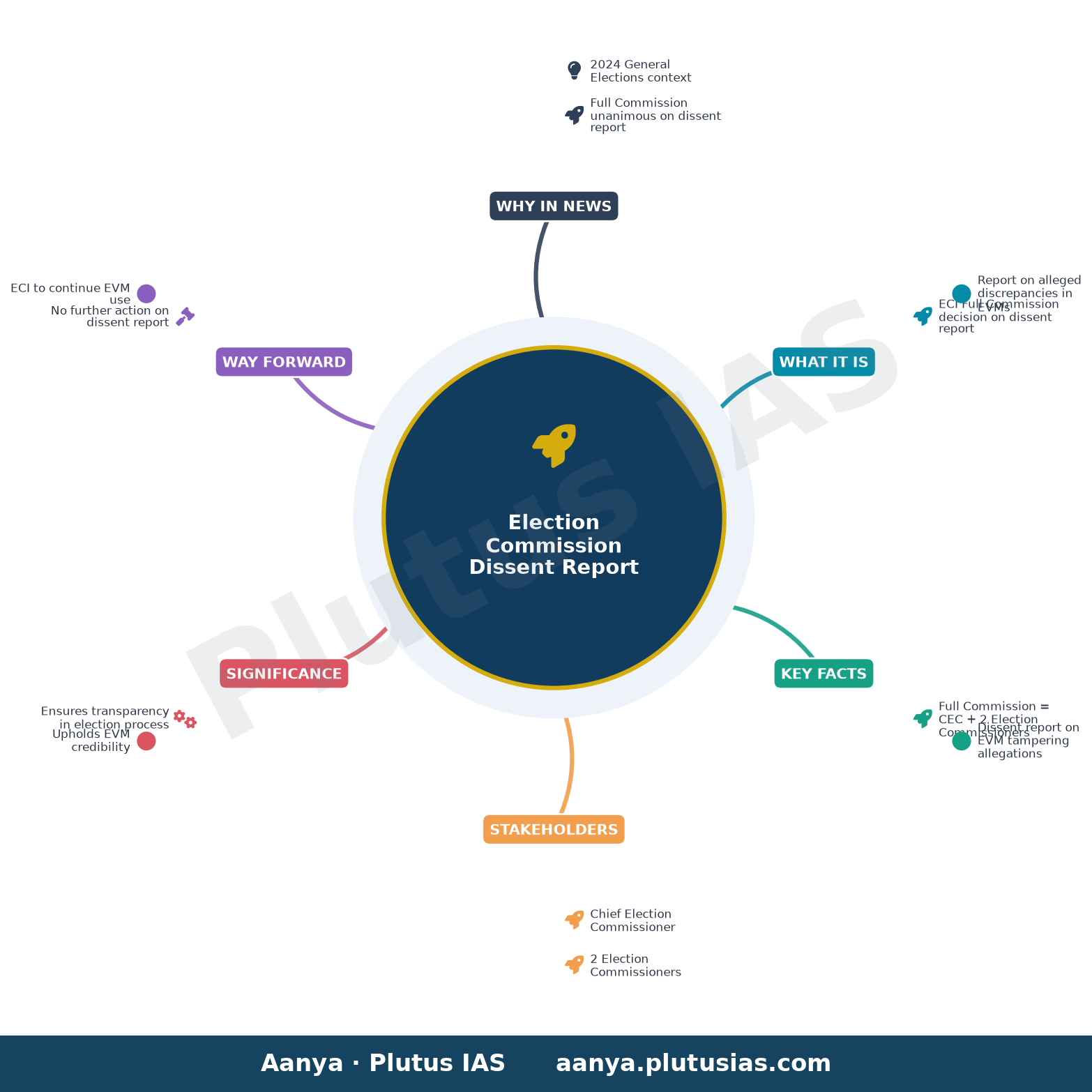
✎ ECI Full Commission unanimously rejected dissent report on EVMs, ensuring electoral integrity.
Relevance for UPSC & State PCS: Economy/Governance
The Election Commission of India (ECI) recently addressed a dissent report within its ranks, emphasizing that decisions taken by the full three-member commission were unanimous and binding. This development underscores the ECI’s commitment to maintaining institutional cohesion, particularly in the face of internal disagreements or external scrutiny. The move highlights the importance of collective decision-making in electoral governance, where consensus among commissioners ensures stability and credibility in the conduct of elections. For aspirants preparing for the UPSC and State PCS examinations, this episode serves as a case study in constitutional bodies, illustrating how constitutional authorities like the ECI function with autonomy and collective responsibility.
The dissent report, which reportedly surfaced in the context of procedural or administrative differences, was effectively neutralized by the ECI’s insistence on unanimous decisions. This approach reinforces the principle that the ECI operates as a unified entity, even when individual commissioners may have differing viewpoints. For governance and polity aspirants, this episode is relevant in understanding the dynamics of constitutional bodies, their internal processes, and the role of dissent in democratic institutions. It also provides insights into how constitutional authorities balance autonomy with collective accountability, a theme often tested in the UPSC mains examination under governance or constitutional provisions.
From an examination perspective, this development aligns with the syllabus’s focus on the Election Commission’s powers, functions, and challenges. The ECI’s stance on unanimity also reflects broader governance principles, such as the need for consensus in multi-member bodies and the challenges of maintaining institutional integrity. For State PCS aspirants, this case is particularly pertinent as state election commissions often mirror the ECI’s structure, making it a useful precedent for understanding state-level electoral governance. The episode also touches upon the broader theme of dissent within institutions, a topic that resonates with current affairs in governance and administration.
For UPSC aspirants, this case can be linked to questions on electoral reforms, the independence of constitutional bodies, and the role of dissent in democratic processes. The ECI’s handling of the dissent report demonstrates how constitutional authorities navigate internal disagreements while upholding public trust. This episode is a reminder of the importance of institutional resilience and the challenges of maintaining consensus in bodies tasked with upholding democratic values. For State PCS aspirants, it offers a practical example of how electoral bodies function at both the central and state levels, reinforcing the need for aspirants to stay updated on such developments for both prelims and mains preparation.
Source: ndtv.com
Practice Questions
Q1. What does the term ‘Unanimous Decisions Of Full Commission’ refer to in the context of the Election Commission of India?
- A process where all members of the Election Commission agree on a decision without any dissent
- A legal requirement for the Election Commission to publish dissenting reports publicly
- A mechanism to override the decisions of the Chief Election Commissioner by majority vote
- A procedure to delay election-related decisions until all members reach a consensus
Answer
A process where all members of the Election Commission agree on a decision without any dissent — The term ‘Unanimous Decisions Of Full Commission’ indicates that all members of the Election Commission of India have agreed on a decision without any dissent, reflecting a collective consensus.
Q2. What is the significance of the Election Commission’s stance on the ‘Dissent’ Report mentioned in the headline?
- It emphasizes the importance of individual opinions even within a unanimous decision-making body
- It suggests that the Election Commission does not recognize or consider dissenting reports as valid
- It indicates a shift toward majority-based decisions rather than unanimous consensus
- It highlights the legal obligation to include dissenting opinions in official election records
Answer
It suggests that the Election Commission does not recognize or consider dissenting reports as valid — The headline implies that the Election Commission has taken a stance rejecting or disregarding dissenting reports, emphasizing unanimous decisions over individual dissent.
Generated by AanyaAi for educational purpose.
Related guides on our sites
- Best PSIR optional coaching for upsc
- Best economics optional coaching for upsc
- Best PSIR optional teacher for upsc
- Best teacher of PSIR optional for upsc

- ग्रीनलैंड समझौता: अमेरिका को मिले अतिरिक्त रक्षा क्षेत्र, जानिए पूरा मामला - September 23, 2026
- US-Greenland Defence Deal: Strategic Implications for UPSC & State PCS - September 23, 2026
- ब्रिक्स कर प्रमुखों की बैठक: कर नियमों में बदलाव में भारत का जोर - September 23, 2026

No Comments