


25 Sep 11th Ayurveda Day 2026: RARI Mandi’s Month-Long Awareness Campaign Highlights
✎ The 11th National Ayurveda Day, celebrated by RARI, Mandi, on 23 September 2026, exemplifies the government’s strategy to integrate Ayurveda into public health through evidence-based outreach, preventive care, and community…
Subject Relevance — Where This Topic Fits
- GS Paper II — Social Justice (Healthcare) | GS Paper III — Science and Technology (Health Sector) | GS Paper IV — Ethics in Public Health
- Prelims: Ayurveda Day, Regional Ayurveda Research Institute (RARI), CCRAS, Ritucharya, Ayurvedic Pharmacovigilance, Holistic Healthcare, Evidence-Based Medicine, National Ayurveda Day
- Essay: The Role of Traditional Knowledge Systems in Modern Healthcare, Sustainable Health: Integrating Preventive and Curative Approaches
Quick Revision: The 11th National Ayurveda Day, celebrated by RARI, Mandi, on 23 September 2026, exemplifies the government’s strategy to integrate Ayurveda into public health through evidence-based outreach, preventive care, and community participation, in line with the constitutional directive to promote the health of the people.
Why is this in the news?
The Regional Ayurveda Research Institute (RARI), Mandi, celebrated the 11th National Ayurveda Day on 23 September 2026 with a month-long public awareness campaign themed ‘Ayurveda for a Healthy Future’. This institutional initiative underscores the government’s commitment to mainstreaming Ayurveda through evidence-based practices, preventive healthcare, and public engagement, aligning with constitutional provisions for the promotion of traditional medical systems under Article 47 of the Directive Principles of State Policy.
Background
- The National Ayurveda Day is observed annually since 2016 on the occasion of Dhanvantari Jayanti, marking the birth of the Hindu god of medicine, to promote awareness about Ayurveda and its holistic healthcare principles.
- Ayurveda is one of the oldest systems of medicine, documented in classical texts such as Charaka Samhita and Sushruta Samhita, and is recognised under the Indian Medicine Central Council Act, 1970, as a formal medical system.
- The National Health Policy 2017 and the National Ayush Mission (NAM) emphasise the integration of traditional medical systems into mainstream healthcare for preventive, promotive, and curative services, particularly in addressing lifestyle diseases and mental health.
- The Regional Ayurveda Research Institute (RARI), Mandi, functions under the aegis of CCRAS and serves as a hub for research, clinical trials, and public health outreach in the Himalayan region.
What is the Regional Ayurveda Research Institute (RARI), Mandi, and its role in Ayurveda Day celebrations?
- RARI, Mandi, is a premier research institute under the Central Council for Research in Ayurvedic Sciences (CCRAS), Ministry of AYUSH, dedicated to advancing Ayurvedic science through clinical research, drug development, and public health interventions.
- The institute conducts evidence-based studies on Ayurvedic formulations, lifestyle interventions, and preventive healthcare strategies, with a focus on regional health challenges such as altitude-related disorders and seasonal ailments in the Himalayan belt.
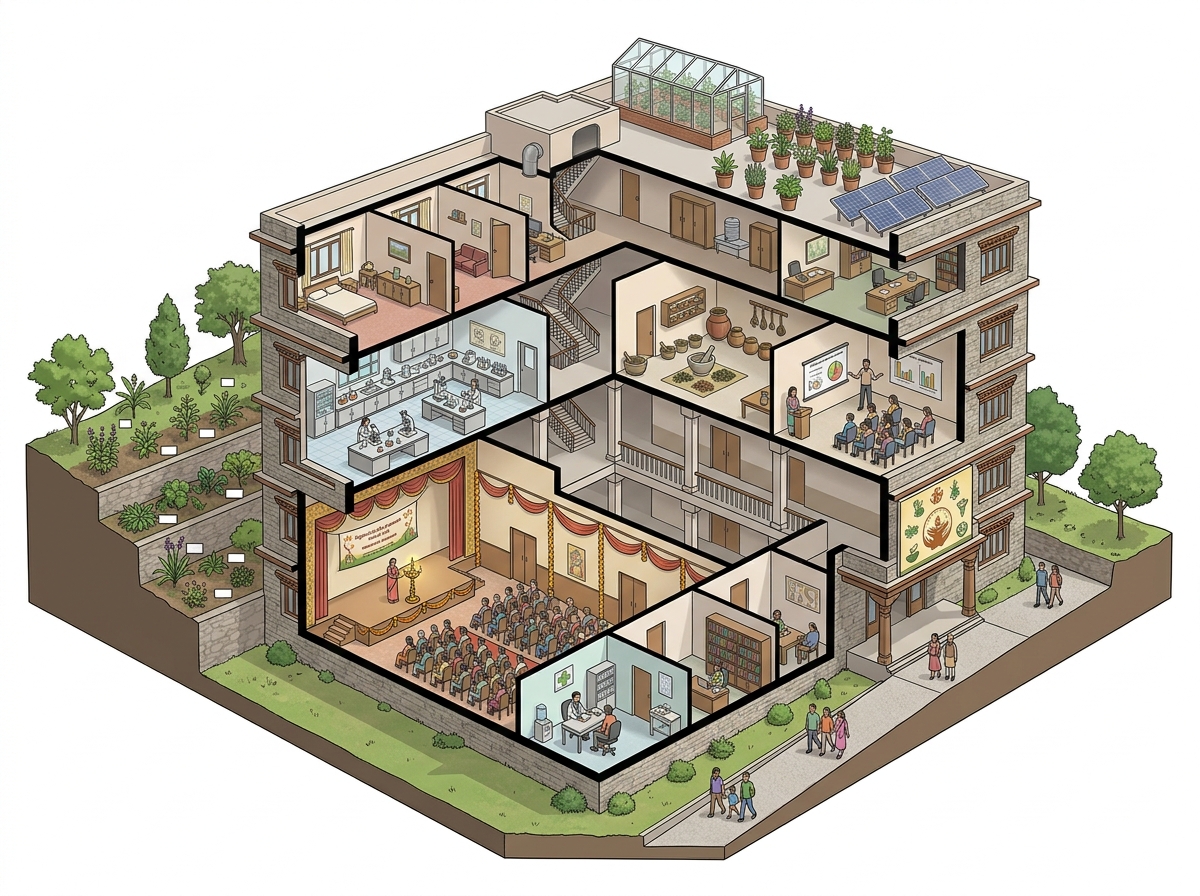
- Ayurveda Day celebrations at RARI, Mandi, are structured around multi-modal awareness campaigns, including lectures by Senior Research Fellows (SRFs) and consultants, interactive workshops, and community engagement activities targeting students, healthcare professionals, and the general public.
- The month-long campaign in September 2026 included thematic sessions on safe medication practices, digestive health, seasonal regimens (Ritucharya), mental health, and ethical research norms in Ayurveda, reflecting the principles of holistic healthcare (Swasthavritta).
- Key activities included a ‘Nature Assessment Camp’ for personalised dietary and lifestyle advice, a ‘Walkathon’ for physical activity promotion, and creative competitions (poster-making, slogan-writing, essay-writing, and Rangoli) to foster youth engagement with Ayurveda.
- The institute distributed medicinal plants during the event, symbolising the importance of herbal medicine in Ayurveda and promoting self-reliance in healthcare through home gardens.
- The celebration culminated in traditional rituals, including a Havan and invocation to Lord Dhanvantari, followed by the singing of the CCRAS anthem, reinforcing the cultural and spiritual dimensions of Ayurveda.
Key Features
| Feature | Significance |
|---|---|
| Month-long awareness campaign on Ayurveda | Disseminated evidence-based, safe Ayurvedic practices to the public, aligning with the National Ayush Mission’s emphasis on preventive healthcare. |
| Theme: ‘स्वस्थ भविष्य के लिए आयुर्वेद’ | Promoted holistic health and well-being through Ayurvedic principles, reinforcing the constitutional directive to safeguard public health under Article 47. |
| Lectures by Senior Research Fellows (SRFs) and consultants | Provided scientific validation of Ayurvedic treatments, bridging traditional knowledge with modern research methodologies. |
| Student engagement activities (posters, slogans, essays, rangoli) | Fostered intergenerational transmission of Ayurvedic knowledge, ensuring continuity of India’s indigenous healthcare systems. |
| Nature assessment camp and walkathon | Integrated Ayurvedic lifestyle recommendations with environmental consciousness, reflecting the Ayurvedic concept of ‘Prakriti’ (individual constitution). |
Why it Matters
Public Health Governance
- Demonstrates the institutional role of Regional Ayurveda Research Institutes (RARIs) in implementing the National Ayurveda Day initiative under the Ministry of Ayush.
- Highlights the integration of Ayurveda into mainstream healthcare through structured awareness campaigns, aligning with the WHO’s Traditional Medicine Strategy 2014-2023.
- Emphasises preventive healthcare, a key pillar of the Ayushman Bharat programme, by promoting lifestyle modifications and disease prevention.
Scientific and Evidence-Based Validation
- Showcases the institutional commitment to validating Ayurvedic practices through research, addressing scepticism and promoting evidence-based integration into healthcare systems.
- Demonstrates the role of Ayurvedic research in addressing non-communicable diseases (NCDs) such as diabetes and hypertension, which are major public health concerns in India.
Cultural and Educational Continuity
- Reinforces the importance of preserving and promoting India’s indigenous healthcare systems through educational initiatives targeting students.
- Promotes Ayurvedic principles such as ‘Dinacharya’ (daily routine) and ‘Ritucharya’ (seasonal routine), which are culturally rooted yet scientifically valid.
Institutional Capacity Building
- Highlights the role of RARIs in conducting research, training, and public outreach, thereby strengthening the Ayurveda ecosystem in India.
- Demonstrates the institutional capacity to organise large-scale awareness campaigns, involving multiple stakeholders such as schools, local communities, and research institutions.
Challenges
1. Standardisation and Quality Control of Ayurvedic Medicines
- Ensuring uniformity in the preparation and administration of Ayurvedic formulations to maintain efficacy and safety.
- Addressing concerns related to contamination, adulteration, and variability in Ayurvedic drugs, which can undermine public trust.
UPSC Link: GS Paper 3 (Science & Tech)
2. Integration with Modern Healthcare Systems
- Overcoming institutional and systemic barriers to integrate Ayurveda into mainstream healthcare, including regulatory frameworks and insurance coverage.
- Ensuring that Ayurvedic practitioners are adequately trained and recognised within the healthcare ecosystem.
UPSC Link: GS Paper 2 (Health Governance)
3. Public Awareness and Skepticism
- Countering misconceptions and scepticism about Ayurveda, particularly among urban populations and younger generations.
- Ensuring that awareness campaigns are accessible and relevant to diverse socio-economic and cultural groups.
UPSC Link: GS Paper 4 (Ethics & Governance)
4. Research and Evidence Generation
- Accelerating research to generate robust scientific evidence for Ayurvedic practices, including clinical trials and systematic reviews.
- Bridging the gap between traditional knowledge and modern scientific validation to enhance credibility.
UPSC Link: GS Paper 3 (Science & Tech)
5. Policy Implementation and Funding
- Ensuring adequate funding and policy support for Ayurveda-related initiatives, including awareness campaigns and research.
- Addressing disparities in resource allocation between Ayurveda and allopathic systems.
UPSC Link: GS Paper 2 (Governance)
Challenges — UPSC Perspective
| Issue | Concern |
|---|---|
| Regulatory Oversight | Lack of stringent quality control mechanisms for Ayurvedic drugs and formulations. |
| Interdisciplinary Collaboration | Limited synergy between Ayurveda practitioners, modern medical professionals, and researchers. |
| Public Perception | Widespread scepticism about the efficacy and scientific basis of Ayurveda. |
| Infrastructure Gaps | Inadequate research facilities and training institutions for Ayurveda in certain regions. |
| Policy Implementation | Slow translation of Ayurveda-related policies into actionable programmes at the grassroots level. |
Way Forward
- Strengthen regulatory frameworks to ensure the quality, safety, and efficacy of Ayurvedic medicines through the Ayush Standards and Pharmacopoeia Commission.
- Promote interdisciplinary research collaborations between Ayurveda institutions and modern medical research bodies to validate Ayurvedic practices scientifically.
- Expand public awareness campaigns to urban and rural areas, leveraging digital platforms and community-based initiatives.
- Enhance the curriculum of Ayurvedic colleges to include modern medical sciences, ensuring holistic training for practitioners.
- Establish a national-level monitoring mechanism to assess the impact of Ayurveda integration initiatives on public health outcomes.
- Encourage the inclusion of Ayurveda in health insurance schemes to improve accessibility and affordability for the public.
- Develop standardised guidelines for Ayurvedic lifestyle interventions, including ‘Dinacharya’ and ‘Ritucharya’, for public dissemination.
UPSC Value Addition
Keywords for Mains Answer-Writing
Ayurveda Day · Regional Ayurveda Research Institute (RARI), Mandi · National Ayurveda Day · Ayurvedic principles · Holistic health · Swasthya Bhavishya Ke Liye Ayurveda · Ayurvedic lifestyle · Ritucharya · Evidence-based Ayurveda · Ayush Ministry · CCRAS (Central Council for Research in Ayurvedic Sciences) · Ayurvedic research ethics · Ayurveda and mental health · Ayurveda and lifestyle diseases · Ayurvedic pharmacovigilance · Ayurvedic diet and digestion · Ayurvedic awareness campaigns · Ayurveda in school education · Ayurveda and sustainable health · Ayurveda and seasonal regimen (Ritucharya)
Constitutional & Policy Linkages
- Article 47 (Duty of State to raise the level of nutrition and standard of living and to improve public health)
Concept Flow
Ayurveda as a traditional healthcare system → Institutionalisation through RARIs → Public awareness campaigns → Evidence-based validation → Integration with modern healthcare → Policy support and regulatory oversight → Improved public health outcomes.
Prelims Practice Questions
Q1. Consider the following statements regarding the National Ayurveda Day:
1. It is celebrated annually on the occasion of Dhanvantari Jayanti.
2. The theme for National Ayurveda Day 2026 was “Swasthya Bhavishya Ke Liye Ayurveda”.
3. The Central Council for Research in Ayurvedic Sciences (CCRAS) is the nodal agency responsible for its celebration.
How many of the above statements are correct?
- Only one
- Only two
- All three
- None
Answer: All three — Statement 1 is correct as National Ayurveda Day is celebrated on Dhanvantari Jayanti. Statement 2 is correct as the theme for 2026 was ‘Swasthya Bhavishya Ke Liye Ayurveda’. Statement 3 is incorrect as the nodal agency for Ayurveda Day is the Ministry of Ayush, not CCRAS.
Q2. Assertion (A): Ayurveda emphasizes the concept of ‘Ritucharya’ for maintaining health.
Reason (R): Ritucharya prescribes seasonal regimens to align human activities with natural cycles.
- Both A and R are true, and R is the correct explanation of A.
- Both A and R are true, but R is NOT the correct explanation of A.
- A is true, but R is false.
- A is false, but R is true.
Answer: Both A and R are true, and R is the correct explanation of A. — Ayurveda indeed emphasizes ‘Ritucharya’ as a principle for health maintenance. Ritucharya refers to seasonal regimens that align human activities with natural cycles, making both the assertion and reason correct, with the reason being the correct explanation of the assertion.
Q3. Match the following pairs related to Ayurveda and its principles:
Column I
1. Dhanvantari Jayanti
2. Ritucharya
3. Ayurvedic pharmacovigilance
4. Swasthavritta
Column II
A. Seasonal regimen
B. God of Ayurveda
C. Prevention of lifestyle diseases
D. Monitoring safety of Ayurvedic drugs
Select the correct match:
- 1-B, 2-A, 3-D, 4-C
- 1-A, 2-B, 3-C, 4-D
- 1-D, 2-C, 3-B, 4-A
- 1-C, 2-D, 3-A, 4-B
Answer: 1-B, 2-A, 3-D, 4-C — 1-B: Dhanvantari Jayanti is celebrated as the birth anniversary of Lord Dhanvantari, the god of Ayurveda. 2-A: Ritucharya refers to seasonal regimens. 3-D: Ayurvedic pharmacovigilance involves monitoring the safety of Ayurvedic drugs. 4-C: Swasthavritta focuses on the prevention of lifestyle diseases.
Mains Practice Question
✍ Ayurveda represents a holistic approach to health that integrates biological, psychological, and environmental dimensions. In light of the recent National Ayurveda Day celebrations and the month-long awareness campaign conducted by the Regional Ayurveda Research Institute (RARI), Mandi, critically examine the relevance of Ayurveda in addressing contemporary public health challenges such as lifestyle diseases, mental health disorders, and antimicrobial resistance. Also, discuss the role of evidence-based Ayurveda in bridging the gap between traditional knowledge and modern scientific validation. (15 Marks)
Approach: MODEL-ANSWER SKELETON:
1. **Introduction (2 Marks)**
– Define Ayurveda as a holistic health system rooted in the principles of ‘Tridosha’ (Vata, Pitta, Kapha) and ‘Swasthavritta’ (preventive healthcare).
– Mention the constitutional mandate: Ayurveda is part of the AYUSH system under the Ministry of Ayush, and National Ayurveda Day is celebrated on Dhanvantari Jayanti.
2. **Relevance of Ayurveda to Contemporary Public Health Challenges (6 Marks)**
– **Lifestyle Diseases**: Ayurveda’s emphasis on ‘Dinacharya’ (daily regimen) and ‘Ritucharya’ (seasonal regimen) can address obesity, diabetes, and cardiovascular diseases through dietary and lifestyle modifications.
– **Mental Health**: Ayurvedic concepts like ‘Manas’ (mind) and ‘Satvavajaya’ (mental discipline) offer complementary approaches to stress, anxiety, and depression, as seen in recent integrative health models.
– **Antimicrobial Resistance (AMR)**: Ayurveda’s use of polyherbal formulations with lower resistance potential and its focus on ‘Prakriti’ (individualized constitution) can reduce reliance on antibiotics.
3. **Evidence-Based Ayurveda and Modern Validation (4 Marks)**
– Discuss the role of institutions like CCRAS and RARI in conducting clinical research to validate Ayurvedic formulations (e.g., studies on ‘Ashwagandha’ for stress, ‘Triphala’ for digestion).
– Highlight the importance of pharmacovigilance in Ayurveda to ensure drug safety and efficacy, as mandated by the Ayush Ministry.
– Mention the integration of Ayurvedic principles in modern healthcare, such as the inclusion of ‘Yoga’ and ‘Naturopathy’ in the National Health Policy 2017.
4. **Challenges and Way Forward (3 Marks)**
– **Standardization**: Lack of uniformity in Ayurvedic formulations and dosage across practitioners.
– **Regulation**: Need for stricter regulatory frameworks to ensure quality control of Ayurvedic drugs (e.g., guidelines by the Pharmacopoeia Commission for Indian Medicine).
– **Awareness**: Bridging the gap between traditional practitioners and modern medical professionals through collaborative research and education.
**Balanced Conclusion**: Ayurveda, with its holistic and preventive approach, offers significant potential to address modern public health challenges. However, its integration into mainstream healthcare requires robust evidence generation, regulatory oversight, and interdisciplinary collaboration.
Source: PIB (Press Information Bureau)
Himachal Pradesh PCS (HPPSC (HAS)) — State PCS Practice
Prelims: Which Himachal Pradesh-based institution recently organized an 11-day awareness campaign culminating in the celebration of the 11th Ayurveda Day?
- Regional Ayurveda Research Institute, Mandi
- Himachal Pradesh University, Shimla
- Indira Gandhi Medical College, Shimla
- Dr. Rajendra Prasad Government Medical College, Tanda
Answer: Regional Ayurveda Research Institute, Mandi — The Regional Ayurveda Research Institute in Mandi, Himachal Pradesh, conducted a month-long awareness campaign before celebrating the 11th Ayurveda Day.
Mains: Discuss the significance of the Regional Ayurveda Research Institute, Mandi, in promoting Ayurveda and its role in public health initiatives in Himachal Pradesh. (150 words)
Generated by AanyaAi for educational purpose.
Related guides on our sites
- Anthropology VS PSIR
- Best PSIR optional coaching
- Best PSIR optional coaching online
- Best PSIR optional teacher

- PM Modi Praises Youth-Led Nasha Mukt Yuva Abhiyan Momentum - September 27, 2026
- राजनाथ सिंह का बड़ा बयान: भारत किसी की ज़मीन कब्ज़ा नहीं करेगा, लेकिन सुरक्षा पर होगा कठोर - September 27, 2026
- Exercise Tarang Shakti 2026: India’s Mega Multi-Nation Air Power Showcase - September 27, 2026

No Comments