


27 Sep Russia Supports India, Brazil for UNSC Permanent Seats; Opposes Germany, Japan
✎ The United Nations Security Council reform seeks to expand permanent membership to enhance global representation, with India’s candidature supported by Russia and the L69 Group, but requiring consensus among all permanent members.
Subject Relevance — Where This Topic Fits
- GS Paper II — International Relations — International Organisations, United Nations System
- Prelims: United Nations Security Council (UNSC), G4 nations, permanent membership, UNSC reform, Article 23 of the UN Charter, L69 Group
- Essay: The case for equitable global governance: Reforming multilateral institutions to reflect contemporary realities
Quick Revision: The United Nations Security Council reform seeks to expand permanent membership to enhance global representation, with India’s candidature supported by Russia and the L69 Group, but requiring consensus among all permanent members.
Why is this in the news?
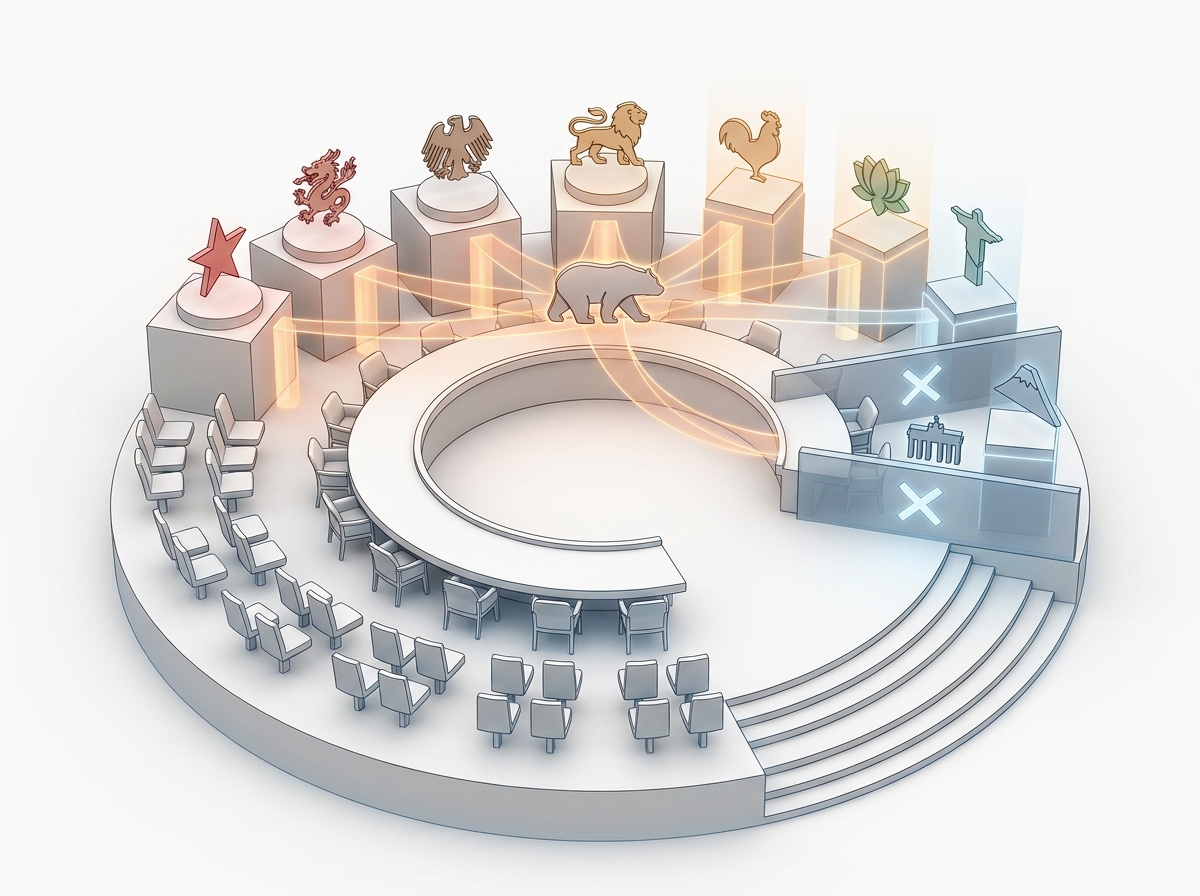
During the 81st session of the United Nations General Assembly in September 2026, the Russian Foreign Minister Sergei Lavrov explicitly endorsed India’s and Brazil’s candidatures for permanent membership of the United Nations Security Council while opposing seats for Germany and Japan. This statement reignited global discourse on UNSC reform, highlighting the competing claims of regional representation, historical power imbalances, and the evolving geopolitical landscape.
Background
- The United Nations Security Council, established in 1945 under the UN Charter, comprises 15 members: five permanent members with veto power (China, France, Russia, the United Kingdom, and the United States) and ten non-permanent members elected for two-year terms.
- The current composition of the UNSC reflects the power dynamics of the post-World War II era, raising concerns about its legitimacy and representativeness in the 21st century.
- The G4 nations—India, Brazil, Germany, and Japan—have been advocating for permanent membership expansion since the early 2000s, arguing that their economic and geopolitical contributions warrant inclusion.
- The L69 Group, a coalition of developing nations including India, Brazil, South Africa, and others, has consistently pushed for UNSC reform to enhance representation from Africa, Asia, and Latin America.
- Africa, the second-most populous continent with 54 member states, remains the only region without a permanent seat on the UNSC, despite repeated calls for reform.
- The UN Charter, particularly Article 23, outlines the composition and voting procedures of the UNSC but does not prescribe a mechanism for expansion or reform.
What is the United Nations Security Council Reform?
- The UN Security Council reform refers to the ongoing debate among member states about expanding the Council’s permanent and non-permanent membership to better reflect contemporary global power structures and regional representation.
- The primary objectives of reform include enhancing the Council’s legitimacy, credibility, and effectiveness by addressing the underrepresentation of Africa, Asia, and Latin America.
- Permanent membership expansion is a key component of reform proposals, with several countries—including India, Brazil, Germany, Japan, and African Union members—advocating for new permanent seats.
- The veto power of permanent members remains a contentious issue, with some proposing its abolition or restriction, while others argue for its preservation as a tool for great-power consensus.
- The G4 nations have proposed a model involving six new permanent seats (two each for Africa, Asia-Pacific, and Latin America-Caribbean) and four new non-permanent seats, alongside a review of the veto power.
- The L69 Group, led by India and Brazil, has been instrumental in mobilising support for reform, particularly for African representation.
- The UN Secretariat, including the Secretary-General, has consistently maintained a neutral stance, asserting that reform decisions rest with member states and not the Secretariat.
- The process of reform is complex, requiring a two-thirds majority in the General Assembly and ratification by permanent members, making consensus difficult to achieve.
Key Features
| Feature | Significance |
|---|---|
| Russian endorsement of India and Brazil for UNSC permanent membership | Validates India’s long-standing campaign for reform and strengthens its diplomatic positioning in multilateral forums. |
| Opposition to additional seats for Germany and Japan | Reflects geopolitical tensions and differing visions of UNSC reform, particularly concerning historical and contemporary power dynamics. |
| Endorsement of greater African representation | Aligns with the African Union’s decades-long demand for permanent representation, highlighting the continent’s underrepresentation in global governance. |
| G4 coalition’s internal divergence | Demonstrates the challenges of collective bargaining in multilateral diplomacy, where national interests may supersede shared objectives. |
| Statements from Mauritius, Portugal, and Marshall Islands | Illustrates the fragmented but evolving consensus on UNSC reform, with varying degrees of support for individual candidacies. |
Why it Matters
Geopolitical Implications
- Reinforces the strategic partnership between India and Russia, particularly in the context of India’s pursuit of a permanent UNSC seat.
- Exposes fault lines within the G4 coalition, which includes India, Brazil, Germany, and Japan, potentially complicating their joint reform agenda.
- Highlights the divergence in global perspectives on UNSC reform, with Russia and African nations prioritising representation for the Global South.
Multilateral Governance
- Underscores the persistent inadequacy of the UNSC’s composition in reflecting contemporary geopolitical realities, as the Council’s structure remains rooted in the post-WWII power structure.
- Emphasises the need for reform to enhance the UN’s legitimacy and credibility, particularly in addressing the demands of underrepresented regions like Africa, Asia, and Latin America.
- Demonstrates the role of smaller states (e.g., Mauritius, Marshall Islands) in shaping the discourse on global governance, despite their limited voting power.
India’s Diplomatic Positioning
- Strengthens India’s claim to permanent membership by securing high-profile support from a major global power like Russia, which has historically been a vocal advocate for reform.
- Positions India as a bridge between the Global North and Global South, given its simultaneous engagement with Western partners (e.g., G4) and the African Union.
- Reinforces India’s image as a constructive actor in global affairs, particularly in advocating for a more inclusive and representative UN system.
Challenges
1. Divergent Visions of UNSC Reform
- The G4 coalition’s internal divergence risks fragmenting the reform movement, as differing national interests may hinder collective bargaining.
- Western powers (e.g., Germany, Japan) may resist reforms that dilute their influence, particularly if such reforms prioritise the Global South.
- Geopolitical rivalries, such as those between Russia and Western nations, could further polarise the debate and stall progress.
UPSC Link: GS II: Important International Institutions
2. Lack of Consensus Among Member States
- The absence of a unified position among UN member states complicates the reform process, as any change requires a two-thirds majority in the General Assembly and ratification by the permanent members.
- Regional blocs (e.g., African Union, G4) may struggle to align their priorities, leading to competing claims and diluted bargaining power.
- Smaller states may lack the diplomatic leverage to influence the reform agenda, despite their vocal support for change.
UPSC Link: GS II: International Organisations
3. Historical Power Imbalances
- The UNSC’s composition remains tied to the post-WWII power structure, which underrepresents emerging powers like India, Brazil, and African nations.
- Permanent members with veto power may resist reforms that threaten their privileged status, creating a structural barrier to change.
- The dominance of traditional powers in decision-making processes undermines the UN’s credibility in addressing contemporary global challenges.
UPSC Link: GS II: Structure and Functioning of UN
4. Balancing Regional Representation
- The demand for greater African representation must be balanced against the claims of other underrepresented regions, such as Asia-Pacific and Latin America.
- Expanding the permanent membership risks diluting the Council’s effectiveness, particularly if new members prioritise regional over global interests.
- The inclusion of new permanent members may require adjustments to the veto power, which could face resistance from existing members.
UPSC Link: GS II: Regional Organisations
Challenges — UPSC Perspective
| Issue | Concern |
|---|---|
| G4 Coalition Fragmentation | Internal disagreements among India, Brazil, Germany, and Japan may weaken their collective bargaining power in UNSC reform negotiations. |
| Veto Power Resistance | Existing permanent members may resist reforms that threaten their veto privileges, creating a structural barrier to change. |
| Regional Bloc Rivalries | Competing claims between the African Union, G4, and other regional groupings may hinder consensus on reform priorities. |
| Legitimacy of the UNSC | The Council’s outdated composition undermines its credibility in addressing modern global challenges, particularly climate change and emerging security threats. |
| Diplomatic Leverage Disparities | Smaller states may lack the influence to shape the reform agenda, despite their vocal support for change. |
| Geopolitical Polarisation | Rivalries between major powers (e.g., Russia vs. Western nations) could further polarise the debate and stall progress. |
Way Forward
- Assess the feasibility of a phased reform approach, starting with non-permanent membership expansion to build consensus before addressing permanent seats.
- Engage in sustained diplomatic outreach to African nations to align their reform priorities with those of India and other G4 members.
- Leverage India’s membership in the G4 and L.69 Group to mediate between divergent visions of UNSC reform and bridge gaps with Western partners.
- Advocate for a transparent and inclusive negotiation process that incorporates input from all UN member states, particularly smaller and underrepresented nations.
- Strengthen India’s diplomatic efforts to secure broader support from the Global South, including through regional organisations like the African Union and ASEAN.
- Monitor and respond to geopolitical developments that may influence the reform debate, such as shifts in US-Russia or US-China relations.
- Prepare contingency plans for scenarios where reform stalls, including alternative multilateral frameworks to address global governance gaps.
UPSC Value Addition
Keywords for Mains Answer-Writing
United Nations Security Council Reform · Permanent Membership of UNSC · G4 Coalition · UNSC Expansion · Representation of Africa in UNSC · UN Charter Chapter V · Veto Power in UNSC · UN General Assembly Resolution on Security Council Reform · India’s candidature for UNSC permanent seat · Brazil’s candidature for UNSC permanent seat · Germany and Japan’s candidature for UNSC permanent seat · L69 Group · UNSC Membership Criteria · UNSC Reform Process · UNSC Working Methods · UNSC Non-Permanent Members · UNSC Composition · UNSC Legitimacy and Credibility · UNSC Regional Representation · UNSC Veto Power Debate
Concept Flow
Post-WWII power structure → UNSC composition remains unchanged → Emerging powers (India, Brazil) demand reform → G4 coalition forms to advocate for permanent seats → Russia endorses India and Brazil but opposes Germany and Japan → African nations demand representation → Fragmented consensus emerges → Reform process stalls due to veto power resistance → Need for inclusive, transparent negotiations to break deadlock
Prelims Practice Questions
Q1. Consider the following statements regarding the United Nations Security Council (UNSC):
1. The UNSC currently consists of 15 members, including 5 permanent members with veto power.
2. The G4 coalition includes India, Brazil, Germany, and Japan, all seeking permanent membership.
3. The UNSC reform process requires a two-thirds majority in the UN General Assembly for any amendment to the UN Charter.
4. The Marshall Islands has explicitly supported Japan’s candidature for a permanent seat in the UNSC.
How many of the above statements are correct?
- Only one
- Only two
- Only three
- All four
Answer: All four — Statements 1, 2, and 4 are correct. Statement 3 is incorrect because amendments to the UN Charter require a two-thirds majority of the UN General Assembly, but the reform process itself is not a simple amendment; it involves broader negotiations and consensus-building.
Q2. Assertion (A): The veto power of the permanent members of the UNSC has been a major obstacle to its reform.
Reason (R): Any expansion of permanent membership requires the approval of all existing permanent members, including those who hold veto power.
In the context of the above two statements, which one of the following is correct?
- Both A and R are true, and R is the correct explanation of A
- Both A and R are true, but R is not the correct explanation of A
- A is true, but R is false
- A is false, but R is true
Answer: Both A and R are true, and R is the correct explanation of A — Both the assertion and reason are true. The veto power of permanent members indeed acts as a significant barrier to UNSC reform, as any expansion requires their consent, making R the correct explanation of A.
Q3. Match the following coalitions/groups with their primary objective related to UNSC reform:
Column I
A. G4 Coalition
B. L69 Group
C. African Union (AU)
D. Uniting for Consensus (UfC)
Column II
1. Advocates for expansion of non-permanent seats without new permanent members
2. Supports permanent membership for India, Brazil, Germany, and Japan
3. Demands permanent representation for Africa in the UNSC
4. Aims to reform UNSC working methods and transparency
Select the correct match:
- A-2, B-4, C-3, D-1
- A-1, B-2, C-3, D-4
- A-3, B-1, C-2, D-4
- A-4, B-3, C-1, D-2
Answer: A-2, B-4, C-3, D-1 — A-2 (G4 supports permanent membership for India, Brazil, Germany, and Japan), B-4 (L69 Group focuses on reforming UNSC working methods and transparency), C-3 (African Union demands permanent representation for Africa), D-1 (Uniting for Consensus advocates for expansion of non-permanent seats without new permanent members).
Mains Practice Question
✍ The United Nations Security Council (UNSC) remains one of the most powerful yet least representative institutions in the global governance architecture. In recent times, the debate over its reform has intensified, with calls for expansion in both permanent and non-permanent categories. Critically examine the challenges and prospects of UNSC reform, with particular reference to the candidature of India and other G4 members. Also, analyse the role of veto power in perpetuating the status quo and its implications for the legitimacy of the UNSC. (15 Marks)
Approach: 1. **Introduction**: Define the UNSC, its composition, and the rationale for reform (outdated structure, lack of representation for Africa, Asia, and Latin America).
2. **Key Proposals for Reform**:
– Expansion of permanent and non-permanent members (G4 proposal, African Union’s demand for 2 permanent seats).
– Criteria for new permanent members (contribution to peacekeeping, economic size, population, etc.).
– Proposals to limit or abolish veto power (France and Mexico’s initiative).
3. **Challenges to Reform**:
– Veto power of permanent members (P5) and their reluctance to dilute influence.
– Lack of consensus among member states on expansion criteria and regional representation.
– Geopolitical rivalries (e.g., India-Pakistan, Japan-China, Germany’s historical legacy).
– Resistance from smaller states fearing marginalisation in an expanded Council.
4. **India’s Candidature**:
– India’s long-standing claim for permanent membership (demographic size, economic growth, peacekeeping contributions).
– Support from Russia, Mauritius, Portugal, and others.
– Counterarguments (Pakistan’s opposition, lack of consensus on criteria).
5. **Veto Power and Legitimacy**:
– Historical use of veto (Cold War, post-Cold War conflicts).
– Arguments for reforming veto power (undemocratic, disproportionate influence).
– Counterarguments (veto as a stabilising force, prevents reckless interventions).
6. **Conclusion**:
– Prospects for reform in the near term (limited, but incremental changes possible).
– Need for a compromise between expansion and veto reform.
– Implications for India’s global standing and multilateral diplomacy.
Source: orissapost.com
Generated by AanyaAi for educational purpose.
Related guides on our sites
- Anthropology VS PSIR
- Best PSIR optional coaching
- Best PSIR optional coaching online
- Best PSIR optional teacher

- यूक्रेन का रोबोट सेना अभियान: युद्ध में मानव हानि कम करने की रणनीति - September 27, 2026
- Ukraine’s ‘Army of Robots’: A Game-Changer for UPSC Mains 2026 Polity & Governance - September 27, 2026
- रूस ने भारत-ब्राजील को दिया UNSC स्थायी सदस्यता का समर्थन, जर्मनी-जापान विरोध में - September 27, 2026

No Comments