


08 Aug Andhra Pradesh Launches Digital Mental Health Platform DIMPLE in Schools
✎ The Digital Mental Health Platform (DIMPLE) in Andhra Pradesh exemplifies the integration of technology and mental health care to address the holistic needs of students, aligning with the National Education Policy 2020 and the…
Subject Relevance — Where This Topic Fits
- GS Paper II — International Relations (Australia-India bilateral cooperation in education and health) | GS Paper IV — Ethics, Integrity and Aptitude (Role of technology in addressing societal challenges, ethical considerations in digital mental health platforms)
- Prelims: Digital India, National Education Policy 2020, Mental Health Care Act 2017, Rebound Group Global Ltd., Samagra Shiksha Abhiyan, Supreme Court directives on student mental health
- Essay: The intersection of technology and mental health: A transformative approach for India’s youth, Education for All: Balancing academic excellence and holistic well-being in India’s school system
Quick Revision: The Digital Mental Health Platform (DIMPLE) in Andhra Pradesh exemplifies the integration of technology and mental health care to address the holistic needs of students, aligning with the National Education Policy 2020 and the Mental Healthcare Act 2017.
Why is this in the news?
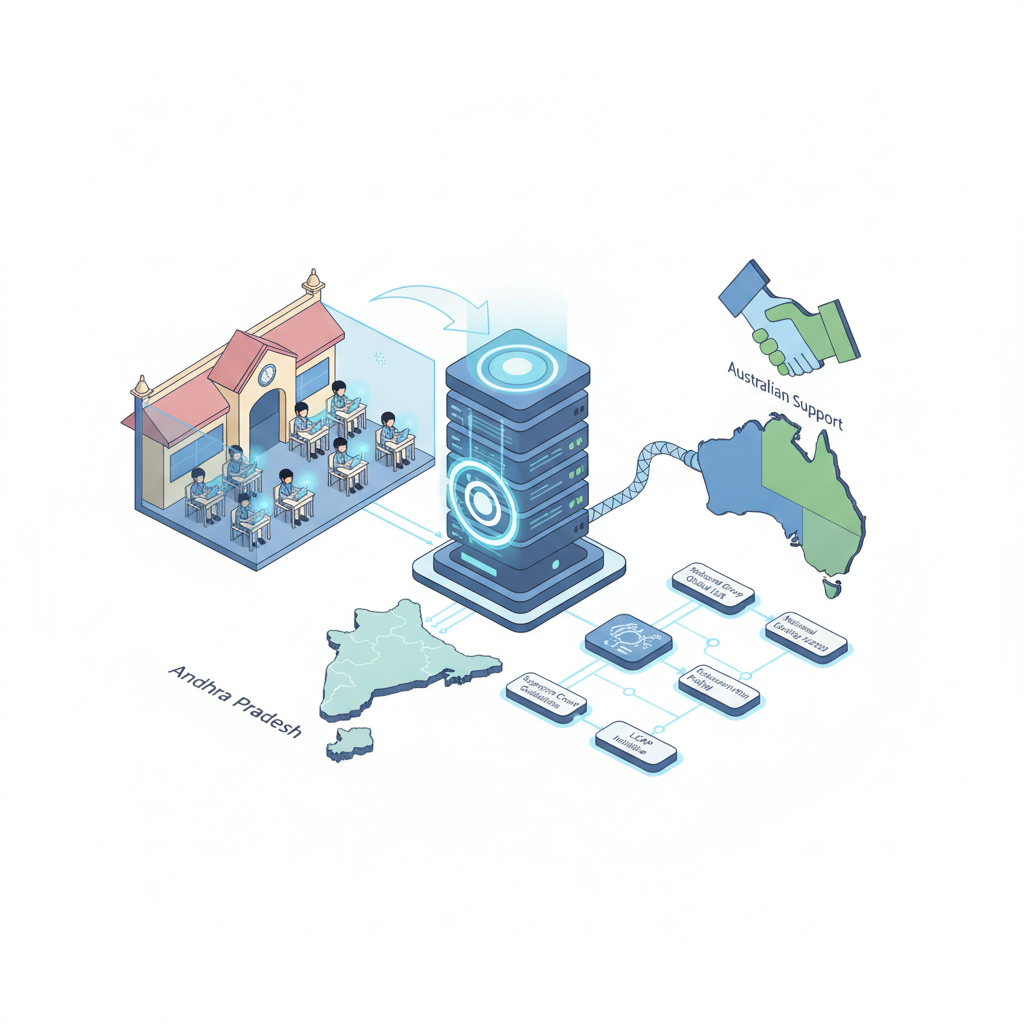
The Government of Andhra Pradesh, in collaboration with Australia’s Rebound Group Global Ltd. and the Australian Government, has launched the Digital Mental Health Platform (DIMPLE) as a pilot initiative in selected schools. This initiative underscores the growing recognition of student mental health as a critical component of educational reform and aligns with the Supreme Court’s emphasis on safeguarding the psychological well-being of students. The programme’s integration with the State’s broader education transformation efforts, such as the Learning Excellence in Andhra Pradesh (LEAP) initiative, highlights its strategic importance in addressing contemporary challenges in India’s education sector.
Background
- The National Education Policy (NEP) 2020 emphasizes the need for holistic education, including the mental and emotional well-being of students, as a foundational pillar for academic and personal development.
- The Mental Healthcare Act, 2017, mandates the provision of mental health services and decriminalizes suicide attempts, underscoring the State’s obligation to ensure accessible mental health care for all, including school-going children.
- The Learning Excellence in Andhra Pradesh (LEAP) initiative focuses on digital integration, teacher recruitment, professional training, and modernisation of learning systems to enhance educational outcomes.
- The Supreme Court of India, in recent directives, has highlighted the urgency of addressing student mental health, particularly in the context of rising stress, anxiety, and academic pressure in schools.
What is the Digital Mental Health Platform (DIMPLE)?
- DIMPLE is a digital mental health platform designed to provide confidential and anonymous mental health support to school students through a user-friendly application.
- The platform enables students to access self-help resources, including guided exercises, coping strategies, and educational content on mental health and well-being.
- Students can connect with trained counsellors via secure, confidential chat or video sessions, ensuring privacy and reducing stigma associated with seeking mental health support.
- The platform incorporates evidence-based interventions, such as Cognitive Behavioral Therapy (CBT) techniques, to address common mental health concerns like anxiety, depression, and stress.
- DIMPLE is developed by Rebound Group Global Ltd., an Australian entity, in collaboration with Andhra Pradesh’s education authorities, ensuring alignment with local needs and cultural sensitivities.
- The pilot initiative is being implemented in select schools across Andhra Pradesh, with plans for evaluation and potential scaling based on outcomes and feedback.
- The platform aligns with the principles of the Mental Healthcare Act, 2017, by promoting early intervention, accessibility, and destigmatization of mental health issues among adolescents.
- Australia’s support for the initiative is part of its broader engagement in global health and education, particularly in the context of the Indo-Pacific region’s developmental priorities.
Key Features
| Feature | Significance |
|---|---|
| Anonymised access to mental health resources | Ensures confidentiality, reducing stigma and encouraging utilisation among students who may fear social repercussions. |
| Confidential counselling via trained professionals | Provides immediate, evidence-based support to students experiencing distress, aligning with WHO guidelines on adolescent mental health. |
| Digital integration with existing education systems | Facilitates seamless adoption within the LEAP initiative, leveraging technology for scalable mental health interventions. |
| Pilot evaluation before statewide rollout | Enables data-driven assessment of efficacy, cost-effectiveness, and scalability, mitigating risks of premature expansion. |
| Cross-border collaboration (India-Australia) | Leverages global best practices in digital mental health, fostering knowledge exchange and institutional capacity-building. |
Why it Matters
Educational Transformation
- Demonstrates Andhra Pradesh’s commitment to holistic education by integrating mental health into the HRD Department’s unified framework.
- Aligns with the Supreme Court’s directives on prioritising student well-being, reinforcing constitutional obligations under Article 21 (Right to Life and Personal Liberty).
- Complements the LEAP initiative by addressing non-academic barriers to learning, thereby enhancing educational outcomes.
Public Health
- Addresses the rising prevalence of adolescent mental health disorders in India, where 1 in 7 adolescents (10-19 years) suffer from mental health conditions (NFHS-5).
- Provides early intervention through digital platforms, reducing long-term healthcare costs and societal burden of untreated mental illness.
- Promotes preventive mental health strategies, countering the adverse effects of academic pressure and digital stressors (e.g., social media-induced anxiety).
Technological and Governance Innovation
- Showcases the potential of digital governance in addressing complex social challenges, setting a precedent for other states.
- Highlights the role of public-private partnerships in scaling innovative solutions within India’s education ecosystem.
- Demonstrates the utility of international collaborations in addressing domestic policy gaps through shared expertise and resources.
Global and Regional Leadership
- Positions Andhra Pradesh as a pioneer in adolescent mental health within India and South Asia, potentially influencing regional policy frameworks.
- Strengthens India-Australia educational and health diplomacy, fostering deeper bilateral ties in critical sectors.
- Contributes to global mental health agendas, such as the WHO’s Comprehensive Mental Health Action Plan 2013-2030.
Challenges
1. Digital Divide and Accessibility
- Risk of excluding students from socio-economically disadvantaged backgrounds due to limited device or internet access.
- Need for robust digital infrastructure in rural and remote areas to ensure equitable utilisation of the platform.
UPSC Link: GS2: Social Justice; GS3: Inclusive growth
2. Data Privacy and Security
- Ensuring compliance with India’s Digital Personal Data Protection Act, 2023, particularly regarding sensitive mental health data.
- Mitigating risks of data breaches or unauthorised access, which could erode trust in the platform.
UPSC Link: GS2: Fundamental Rights; GS3: Cybersecurity
3. Cultural and Linguistic Sensitivity
- Need for localisation of content to address regional dialects, cultural nuances, and stigma around mental health in diverse communities.
- Training counsellors to understand socio-cultural contexts to avoid misdiagnosis or ineffective interventions.
UPSC Link: GS1: Social Issues; GS2: Governance
4. Sustainability and Scalability
- Ensuring long-term funding and political commitment beyond the pilot phase to prevent discontinuation of services.
- Balancing rapid expansion with maintaining service quality, particularly in high-demand scenarios.
UPSC Link: GS2: Governance; GS3: Economic Development
5. Behavioural Resistance
- Overcoming stigma and scepticism among students, parents, and teachers regarding digital mental health interventions.
- Addressing potential resistance from traditional education systems resistant to integrating mental health into academic frameworks.
UPSC Link: GS1: Social Issues; GS4: Ethics
Challenges — UPSC Perspective
| Issue | Concern |
|---|---|
| Digital infrastructure gaps | Limited device/internet access may exclude marginalised students, undermining equity. |
| Data protection vulnerabilities | Risk of breaches or misuse of sensitive mental health data under current regulatory frameworks. |
| Cultural misalignment | Lack of localisation may reduce effectiveness in diverse socio-cultural contexts. |
| Sustainability of funding | Pilot success may not translate to long-term political or financial commitment. |
| Stigma and awareness deficits | Low utilisation due to societal taboos or lack of awareness about mental health services. |
Way Forward
- Conduct a rigorous impact assessment of the DIMPLE pilot, including metrics on utilisation rates, user satisfaction, and mental health outcomes.
- Develop a phased rollout plan with targeted interventions for rural and tribal areas to bridge the digital divide.
- Strengthen data privacy frameworks by implementing encryption, anonymisation protocols, and regular security audits.
- Localise content and counselling approaches to align with regional languages, cultural norms, and prevalent mental health challenges.
- Establish a multi-stakeholder governance body comprising educators, health professionals, and student representatives to oversee implementation.
- Integrate DIMPLE with existing school health programmes (e.g., Ayushman Bharat – School Health and Wellness Programme) for synergy.
- Launch awareness campaigns in collaboration with NGOs and community leaders to destigmatise mental health issues among students and parents.
- Explore public-private partnerships to secure sustainable funding models, including corporate social responsibility (CSR) contributions.
UPSC Value Addition
Keywords for Mains Answer-Writing
Digital Mental Health Platform (DIMPLE) · student mental health · School Education Reforms · Human Resource Development (HRD) Department · Learning Excellence in Andhra Pradesh (LEAP) · Supreme Court guidelines on student well-being · digital integration in education · counselling services for adolescents · Australia-India educational collaboration · anonymised mental health support · National Education Policy 2020 · UN Sustainable Development Goal 4 (Quality Education) · cognitive-behavioural therapy (CBT) in schools · mental health literacy programmes · UNICEF’s adolescent mental health framework
Constitutional & Policy Linkages
- Article 21 (Right to Life and Personal Liberty) – Ensuring mental well-being as part of life and liberty.
- Article 45 (DPSP) – Provision for early childhood care and education, extending to adolescent mental health.
Concept Flow
Rising adolescent mental health burden in India → Supreme Court directives on student well-being → Andhra Pradesh’s unified HRD Department framework → LEAP initiative for digital education reform → DIMPLE pilot as a mental health intervention → Cross-border collaboration with Australia for expertise → Pilot evaluation for scalability → Potential nationwide replication.
Prelims Practice Questions
Q1. Consider the following statements regarding the Digital Mental Health Platform (DIMPLE) launched in Andhra Pradesh:
1. DIMPLE is a pilot initiative developed in collaboration with Australia’s Rebound Group Global Ltd.
2. The platform enables students to access mental health resources anonymously and connect with trained counsellors.
3. DIMPLE is part of the Learning Excellence in Andhra Pradesh (LEAP) initiative.
4. The platform was launched under the aegis of the Ministry of Education, Government of India.
How many of the above statements are correct?
- Only one
- Only two
- Only three
- All four
Answer: Only three — Statements 1, 2, and 3 are correct as per the report. Statement 4 is incorrect because DIMPLE was launched by the Government of Andhra Pradesh in partnership with Australia, not the Ministry of Education, Government of India.
Q2. Assertion (A): The Digital Mental Health Platform (DIMPLE) in Andhra Pradesh prioritises student mental health in alignment with the Supreme Court’s emphasis on the same.
Reason (R): The platform was inaugurated at GDET High School, Patamata, Vijayawada, and is being evaluated for potential scaling up.
Options:
A. Both A and R are true, and R is the correct explanation of A.
B. Both A and R are true, but R is NOT the correct explanation of A.
C. A is true, but R is false.
D. A is false, but R is true.
Answer: ? — Both Assertion (A) and Reason (R) are true. The Supreme Court has emphasised student mental health, and DIMPLE aligns with this emphasis. However, Reason (R) describes the inauguration and evaluation process, which is a consequence of the assertion rather than its explanation.
Q3. Match the following initiatives with their respective objectives:
Column I (Initiative) | Column II (Objective)
—————————————————|—————————————————–
A. Learning Excellence in Andhra Pradesh (LEAP) | 1. Unified governance of school, intermediate, higher education and skill development
B. DIMPLE | 2. Digital integration, teacher recruitment and professional training
C. Human Resource Development (HRD) Department | 3. Digital mental health support for students
D. Samagra Shiksha | 4. Holistic development of school education in India
Options:
A. A-2, B-3, C-1, D-4
B. A-1, B-2, C-3, D-4
C. A-3, B-1, C-4, D-2
D. A-4, B-3, C-2, D-1
Answer: ? — Correct matching: A-2 (LEAP focuses on digital integration, teacher recruitment and professional training), B-3 (DIMPLE is a digital mental health platform), C-1 (HRD Department unifies governance of education and skill development), D-4 (Samagra Shiksha aims for holistic development of school education).
Mains Practice Question
✍ The integration of digital mental health platforms in school education systems represents a transformative approach to addressing adolescent mental health challenges. Critically examine the significance of such initiatives in India, with reference to the Digital Mental Health Platform (DIMPLE) launched in Andhra Pradesh. Also, analyse the potential challenges in scaling such programmes nationwide. (15 Marks)
Approach: MODEL-ANSWER SKELETON:
1. **Introduction (2 marks)**
– Define adolescent mental health and its significance in India (cite WHO/UNICEF data on prevalence, e.g., 1 in 7 adolescents globally faces mental health issues; India’s National Mental Health Survey 2023 data on youth mental health).
– Briefly introduce DIMPLE: its features (anonymity, trained counsellors, digital integration) and its alignment with Supreme Court’s emphasis on student well-being.
2. **Significance of Digital Mental Health Platforms (5 marks)**
– **Accessibility and Anonymity**: Addresses stigma and lack of awareness; aligns with NEP 2020’s emphasis on inclusive and equitable education (SDG 4.5).
– **Early Intervention**: Prevents long-term consequences (e.g., school dropout, substance abuse); cites studies on early intervention efficacy (e.g., WHO’s mhGAP guidelines).
– **Data-Driven Governance**: Enables real-time monitoring of mental health trends; supports evidence-based policy (e.g., India’s Mental Health Care Act 2017, Section 24 on mental health services).
– **Teacher and Parent Engagement**: Facilitates upskilling of educators (e.g., CBT modules) and parental awareness (UNICEF’s adolescent mental health framework).
– **Global Best Practices**: Cites Australia’s digital mental health initiatives (e.g., Headspace) as a model for India.
3. **Challenges in Scaling Nationwide (5 marks)**
– **Digital Divide**: Rural-urban disparities in internet access and smartphone penetration (e.g., TRAI 2025 data on digital divide).
– **Privacy and Data Security**: Risks of data breaches; need for compliance with Digital Personal Data Protection Act 2023.
– **Cultural and Linguistic Barriers**: Lack of multilingual content; need for localisation (e.g., NCERT’s multi-lingual textbooks).
– **Resource Constraints**: Shortage of trained counsellors (India’s counsellor-to-student ratio is 1:50,000 vs. WHO’s 1:500 recommendation).
– **Sustainability and Funding**: Reliance on external partnerships (e.g., Australia) vs. domestic budgetary allocations; cites NEP 2020’s call for increased public investment in education.
4. **Way Forward (3 marks)**
– **Public-Private Partnerships (PPP)**: Leverage corporate social responsibility (CSR) funds (e.g., Section 135 of Companies Act 2013) for scaling.
– **Integration with Existing Schemes**: Align with Ayushman Bharat Digital Mission (ABDM) and Poshan Abhiyaan for holistic adolescent health.
– **Teacher Training Programmes**: Mandate mental health literacy in pre-service and in-service teacher training (e.g., DIETs and SCERTs).
– **Community-Based Models**: Pilot programmes like DIMPLE in tribal and remote districts (e.g., Aspirational Districts Programme).
**Balanced View**: Acknowledge both the transformative potential and the structural constraints, emphasising the need for a phased, context-sensitive rollout.
Source: The Hindu
Generated by AanyaAi for educational purpose.

- आरबीआई ने सरकारी प्रतिभूतियों की ओएमओ बिक्री की घोषणा, जानिए पूरा विवरण - September 23, 2026
- RBI to Sell ₹25,000 Crore Govt Securities via OMO on Sept 28, 2026 - September 23, 2026
- भारत-श्रीलंका नौसैनिक अभ्यास ‘स्लाईनेक्स-26’: विशाखापत्तनम में संपन्न, जानें प्रमुख बिंदु - September 23, 2026

No Comments