


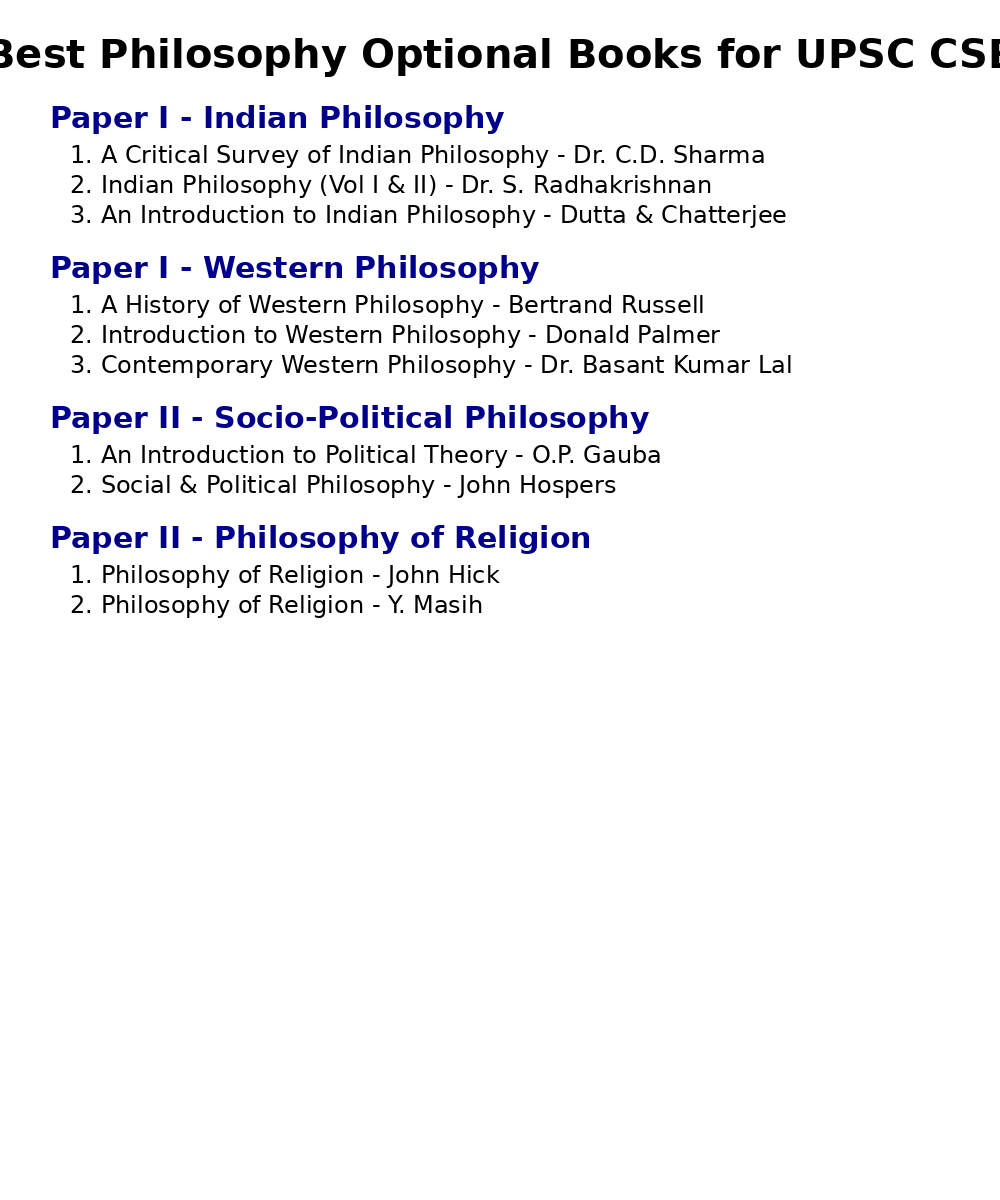
13 Jun Best Philosophy optional books for UPSC
Best Philosophy Optional Books for UPSC CSE – Complete Guide
Why Book Selection Matters for Philosophy Optional
Philosophy is concept-dense and argument-driven. The right books provide original texts, lucid commentaries, and structured
analysis—critical for writing nuanced answers and scoring 280 + in UPSC CSE Mains. Below is a curated list of authoritative
sources, divided into Indian Philosophy, Western Philosophy, Ethics, and answer-writing guides.
Top Indian Philosophy Books
- C. D. Sharma – A Critical Survey of Indian Philosophy
A concise yet comprehensive classic covering all six orthodox Darśanas and heterodox schools. - M. Hiriyanna – Outlines of Indian Philosophy
Lucid language ideal for beginners; excellent for Paper I timelines. - Datta & Chatterjee – An Introduction to Indian Philosophy
Deep dives into Buddhist & Jain metaphysics; clear comparison charts. - Satischandra Chatterjee & D. Datta – Advanced History of Indian Philosophy
Higher-level analysis, good for philosopher quotations. - B. K. Matilal – Logic, Language & Reality (selected)
Adds sophistication for Nyāya & Navya-Nyāya arguments. -
Best ias coaching in hindi medium
Top Western Philosophy Books
- Frank Thilly – A History of Philosophy
UPSC favourite for Greek to Modern thinkers; crisp summaries. - Y. Masih – A Critical History of Western Philosophy
Indian author, exam-oriented language. - Will Durant – The Story of Philosophy
Engaging narrative—great for building answer anecdotes. - Bertrand Russell – History of Western Philosophy (selected)
Quotable insights; use carefully to avoid bias. - Stace – A Critical History of Greek Philosophy
Detailed pre-Socratic to Aristotle coverage.
Essential Ethics & Contemporary Philosophy Texts
- William Lillie – An Introduction to Ethics
- James Rachels – The Elements of Moral Philosophy
- D. D. Raphael – Problems of Political Philosophy
- A. C. Grayling – The Ethics of the New World (for Paper II examples)
Commentaries & Answer-Writing Guides
- P. Rama Mohana Rao – Approach to Philosophy Optional
- Vikas Ranjan – Philosophy for UPSC (Both Papers)
- Patanjali IAS topic sheets – concise bullet notes
- Insight & IQRA PYQ compilations – 30 years of solved papers
How to Use These Books – Study Strategy
1. Build Thinker Timelines
Create a wall chart mapping Indian Rishis & Western philosophers chronologically to avoid anachronistic answers.
2. Quote Primary Texts
Citing Bhagavad Gītā, Nicomachean Ethics, or Kant’s Critique adds authenticity.
3. Comparative Tables
Contrast Advaita vs. Vishishtadvaita or Rationalism vs. Empiricism in two-column tables for quick revision.
4. Weekly PYQ Practice
Allocate Sundays for 3 hr mock using past UPSC questions; review with model answers.
Month-Wise Reading Plan (24 Weeks)
- Weeks 1-4: Datta & Chatterjee + Pre-Socratic Greeks
- Weeks 5-8: Upanishads & Buddhist schools + Socrates, Plato, Aristotle
- Weeks 9-12: Six Darśanas + Rationalists & Empiricists
- Weeks 13-16: Kant, Hegel, Utilitarians + Modern Indian thinkers (Radhakrishnan, Vivekananda)
- Weeks 17-20: Ethics texts + Paper II contemporary philosophy
- Weeks 21-24: PYQs, test series, revision cheat sheets
Conclusion – Craft Your Personal Canon
No single book covers all philosophical nuances. Start with the core texts above, annotate vigorously, and supplement with
lectures or mentorship. With disciplined reading and answer practice, Philosophy can become a high-scoring optional
that also enriches your world-view.

- ‘बौद्धिक नक्सली’ का लेबल असहमति को कुचलने का प्रयास: सीपीआई(एम) - August 16, 2026
- CPI(M) slams ‘Intellectual Naxal’ label as attack on dissent in UPSC prep - August 16, 2026
- तेलंगाना सरकार का ई-ऑटो रूपांतरण योजना: ₹1.50 लाख तक सब्सिडी, जानिए पूरी प्रक्रिया - August 16, 2026

No Comments