


23 Sep Bihar Launches Single Window Portal for 62 Business Services: UPSC & PCS Guide
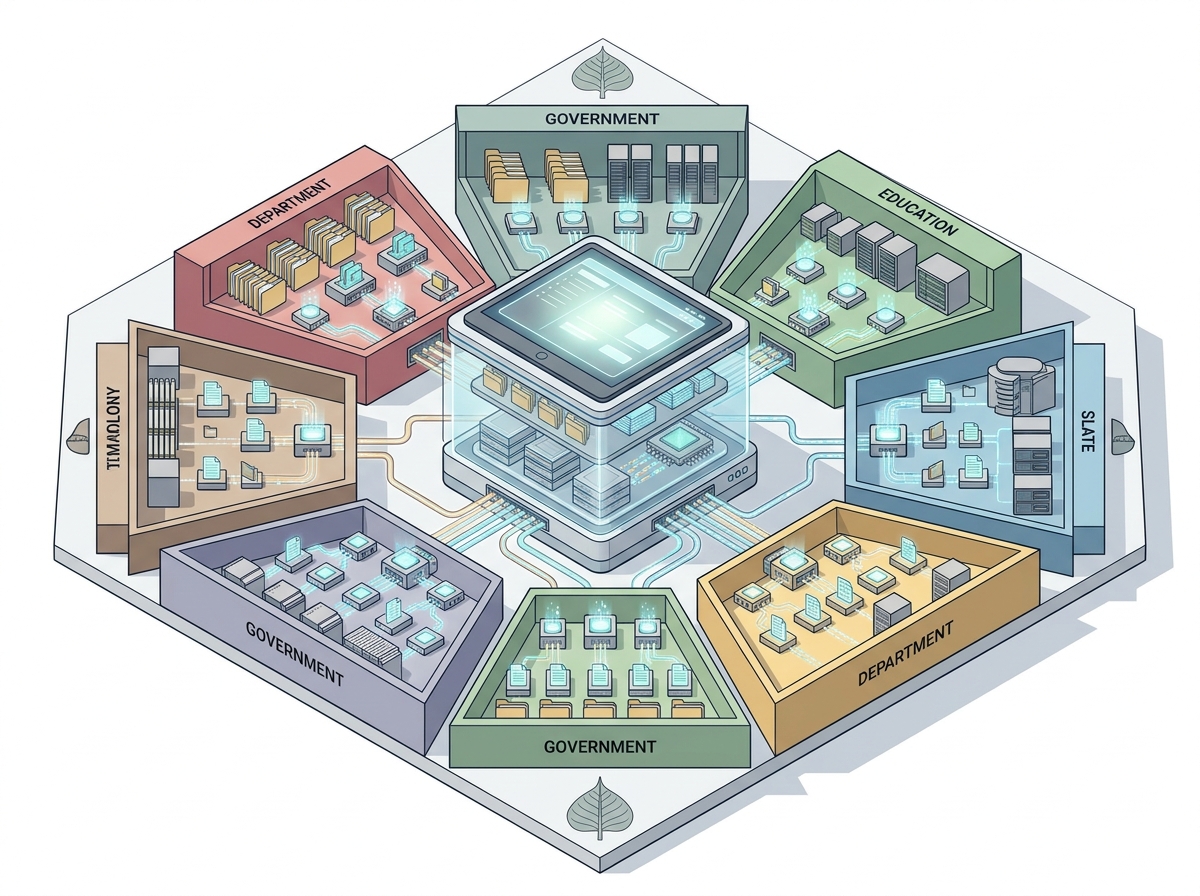
✎ Bihar’s revamped Single Window Clearance Portal consolidates 62 services from nine departments into a single digital platform, institutionalising transparency and reducing regulatory delays to enhance the state’s Ease of Doing…
Subject Relevance — Where This Topic Fits
- GS Paper II — Governance, Transparency and Accountability | GS Paper III — Indian Economy and Issues relating to Planning, Mobilisation of Resources, Growth, Development and Employment
- Prelims: Single Window Clearance, Ease of Doing Business, Digital Governance, Business Licensing, State-level Regulatory Reforms
- Essay: Digital Transformation in Governance: Catalysing Economic Growth and Inclusive Development
Quick Revision: Bihar’s revamped Single Window Clearance Portal consolidates 62 services from nine departments into a single digital platform, institutionalising transparency and reducing regulatory delays to enhance the state’s Ease of Doing Business environment.
Why is this in the news?
On 23 September 2026, the Bihar Department of Industries launched a revamped Single Window Clearance Portal integrating 62 services from nine departments onto a unified digital platform. This initiative is designed to streamline regulatory compliance for investors, reduce procedural delays, and institutionalise transparency in approval processes, thereby enhancing the state’s Ease of Doing Business (EoDB) ranking. The development assumes significance in the context of India’s broader agenda to improve sub-national business environments and align with global best practices in regulatory governance.
Background
- India’s Ease of Doing Business (EoDB) rankings, published annually by the World Bank, assess the regulatory environment for starting and operating businesses across states and union territories.
- The Government of India has been promoting the Single Window Clearance (SWC) system as a key instrument to reduce regulatory bottlenecks and improve the business climate, as outlined in the ‘Ease of Doing Business’ Action Plan (2019–2023) and subsequent reforms.
- Several states, including Maharashtra, Gujarat, Karnataka, and Tamil Nadu, have implemented SWC portals to consolidate multiple approvals under one digital interface, reducing the number of interactions required between businesses and government agencies.
- Bihar has historically lagged in EoDB rankings due to fragmented approval processes, overlapping jurisdictions, and high compliance costs, necessitating structural reforms in regulatory delivery.
- The revamped portal aligns with the ‘Digital India’ vision, leveraging information and communication technology (ICT) to enhance service delivery, reduce corruption, and improve ease of compliance.
- The portal integrates services from departments such as Pollution Control, Excise, Legal Metrology, Fire Services, Energy, Environment & Forests, Roads & Buildings, Revenue & Land Reforms, and Water Resources.
What is the Revamped Single Window Clearance Portal in Bihar?
- A unified digital platform launched by the Bihar Department of Industries to consolidate 62 services from nine state departments, enabling investors to access approvals, licenses, and compliance-related services in a single interface.
- The portal incorporates a ‘Know Your Approval’ (KYA) module, which guides investors through the regulatory requirements applicable to their specific project stage, ensuring clarity on mandatory approvals.
- Investors can register their intent, apply for licenses, upload documents, track application status, and receive real-time updates on approvals, thereby reducing physical visits to government offices.
- The portal includes features such as ‘Strategic Partnership’ and ‘Investor Facilitation’ to facilitate direct engagement with departmental officials, appointment scheduling, and access to contact information for grievance redressal.
- The initiative is designed to enhance transparency by providing a centralised dashboard for monitoring approvals, reducing discretionary powers, and minimising delays caused by inter-departmental coordination gaps.
- The revamped portal is part of Bihar’s broader strategy to improve its Ease of Doing Business ranking by addressing procedural inefficiencies, reducing compliance costs, and fostering a predictable regulatory environment.
- The portal is expected to benefit micro, small, and medium enterprises (MSMEs), startups, and large investors by simplifying the process of obtaining clearances such as pollution control, fire safety, land use, and environmental clearances.
- The integration of services across departments ensures that investors do not need to navigate multiple portals or submit duplicate documentation, thereby reducing administrative burden and improving compliance efficiency.
Key Features
| Feature | Significance |
|---|---|
| Single Window Clearance Portal | Consolidates 62 services across 9 departments into a unified digital platform, eliminating multi-departmental visits for investors. |
| Know Your Approval (KYA) Module | Enables investors to identify required clearances at each project stage, reducing procedural ambiguity and delays. |
| Online Application & Tracking | Permits submission of applications, document uploads, and real-time status monitoring for licenses and approvals. |
| Strategic Partnership & Investor Facilitation | Facilitates pre-application consultations, appointment scheduling, and direct contact with officials for guidance. |
| Integration of Key Departments | Includes services from pollution control, excise, legal metrology, water resources, energy, and land revenue, covering critical regulatory domains. |
Why it Matters
Economic Governance
- Enhances ‘Ease of Doing Business’ (EODB) in Bihar by streamlining approval processes, reducing transaction costs, and improving regulatory predictability for investors.
Digital Public Infrastructure
- Demonstrates the role of integrated digital governance in reducing bureaucratic friction, aligning with national initiatives like the National Single Window System (NSWS).
- Promotes transparency, accountability, and reduced discretionary delays in administrative processes.
Investment Attraction
- Lowers entry barriers for MSMEs and large enterprises by simplifying compliance, thereby fostering industrial growth and employment generation in Bihar.
Administrative Efficiency
- Centralises inter-departmental coordination, minimising inter-agency conflicts and enabling faster decision-making for project clearances.
Challenges
1. Digital Divide & Accessibility
- Rural and micro-enterprise investors may face challenges due to limited digital literacy or internet connectivity, necessitating offline support mechanisms.
- Ensuring inclusivity for stakeholders without smartphones or reliable internet access is critical.
UPSC Link: GS-III: Digital Infrastructure
2. Data Security & Privacy
- Centralised digital platforms handling sensitive business and personal data require robust cybersecurity frameworks to prevent breaches or misuse.
UPSC Link: GS-III: Cyber Security
3. Inter-Departmental Coordination
- Sustained alignment among 9 departments is essential to prevent siloed operations or conflicting approvals, requiring institutionalised review mechanisms.
UPSC Link: GS-II: Inter-State Relations
4. Monitoring & Grievance Redressal
- Effective tracking of approval timelines and responsive grievance redressal systems are necessary to ensure the portal’s credibility and reduce corruption risks.
UPSC Link: GS-II: Transparency & Accountability
5. Awareness & Capacity Building
- Large-scale outreach and training programs are required to familiarise investors, officials, and intermediaries with the portal’s functionalities and benefits.
UPSC Link: GS-II: Skill Development
Challenges — UPSC Perspective
| Issue | Concern |
|---|---|
| Digital Literacy Gaps | Limited adoption among rural or small-scale investors due to low digital awareness or infrastructure constraints. |
| Cybersecurity Risks | Potential data breaches or unauthorised access to sensitive business information in a centralised system. |
| Departmental Silos | Risk of persistent bureaucratic inertia or lack of inter-departmental synergy post-implementation. |
| Grievance Redressal Delays | Inadequate mechanisms to address complaints or delays in approvals could undermine investor trust. |
| Monitoring Efficacy | Absence of real-time performance metrics to evaluate the portal’s impact on approval timelines and investor satisfaction. |
Way Forward
- Establish a dedicated helpline and offline facilitation centres in districts to assist investors unfamiliar with digital platforms.
- Implement periodic audits of the portal’s performance, including approval timelines and user feedback, with public dashboards for transparency.
- Integrate the portal with the National Single Window System (NSWS) to ensure interoperability with central schemes and reduce duplication.
- Conduct capacity-building workshops for departmental officials to standardise processes and reduce discretionary delays.
- Develop a grievance redressal mechanism with defined timelines, escalation paths, and penalties for non-compliance by departments.
- Expand the portal’s services incrementally, incorporating feedback from stakeholders to refine functionalities and user experience.
- Promote the portal through industry associations and MSME networks to maximise awareness among target investors.
UPSC Value Addition
Keywords for Mains Answer-Writing
Ease of Doing Business · Single Window Clearance System · Digital Governance · Investor Facilitation · Business Regulatory Framework · Transparency in Approvals · Digital Public Infrastructure · State-level Economic Reforms · Bihar Industrial Policy · Business Licensing Process
Concept Flow
Policy Imperative → Bihar’s ‘Ease of Doing Business’ initiative to attract investment and stimulate economic growth. → Administrative Reforms → Consolidation of 62 services across 9 departments into a single digital portal to reduce procedural complexity. → Digital Transformation → Integration of regulatory services into a unified platform, enabling online applications and real-time tracking. → Investor Facilitation → Provision of pre-application consultations and strategic partnerships to guide investors through approval stages. → Outcome → Reduced bureaucratic friction, faster project clearances, and improved regulatory predictability for businesses in Bihar. → Feedback Loop → Continuous monitoring, user feedback, and inter-departmental coordination to refine the system and address challenges.
Prelims Practice Questions
Q1. Consider the following statements regarding the Single Window Clearance System in Bihar:
1. It integrates services from 9 departments.
2. It includes the Bihar State Pollution Control Board.
3. It allows investors to track the status of their applications online.
4. It is mandatory for all states in India to implement such a system.
How many of the above statements are correct?
- Only one
- Only two
- Only three
- All
Answer: Only three — Statements 1, 2, and 3 are correct as per the news report. Statement 4 is incorrect because the Single Window Clearance System is not mandatory for all states in India; it is an initiative by the Bihar government.
Q2. Assertion (A): The Single Window Clearance System in Bihar aims to reduce procedural complexities for investors.
Reason (R): It consolidates multiple departmental services into a single digital platform.
Options:
A. Both A and R are true, and R is the correct explanation of A.
B. Both A and R are true, but R is not the correct explanation of A.
C. A is true, but R is false.
D. A is false, but R is true.
- A
- B
- C
- D
Answer: A — Both Assertion (A) and Reason (R) are true. The Single Window Clearance System in Bihar consolidates 62 services from 9 departments into a single digital platform, thereby reducing procedural complexities for investors. Hence, R correctly explains A.
Q3. Match the following services with their respective departments as per the Single Window Clearance System in Bihar:
Column I (Service) Column II (Department)
1. Environmental Clearance A. Bihar State Pollution Control Board
2. Land Revenue Records B. Revenue & Land Reforms Department
3. Fire Safety Approval C. Fire Services Department
4. Industrial License D. Industries Department
Options:
A. 1-A, 2-B, 3-C, 4-D
B. 1-B, 2-A, 3-D, 4-C
C. 1-C, 2-D, 3-A, 4-B
D. 1-D, 2-C, 3-B, 4-A
- A
- B
- C
- D
Answer: A — 1. Environmental Clearance is provided by the Bihar State Pollution Control Board (A). 2. Land Revenue Records are managed by the Revenue & Land Reforms Department (B). 3. Fire Safety Approval is issued by the Fire Services Department (C). 4. Industrial License is issued by the Industries Department (D).
Mains Practice Question
✍ The Single Window Clearance System represents a transformative approach to business regulatory frameworks in India. Critically examine its potential to enhance Ease of Doing Business in Indian states, with particular reference to the Bihar model. Also, discuss the challenges that may impede its effective implementation. (15 Marks)
Approach: MODEL-ANSWER SKELETON:
1. **Introduction (2 Marks)**
– Define the Single Window Clearance System and its objective: to streamline business regulatory processes by consolidating multiple departmental services into a single digital platform.
– Reference the Bihar model: 9 departments, 62 services, and the inclusion of modules like ‘Know Your Approval’ and ‘Investor Facilitation’.
2. **Potential Benefits (5 Marks)**
– **Transparency and Accountability**: Centralised tracking of applications reduces corruption and delays (cite the Right to Information Act, 2005, and the Digital India initiative).
– **Efficiency**: Reduces the need for investors to interact with multiple departments, cutting down on time and cost (reference the World Bank’s Ease of Doing Business Index and India’s ranking improvements).
– **Data-Driven Governance**: Digital records enable real-time monitoring and data analytics for policy formulation (cite the National e-Governance Plan and the JAM trinity).
– **Investor Confidence**: Facilitates strategic partnerships and pre-application consultations (reference the ‘Register Your Intent’ and ‘Strategic Partnership’ modules).
– **Compliance**: Standardises processes and reduces discretionary powers of officials, minimising arbitrariness.
3. **Challenges to Effective Implementation (5 Marks)**
– **Digital Divide**: Limited internet penetration and digital literacy in rural areas may exclude stakeholders (cite the India Internet 2023 report by IAMAI).
– **Inter-Departmental Coordination**: Siloed functioning of departments may hinder seamless integration (reference the Sarkaria Commission’s observations on Centre-State relations).
– **Data Security and Privacy**: Risks of data breaches and misuse of sensitive business information (cite the Personal Data Protection Bill, 2019, and the Puttaswamy judgment).
– **Resistance to Change**: Bureaucratic inertia and lack of training may delay adoption (reference the 73rd and 74th Constitutional Amendments on decentralisation).
– **Legal and Regulatory Hurdles**: Existing laws may not be fully aligned with digital processes (reference the Industrial Disputes Act, 1947, and its provisions on labour compliance).
4. **Way Forward (3 Marks)**
– **Capacity Building**: Training programmes for officials and stakeholders to ensure smooth adoption (reference the National Programme on Technology Enhanced Learning).
– **Public-Private Partnerships**: Collaborate with tech firms to enhance platform robustness (cite the MeitY’s Digital India initiatives).
– **Feedback Mechanisms**: Establish grievance redressal systems to address implementation gaps (reference the Jan Vishwas (Amendment of Provisions) Bill, 2023).
– **Benchmarking**: Adopt best practices from states like Gujarat and Karnataka, which have successfully implemented similar systems.
**Balanced Conclusion**: While the Single Window Clearance System holds significant promise for improving the business environment, its success hinges on addressing structural, technological, and institutional challenges. States must adopt a holistic approach, integrating digital governance with ground-level reforms.
Source: amarujala.com
Bihar PCS (BPSC) — State PCS Practice
Prelims: Which of the following statements about Bihar’s new initiative to simplify business processes is INCORRECT?
- The initiative consolidates 62 services from 9 departments onto a single portal to ease business registration.
- This portal is part of Bihar’s ‘Ease of Doing Business’ reforms aimed at attracting investment.
- The portal includes services like land allotment, trade licenses, and labor registrations under one digital roof.
- The initiative mandates physical verification of all business premises before granting approvals.
Answer: The initiative mandates physical verification of all business premises before granting approvals. — The new portal aims to digitize and streamline services, reducing physical verification requirements to enhance ease of doing business.
Mains: Analyze how Bihar’s new unified business services portal can contribute to economic growth and employment generation in the state. Discuss the challenges in its implementation and suggest measures to ensure its success. [‘Introduction: Brief about the portal and its objectives (consolidation of 62 services from 9 departments).’, ‘Economic Growth: How the portal reduces bureaucratic delays, attracts investment, and boosts MSMEs.’, ‘Employment Generation: Impact on job creation through industrial growth and ease of starting businesses.’, ‘Challenges: Digital divide, awareness gaps, inter-departmental coordination, and infrastructure constraints.’, ‘Suggestions: Strengthening digital literacy, integrating with other state schemes, public-private partnerships, and monitoring mechanisms.’]
Generated by AanyaAi for educational purpose.
Related guides on our sites
- Best PSIR optional coaching for upsc
- Best PSIR optional teacher for upsc
- Best teacher of PSIR optional for upsc
- Best PSIR optional coaching in delhi for UPSC

- Bihar Launches Single Window Portal for 62 Business Services: UPSC & PCS Guide - September 23, 2026
- ग्रीनलैंड समझौता: अमेरिका को मिले अतिरिक्त रक्षा क्षेत्र, जानिए पूरा मामला - September 23, 2026
- US-Greenland Defence Deal: Strategic Implications for UPSC & State PCS - September 23, 2026

No Comments