


25 Sep CARI Guwahati concludes 10-day Ayurveda Day 2026 celebrations with public walkathon
✎ National Ayurveda Day is observed on Dhanteras to promote Ayurveda’s preventive healthcare principles, with CARI, Guwahati, leading research and outreach.
Subject Relevance — Where This Topic Fits
- GS Paper II — Health, Education, Human Resources | GS Paper III — Science and Technology (Healthcare Innovations)
- Prelims: Ayurveda Day, CCRAS, National Ayurveda Day, Preventive Healthcare, Marm Chikitsa, Ritucharya, Dinacharya
- Essay: The Role of Traditional Medicine in Public Health: Lessons from Ayurveda, Integrating Ancient Wisdom with Modern Healthcare Systems
Quick Revision: National Ayurveda Day is observed on Dhanteras to promote Ayurveda’s preventive healthcare principles, with CARI, Guwahati, leading research and outreach.
Why is this in the news?
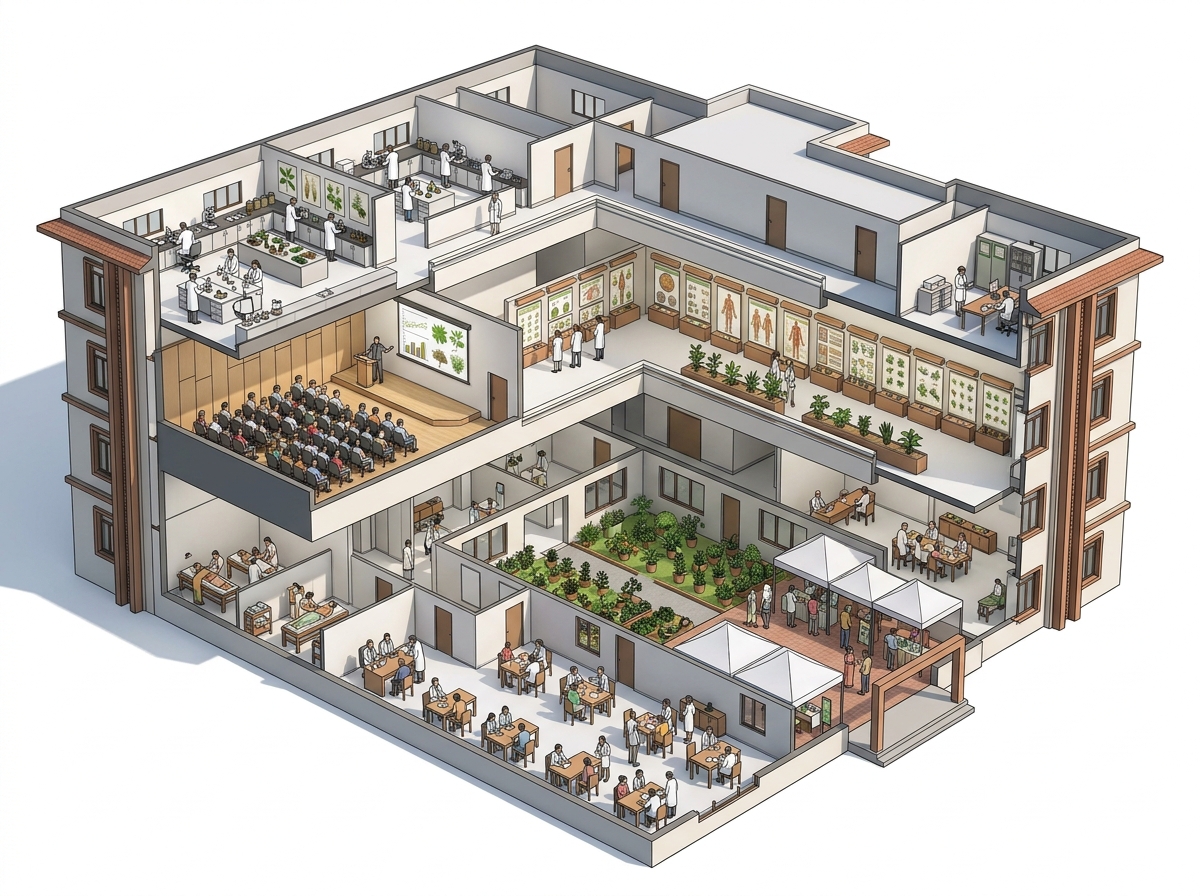
The Central Ayurveda Research Institute (CARI), Guwahati, concluded a 10-day celebration marking the 11th National Ayurveda Day 2026 under the theme ‘Ayurveda for a Healthy Tomorrow’. The event featured health camps, awareness drives, lectures, exhibitions, and community engagement activities, emphasizing preventive healthcare, healthy lifestyle practices, and the integration of Ayurvedic principles into contemporary living. This initiative underscores the government’s commitment to promoting Ayurveda as a holistic healthcare system and highlights the role of research institutions in disseminating evidence-based Ayurvedic knowledge.
Background
- The Ministry of AYUSH, Government of India, designated ‘Dhanvantari Jayanti’ (Dhanteras) as National Ayurveda Day in 2016 to promote awareness about Ayurveda and its preventive and curative potential.
- Ayurveda, a 5,000-year-old system of medicine, is one of the world’s oldest holistic healthcare systems, originating in the Indian subcontinent and documented in texts like Charaka Samhita and Sushruta Samhita.
- The National Ayurveda Day celebrations aim to bridge the gap between traditional Ayurvedic knowledge and modern healthcare needs, fostering preventive healthcare practices.
- Preventive healthcare in Ayurveda is rooted in concepts such as Dinacharya (daily routine), Ritucharya (seasonal routine), and Ahara (diet), which are designed to maintain balance and prevent diseases.
What is the National Ayurveda Day and the role of CARI, Guwahati?
- National Ayurveda Day is observed annually on Dhanvantari Jayanti (Dhanteras), a day dedicated to Dhanvantari, the Hindu god of medicine, to promote Ayurveda and its preventive healthcare principles.
- The 11th National Ayurveda Day (2026) theme, ‘Ayurveda for a Healthy Tomorrow,’ emphasizes the integration of Ayurvedic principles with modern healthcare to address contemporary health challenges.
- Preventive healthcare in Ayurveda is based on three pillars: Dinacharya (daily regimen), Ritucharya (seasonal regimen), and Ahara (diet), which help maintain physiological balance and prevent diseases.
- Marm Chikitsa (vital point therapy) is a specialized branch of Ayurveda that focuses on the manipulation of vital points (Marma) in the body to restore health and alleviate pain, as highlighted in the Guwahati event.
- Ayurveda Day celebrations include health camps, awareness programs, and community engagement activities to disseminate evidence-based Ayurvedic knowledge and promote healthy lifestyle practices.
- The integration of Ayurveda with modern healthcare systems is a key objective of the Ministry of AYUSH, aiming to provide holistic, affordable, and accessible healthcare solutions.
Key Features
| Feature | Significance |
|---|---|
| 10-day thematic celebrations under ‘Ayurveda for a Healthy Tomorrow’ | Demonstrates institutional commitment to preventive healthcare through structured public engagement and multi-stakeholder participation. |
| Free health screening camps across Assam | Expands access to primary healthcare, particularly in underserved regions, while promoting early diagnosis and Ayurvedic interventions. |
| Awareness lectures on Dinacharya, Ritucharya, and dietetics | Reinforces Ayurvedic principles of daily and seasonal routines, aligning traditional wisdom with contemporary lifestyle challenges. |
| Interactive exhibitions on medicinal plants | Bridges traditional knowledge with modern healthcare, fostering appreciation for sustainable, locally available remedies. |
| Specialised seminar on Marma Chikitsa | Highlights the integration of Ayurvedic anatomical knowledge with contemporary healthcare practices, particularly in stress management. |
Why it Matters
Healthcare Delivery
- Expands the reach of Ayurveda beyond clinical settings into community health, aligning with the National Health Policy 2017’s emphasis on preventive and promotive healthcare.
- Demonstrates the role of AYUSH institutions in complementing allopathic healthcare, particularly in rural and peri-urban areas.
- Promotes early intervention through health camps, reducing the burden on tertiary care systems.
Public Awareness & Education
- Enhances public trust in Ayurveda by showcasing its scientific basis and practical applications in daily life.
- Encourages adoption of holistic health practices, including seasonal routines and dietary discipline, as part of lifestyle medicine.
- Fosters intergenerational transmission of traditional knowledge through community engagement.
Institutional Capacity Building
- Strengthens the outreach capabilities of CARI Guwahati, a premier AYUSH research institute, through structured community programmes.
- Demonstrates the role of AYUSH institutions in fulfilling the mandate of the National AYUSH Mission (NAM) for mainstreaming traditional medicine.
- Provides a replicable model for other AYUSH institutions to engage with local communities.
Policy Alignment
- Supports the Ayurveda Day initiative, launched under the Ministry of AYUSH, to promote the integration of Ayurveda into mainstream healthcare discourse.
- Contributes to the Sustainable Development Goals (SDG 3: Good Health and Well-being) by promoting equitable access to healthcare.
Challenges
1. Limited Public Awareness of Ayurvedic Principles
- Despite institutional efforts, many citizens remain unaware of Ayurveda’s preventive and curative potential, leading to underutilisation of available services.
- Misconceptions about Ayurveda’s efficacy and modern scientific validation persist, necessitating sustained educational campaigns.
UPSC Link: AYUSH systems – challenges in mainstreaming
2. Access Disparities in Rural and Tribal Areas
- Geographical and infrastructural barriers limit the reach of health camps and awareness programmes in remote regions of Assam.
- Dependence on traditional healers without formal integration into the healthcare system poses challenges for standardised care.
UPSC Link: Healthcare access – rural India
3. Standardisation and Quality Control of Ayurvedic Products
- Variability in the preparation and administration of Ayurvedic formulations raises concerns about efficacy and safety.
- Regulatory oversight requires strengthening to ensure adherence to Good Manufacturing Practices (GMP) and standardised protocols.
UPSC Link: AYUSH regulation – quality control
4. Integration with Allopathic Healthcare Systems
- Lack of formal protocols for integrating Ayurvedic interventions into allopathic treatment regimens hinders collaborative healthcare delivery.
- Skepticism among allopathic practitioners regarding Ayurveda’s evidence base limits interdisciplinary collaboration.
UPSC Link: AYUSH – allopathy integration
5. Sustainability of Community Engagement Initiatives
- Long-term impact of short-term programmes like health camps and awareness drives remains uncertain without follow-up mechanisms.
- Dependence on institutional resources and manpower limits scalability of such initiatives.
UPSC Link: Public health programmes – sustainability
Challenges — UPSC Perspective
| Issue | Concern |
|---|---|
| Public Perception | Low awareness of Ayurveda’s scientific basis and practical applications. |
| Infrastructure Gaps | Limited reach of health camps in remote and tribal regions. |
| Regulatory Frameworks | Need for stricter quality control of Ayurvedic formulations. |
| Interdisciplinary Collaboration | Challenges in integrating Ayurveda with allopathic healthcare systems. |
| Resource Constraints | Scalability of community engagement programmes limited by institutional capacity. |
Way Forward
- Strengthen institutional partnerships with local governments and NGOs to expand the reach of health camps and awareness programmes.
- Develop standardised educational modules on Dinacharya, Ritucharya, and medicinal plants for integration into school and college curricula.
- Establish a digital platform for disseminating Ayurvedic knowledge, including interactive tools for self-assessment and lifestyle guidance.
- Collaborate with allopathic medical colleges to design joint training programmes on integrative healthcare approaches.
- Enhance regulatory oversight of Ayurvedic drug manufacturing through periodic audits and adherence to GMP standards.
- Incorporate Ayurvedic principles into national health programmes, such as the Ayushman Bharat Health and Wellness Centres.
- Promote research on evidence-based Ayurvedic interventions to bridge the gap between traditional knowledge and modern science.
UPSC Value Addition
Keywords for Mains Answer-Writing
Ayurveda Day 2026 · Central Council for Research in Ayurvedic Sciences (CCRAS) · Preventive healthcare · National Ayurveda Day · Rashtriya Ayurveda Parishad · Dinacharya and Ritucharya · Marmachikitsa · Medicinal plants in Ayurveda · Ayurvedic health camps · Integrative medicine · Community health awareness · Yoga and stress management in Ayurveda · Ayurvedic pharmacology · Swasthya Kal ke Liye Ayurveda · CCRAS research institutes
Concept Flow
Ayurveda Day celebrations → Institutional outreach (CARI Guwahati) → Community engagement (health camps, lectures, exhibitions) → Promotion of preventive healthcare (Dinacharya, Ritucharya) → Adoption of holistic lifestyle practices → Long-term health and well-being outcomes.
Prelims Practice Questions
Q1. Consider the following statements regarding the Central Council for Research in Ayurvedic Sciences (CCRAS):
1. CCRAS is an autonomous body under the Ministry of Ayush, Government of India.
2. It functions as the apex body for the formulation, coordination, development, and promotion of research on scientific lines in Ayurveda.
3. The Central Ayurveda Research Institute (CARI), Guwahati, is one of the institutes under CCRAS.
4. CCRAS is responsible for the declaration and observance of National Ayurveda Day in India.
How many of the above statements are correct?
- Only one
- Only two
- Only three
- All
Answer: All — Statements 1, 2, and 3 are correct. CCRAS is indeed an autonomous body under the Ministry of Ayush and serves as the apex research body for Ayurveda. CARI, Guwahati, is one of its constituent institutes. However, the declaration and observance of National Ayurveda Day is coordinated by the Rashtriya Ayurveda Parishad (RAP), not CCRAS directly, though CCRAS participates in its activities.
Q2. Assertion (A): The theme of National Ayurveda Day 2026, ‘Swasthya Kal ke Liye Ayurveda’, emphasizes preventive healthcare and healthy lifestyle practices.
Reason (R): Ayurveda, as a traditional system of medicine, focuses exclusively on curative treatments rather than preventive measures.
- Both A and R are true, and R is the correct explanation of A
- Both A and R are true, but R is NOT the correct explanation of A
- A is true, but R is false
- A is false, but R is true
Answer: A is true, but R is false — Assertion (A) is true as the theme explicitly promotes preventive healthcare and lifestyle practices. However, Reason (R) is false because Ayurveda places significant emphasis on preventive healthcare through practices like Dinacharya (daily routine) and Ritucharya (seasonal routine).
Q3. Match the following pairs related to Ayurveda and its contemporary relevance:
Column I (Concept/Term) Column II (Description/Relevance)
A. Dinacharya 1. Seasonal regimen prescribed in Ayurveda
B. Ritucharya 2. Daily routine practices for health maintenance
C. Marmachikitsa 3. Ayurvedic therapy involving vital points
D. Rasayana 4. Rejuvenation therapy in Ayurveda
Select the correct match:
- A-2, B-1, C-3, D-4; A-1, B-2, C-3, D-4; A-2, B-1, C-4, D-3; A-3, B-2, C-1, D-4
- answer_explain_pairing_only_for_internal_use_do_not_output_in_json_but_ensure_correctness_in_answer_itself
- answer_explanation_in_json_is_not_needed
Answer: A-2, B-1, C-3, D-4; A-1, B-2, C-3, D-4; A-2, B-1, C-4, D-3; A-3, B-2, C-1, D-4 — The correct matches are: Dinacharya (A) corresponds to daily routine practices (2), Ritucharya (B) to seasonal regimen (1), Marmachikitsa (C) to therapy involving vital points (3), and Rasayana (D) to rejuvenation therapy (4).
Mains Practice Question
✍ The observance of National Ayurveda Day in India represents a significant policy thrust towards integrating traditional knowledge systems with contemporary public health paradigms. Critically examine the role of Ayurveda in promoting preventive healthcare and healthy lifestyle practices in the context of India’s healthcare system. Also, discuss the institutional mechanisms through which the Government of India promotes research and awareness in Ayurveda. (15 Marks)
Approach: **Introduction (2 Marks):**
– Briefly define Ayurveda as a holistic system of medicine and its recognition in India’s healthcare framework.
– Mention the observance of National Ayurveda Day and its thematic focus (e.g., ‘Swasthya Kal ke Liye Ayurveda’).
**Role of Ayurveda in Preventive Healthcare (6 Marks):**
– **Preventive Principles:** Discuss Ayurvedic concepts like Dinacharya (daily routine), Ritucharya (seasonal routine), and Ahara (diet) as preventive measures.
– **Holistic Approach:** Explain Ayurveda’s emphasis on balancing bodily humors (Doshas) and lifestyle modifications to prevent diseases.
– **Evidence-Based Practices:** Highlight the integration of Ayurvedic practices such as Yoga and meditation for stress management and mental health.
– **Community Engagement:** Refer to initiatives like free health camps, awareness programs, and public walks (e.g., the 10-day event by CARI, Guwahati).
**Institutional Mechanisms for Promotion of Ayurveda (5 Marks):**
– **CCRAS (Central Council for Research in Ayurvedic Sciences):** Discuss its role as the apex body for research coordination and development in Ayurveda.
– **Autonomous Institutes:** Mention institutions like CARI (Central Ayurveda Research Institute), Guwahati, and their functions in research, education, and community outreach.
– **Ministry of Ayush:** Explain its role in policy formulation, funding, and inter-ministerial coordination for Ayurveda promotion.
– **Collaborations:** Highlight partnerships with other institutions (e.g., CISF for stress management workshops) and public-private initiatives.
**Critical Analysis (2 Marks):**
– **Challenges:** Discuss limitations such as lack of standardized clinical evidence, integration with modern medicine, and scalability of community programs.
– **Way Forward:** Suggest measures like strengthening research infrastructure, promoting evidence-based Ayurveda, and enhancing public awareness campaigns.
Source: PIB (Press Information Bureau)
Assam PCS (APSC) — State PCS Practice
Prelims: Which of the following institutions in Assam is associated with the 11th Ayurveda Day celebrations organized by the Central Ayurveda Research Institute (CARI), Guwahati?
- A. Regional Research Institute of Ayurveda, Guwahati
- B. North Eastern Institute of Ayurveda and Folk Medicine Research, Pasighat
- C. Central Ayurveda Research Institute, Guwahati
- D. All India Institute of Ayurveda, New Delhi
Answer: C. Central Ayurveda Research Institute, Guwahati — The Central Ayurveda Research Institute (CARI), Guwahati, is the institution that organized the 11th Ayurveda Day celebrations in Assam.
Mains: Discuss the significance of the Central Ayurveda Research Institute (CARI), Guwahati, in promoting Ayurveda and its role in the 11th Ayurveda Day celebrations. How can such initiatives contribute to the socio-economic development of Assam?
Generated by AanyaAi for educational purpose.

- PM Modi Praises Youth-Led Nasha Mukt Yuva Abhiyan Momentum - September 27, 2026
- राजनाथ सिंह का बड़ा बयान: भारत किसी की ज़मीन कब्ज़ा नहीं करेगा, लेकिन सुरक्षा पर होगा कठोर - September 27, 2026
- Exercise Tarang Shakti 2026: India’s Mega Multi-Nation Air Power Showcase - September 27, 2026

No Comments