


08 Aug Centre Reaffirms Stand on Mekedatu Dam Project in Lok Sabha
✎ The Mekedatu dam project exemplifies the tension between developmental imperatives and inter-State water equity, with the Union government’s position hinging on the Supreme Court’s 2018 judgment, which does not mandate…
Subject Relevance — Where This Topic Fits
- GS Paper II — Polity and Governance (Inter-State Water Disputes) | GS Paper II — Polity and Governance (Federalism and Centre-State Relations) | GS Paper III — Environment and Disaster Management (Water Resource Management) | GS Paper III — Economic and Sustainable Development (Infrastructure and Water Security)
- Prelims: Cauvery Water Disputes Tribunal (CWDT) Award, Inter-State Water Disputes Act, 1956, Riparian Principle, Supreme Court’s 2018 Judgment on Cauvery, Mekedatu Project, Upper and Lower Riparian States, Drinking Water Security, River Basin Management
- Essay: Federalism in India: Balancing Development and Inter-State Equity, Water Governance and Sustainable Development: Lessons from the Cauvery Dispute
Quick Revision: The Mekedatu dam project exemplifies the tension between developmental imperatives and inter-State water equity, with the Union government’s position hinging on the Supreme Court’s 2018 judgment, which does not mandate Karnataka’s consent for riverine projects but requires adherence to the Cauvery Water Disputes Tribunal Award’s regulated flow regime.
Why is this in the news?
The Union government’s reiteration of its stance on the Mekedatu dam project in the Lok Sabha has reignited the long-standing inter-State dispute between Karnataka and Tamil Nadu over the Cauvery river’s water allocation. The Centre’s assertion that the Supreme Court’s 2018 judgment does not mandate Karnataka’s consent for inter-State river projects has drawn sharp criticism from Tamil Nadu, which argues that the project violates the Cauvery Water Disputes Tribunal (CWDT) Award and undermines the regulated flow regime. This development underscores the persistent challenges in India’s water governance framework, particularly in resolving transboundary river disputes while balancing developmental imperatives.
Background
- The Cauvery river, originating in Karnataka and flowing through Tamil Nadu, Kerala, and Puducherry, has been a source of inter-State disputes for over a century, culminating in the establishment of the Cauvery Water Disputes Tribunal (CWDT) in 1990.
- The CWDT, after prolonged deliberations, delivered its final award in 2007, allocating specific water shares to Karnataka, Tamil Nadu, Kerala, and Puducherry, and establishing a regulated flow regime to ensure equitable distribution.
- The Supreme Court, in its 2018 judgment on the Cauvery dispute, upheld the CWDT Award while modifying certain aspects, such as the allocation of water to Tamil Nadu and the inclusion of groundwater in the water balance calculations.
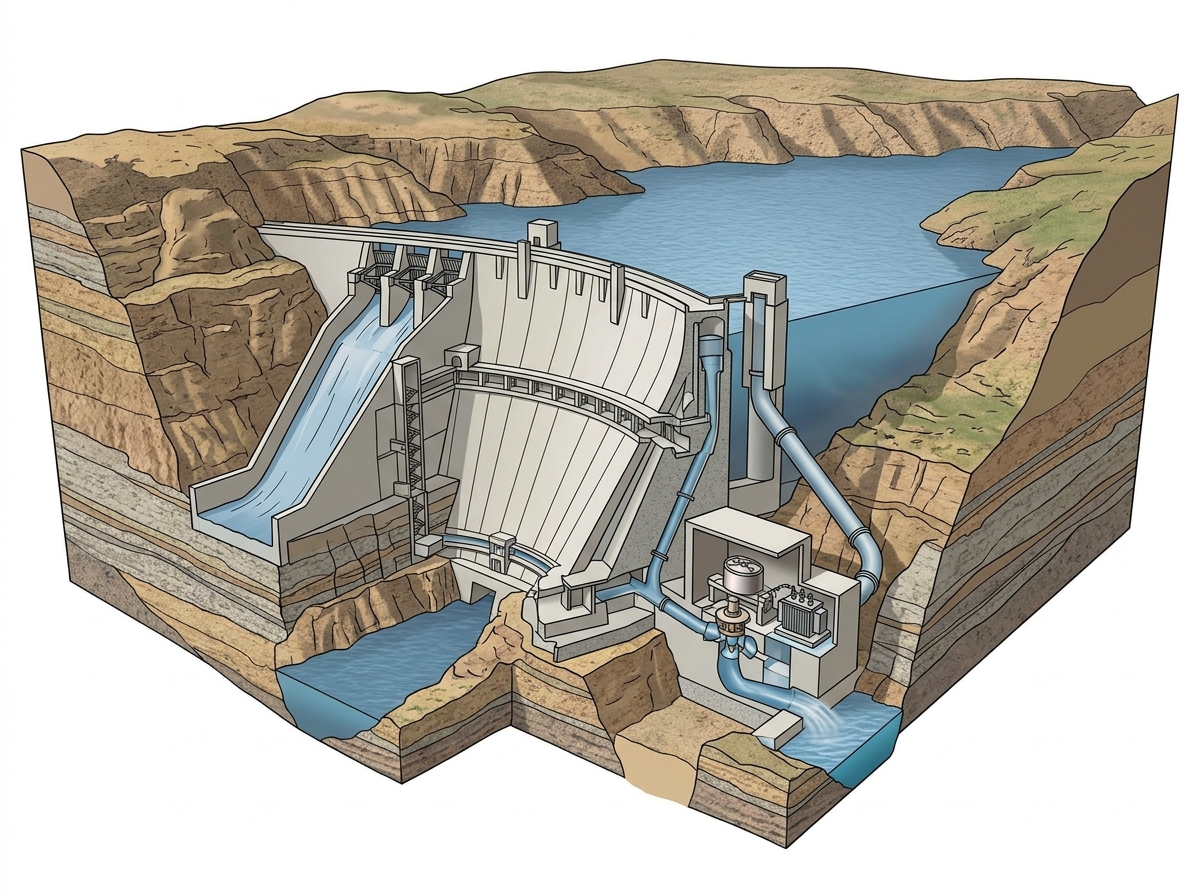
- Karnataka has proposed the Mekedatu dam project, located near the Karnataka-Tamil Nadu border, primarily to meet Bengaluru’s drinking water needs and generate hydroelectric power.
- Tamil Nadu has consistently opposed the project, citing concerns over reduced water availability for its delta regions, agricultural productivity, and adherence to the CWDT Award’s provisions on regulated flow.
What is the Mekedatu Dam Project?
- The Mekedatu dam is a proposed multi-purpose project across the Cauvery river, located in Ramanagara district of Karnataka, approximately 40 km from Bengaluru.
- The project aims to create a reservoir with a storage capacity of 67.16 TMC (thousand million cubic feet) to meet Bengaluru’s drinking water needs, which are projected to rise significantly due to urbanisation and population growth.
- Karnataka argues that the project is essential for ensuring water security for Bengaluru, India’s third-largest city, and aligns with the principles of integrated river basin management.
- Critics, including Tamil Nadu, contend that the project violates the CWDT Award by altering the river’s flow regime and reducing water availability for the Cauvery delta, which is critical for Tamil Nadu’s agriculture.
- The project has also sparked debates on the ecological impacts, including potential changes to riverine ecosystems and sediment transport downstream.
- The Union government’s stance is based on the interpretation that the Supreme Court’s 2018 judgment does not impose a requirement for inter-State consent for riverine projects, provided they do not contravene the CWDT Award’s provisions.
Key Features
| Feature | Significance |
|---|---|
| Mekedatu Dam Project | Proposed multi-purpose dam by Karnataka on the Cauvery River to meet Bengaluru’s drinking water needs and potentially generate hydroelectric power. |
| Supreme Court’s 2018 Judgment on Cauvery Dispute | Final adjudication of the Cauvery Water Disputes Tribunal’s award, establishing a regulated flow regime and prohibiting upper riparian states from actions affecting scheduled deliveries to lower riparian states. |
| Union Government’s Stand | Asserts that Karnataka is not required to obtain consent from other riparian states (Tamil Nadu, Kerala, Puducherry) for constructing structures across the Cauvery, citing the Supreme Court’s interpretation of the Tribunal’s award. |
| Tamil Nadu’s Objections | Contends that the Mekedatu project must align with the Cauvery Water Disputes Tribunal’s award and that any deviation could disrupt the regulated flow regime and scheduled water deliveries. |
| Cauvery Water Disputes Tribunal (CWDT) Award | Final award of 2007, which apportioned Cauvery waters among riparian states and established mechanisms for water sharing, including regulated releases and dispute resolution. |
Why it Matters
Inter-State Water Disputes
- The Mekedatu project exemplifies the recurring tensions in federal water governance, where upper and lower riparian states often contest the legality and impact of proposed structures under the doctrine of equitable apportionment.
- The Supreme Court’s 2018 judgment on the Cauvery dispute reinforces the primacy of the CWDT award, setting a legal precedent for resolving similar inter-state water conflicts.
- The Union government’s stance underscores the constitutional ambiguity in balancing state autonomy (Entry 17, State List) with the Union’s duty to ensure cooperative federalism under Article 262.
Environmental and Socio-Economic Impact
- The project’s potential to alter the Cauvery’s flow regime raises concerns about downstream water availability for irrigation, drinking water supply, and ecosystem sustainability in Tamil Nadu’s delta regions.
- Bengaluru’s burgeoning water demand necessitates long-term solutions, but the project’s environmental and social trade-offs must be rigorously assessed under the Environmental Impact Assessment (EIA) 2006.
Legal and Constitutional Dimensions
- The dispute tests the interpretation of the Cauvery Water Disputes Tribunal’s award, particularly Clause 4.1 of the final order, which prohibits upper riparian states from taking actions affecting scheduled deliveries.
- The Union government’s reliance on the Supreme Court’s judgment highlights the judiciary’s role in adjudicating inter-state water disputes, as envisaged under Article 262 of the Constitution.
Challenges
1. Legal and Jurisdictional Challenges
- Ambiguity in the Union government’s stance: While it asserts Karnataka’s right to construct the dam, it acknowledges representations from Tamil Nadu, creating a paradox in policy execution.
- Potential for prolonged litigation: Tamil Nadu may approach the Supreme Court or seek presidential reference under Article 143 to challenge the Union’s interpretation of the CWDT award.
- Risk of erosion of trust: Repeated assertions by the Union government without addressing Tamil Nadu’s concerns may exacerbate inter-state tensions and undermine cooperative federalism.
UPSC Link: GS-II: Federalism; Inter-State Relations
2. Environmental and Ecological Concerns
- Disruption of the Cauvery delta’s ecosystem: Reduced water flow may affect salinity levels, mangrove health, and biodiversity in the delta, a critical agricultural and ecological zone.
- Impact on irrigation: The CWDT award allocates specific quantum of water to Tamil Nadu for irrigation; any reduction could jeopardize the state’s agricultural productivity.
- Climate change vulnerabilities: Changing precipitation patterns and glacial melt in the Cauvery basin may exacerbate water scarcity, necessitating adaptive water management strategies.
UPSC Link: GS-III: Environmental Conservation; Climate Change
3. Political and Diplomatic Challenges
- Strain in Centre-State relations: Tamil Nadu’s objections, including the Chief Minister’s letter to the Prime Minister, signal potential political fallout and erosion of trust between the Union and state governments.
- Regional political dynamics: The dispute may be exploited by regional parties to mobilise electoral support, complicating consensus-building and policy implementation.
- International implications: While the Cauvery is an intra-national river, similar disputes in transboundary rivers (e.g., Indus, Ganges) highlight the need for robust diplomatic frameworks to manage water-sharing agreements.
UPSC Link: GS-II: Centre-State Relations; Political Processes
4. Technical and Engineering Challenges
- Feasibility of the project: The dam’s design, storage capacity, and water diversion mechanisms must align with the CWDT award’s stipulations to avoid downstream water shortages.
- Cost and funding: The project’s estimated cost (~₹9,000 crore) and funding sources (Karnataka’s budget, central assistance) require scrutiny to ensure fiscal prudence and sustainability.
- Multi-purpose utility: Balancing drinking water supply, hydroelectric generation, and flood control while mitigating environmental impacts demands integrated water resource management.
UPSC Link: GS-III: Infrastructure Development; Water Resource Management
Challenges — UPSC Perspective
| Issue | Concern |
|---|---|
| Legal Ambiguity | Interpretation of the CWDT award and Supreme Court’s judgment regarding Karnataka’s right to construct the dam without consent from other riparian states. |
| Environmental Degradation | Potential disruption of the Cauvery delta’s ecosystem, including salinity intrusion, biodiversity loss, and reduced irrigation water availability. |
| Political Polarisation | Risk of exacerbating Centre-State tensions and regional political dynamics, particularly in the context of electoral politics in Tamil Nadu and Karnataka. |
| Technical Feasibility | Challenges in designing the dam to meet Bengaluru’s water needs while adhering to the CWDT award’s regulated flow regime and avoiding downstream water shortages. |
| Financial Sustainability | Ensuring adequate funding for the project (~₹9,000 crore) without compromising other developmental priorities or increasing fiscal burden on Karnataka. |
| Climate Variability | Uncertainty in water availability due to changing precipitation patterns, glacial melt, and long-term climate change impacts on the Cauvery basin. |
Way Forward
- Constitute a high-powered inter-state committee under the aegis of the Ministry of Jal Shakti, comprising representatives from Karnataka, Tamil Nadu, Kerala, Puducherry, and independent experts, to assess the project’s compliance with the CWDT award and its environmental impact.
- Undertake a comprehensive Environmental Impact Assessment (EIA) as per the EIA Notification 2006, including public consultations in affected regions, to address ecological and socio-economic concerns.
- Explore alternative water resource solutions for Bengaluru, such as rainwater harvesting, wastewater recycling, and inter-basin water transfers, to reduce dependency on the Mekedatu project.
- Strengthen data-sharing mechanisms between riparian states to enable real-time monitoring of water flows, storage levels, and environmental parameters in the Cauvery basin.
- Formulate a basin-wide integrated water resource management plan, incorporating climate change adaptation strategies and equitable water allocation mechanisms.
- Encourage Karnataka to engage in bilateral negotiations with Tamil Nadu to build consensus on the project’s design, operational protocols, and mitigation measures.
- Leverage the Cauvery Management Board (CMB) to oversee the implementation of the CWDT award and resolve disputes arising from the Mekedatu project.
- Promote research and innovation in water-efficient technologies, such as drip irrigation and precision agriculture, to enhance water productivity in the Cauvery basin.
UPSC Value Addition
Keywords for Mains Answer-Writing
Mekedatu dam project · Cauvery Water Disputes Tribunal (CWDT) · Inter-State Water Disputes · Riparian rights · Supreme Court judgment on Cauvery (2018) · Karnataka-Tamil Nadu water disputes · River water sharing mechanisms · Constitutional provisions on water disputes (Art. 262) · Federalism in water governance · Environmental and ecological concerns in dam construction
Constitutional & Policy Linkages
- Article 262: Adjudication of inter-state water disputes and prohibition of jurisdiction of courts in such matters.
- Entry 17, State List: Water supply, irrigation, and canals as state subjects, highlighting the tension between state autonomy and central oversight.
Concept Flow
Cauvery Water Disputes Tribunal (CWDT) Award (2007) → Regulated flow regime and water allocation among riparian states → Supreme Court’s 2018 judgment upholding the award → Karnataka’s proposal for Mekedatu dam to meet Bengaluru’s water needs → Tamil Nadu’s objections citing potential disruption of regulated flow and scheduled deliveries → Union government’s assertion of Karnataka’s right to construct the dam without consent → Inter-state tensions and legal ambiguity → Need for integrated water resource management and consensus-building.
Prelims Practice Questions
Q1. Consider the following statements regarding the Mekedatu dam project and the Cauvery Water Disputes Tribunal (CWDT) Award:
1. The CWDT Award prohibits any upper riparian State from taking action that affects scheduled deliveries to lower riparian States.
2. The Supreme Court, in its 2018 judgment on the Cauvery dispute, explicitly mandated that Karnataka must obtain the consent of Tamil Nadu, Kerala, and Puducherry to construct any structure across the Cauvery.
3. The Mekedatu dam project is proposed by Karnataka to meet Bengaluru’s drinking water needs.
How many of the above statements are correct?
- Only one
- Only two
- All three
- None
Answer: Only two — Statement 1 is correct as per the CWDT Award cited in the news. Statement 2 is incorrect because the Supreme Court judgment did not mandate consent from other riparian States for construction. Statement 3 is correct as the project is proposed by Karnataka for Bengaluru’s water needs.
Q2. Assertion (A): The Union Government’s stand on the Mekedatu dam project is legally tenable as per the Supreme Court’s 2018 judgment on the Cauvery dispute.
Reason (R): The judgment explicitly states that the Cauvery Water Disputes Tribunal Award does not require Karnataka to obtain consent from other riparian States for constructing structures across the river.
Options:
A. Both A and R are true, and R is the correct explanation of A.
B. Both A and R are true, but R is not the correct explanation of A.
C. A is true, but R is false.
D. A is false, but R is true.
Answer: ? — Both the Assertion (A) and Reason (R) are true, and the Reason (R) correctly explains the Assertion (A) as it directly cites the Supreme Court’s judgment.
Q3. Which of the following pairs is correctly matched regarding the Mekedatu dam project and inter-State water disputes in India?
Column I (Issue) | Column II (Relevant Provision/Authority)
1. Consent requirement for dam construction | Cauvery Water Disputes Tribunal Award
2. Resolution of inter-State water disputes | Article 262 of the Constitution
3. Environmental clearance for dams | National Green Tribunal
4. Allocation of river water | Interstate River Water Disputes Act, 1956
Options:
A. 1 and 2 only
B. 2 and 3 only
C. 1, 2, and 4 only
D. All of the above
- A
- B
- C
- D
Answer: D — All pairs are correctly matched: (1) The CWDT Award governs consent requirements, (2) Article 262 provides for the resolution of inter-State water disputes, (3) The National Green Tribunal handles environmental clearances, and (4) The Interstate River Water Disputes Act governs water allocation.
Mains Practice Question
✍ The Union Government’s reiteration of its stand on the Mekedatu dam project, citing the Supreme Court’s 2018 judgment on the Cauvery dispute, underscores the complex interplay between federalism, riparian rights, and judicial interpretation in inter-State water disputes. Critically examine the legal and constitutional dimensions of this issue, with particular reference to the role of the Cauvery Water Disputes Tribunal (CWDT) Award, the Supreme Court’s judgment, and the federal structure of water governance in India. (15 Marks)
Approach: Introduction: Briefly contextualise the Mekedatu dam project and its significance for Karnataka and Tamil Nadu. Legal Framework: – Highlight the constitutional provisions governing inter-State water disputes (Art. 262) and the role of the Inter-State River Water Disputes Act, 1956. – Explain the CWDT Award (2007) and its key provisions, including the allocation of Cauvery waters and the prohibition on upper riparian States affecting scheduled deliveries to lower riparian States. Judicial Interpretation: – Analyse the Supreme Court’s 2018 judgment on the Cauvery dispute, focusing on its interpretation of the CWDT Award and the absence of a consent requirement for Karnataka to construct structures. – Discuss the judicial reasoning behind the judgment, including the emphasis on the finality of the CWDT Award and the limited scope for judicial interference. Federalism and Riparian Rights: – Examine the tension between federalism and riparian rights, particularly the rights of lower riparian States like Tamil Nadu. – Discuss the implications of the Union Government’s stand for cooperative federalism and the potential for future disputes. Critical Evaluation: – Assess the validity of the Union Government’s stand in the context of the CWDT Award and the Supreme Court’s judgment. – Evaluate the arguments of Tamil Nadu, including the contention that the project could affect the regulated flow regime and drinking water availability in the Cauvery delta. Conclusion: Provide a balanced view on the legal and constitutional dimensions, highlighting the need for a collaborative approach to inter-State water disputes.
Source: The Hindu
Generated by AanyaAi for educational purpose.

- आरबीआई ने सरकारी प्रतिभूतियों की ओएमओ बिक्री की घोषणा, जानिए पूरा विवरण - September 23, 2026
- RBI to Sell ₹25,000 Crore Govt Securities via OMO on Sept 28, 2026 - September 23, 2026
- भारत-श्रीलंका नौसैनिक अभ्यास ‘स्लाईनेक्स-26’: विशाखापत्तनम में संपन्न, जानें प्रमुख बिंदु - September 23, 2026

No Comments