


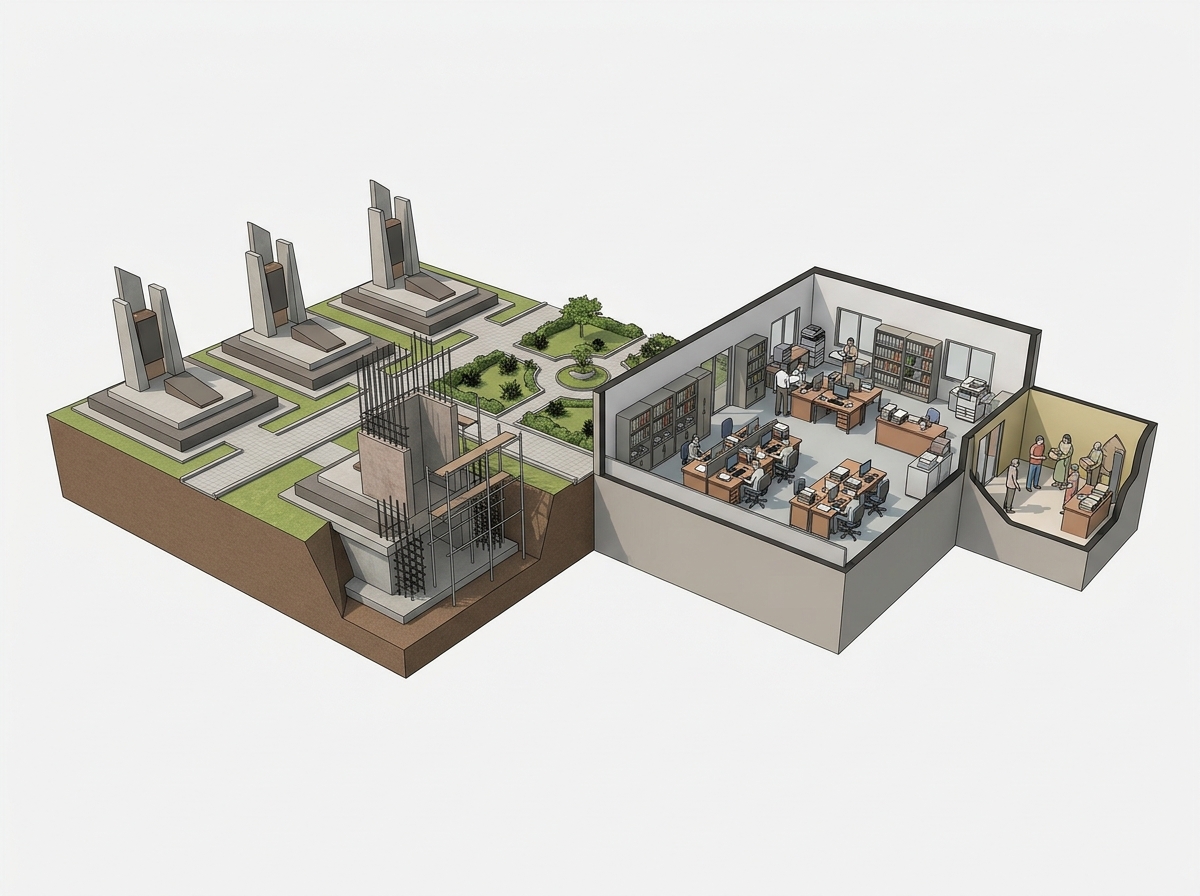
11 Aug Chhattisgarh to Build 109 Martyr Memorials for Naxal-Affected Families
✎ The Chhattisgarh Government’s initiative integrates memorialisation, rehabilitation, and justice delivery for Naxal-affected families, aligning with national policies on Left-Wing Extremism mitigation.
Subject Relevance — Where This Topic Fits
- GS Paper II — Governance, Constitution, and Social Justice | GS Paper III — Security Challenges and Disaster Management
- Prelims: Naxalism, Left-Wing Extremism, Security Challenges, Counter-Insurgency Operations, Rehabilitation Policies, Compassionate Appointment, Victim Compensation
- Essay: Role of State in Addressing Internal Security Challenges: A Case Study of Naxalism, Balancing Development and Security: Lessons from Naxal-Affected Regions
Quick Revision: The Chhattisgarh Government’s initiative integrates memorialisation, rehabilitation, and justice delivery for Naxal-affected families, aligning with national policies on Left-Wing Extremism mitigation.
Why is this in the news?
The Government of Chhattisgarh has announced a comprehensive plan for the rehabilitation of Naxal-affected families, including the construction of 109 martyr memorials and a special campaign to resolve pending relief cases. This initiative underscores the state’s commitment to addressing the socio-economic impact of Naxal violence while ensuring justice and remembrance for affected families.
Background
- Naxalism, or Left-Wing Extremism (LWE), has been a persistent internal security challenge in India since the late 1960s, particularly affecting states such as Chhattisgarh, Jharkhand, Odisha, and Maharashtra.
- The conflict has resulted in significant loss of life, displacement, and socio-economic disruption, necessitating targeted rehabilitation and memorialisation efforts.
- The Government of India has implemented various schemes, including the ‘National Policy and Action Plan to Address LWE’ (2015), to address the root causes of Naxalism through development and security measures.
- Chhattisgarh has been a focal state for Naxal-related violence, with numerous incidents of attacks on security forces and civilians, leading to displacement and economic hardship.
- Previous rehabilitation efforts have included compensation schemes, skill development programs, and the provision of financial assistance to affected families.
- The announcement aligns with broader national efforts to integrate affected communities into the mainstream while acknowledging the sacrifices of security personnel and civilians.
What are the key components of the Chhattisgarh Government’s initiative for Naxal-affected families?
- Construction of 109 martyr memorials to honour security personnel and civilians killed in Naxal-related violence, with QR codes providing detailed information about each martyr.
- A special campaign to expedite the resolution of pending relief and compensation cases for affected families, ensuring no eligible beneficiary is left out.
- 100% compassionate appointments for the kin of martyrs, as part of the state’s commitment to supporting the families of those who have sacrificed their lives.
- Rehabilitation of youth returning from Naxal-affected areas through skill development training and employment linkages.
- Establishment of a dedicated SIB dashboard to regularly update and monitor the status of rehabilitation and relief measures for affected families.
- Focus on economic empowerment of rehabilitated youth through vocational training, entrepreneurship support, and access to government schemes.
- Ensuring that memorials serve not only as symbols of remembrance but also as educational tools, documenting the history and impact of Naxal violence in the region.
Key Features
| Feature | Significance |
|---|---|
| 109 Shheduled Martyr Memorials | Provides a structured, dignified space for collective remembrance of security personnel and civilians killed in Naxal violence, integrating digital documentation via QR codes to preserve historical narratives for posterity. |
| 100% Compassionate Appointment for Martyr Families | Ensures immediate economic security for families of security personnel killed in counter-Naxal operations, aligning with the constitutional directive of welfare for defence personnel. |
| Special Campaign for Pending Relief Cases | Addresses administrative delays in disbursing compensation and rehabilitation benefits to victims of Naxal violence, ensuring equitable access to justice and social support. |
| Skill Development for Rehabilitated Youth | Focuses on vocational training and employment linkage for youth returning from Naxal-affected areas or rehabilitation centres, facilitating socio-economic integration. |
| State-Level Coordination for Migrant Rehabilitated Youth | Facilitates inter-state collaboration to ensure displaced youth are either reintegrated locally or repatriated to their home states with appropriate support. |
Why it Matters
Governance and Administrative
- Demonstrates a structured, multi-pronged approach to address the socio-economic fallout of Naxal violence, moving beyond episodic relief to systemic rehabilitation.
- Institutionalises memorialisation as a governance tool, ensuring that the State acknowledges sacrifice and maintains institutional memory of conflict victims.
- Strengthens the interface between security operations and civilian welfare, reducing the risk of alienation among affected communities.
Legal and Policy
- Reinforces the implementation of existing compensation and rehabilitation policies for victims of Left-Wing Extremism (LWE), ensuring compliance with statutory entitlements.
- Highlights the role of administrative discretion in expediting pending cases, a critical aspect of governance in conflict-affected regions.
Social and Humanitarian
- Acknowledges the psychological and emotional trauma of affected families by providing tangible symbols of recognition and support.
- Promotes inter-generational justice by ensuring that the children of martyrs and victims receive equitable opportunities for education and employment.
Economic
- Facilitates the economic rehabilitation of youth from conflict zones through skill development and employment linkages, reducing vulnerability to radicalisation.
- Leverages memorial infrastructure as potential socio-cultural assets, contributing to local tourism and community cohesion.
Challenges
1. Administrative Delays in Relief Disbursement
- Prolonged pendency of compensation and rehabilitation claims erodes trust in State institutions and exacerbates socio-economic distress among victims.
- Lack of a centralised, real-time tracking system for pending cases hampers accountability and delays redressal.
UPSC Link: GS-II: Role of Civil Services in Disaster Management
2. Socio-Economic Integration of Rehabilitated Youth
- Stigma and discrimination against former Naxal cadres or affected youth may impede their reintegration into mainstream society.
- Mismatch between available skill training and local/regional labour market demands can render vocational programmes ineffective.
UPSC Link: GS-II: Social Empowerment and Inclusive Growth
3. Inter-State Coordination for Migrant Youth
- Variations in rehabilitation policies across states may create gaps in support for displaced youth.
- Lack of a unified framework for repatriation and reintegration complicates the process of returning youth to their home states.
UPSC Link: GS-II: Centre-State Relations and Cooperative Federalism
4. Sustainability of Memorial Infrastructure
- High maintenance costs and lack of community ownership may lead to the neglect of memorial sites over time.
- Ensuring that digital documentation (QR codes) remains accessible and updated requires long-term institutional commitment.
UPSC Link: GS-II: Public Policy and Good Governance
5. Psychological and Emotional Rehabilitation
- Trauma and grief among affected families may persist despite material support, necessitating counselling and mental health interventions.
- The State’s role in addressing collective trauma and fostering resilience in conflict-affected communities remains underemphasised in policy discourse.
UPSC Link: GS-II: Social Sector Services and Governance
Challenges — UPSC Perspective
| Issue | Concern |
|---|---|
| Pending Compensation Claims | Delays in disbursing relief to victims of Naxal violence undermine trust in State institutions. |
| Stigma Against Rehabilitated Youth | Social ostracisation and lack of opportunities hinder their reintegration into mainstream society. |
| Inter-State Disparities in Rehabilitation | Variations in policies across states create inequities in support for displaced youth. |
| Maintenance of Memorial Infrastructure | High operational costs and lack of community engagement may lead to neglect of memorial sites. |
| Digital Divide in Access to QR Code Data | Limited digital literacy among affected communities may restrict access to memorialised information. |
Government Initiatives — Must-Memorise for Prelims
- Compensation Scheme for Victims of Terrorist/Extremist Violence (as per central guidelines)
- Skill Development for Youth from Violence-Affected Areas (under PMKVY or state-specific schemes)
- Rehabilitation Packages for Left-Wing Extremism-Affected Areas (as per central and state policies)
Way Forward
- Establish a real-time, centralised dashboard for tracking pending compensation and rehabilitation cases, ensuring transparency and accountability.
- Constitute district-level committees comprising officials, civil society representatives, and affected families to expedite pending cases.
- Design vocational training programmes in consultation with local industries to align skill development with employment opportunities.
- Launch community awareness campaigns to combat stigma against rehabilitated youth and promote social inclusion.
- Develop a standard operating procedure (SOP) for inter-state coordination to streamline repatriation and reintegration of displaced youth.
- Integrate mental health and counselling services into rehabilitation packages to address long-term psychological impacts of conflict.
- Ensure periodic maintenance and community engagement in the upkeep of martyr memorials, including digital updates to QR code data.
- Conduct impact assessments of the memorial initiative to evaluate its effectiveness in fostering social cohesion and remembrance.
UPSC Value Addition
Keywords for Mains Answer-Writing
Naxalism · Left-Wing Extremism · Internal Security · Rehabilitation Policy · Martyr Memorials · Compensation and Relief · Special Campaign · Skill Development · Compensatory Appointment · Governance of Affected Areas · State Reforms · Humanitarian Approach
Constitutional & Policy Linkages
- Article 355: Duty of the Union to protect States against internal disturbances (applicable in LWE-affected regions).
- Directive Principles of State Policy (Article 38, 39, 41): Emphasis on welfare measures for weaker sections and victims of violence.
Concept Flow
Naxal violence → Loss of lives and livelihoods → State response in form of memorialisation and relief → Administrative delays in disbursement → Special campaign for pending cases → Economic rehabilitation via skill development → Social integration of affected youth → Long-term community resilience.
Prelims Practice Questions
Q1. Consider the following statements regarding measures for rehabilitation of Naxal-affected families in India:
1. The government has announced the construction of 109 martyr memorials to honour security personnel and civilians killed in Naxal violence.
2. Shat- pratishat (100%) compassionate appointments have been mandated for families of martyrs in government jobs.
3. Special campaigns are being launched to address pending relief and compensation cases for victims of Naxal violence.
Which of the above statements are correct?
- Only one
- Only two
- Only three
- None
Answer: Only three — Statements 1 and 3 are correct as per the report. Statement 2 is also correct, as the Deputy CM confirmed 100% compassionate appointments for martyr families.
Q2. Assertion (A): The construction of martyr memorials in Naxal-affected regions is primarily symbolic and lacks utilitarian value.
Reason (R): These memorials are designed to provide QR-coded information about the martyrs and the events, serving both commemorative and informational purposes.
In the context of the above statements, which of the following is correct?
- Both A and R are true, and R is the correct explanation of A
- Both A and R are true, but R is NOT the correct explanation of A
- A is true, but R is false
- A is false, but R is true
Answer: ? — Assertion (A) is false because the memorials serve utilitarian purposes beyond symbolism, as stated in the report. Reason (R) is correct as it accurately describes the functional aspect of the memorials.
Q3. Match the following initiatives with their respective objectives in the context of Naxal-affected regions:
Column I (Initiative) Column II (Objective)
A. 109 Martyr Memorials 1. Skill development for rehabilitated youth
B. Special Campaign for Pending Cases 2. Commemorating security personnel and civilians
C. Skill Development and Employment 3. Expeditious redressal of pending relief cases
D. 100% Compassionate Appointments 4. Ensuring employment for martyr families
Select the correct match:
- A-2, B-3, C-1, D-4
- A-1, B-2, C-3, D-4
- A-4, B-1, C-2, D-3
- A-3, B-4, C-1, D-2
Answer: A-2, B-3, C-1, D-4 — A-2 (Memorials commemorate martyrs), B-3 (Special campaign addresses pending cases), C-1 (Skill development for youth), D-4 (100% appointments for martyr families).
Mains Practice Question
✍ The Government of India has initiated a multi-pronged strategy to address the humanitarian and developmental challenges in Naxal-affected regions, including the construction of martyr memorials, special campaigns for pending relief cases, and skill development for rehabilitated youth. Critically examine the efficacy of these measures in achieving long-term peace and integration of affected communities. (15 Marks)
Approach: MODEL-ANSWER SKELETON:
1. **Context and Objectives**:
– Briefly explain the issue of Left-Wing Extremism (LWE) in India, its socio-economic roots, and the government’s policy shift from purely security-centric to a balanced approach (e.g., SRE 2015, National Policy and Action Plan to Address LWE).
– State the objectives of the recent initiatives: memorialisation (cultural integration), relief expedited (justice), and skill development (economic rehabilitation).
2. **Analysis of Measures**:
– **Martyr Memorials**:
* Symbolic value: Honouring sacrifices, fostering national unity, and acknowledging state efforts.
* Practical value: QR-coded information can serve as educational tools and memorial archives.
* Limitations: Risk of being perceived as state propaganda if not inclusive of local narratives.
– **Special Campaign for Pending Cases**:
* Addresses administrative delays and bureaucratic bottlenecks in relief distribution.
* Ensures transparency and accountability in governance (e.g., SI&D dashboard updates).
* Challenges: Requires sustained political will and grassroots monitoring to prevent re-emergence of grievances.
– **Skill Development and Employment**:
* Focus on rehabilitated youth: Aligns with the ‘Aspirational Districts Programme’ and ‘Skill India Mission’.
* Economic integration: Reduces vulnerability to recruitment by extremist groups.
* Limitations: Requires coordination with state governments, private sector engagement, and post-training placement support.
3. **Critical Evaluation**:
– **Strengths**:
* Holistic approach: Combines symbolic, administrative, and developmental measures.
* Evidence of intent: 100% compassionate appointments and expedited relief indicate political commitment.
– **Weaknesses**:
* Top-down design: Risk of being perceived as externally imposed solutions without local ownership.
* Implementation gaps: Past initiatives (e.g., ‘Naxal-affected district plans’) have faced execution challenges.
* Structural issues: Land reforms, forest rights, and governance deficits in LWE regions remain unaddressed.
4. **Long-term Efficacy**:
– **Peace and Integration**:
* Memorials alone cannot resolve grievances; must be complemented by socio-economic development.
* Skill development and employment are critical to wean youth away from extremism.
– **Sustainability**:
* Requires continuous monitoring via SI&D dashboards and periodic reviews.
* Need for inter-state coordination (e.g., rehabilitated youth returning from other states).
5. **Conclusion**:
– The measures are a positive step but must be integrated into a broader, participatory framework addressing root causes (e.g., land alienation, forest rights, and local governance).
– Emphasise the need for ‘security with development’ and ‘governance with empathy’ to achieve lasting peace.
Source: amarujala.com
Generated by AanyaAi for educational purpose.

- Piyush Goyal Attends G20 Trade Ministers’ Meeting in Milwaukee - October 1, 2026
- विशेष अभियान-6: कोल इंडिया लिमिटेड की तैयारी पर केंद्र सरकार की निगरानी - October 1, 2026
- ECL’s Action Plan for Special Campaign 6: A UPSC Governance Case Study - October 1, 2026

No Comments