


01 Oct Chhattisgarh’s Developed Gram Panchayat Scheme: Key for UPSC & State PCS
✎ The Developed Gram Panchayat Scheme (DGPS) under the V.B.G. Ramji Act, 2025, transforms rural planning by making Gram Sabhas the nucleus for participatory, data-driven, and digitally integrated village development.
Subject Relevance — Where This Topic Fits
- GS Paper II — Constitutional, Statutory, Regulatory and Various Quasi-judicial Bodies (Panchayati Raj Institutions) | GS Paper III — Rural Development, Decentralised Planning and Participatory Governance
- Prelims: Gram Sabha, Panchayati Raj Institutions (PRIs), Developed Gram Panchayat Scheme (DGPS), V.B.G. Ramji Act, 2025, Participatory Rural Appraisal (PRA), E-Jal Portal, Jal Jeevan Mission, Digital Land Records, Convergence of Schemes
- Essay: Decentralisation and Grassroots Democracy: The Case of Gram Sabhas in India, Technology and Governance: Balancing Efficiency with Inclusivity in Rural Development
Quick Revision: The Developed Gram Panchayat Scheme (DGPS) under the V.B.G. Ramji Act, 2025, transforms rural planning by making Gram Sabhas the nucleus for participatory, data-driven, and digitally integrated village development.
Why is this in the news?
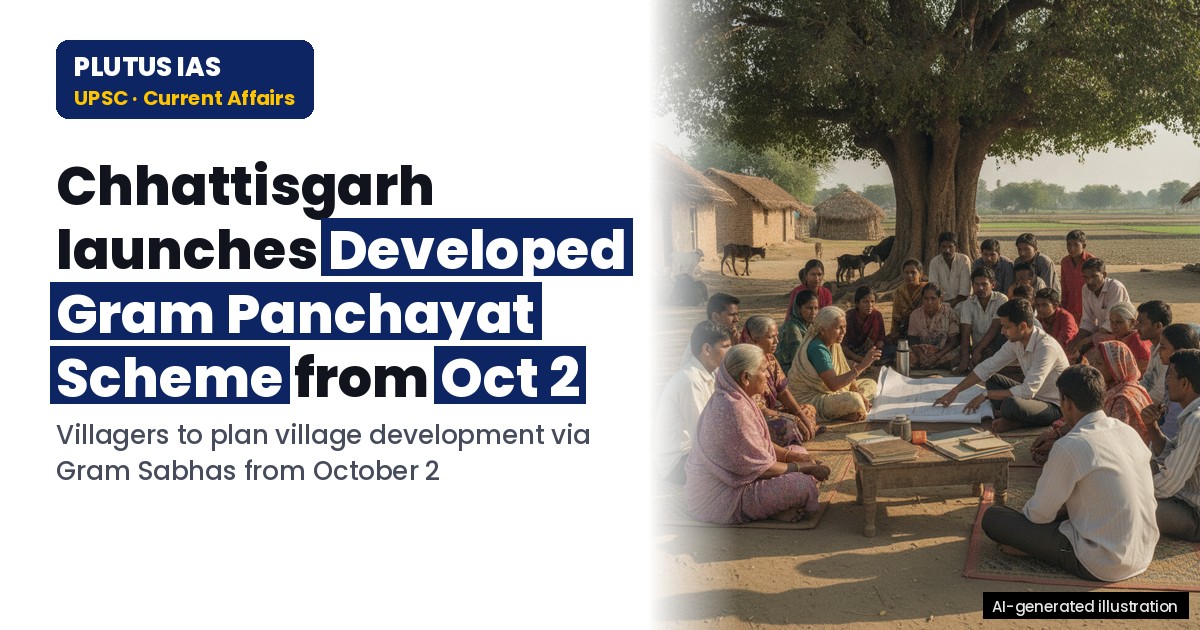
Chhattisgarh has intensified efforts to implement the Developed Gram Panchayat Scheme (DGPS) from 2 October 2026, leveraging Gram Sabhas to facilitate participatory planning at the village, basti (hamlet), and ward levels. This initiative, mandated under the V.B.G. Ramji Act, 2025, aims to align rural development with locally identified priorities, resource mapping, and digital documentation of assets. The phased approach—commencing with baseline data preparation, followed by community consultations and asset verification—highlights the state’s emphasis on inclusive and data-driven decentralised planning.
Background
- The 73rd Constitutional Amendment Act (1992) established Panchayati Raj Institutions (PRIs) as the third tier of governance, empowering Gram Sabhas as statutory bodies for participatory decision-making in rural areas.
- Chhattisgarh, a state with significant tribal and rural populations, has historically prioritised decentralised governance models, including the ‘Panchayat Raj System’ and ‘Gram Swaraj Abhiyan’ to enhance local self-governance.
- The V.B.G. Ramji Act, 2025, is a state-specific legislation that institutionalises the Developed Gram Panchayat Scheme (DGPS) to replace traditional top-down planning with bottom-up, community-driven development strategies.
- The DGPS aligns with national schemes such as the Jal Jeevan Mission (JJM) and Digital India Land Records Modernisation Programme (DILRMP), which emphasise community participation and digital integration in rural development.
- Participatory Rural Appraisal (PRA) techniques, including social mapping, transect walks, and resource mapping, have been widely adopted in India to ensure inclusive planning, particularly in tribal and marginalised regions.
- The integration of digital tools, such as the E-Jal Portal and Yuktadhara GIS platform, reflects a broader trend towards leveraging technology for transparent and accountable rural governance.
What is the Developed Gram Panchayat Scheme (DGPS)?
- The DGPS is a statutory framework under the V.B.G. Ramji Act, 2025, designed to replace conventional, centrally-driven rural development planning with a participatory, bottom-up approach.
- The scheme mandates Gram Sabhas to identify local needs, prioritise development activities, and prepare village-level development plans based on grassroots inputs and resource mapping.
- Key components include participatory rural appraisal (PRA), asset verification, digital documentation of village resources, and convergence with national schemes like Jal Jeevan Mission and MGNREGA.
- Basti (hamlet) and ward-level meetings are integral to the process, enabling granular participation from all sections of the village community, including marginalised groups.
- The Yuktadhara GIS platform and E-Jal Portal are used to collate baseline data, map resources, and track progress, ensuring transparency and accountability in plan formulation.
- Plans approved by Gram Sabhas are consolidated at the block and district levels, followed by integration into state and central schemes for implementation.
- The scheme emphasises the documentation of ‘missing assets’—physical infrastructure or resources that exist but are not digitally recorded—thereby improving the accuracy of rural asset inventories.
Key Features
| Feature | Significance |
|---|---|
| Participatory Gram Sabha mechanism | Ensures direct democratic involvement of villagers in identifying local needs and priorities, aligning development with grassroots realities. |
| Basti-Ward level consultations | Facilitates micro-level assessment of developmental gaps, resource mapping, and asset verification within smaller community units. |
| Digital integration via e-Jal Portal & YuvaDhara | Leverages technology for data-driven planning, asset digitization, and evidence-based decision-making in resource allocation. |
| Asset verification and digitization | Identifies and records physical assets not yet documented in official records, preventing duplication or neglect in development planning. |
| Time-bound multi-stage process | Structures consultations, data collection, and plan finalization within a defined timeline to ensure timely execution and accountability. |
Why it Matters
Institutional Strengthening
- Reinforces the constitutional mandate of Gram Sabhas under Article 243B as participatory institutions for local self-governance.
- Enhances the role of Panchayati Raj Institutions (PRIs) in decentralized planning, aligning with the 73rd Constitutional Amendment Act.
- Promotes transparency and ownership in development by involving communities in the identification and prioritization of projects.
Resource Optimization
- Facilitates efficient use of local resources by mapping available assets, including water bodies, land, and infrastructure.
- Reduces wastage of funds by ensuring development plans are based on verified data and community needs rather than top-down directives.
- Integrates climate-resilient practices through water budgeting and sustainable resource management in planning.
Social Inclusion
- Ensures marginalized sections (women, SCs, STs, and economically weaker groups) have a voice in determining developmental priorities.
- Encourages gender-sensitive planning by mandating participation of women in Gram Sabha discussions and decision-making.
- Bridges urban-rural divides by addressing local disparities in infrastructure, services, and livelihood opportunities.
Technological Integration
- Leverages geospatial tools (e.g., YuvaDhara portal) for accurate mapping of assets, land use, and developmental gaps.
- Uses digital platforms (e.g., e-Jal Portal) for real-time data collection, monitoring, and reporting of developmental progress.
- Enhances accountability by creating a transparent, auditable trail of planning and implementation processes.
Challenges
1. Limited Awareness and Participation
- Low awareness among rural populations about their rights and the participatory planning process may lead to low turnout or passive participation.
- Dominance of local elites or influential groups in Gram Sabhas may skew priorities away from marginalized sections.
UPSC Link: GS-II: Local Governance
2. Data Gaps and Digital Divide
- Incomplete or outdated baseline data on assets, resources, and infrastructure may hinder accurate planning.
- Digital illiteracy and lack of access to technology in remote areas may exclude certain groups from the planning process.
UPSC Link: GS-III: Science & Tech
3. Coordination and Convergence
- Fragmented implementation across departments (e.g., water, agriculture, rural development) may lead to overlapping or conflicting plans.
- Delays in inter-departmental coordination for resource allocation and project approvals may stall progress.
UPSC Link: GS-II: Governance
4. Sustainability and Maintenance
- Lack of post-implementation monitoring and maintenance mechanisms may render assets non-functional over time.
- Insufficient capacity of Gram Panchayats to manage and sustain development projects independently.
UPSC Link: GS-III: Infrastructure
5. Political and Bureaucratic Interference
- Pressure from higher authorities to prioritize politically expedient projects over community needs may distort planning.
- Resistance from bureaucratic structures accustomed to top-down planning may slow down participatory processes.
UPSC Link: GS-II: Accountability
6. Climate and Environmental Constraints
- Unpredictable climate patterns and environmental degradation may necessitate frequent revisions to development plans.
- Balancing developmental needs with environmental sustainability requires careful resource management.
UPSC Link: GS-III: Environment
Challenges — UPSC Perspective
| Issue | Concern |
|---|---|
| Low awareness | Risk of passive participation or elite capture in Gram Sabha meetings. |
| Data gaps | Inaccurate planning due to incomplete or outdated asset and resource data. |
| Digital divide | Exclusion of digitally illiterate or remote communities from planning processes. |
| Departmental silos | Lack of convergence leading to overlapping or conflicting development plans. |
| Maintenance gaps | Risk of assets becoming non-functional due to lack of post-implementation support. |
| Climate variability | Need for adaptive planning to address changing environmental conditions. |
Way Forward
- Conduct pre-Gram Sabha awareness campaigns in local languages to educate villagers about their rights and the planning process.
- Establish a robust grievance redressal mechanism to address concerns raised during Gram Sabha consultations.
- Strengthen capacity-building programs for Gram Panchayat members on participatory planning, data management, and project monitoring.
- Develop a standardized digital template for asset mapping and resource inventory to ensure uniformity across Panchayats.
- Institutionalize inter-departmental coordination committees at the district and block levels to ensure convergence in planning.
- Introduce mandatory gender and social audits in Gram Sabhas to ensure inclusive and equitable decision-making.
- Allocate dedicated funds for post-implementation maintenance and monitoring of development assets.
- Leverage community-based organizations (e.g., SHGs, youth groups) to facilitate outreach and participation in Gram Sabhas.
UPSC Value Addition
Keywords for Mains Answer-Writing
Gram Sabha · Developed Gram Panchayat Scheme · VB-GI Ramji Act 2025 · Participatory Rural Appraisal · Gram Panchayat Development Plan · 73rd Constitutional Amendment Act · Local Self-Governance · Community-Based Planning · Rural Development · Decentralised Governance · Grassroots Democracy · Inclusive Development
Constitutional & Policy Linkages
- Article 243G: Empowers Panchayats to prepare plans for economic development and social justice.
- 73rd Constitutional Amendment Act: Provides the legal framework for decentralized governance and participatory development.
Concept Flow
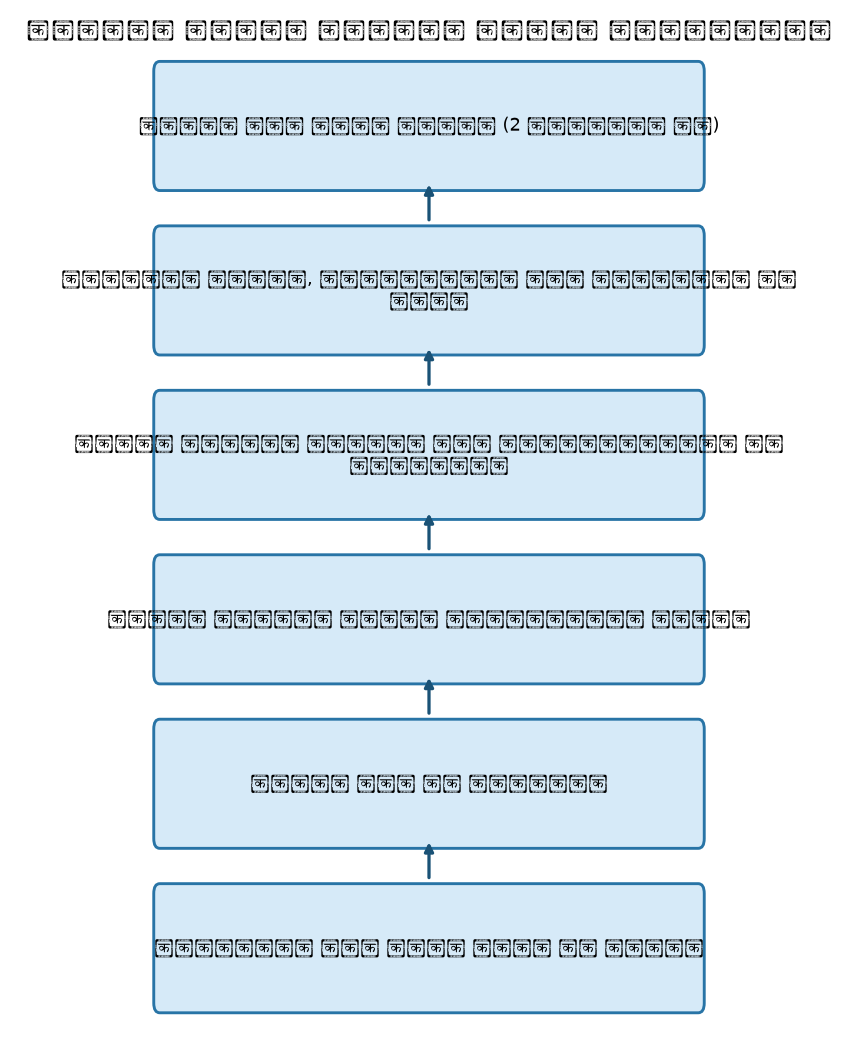
Constitutional mandate for Gram Sabhas under Article 243B → Formation of participatory planning mechanism → Identification of local needs and priorities through Gram Sabhas → Asset mapping and resource inventory via digital tools → Development of Gram Panchayat plans → Convergence with higher-level plans → Implementation and monitoring → Post-implementation maintenance and feedback.
Prelims Practice Questions
Q1. Consider the following statements regarding the Developed Gram Panchayat Scheme in Chhattisgarh:
1. The scheme is implemented under the provisions of the VB-GI Ramji Act, 2025.
2. The primary objective is to prepare the Gram Panchayat Development Plan through participatory processes in Gram Sabhas.
3. The scheme mandates that Gram Sabhas must be conducted only at the village level, excluding ward-level consultations.
4. The scheme requires the use of the yuktadhara portal for mapping and data collection at the Gram Panchayat level.
How many of the above statements are correct?
- Only one
- Only two
- Only three
- All
Answer: Only three — Statements 1, 2, and 4 are correct. Statement 3 is incorrect as the scheme explicitly includes ward-level consultations (बस्ती-वार्ड स्तर पर होगा संवाद). The VB-GI Ramji Act, 2025, is the legal framework for the scheme, and the yuktadhara portal is used for mapping and data preparation.
Q2. Assertion (A): The 73rd Constitutional Amendment Act, 1992, mandates the establishment of Gram Sabhas as institutions of self-governance at the village level.
Reason (R): Gram Sabhas are empowered to approve plans, programmes, and schemes for economic development and social justice under the Act.
In the context of the above Assertion and Reason, which of the following is correct?
- Both A and R are true, and R is the correct explanation of A
- Both A and R are true, but R is not the correct explanation of A
- A is true, but R is false
- A is false, but R is true
Answer: Both A and R are true, and R is the correct explanation of A — Both Assertion (A) and Reason (R) are true, and Reason (R) correctly explains Assertion (A). The 73rd Constitutional Amendment Act, 1992, indeed mandates Gram Sabhas as institutions of self-governance, and they are empowered to approve plans and schemes for rural development under Schedule XI of the Constitution.
Mains Practice Question
✍ Examine the significance of participatory planning in the Developed Gram Panchayat Scheme of Chhattisgarh. How does this scheme align with the constitutional framework of local self-governance in India? Also, discuss the potential challenges in ensuring inclusive participation in Gram Sabhas. (15 Marks)
Approach: MODEL-ANSWER SKELETON:
1. **Introduction (2 marks)**: Define participatory planning and its relevance in rural development. Briefly introduce the Developed Gram Panchayat Scheme and its legal basis (VB-GI Ramji Act, 2025).
2. **Constitutional Framework (4 marks)**:
– Cite the 73rd Constitutional Amendment Act, 1992, and its provisions for Gram Sabhas (Article 243B, Schedule XI).
– Explain the role of Gram Sabhas as institutions of self-governance and their functions (approval of plans, programmes, and schemes).
– Highlight the principles of subsidiarity and decentralisation enshrined in the Constitution.
3. **Scheme Alignment (4 marks)**:
– Discuss how the Developed Gram Panchayat Scheme operationalises participatory planning through Gram Sabhas.
– Explain the process: identification of needs, resource mapping, and preparation of the Gram Panchayat Development Plan.
– Link the scheme to the broader goal of inclusive and sustainable rural development.
4. **Challenges in Inclusive Participation (4 marks)**:
– **Socio-economic barriers**: Caste, gender, and class disparities affecting participation (cite studies on rural India).
– **Institutional weaknesses**: Lack of awareness, capacity gaps among officials, and procedural complexities.
– **Political economy factors**: Elite capture, patronage politics, and power asymmetries in Gram Sabhas.
– **Logistical issues**: Accessibility, timing of meetings, and digital divide (e.g., reliance on yuktadhara portal).
5. **Conclusion (1 mark)**: Summarise the importance of participatory planning in achieving grassroots democracy and suggest measures to enhance inclusivity (e.g., awareness campaigns, capacity-building, and gender-sensitive planning).
Source: amarujala.com
Generated by AanyaAi for educational purpose.
Related guides on our sites
- Best PSIR optional coaching for upsc
- Best PSIR optional teacher for upsc
- Best teacher of PSIR optional for upsc
- Best PSIR optional coaching in delhi for UPSC


No Comments