


10 Jun Cracks in the Cornerstone: Why India’s Election Law Needs an Upgrade
This article covers “Daily Current Affairs” and the Topic Cracks in the Cornerstone: Why India’s Election Law Needs an Upgrade
SYLLABUS MAPPING:
GS-2- Polity- Cracks in the Cornerstone: Why India’s Election Law Needs an Upgrade
FOR PRELIMS
What is the Representation of the People Act, 1951, and what are its main features in conducting elections in India?
FOR MAINS
What are the specific points regarding “Qualifications and Disqualifications” in the Representation of the People Act, 1951?
Why in the News?
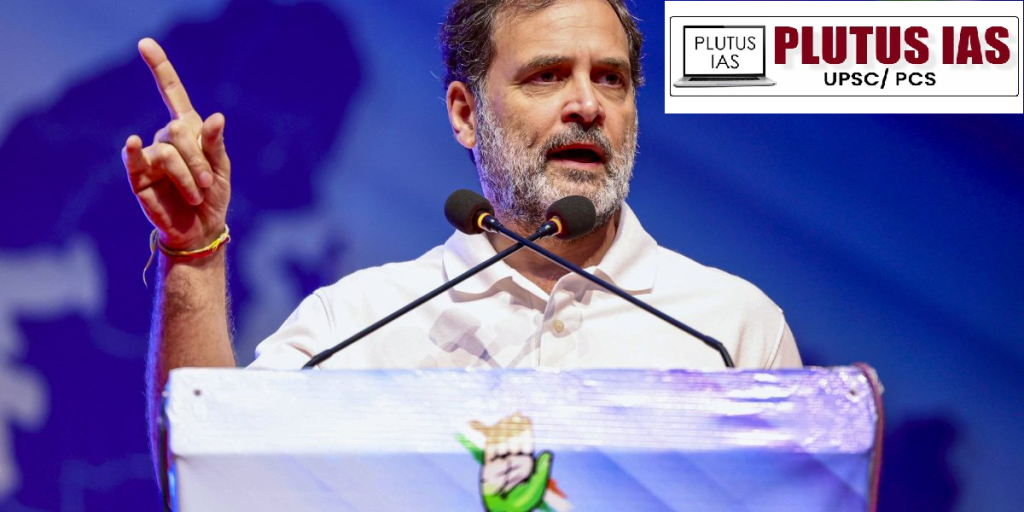
Rahul Gandhi’s challenge to the Election Commission of India (ECI) has become a significant news story following the ECI’s dismissal of his allegations of “industrial scale rigging” in the 2024 Maharashtra assembly elections as “unsubstantiated.” In response, the opposition leader in the Lok Sabha has intensified the debate by demanding the ECI publish “consolidated, digital, machine-readable voter rolls” for all recent elections. This demand highlights ongoing concerns about electoral transparency and the integrity of voter data, making the issue a focal point in discussions about election fairness and accountability in India.
What is the Representation of People Act 1951?
The Representation of the People Act 1951 (RPA) is a crucial legislative framework that guides India’s electoral process, ensuring transparency, fairness, and efficiency in the democratic system. Enacted in 1951, the Act defines rules for conducting elections, candidate eligibility, registration of political parties, and disqualification criteria, promoting a balanced and ethical electoral environment. Below are the primary highlights and sections that make RPA essential for maintaining India’s democratic integrity.
Constitutional provision related to elections in India
| Article | Title | Summary |
|---|---|---|
| 324 | Superintendence, direction and control of elections | Empowers the Election Commission of India to supervise, direct, and control elections to Parliament, State Legislatures, President, and VP. |
| 325 | No person to be ineligible by reason of religion, race, caste or sex | Ensures no discrimination in inclusion in electoral rolls based on religion, race, caste, or sex. |
| 326 | Elections on the basis of adult suffrage | Elections to Lok Sabha and State Assemblies shall be based on universal adult suffrage (18 years and above). |
| 327 | Power of Parliament to make provision with respect to elections | Parliament is empowered to make laws for elections to Parliament and State Legislatures, including electoral rolls and delimitation. |
| 328 | Power of State Legislature to make provision with respect to elections | State Legislatures can make laws for elections to their own assemblies, subject to Parliament’s laws. |
| 329 | Bar to interference by courts in electoral matters | Courts cannot interfere in electoral matters except through election petitions as per the law made by Parliament. |
| 330 | Reservation of seats for SCs and STs in the Lok Sabha | Provides for the reservation of seats for Scheduled Castes (SCs) and Scheduled Tribes (STs) in the House of the People (Lok Sabha). |
Features of the Representation of the People Act, 1951
1. Conduct of Elections: It provides the legal framework for conducting elections to the Parliament and State Legislatures in India.
2. Qualifications and Disqualifications: It lays down the qualifications for contesting elections and enumerates grounds for disqualification, such as holding an office of profit, insolvency, or criminal conviction.
3. Electoral Offences and Corrupt Practices: The Act defines corrupt practices like bribery, undue influence, impersonation, and also lists electoral offences with associated penalties.
4. Election Disputes: It allows for the filing of election petitions to High Courts in case of disputes regarding elections, with the Supreme Court being the final appellate authority.
5. Vacancies and By-elections: It prescribes procedures for conducting by-elections in case of vacancies due to resignation, death, or disqualification of members.
6. Role of Election Commission: The Act gives the Election Commission the authority to supervise and conduct elections, ensuring free and fair electoral processes.
7. Declaration of Results and Expenditures: It mandates candidates to declare their election expenses and allows the EC to monitor and enforce spending limits.
8. Use of Voting Technology: It provides for the use of Electronic Voting Machines (EVMs) and other technological means to enhance transparency and efficiency in elections.
Significance of the Election in India
1. Foundation of Democracy: Elections are the cornerstone of India’s democratic setup, enabling citizens to choose their representatives and form governments.
2. Political Equality: Through the principle of universal adult suffrage, elections ensure that every citizen above 18, regardless of caste, religion, or economic status, has an equal vote.
3. Government Accountability: Elections empower the people to hold the government accountable for its performance, policies, and promises.
4. Peaceful Transfer of Power: Regular and free elections ensure non-violent, constitutional transitions of power, maintaining political stability.
5. Public Participation: Elections promote people’s participation in governance, making them active stakeholders in the democratic process.
6. Strengthening Federalism: Elections at the national, state, and local levels strengthen India’s federal structure by decentralising political power.
7. Check on Authoritarianism: Free and fair elections act as a check against authoritarianism by ensuring no single party or leader remains in power indefinitely.
8. Encouragement of Political Awareness: Elections stimulate public debate, awareness of national issues, and civic engagement, strengthening democratic culture.
What are the issues with the Act
1. Criminalisation of Politics: The Act disqualifies only after conviction, allowing candidates with serious criminal charges to contest elections.
2. Money and Muscle Power: Spending limits are often bypassed, and there’s inadequate enforcement against the use of black money and voter bribery.
3. Delayed Disqualification: Disqualification processes are slow, especially due to delays in judicial proceedings and inaction by constitutional authorities.
4. Opaque Political Funding: Despite expenditure disclosures, lack of donor transparency (e.g., via electoral bonds) weakens accountability.
5. Model Code of Conduct (MCC) Lacks Legal Status: Violations of the MCC are hard to penalize due to its non-statutory nature under the Act.
6. Weak Regulation of Political Parties: The Act does not ensure internal democracy, transparency in candidate selection, or accountability of parties.
7. Concerns over EVMs and VVPATs: Though legally backed, limited VVPAT verification and technical concerns raise questions about transparency.
8. Outdated Provisions: The Act does not adequately address modern challenges like digital campaigning, deepfakes, and social media manipulation.
Way forward
1. Decriminalisation of Politics: Amend the Act to bar candidates facing serious criminal charges (with charges framed by a court) from contesting elections, as recommended by the Law Commission.
2. Strengthening Election Funding Transparency: Ensure full disclosure of political donations, including reforms to electoral bonds, to promote transparency and curb black money.
3. Time-Bound Disqualification Mechanism: Establish fast-track courts to decide on disqualification and election disputes within a stipulated time.
4. Legal Backing to Model Code of Conduct: Give statutory status to the MCC with clear punitive provisions to deter violations during elections.
5. Internal Democracy in Political Parties: Mandate regular intra-party elections, financial disclosures, and democratic candidate selection to improve party accountability.
6. Robust Electoral Technology Oversight: Enhance VVPAT verification coverage and ensure independent technical audits of EVMs to address transparency concerns.
7. Regulation of Digital Campaigns: Update the RPA to address challenges from digital platforms, including misinformation, deepfakes, and unregulated online spending.
8. Empowering the Election Commission: Provide the ECI with greater autonomy and legal authority for enforcement, along with institutional support to ensure free and fair elections.
Conclusion
The Representation of the People Act, 1951, remains the cornerstone of India’s electoral democracy, offering a robust legal framework to conduct free and fair elections. However, evolving political dynamics, digital disruption, and increasing public scrutiny call for urgent reforms to address emerging challenges. Rahul Gandhi’s recent allegations and the subsequent response from the Election Commission highlight the growing demand for greater transparency, accountability, and digital modernisation in electoral processes. Strengthening the RPA through timely amendments, especially on issues like criminalisation, opaque funding, EVM trust, and digital manipulation, is essential to uphold the sanctity of elections.
Prelims Questions
Q. Which of the following statements about the Representation of the People Act, 1951 is/are correct?
1. It defines rules for conducting elections to the Parliament and State Legislatures.
2. It allows for the disqualification of candidates only after a criminal conviction.
3. It mandates a minimum Out Turn Ratio (OTR) for rice procurement by FCI.
Select the correct answer using the code given below:
(a) 1 only
(b) 1 and 2 only
(c) 2 and 3 only
(d) 1, 2 and 3
Answer: A
Mains Questions
Q. Evolving political dynamics, digital disruption, and increasing public scrutiny have exposed new challenges to India’s electoral process. Critically examine the limitations of the Representation of the People Act, 1951 in addressing these challenges, and suggest comprehensive reforms to strengthen the integrity of India’s elections.”
(250 words, 15 marks)


No Comments