


16 May Defence Minister Inaugurated Combat Aircraft Infrastructures
This article covers “Daily Current Affairs”
SYLLABUS MAPPING : GS Paper 3 : Security , Science and Technology
FOR PRELIMS : AMCA , STEALTH TECH , DRONES TECH
FOR MAINS : “India’s defence industrialisation model — as exemplified by the AMCA project, Kurnool Drone City, BDL naval systems facility, and Bharat Forge energetics plant — represents a shift from state monopoly to public-private partnership. Critically evaluate this shift, its implications for national security and economic development, and the governance challenges of building a credible military-industrial complex in a democratic India.” (15 M)
Why in News?
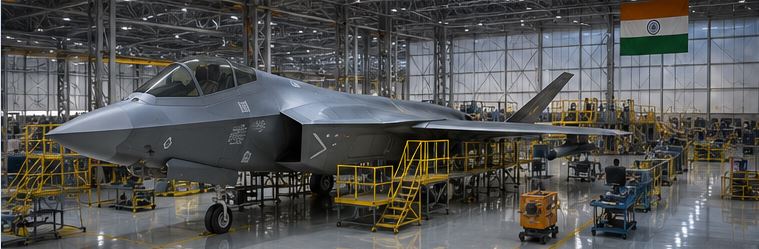
On Friday, May 15, 2026, Defence Minister Rajnath Singh and Andhra Pradesh Chief Minister N. Chandrababu Naidu laid the foundation stone for a ₹15,803 crore combat aircraft infrastructure project — the Core Integration and Flight Testing Centre of the Aeronautical Development Agency (ADA) — at Puttaparthi, Sri Satya Sai district, Andhra Pradesh. The centre will serve as the national hub for the development, integration, flight testing, and certification of India’s flagship Advanced Medium Combat Aircraft (AMCA) — India’s first indigenous fifth-generation stealth fighter jet programme. The project, spread across nearly 650 acres, will generate employment for approximately 7,500 people. On the same day, foundation stones were also laid for a Naval Systems Manufacturing Facility (BDL, ₹480 crore), a Defence Energetics Facility (Agneyastra, ₹1,500 crore), and an Ammunition and Electric Fuse Plant (HFCL, ₹1,200 crore). Additionally, a consortium of eight drone companies announced the creation of a Drone City in Kurnool. Rajnath Singh called the day “a historic chapter in India’s defence history”, adding: “Puttaparthi is set to join the exclusive league of global destinations from which a fifth-generation aircraft will take to the skies.”
What is the AMCA? — India’s Fifth-Generation Fighter Jet
TheAdvanced Medium Combat Aircraft (AMCA)is India’s most ambitious indigenous military aviation programme — afifth-generation, twin-engine, single-seat stealth multirole fighter jetbeing developed for theIndian Air Force (IAF). It is being designed and developed by theAeronautical Development Agency (ADA), an affiliate organisation of theDefence Research and Development Organisation (DRDO), under the Ministry of Defence. The AMCA will serve as the successor to the Tejas (LCA) and will be India’s first aircraft to incorporate full stealth features, advanced avionics, an internal weapons bay, and supercruise capability.
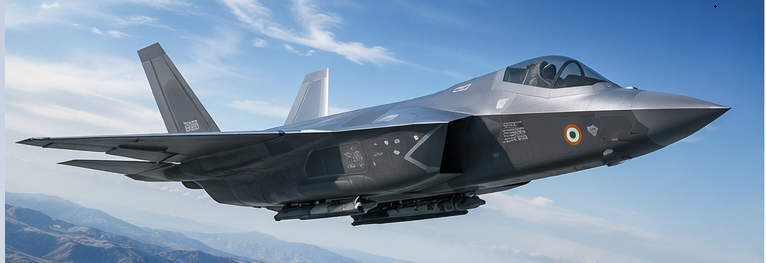
Generation:5th generation stealth multirole
Engine:Initially GE F414 (80 kN); later planned with indigenous 110 kN engine (GTRE Kaveri Mk-2 or new engine)
Weight class:Medium — 25,000 kg MTOW (between Tejas Light CA and Su-30 Heavy CA)
Role:Air superiority, ground attack, electronic warfare, ISR — true multirole
Variants:AMCA Mk-1 (conventional); AMCA Mk-2 (enhanced stealth, indigenous engine)
Stealth:Radar-absorbing materials, S-duct intake (hides engine face from radar), internal weapons bays — reduces RCS (Radar Cross-Section) by 90%+
Supercruise:Ability to fly supersonically without afterburner — range and endurance advantage
Sensor fusion:AESA radar + IRST + EW suite integrated via central mission computer — pilot sees battlespace, not individual sensors
Net-centric:Integrated with C4ISR networks; can share data with satellites, UAVs, warships in real time
All Projects Launched — Complete Profile
The nerve centre of India’s fifth-generation fighter programme. 650-acre complex at Puttaparthi. Will handle aircraft assembly, integration of avionics and weapons, structural testing, engine run-up, and full flight test certification. First flight of AMCA Mk-1 expected by 2028–29; induction in IAF from mid-2030s
Located at T. Sirasapalli village, Anakapalli district. Will manufacture autonomous underwater vehicles (AUVs), next-generation torpedoes, and underwater counter-measure systems. Directly reduces import dependence for India’s submarine and warship fleet. BDL is India’s premier missile and underwater weapon manufacturer
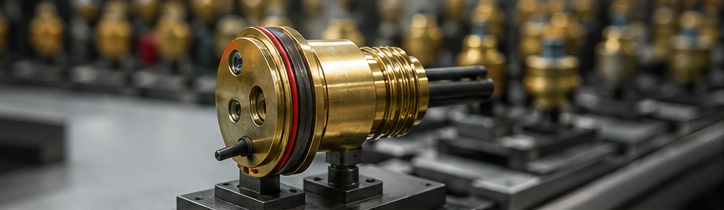
A subsidiary of Kalyani Strategic Systems (Bharat Forge Group). Located at Madakasira, Sri Satya Sai district. Will manufacture propellants, explosives, and high-energy materials for missiles, bombs, and warheads. India currently imports significant quantities of energetics — this facility will help close the gap
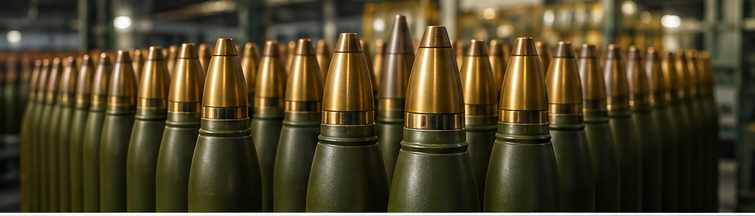
Located at Madakasira, Sri Satya Sai district. Will manufacture ammunition components and electric fuses — Rajnath Singh called fuses “the most critical component of any ammunition.” Electric fuses determine detonation precision; currently largely imported. India’s armed forces require millions of rounds annually; domestic fuse supply is strategically vital
Eight drone companies are jointly establishing a drone technology cluster in Kurnool, Andhra Pradesh — addressing applications in agriculture (crop monitoring, spraying), civilian infrastructure (surveying, delivery), and several military/civilian sectors. Rajnath Singh praised the young entrepreneurs and described the units as “vital components that will transform Make in India into tangible reality”
Global Comparison
| Aircraft | Country | Generation | Stealth | Status |
|---|---|---|---|---|
| F-22 Raptor | United States | 5th | Full stealth; VLO | Operational (2005); not for export |
| F-35 Lightning II | USA (Allied nations) | 5th | Full stealth; lower observability | Operational (2015); exported widely |
| J-20 Mighty Dragon | China | 5th | Full stealth; frontal aspect VLO | Operational (2017); ~200 in service |
| Su-57 Felon | Russia | 5th | Partial stealth; higher RCS than F-22 | Limited operational (2020); ~30 in service |
| KF-21 Boramae | South Korea | 4.5th | Partial stealth; externally mounted weapons | In development/testing (2022–) |
| AMCA Mk-1 | India | 5th | Full stealth; internal weapons bay; S-duct intake | Development; first flight ~2028–29; Core centre launched May 2026 |
| HAL Tejas Mk-1A | India | 4th+ | No stealth | Operational (2024); 83 ordered; 180 more planned |
The AMCA Programme — Development Timeline
Andhra Pradesh as a Defence Hub — Strategic Significance
The May 15 ceremony was not merely an industrial investment event — it marks Andhra Pradesh’s emergence as a strategically significant node in India’s defence manufacturing ecosystem. Chief Minister Chandrababu Naidu called upon industry to “Design in Andhra Pradesh, Make in Andhra Pradesh, Lead from Andhra Pradesh”, articulating an ambitious vision for the state as a defence manufacturing powerhouse.
- Bharat Electronics Limited (BEL): Major BEL facility at Machilipatnam — produces radars, communication equipment, and electronic warfare systems
- Bharat Dynamics Limited (BDL): Headquarters at Hyderabad (now Telangana); new Anakapalli facility will expand naval systems capability
- Kalyani Strategic Systems / Bharat Forge: New Agneyastra energetics facility at Madakasira — ₹1,500 crore; strengthens ammunition supply chain
- HFCL: ₹1,200 crore electric fuse plant at Madakasira — fills critical gap in domestic ammunition components
- Aerospace and Defence Policy 2025-30: Andhra Pradesh has established 6 specialised clusters — naval systems, missiles and ammunition, unmanned systems, aerospace and electronics, aircraft components, precision manufacturing
- MoUs signed: Defence MoUs with the Government of Andhra Pradesh for defence manufacturing, aerospace innovation, and next-generation drone technologies were exchanged at the ceremony
- Strategic geography: Andhra Pradesh’s long coastline (974 km — 2nd longest in India) makes it ideal for naval manufacturing; proximity to eastern seaboard naval installations
Drone City, Kurnool — The AMCA Ecosystem Companion
The Drone City announcement in Kurnool is particularly significant in the light of Operation Sindoor’s lessons — where drone swarm tactics by Pakistan revealed both the offensive potential and the defensive vulnerability of drone warfare. The eight companies forming the Drone City consortium represent a cluster approach to drone manufacturing — combining design, component supply, assembly, and testing in a single location to create cost and innovation synergies.
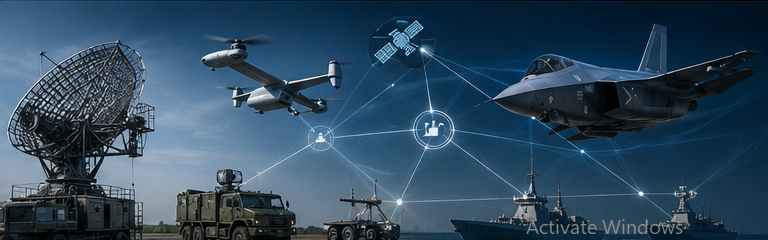
- Modern warfare doctrine: drones are no longer peripheral — they are central to land battle, maritime domain awareness, intelligence-gathering, and logistics. Operation Sindoor’s Harop, Harpy, and PALM loitering munitions validated this
- Eight-company consortium creating an integrated drone ecosystem — component manufacturers, assemblers, software developers, and test operators in one cluster
- Applications: agriculture (crop monitoring, precision spraying), defence (ISR drones, loitering munitions, logistics), civilian infrastructure (power line monitoring, disaster relief)
- Andhra Pradesh’s topology — semi-arid Rayalaseema and flat coastal plains — provides ideal test-flight conditions for unmanned aerial systems
- Aligned with the national Drone Rules 2021, PLI scheme for drones (₹120 crore) and the iDEX (Innovations for Defence Excellence) programme supporting drone startups
Practice Questions
Q. With reference to India’s Advanced Medium Combat Aircraft (AMCA) programme, consider the following statements:
2. Fifth-generation aircraft are characterised by features such as Very Low Observable (VLO) stealth, supercruise capability, sensor fusion, internal weapons bays, and full net-centric warfare integration — distinguishing them from fourth-generation platforms like the Tejas Mk-1.
3. The Core Integration and Flight Testing Centre for the AMCA, inaugurated in May 2026 at Puttaparthi, Andhra Pradesh, will serve as a facility for aircraft integration, validation, flight testing, and certification, and is being established at a total programme cost of ₹15,803 crore.
4. Bharat Dynamics Limited (BDL), which is inaugurating a naval systems manufacturing facility in Andhra Pradesh, is primarily known as India’s manufacturer of satellites and space launch vehicles under ISRO’s commercial programme.
Which of the statements given above are correct?
Statement 1 is CORRECT. The AMCA is being developed by the Aeronautical Development Agency (ADA), which functions as an affiliate organisation of DRDO under the Ministry of Defence. It is designed as a twin-engine, single-seat fifth-generation stealth multirole fighter intended primarily for the Indian Air Force (IAF). The AMCA programme represents India’s most ambitious indigenous military aviation effort, building on the experience gained from the Tejas (Light Combat Aircraft) programme but achieving a generational leap in capability through stealth, sensor fusion, and net-centric features.
Statement 2 is CORRECT. Fifth-generation aircraft are defined by a specific cluster of advanced capabilities: Very Low Observable (VLO) stealth technology (achieved through radar-absorbing materials, S-duct intakes that hide the engine face, and internal weapons bays); supercruise (ability to sustain supersonic flight without afterburner); advanced sensor fusion (integrating AESA radar, infrared search and track, and electronic warfare data through a central mission computer); and net-centric warfare integration (real-time data sharing with C4ISR networks). Fourth-generation platforms like India’s Tejas Mk-1 lack these features — they carry weapons externally (increasing radar cross-section) and have no stealth shaping.
Statement 3 is CORRECT. The Core Integration and Flight Testing Centre was inaugurated through a foundation stone ceremony at Puttaparthi, Sri Satya Sai district, Andhra Pradesh on May 15, 2026, by Defence Minister Rajnath Singh and AP CM Chandrababu Naidu. The facility, to be spread across 650 acres, will handle aircraft integration, structural testing, engine run-up, and full flight test and certification activities for the AMCA. The total programme cost of the AMCA is ₹15,803 crore, with the Core Integration and Flight Testing Centre itself estimated at approximately ₹2,000 crore.
Statement 4 is INCORRECT. Bharat Dynamics Limited (BDL) is NOT associated with ISRO or satellite/launch vehicle manufacturing. BDL is India’s premier manufacturer of missiles, underwater weapons, and guided systems for the defence forces, under the Ministry of Defence. It manufactures Akash surface-to-air missiles, Astra air-to-air missiles, torpedoes, and now autonomous underwater vehicles. ISRO’s commercial launch vehicles and satellites are manufactured by ISRO’s own facilities and agencies like NewSpace India Limited (NSIL). BDL and ISRO are completely separate organisations with no overlapping product lines.
Mains Questions

- India’s Youth Unemployment and Education Crisis - August 5, 2026
- India’s Sports Infrastructure and the 2036 Olympics Ambition - August 5, 2026
- Critical Minerals: The Foundation of Strategic Power - August 4, 2026

No Comments