


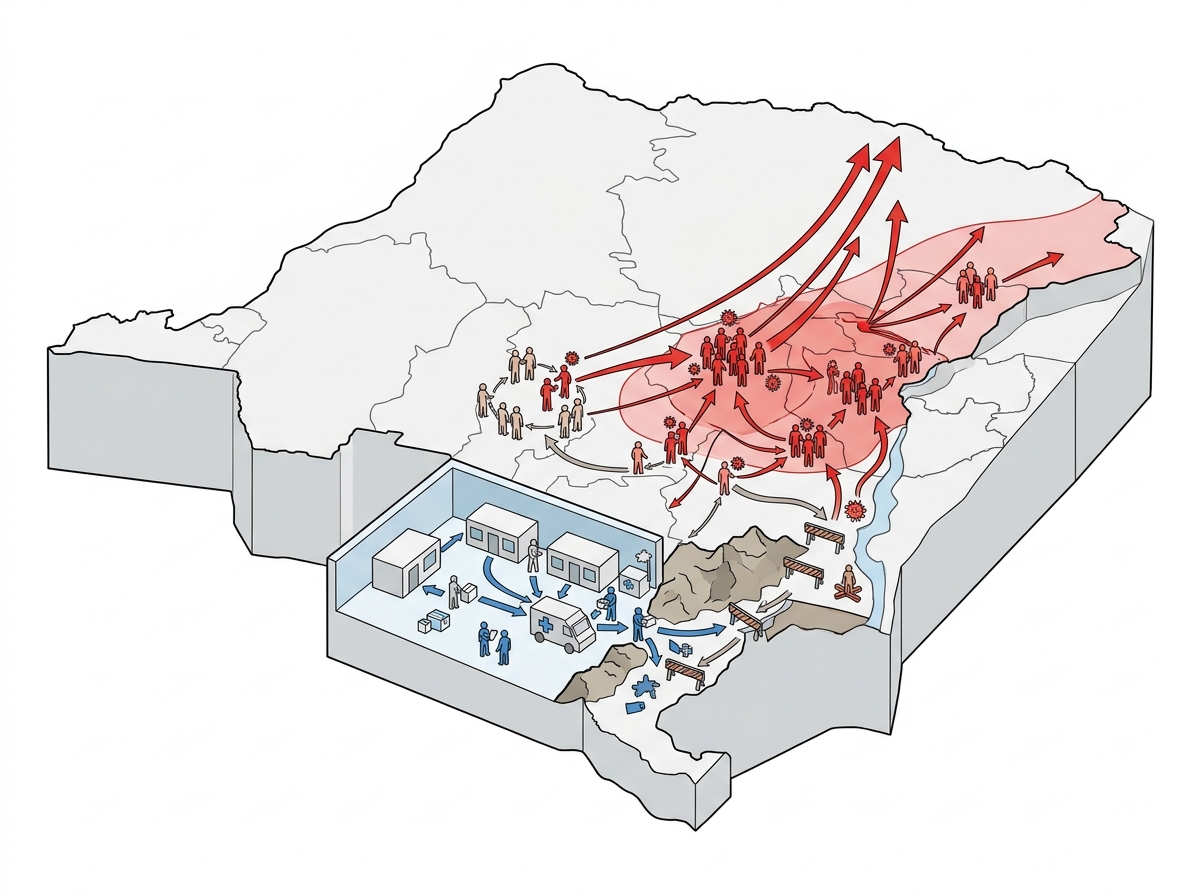
24 Aug DR Congo’s Ebola Outbreak: Exponential Spread Threatens Global Health Security
✎ Ebola Virus Disease is a zoonotic haemorrhagic fever with high fatality rates, transmitted through direct contact with bodily fluids; containment relies on rapid diagnostics, contact tracing, vaccination, and infection control in…
Subject Relevance — Where This Topic Fits
- GS Paper II — International Organisations & Health Diplomacy | GS Paper III — Disaster Management & Health Security | GS Paper II — Role of Civil Society in Public Health
- Prelims: Ebola Virus Disease (EVD), Zoonotic disease, WHO, UN OCHA, Public Health Emergency of International Concern (PHEIC), Contact tracing, Herd immunity, Viral haemorrhagic fever, WHO International Health Regulations (IHR 2005)
- Essay: Global health governance in crisis: Lessons from Ebola and COVID-19, The interplay of conflict, poverty, and pandemics in fragile states
Quick Revision: Ebola Virus Disease is a zoonotic haemorrhagic fever with high fatality rates, transmitted through direct contact with bodily fluids; containment relies on rapid diagnostics, contact tracing, vaccination, and infection control in fragile health systems.
Why is this in the news?
The Democratic Republic of the Congo (DRC) is experiencing its deadliest Ebola Virus Disease (EVD) outbreak in recorded history, with exponential transmission and a fatality rate of 47.6%. The United Nations and global health partners have issued urgent appeals for funding, citing critical shortfalls that threaten to halt lifesaving interventions. The crisis is exacerbated by systemic challenges including insecurity, weak health infrastructure, and humanitarian access constraints in conflict-affected eastern provinces.
Background
- Ebola Virus Disease (EVD) is a severe, often fatal zoonotic illness caused by the Ebola virus, first identified in 1976 near the Ebola River in the DRC.
- The DRC has faced recurrent EVD outbreaks since 1976, with the 2014–2016 West African Ebola epidemic marking the most widespread outbreak, resulting in over 11,000 deaths.
- Eastern DRC provinces—Ituri, North Kivu, South Kivu, Haut-Uélé, Tshopo, and Bas-Uélé—are experiencing the highest transmission rates, compounded by decades of protracted conflict and displacement.
- The WHO’s International Health Regulations (IHR 2005) provide a legal framework for global health security, mandating rapid reporting and coordinated international response to public health emergencies.
- The UN’s Central Emergency Response Fund (CERF) and humanitarian clusters (e.g., Health, Logistics, Protection) are central to coordinating multi-agency responses in complex emergencies.
What is Ebola Virus Disease (EVD)?
- EVD is a viral haemorrhagic fever caused by the Ebola virus, a member of the Filoviridae family, with a case fatality rate historically ranging from 25% to 90%, depending on the outbreak and healthcare response.
- Transmission occurs through direct contact with bodily fluids of infected humans or animals (e.g., bats, primates), contaminated surfaces, or deceased individuals, with no evidence of airborne transmission.
- Symptoms include sudden fever, fatigue, muscle pain, headache, and sore throat, progressing to vomiting, diarrhoea, rash, impaired kidney and liver function, and in severe cases, internal and external bleeding.
- The incubation period ranges from 2 to 21 days, during which individuals are not contagious, enabling targeted containment measures such as contact tracing and quarantine.
- Diagnosis relies on rapid diagnostic tests (e.g., RT-PCR), serological assays, and clinical assessment, with laboratory confirmation required to guide outbreak response strategies.
- Treatment is primarily supportive, including rehydration, symptom management, and critical care, while experimental vaccines (e.g., rVSV-ZEBOV) and therapeutics (e.g., monoclonal antibodies) have demonstrated efficacy in reducing mortality.
- Preventive measures include vaccination campaigns, community engagement, safe burial practices, and infection prevention and control (IPC) protocols in healthcare settings.
- The WHO classifies EVD as a Public Health Emergency of International Concern (PHEIC) when outbreaks pose a significant risk to global health security, necessitating coordinated international action under the IHR 2005.
Key Features
| Feature | Significance |
|---|---|
| Exponential spread of Ebola | The outbreak is expanding at an accelerating rate, with 50% of deaths occurring in the last 20 days, indicating a rapid deterioration in containment efforts. |
| High fatality rate (47.6%) | The mortality rate significantly exceeds the WHO threshold for Ebola outbreaks, reflecting limited access to healthcare, delayed treatment, and systemic vulnerabilities in the healthcare infrastructure. |
| Frontline healthcare worker fatalities (43 deaths) | The loss of trained medical personnel critically undermines the response capacity, exacerbating the shortage of skilled workers in an already strained healthcare system. |
| Attacks on healthcare facilities and personnel | Violence against responders and infrastructure disrupts logistical operations, delays treatment, and erodes public trust in the response efforts. |
| Inadequate funding for response efforts | Existing financial resources are projected to deplete within weeks, halting critical operations such as contact tracing, treatment, and safe burials, thereby prolonging the outbreak. |
Why it Matters
Public Health and Global Health Security
- The outbreak exemplifies the challenges of controlling infectious diseases in conflict-affected regions, where weak governance and infrastructure hinder coordinated responses.
- It highlights the need for international solidarity in funding and resource allocation to prevent cross-border transmission and mitigate global health risks.
- The high fatality rate underscores the importance of early detection, rapid response, and equitable access to healthcare in outbreak management.
- The crisis demonstrates the interconnectedness of health security with peace, stability, and socio-economic development in fragile states.
Humanitarian and Operational Challenges
- The exponential spread and operational constraints (e.g., attacks on healthcare workers, logistical delays) illustrate the complexities of delivering aid in high-risk environments.
- The lack of basic social services, including banking infrastructure, disrupts payment systems for frontline workers, leading to morale issues and operational inefficiencies.
- The displacement of populations due to decades of conflict exacerbates the spread of disease, as overcrowded camps lack adequate sanitation and healthcare access.
Economic and Developmental Impact
- The outbreak diverts critical resources from long-term development initiatives, such as education and infrastructure, to emergency response efforts.
- Sustained violence and instability deter investment, trade, and economic growth in the resource-rich eastern DRC, perpetuating cycles of poverty and underdevelopment.
- The loss of productive labor, including healthcare workers, further strains the economy and hampers recovery efforts in affected regions.
Geopolitical and Diplomatic Implications
- The crisis tests the efficacy of international organizations (e.g., UN, WHO) in coordinating global health responses, particularly in conflict zones.
- It underscores the need for diplomatic engagement to ensure safe passage for humanitarian workers and to address the root causes of instability in the region.
- The outbreak may influence global health policies, including funding priorities for the World Health Organization and other multilateral agencies.
Challenges
1. Insufficient Funding for Emergency Response
- Existing funding for the Ebola response is projected to run out within weeks, halting critical operations such as contact tracing, treatment, and safe burials.
- Cuts to international aid over the past two years have reduced the operational capacity of humanitarian organizations by over 30%, exacerbating the crisis.
- The lack of financial resources delays the deployment of medical supplies, personal protective equipment (PPE), and logistical support to affected areas.
UPSC Link: GS II: Health – International cooperation
2. Violence and Insecurity in Conflict-Affected Regions
- Attacks on healthcare workers, ambulances, and treatment centers disrupt response efforts and deter public participation in containment measures.
- The ongoing conflict and presence of armed groups in eastern DRC impede the safe deployment of humanitarian aid and restrict access to affected populations.
- Violence against responders erodes trust in the healthcare system, leading to underreporting of cases and reduced compliance with public health measures.
UPSC Link: GS III: Security challenges
3. Weak Healthcare Infrastructure and Governance Gaps
- The healthcare system in eastern DRC is severely under-resourced, with limited bed capacity, inadequate diagnostic facilities, and a shortage of trained personnel.
- Decades of conflict have eroded governance structures, leaving gaps in coordinated healthcare delivery and public health surveillance systems.
- The lack of basic social services, including banking infrastructure, disrupts payment systems for frontline workers, leading to operational inefficiencies and morale issues.
UPSC Link: GS II: Health – Public health infrastructure
4. Logistical and Operational Constraints
- Extreme operational conditions, such as roadblocks and attacks, delay the transportation of medical supplies and personnel to affected areas.
- The lack of reliable banking infrastructure complicates the disbursement of funds to frontline workers, leading to delays in payments and operational disruptions.
- The vast geographic spread of the outbreak, covering an area larger than France, overwhelms the limited resources of response teams.
UPSC Link: GS III: Logistics and infrastructure
5. Public Health Communication and Community Engagement
- Mistrust of authorities and misinformation about the disease hinder compliance with public health measures, such as isolation and vaccination.
- The lack of culturally sensitive communication strategies limits the effectiveness of outreach efforts, particularly in marginalized and displaced communities.
- Stigma associated with Ebola discourages individuals from seeking treatment, leading to underreporting and further spread of the disease.
UPSC Link: GS II: Health – Community health programs
6. Cross-Border Transmission Risks
- The porous borders of eastern DRC facilitate the movement of infected individuals, increasing the risk of cross-border transmission to neighboring countries.
- Weak surveillance systems in border regions may fail to detect and contain imported cases, leading to localized outbreaks in other nations.
- The lack of coordinated regional health policies exacerbates the challenge of preventing the spread of infectious diseases across borders.
UPSC Link: GS II: Health – International cooperation
Challenges — UPSC Perspective
| Issue | Concern |
|---|---|
| Funding shortfall | Critical operations may halt due to insufficient financial resources, prolonging the outbreak. |
| Violence against responders | Attacks on healthcare facilities and personnel disrupt response efforts and deter public participation. |
| Weak healthcare infrastructure | Limited resources and governance gaps hinder effective disease containment and treatment. |
| Logistical delays | Operational constraints, such as roadblocks and banking issues, impede the delivery of aid and medical supplies. |
| Public health communication gaps | Misinformation and stigma reduce compliance with containment measures, exacerbating the spread. |
| Cross-border transmission risks | Porous borders and weak surveillance systems increase the risk of regional spread. |
Way Forward
- Augment international funding for the Ebola response through coordinated appeals by the UN, WHO, and other multilateral agencies to prevent operational disruptions.
- Strengthen the security framework in eastern DRC to ensure safe passage for humanitarian workers and protect healthcare infrastructure from attacks.
- Enhance the healthcare infrastructure in the region by deploying mobile treatment units, expanding bed capacity, and training local healthcare personnel.
- Improve logistical coordination by establishing dedicated supply chains, secure payment systems, and rapid-response transport mechanisms for medical supplies.
- Implement culturally sensitive public health communication strategies to address misinformation, stigma, and community resistance to containment measures.
- Establish regional surveillance systems to monitor cross-border movement and detect imported cases, enabling swift containment actions.
- Leverage technology, such as mobile health applications and telemedicine, to improve real-time data sharing and remote diagnostics in remote areas.
- Promote long-term peacebuilding and development initiatives to address the root causes of instability and reduce the risk of future outbreaks.
UPSC Value Addition
Keywords for Mains Answer-Writing
Ebola Virus Disease · Public Health Emergency of International Concern · WHO International Health Regulations · Global Health Security · Zoonotic Diseases · Health System Resilience · Humanitarian Access Constraints · Vaccine Equity · International Cooperation in Health · Pandemic Preparedness · Healthcare Worker Safety · Decentralized Healthcare Delivery · Conflict-Affected Regions and Health · Cross-Border Health Threats
Concept Flow
Conflict and instability in eastern DRC → Weak governance and healthcare infrastructure → Delayed detection and response to Ebola outbreak → Exponential spread of the disease → Increased fatalities and strain on healthcare system → Attacks on healthcare workers and facilities → Disruption of response efforts → Funding shortfall due to prolonged crisis → Reduced operational capacity of humanitarian organizations → Increased risk of cross-border transmission → Regional and global health security threats
Prelims Practice Questions
Q1. Consider the following statements regarding Ebola Virus Disease (EVD):
1. EVD is caused by a virus belonging to the Filoviridae family.
2. The natural reservoir of Ebola virus is believed to be fruit bats.
3. Human-to-human transmission of Ebola virus occurs primarily through direct contact with bodily fluids of infected individuals.
4. There is no approved vaccine for Ebola virus disease.
How many of the above statements are correct?
- Only one
- Only two
- Only three
- All four
Answer: Only three — Statements 1, 2, and 3 are correct. Statement 4 is incorrect as several vaccines, including Ervebo (rVSV-ZEBOV), are approved for Ebola virus disease prevention.
Q2. Assertion (A): The World Health Organization (WHO) can declare a Public Health Emergency of International Concern (PHEIC) under the International Health Regulations (IHR), 2005.
Reason (R): The IHR, 2005, empowers the WHO Director-General to declare a PHEIC if an extraordinary event constitutes a public health risk to other States through international spread.
Options:
A. Both A and R are true, and R is the correct explanation of A.
B. Both A and R are true, but R is not the correct explanation of A.
C. A is true, but R is false.
D. A is false, but R is true.
Answer: ? — Both Assertion (A) and Reason (R) are true, and Reason (R) correctly explains Assertion (A). The IHR, 2005, provides the legal framework for the WHO to declare a PHEIC.
Q3. Match the following columns related to zoonotic diseases and their primary reservoirs:
Column I (Disease) | Column II (Primary Reservoir)
——————-|—————————
A. Ebola Virus Disease | 1. Rodents
B. Hantavirus Pulmonary Syndrome | 2. Fruit bats
C. Rabies | 3. Dogs and other mammals
D. Lyme Disease | 4. Ixodes ticks
Options:
A. A-2, B-1, C-3, D-4
B. A-1, B-2, C-3, D-4
C. A-3, B-1, C-2, D-4
D. A-4, B-3, C-1, D-2
Answer: ? — Correct matches are: A (Ebola Virus Disease) – 2 (Fruit bats), B (Hantavirus Pulmonary Syndrome) – 1 (Rodents), C (Rabies) – 3 (Dogs and other mammals), D (Lyme Disease) – 4 (Ixodes ticks).
Mains Practice Question
✍ The exponential spread of Ebola Virus Disease in conflict-affected regions of the Democratic Republic of the Congo (DRC) underscores the critical importance of global health security and the challenges posed by humanitarian access constraints. Critically examine the factors contributing to the persistence and escalation of such outbreaks in fragile states. Also, elucidate the role of international cooperation mechanisms, including the WHO’s International Health Regulations (IHR), 2005, in mitigating cross-border health threats. (15 Marks)
Approach: MODEL-ANSWER SKELETON:
1. **Introduction (2 Marks)**
– Define Ebola Virus Disease (EVD) and its zoonotic origins (Filoviridae family, fruit bat reservoir).
– Contextualise the current outbreak in DRC: declared on 15 May 2026, with 5,290 cases and 2,516 deaths as of 21 August 2026.
– State the directive: factors contributing to persistence and escalation, and the role of international cooperation.
2. **Factors Contributing to Outbreak Persistence and Escalation (6 Marks)**
– **Conflict and Fragility**: Decades of violence in eastern DRC (Ituri, North Kivu, South Kivu) have disrupted healthcare infrastructure, displaced populations, and created insecurity for humanitarian workers (e.g., attacks on healthcare facilities, ambulances, and workers).
– **Health System Weaknesses**: Limited government-run coordinated healthcare services, low bed capacity, and inadequate safe burial practices exacerbate transmission.
– **Humanitarian Access Constraints**: Restricted movement due to violence, roadblocks, and community resistance hinder response efforts.
– **Socioeconomic Factors**: Lack of basic social services, non-functional banking systems, and delayed payments to frontline workers demoralise staff and disrupt operations.
– **Vaccine and Treatment Gaps**: While vaccines like Ervebo exist, deployment challenges (logistics, cold chain, community acceptance) persist.
– **Zoonotic Spillover Risk**: Continued interaction between humans and wildlife in resource-rich but poorly regulated environments.
3. **Role of International Cooperation Mechanisms (5 Marks)**
– **WHO’s International Health Regulations (IHR), 2005**: Legal framework for global health security, enabling the declaration of Public Health Emergency of International Concern (PHEIC) to mobilise resources and coordinate international response.
– **UN Agencies and Multilateral Response**: Role of WHO, UNICEF, WFP, and UN migration agencies in deploying medical assistance, safe burial teams, and logistical support.
– **Global Health Security Agenda (GHSA)**: Multilateral initiative to strengthen health security, including zoonotic disease surveillance and outbreak response.
– **International Funding and Donor Support**: Role of the United States ($80 million contribution) and other donors in sustaining response efforts.
– **Challenges in Coordination**: Fragmentation of aid, cuts to humanitarian funding (30% reduction in capacity), and delays in disbursement of funds.
4. **Conclusion (2 Marks)**
– Synthesis: Outbreaks in fragile states are driven by a confluence of conflict, weak health systems, and socioeconomic vulnerabilities.
– Emphasise the need for sustained international cooperation, resilient health systems, and community engagement to address root causes.
– Highlight the IHR, 2005, as a critical tool but note its limitations in conflict zones where state authority is weak.
Source: news.un.org
Generated by AanyaAi for educational purpose.
Related guides on our sites
- Current affairs for upsc 2026
- Best PSIR optional coaching for upsc
- Best PSIR optional teacher for upsc
- Best teacher of PSIR optional for upsc

- UPSC Alert: 40-Day ‘Khet Bachao Abhiyan’ Launch by Union Minister - October 22, 2026
- भारत ने बताया UN रिपोर्ट में दाऊद इब्राहिम को ‘भारत-आधारित’ बताना ‘गलत’ - October 22, 2026
- GRAP Stage I activated in Delhi-NCR amid rising AQI: Key actions for aspirants - October 22, 2026

No Comments