


09 Sep First Pan-India CSR Framework for Coal Companies: Key Achievements in Health Initiatives
✎ The Companies Act, 2013 mandates CSR expenditure for eligible companies, and the newly launched sector-specific CSR framework for coal companies aims to institutionalise healthcare interventions for rare diseases and congenital…
Subject Relevance — Where This Topic Fits
- GS Paper II — Governance, Transparency and Accountability (CSR Policy) | GS Paper III — Environment and Disaster Management (Mining Sector and Community Welfare) | GS Paper III — Science and Technology (Medical Innovations and Rare Diseases)
- Prelims: Corporate Social Responsibility (CSR), Section 135 of Companies Act 2013, Rare Genetic Blood Disorders, Congenital Heart Disease (CHD), Bone Marrow Transplant (BMT), Public Sector Undertakings (PSUs), Coal India Limited (CIL), Indian Institute of Corporate Affairs (IICA)
- Essay: The Role of Corporate Governance in Public Welfare: CSR as a Catalyst for Social Transformation, Healthcare Equity in India: Bridging Gaps through Public-Private Partnerships
Quick Revision: The Companies Act, 2013 mandates CSR expenditure for eligible companies, and the newly launched sector-specific CSR framework for coal companies aims to institutionalise healthcare interventions for rare diseases and congenital disorders through structured, outcome-driven initiatives like Thalassemia Bal Sewa Yojana and Nanha Sa Dil.
Why is this in the news?
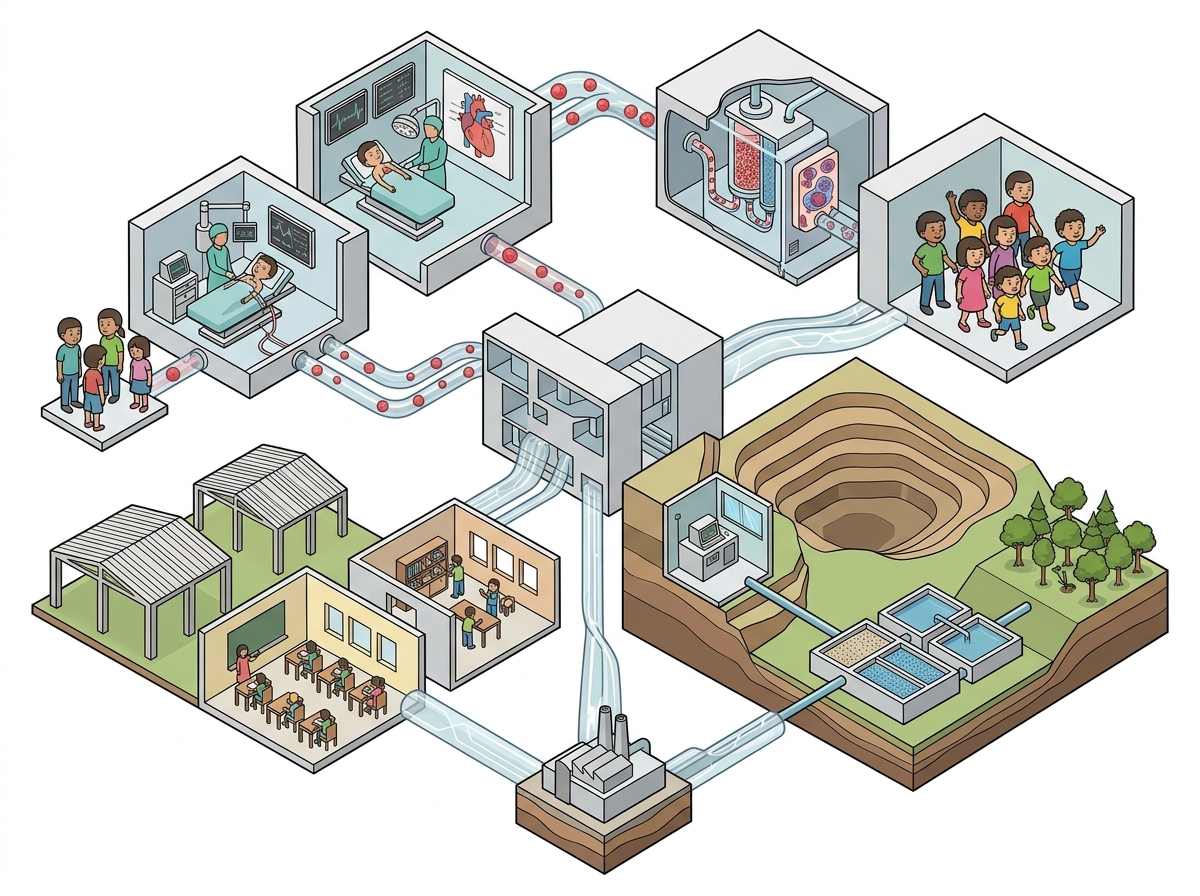
The Union Minister for Coal and Mines launched India’s first sector-specific Corporate Social Responsibility (CSR) framework for coal companies, while celebrating milestones under two flagship CSR initiatives—Thalassemia Bal Sewa Yojana (TBSY) and Nanha Sa Dil—achieving over 1,050 bone marrow transplants and 1,500 corrective heart surgeries for underprivileged children. This initiative underscores the integration of statutory CSR mandates with targeted healthcare interventions in mining-affected communities.
Background
- The Companies Act, 2013, mandates CSR expenditure for eligible companies, with Section 135 specifying a minimum 2% of average net profits for social development projects.
- Coal India Limited (CIL), a Maharatna Central Public Sector Enterprise (CPSE), operates in 84 mining districts across India, impacting over 1.5 million people directly.
- Rare genetic blood disorders like Thalassemia and Aplastic Anemia affect an estimated 10,000 children annually in India, with limited access to specialised treatment.
- Congenital Heart Disease (CHD) accounts for nearly 10% of infant mortality in India, with only 5% of affected children receiving timely surgical intervention due to financial and infrastructural barriers.
- The coal sector’s CSR initiatives have historically focused on education, healthcare, and livelihood enhancement, but lacked a unified, outcome-driven framework until now.
- The Indian Institute of Corporate Affairs (IICA), under the Ministry of Corporate Affairs, has been instrumental in designing sector-specific CSR guidelines for various industries.
Key Components of the CSR Framework and Healthcare Initiatives
- **Sector-Specific CSR Framework for Coal Companies**: Launched by the Ministry of Coal, this framework is the first of its kind in India, developed by the Indian Institute of Corporate Affairs (IICA). It provides a structured approach for coal companies to align their CSR activities with the developmental needs of mining communities, ensuring measurable outcomes in healthcare, education, livelihood, and environmental sustainability.
- **Thalassemia Bal Sewa Yojana (TBSY)**: A flagship CSR initiative by Coal India Limited (CIL) to address Thalassemia and Aplastic Anemia, rare genetic blood disorders. The scheme covers up to ₹10 lakh per patient for Bone Marrow Transplant (BMT) through a network of 21 empanelled hospitals across India, with a total outlay of ₹130 crore over four phases.
- **Implementation and Impact of TBSY**: Over 1,050 BMTs have been successfully conducted under TBSY, with the majority of beneficiaries now leading normal, healthy lives. The scheme is implemented in collaboration with the Ministry of Health and Family Welfare and Thalassemics India, ensuring clinical oversight and monitoring.
- **Nanha Sa Dil Initiative**: A CSR programme launched in March 2024 in partnership with the Sri Sathya Sai Health and Education Trust to address Congenital Heart Disease (CHD) in children. The initiative involves free diagnostic screening and corrective surgeries for underprivileged children, with over 2 lakh screenings and 1,500 surgeries conducted to date.
- **Expansion and Reach of Nanha Sa Dil**: Initially piloted in four districts of Jharkhand, the programme has been scaled up through CIL’s subsidiaries—South Eastern Coalfields Limited (SECL), Central Coalfields Limited (CCL), Northern Coalfields Limited (NCL), and Western Coalfields Limited (WCL)—covering multiple states.
- **Free Treatment and Holistic Support**: Both initiatives provide end-to-end support, including travel, hospitalisation, and post-operative care, ensuring that financial constraints do not impede access to critical healthcare services.
- **Institutional Collaboration**: The CSR framework and healthcare initiatives exemplify multi-stakeholder partnerships involving central ministries, state governments, medical institutions, non-governmental organisations, and beneficiary families, fostering a collaborative ecosystem for social welfare.
- **Statutory Compliance and Governance**: The CSR framework adheres to the provisions of the Companies Act, 2013, ensuring transparency, accountability, and periodic reporting of outcomes to stakeholders.
Key Features
| Feature | Significance |
|---|---|
| Thalassemia Bal Sewa Yojana (TBSY) | First-of-its-kind CSR initiative by a CPSE for rare genetic blood disorders, providing direct financial support for Bone Marrow Transplants (BMT) up to ₹10 lakh per patient across 21 empanelled hospitals. |
| Nanha Sa Dil Initiative | Comprehensive CSR programme addressing Congenital Heart Disease (CHD) in coal mining districts, offering free corrective surgeries, diagnostics, and holistic care for underprivileged children. |
| CSR Framework for Coal Sector | First sector-specific CSR framework under Companies Act, 2013, guiding outcome-oriented interventions in health, education, livelihood, and community development for coal-bearing regions. |
| Monitoring & Implementation | Multi-stakeholder governance involving Ministry of Health & Family Welfare, Thalassemics India, and partner trusts (e.g., Sri Sathya Sai Health and Education Trust) ensuring transparency and impact assessment. |
| Scalability & Replicability | Demonstrated expansion from pilot districts to pan-India reach (TBSY) and multi-state coverage (Nanha Sa Dil), with documented outcomes in terms of lives saved and quality-of-life improvements. |
Why it Matters
Public Health Governance
- TBSY exemplifies a targeted, disease-specific CSR intervention addressing rare genetic disorders, filling gaps in India’s public health infrastructure for paediatric haematology.
- Nanha Sa Dil bridges the critical gap in congenital heart disease treatment, where only 5% of affected infants receive timely surgical intervention despite high prevalence (2.4 lakh cases/year).
- Both initiatives integrate preventive screening, tertiary care, and post-operative rehabilitation, aligning with the Ayushman Bharat framework’s emphasis on comprehensive health coverage.
Corporate Social Responsibility (CSR) Evolution
- Sector-specific CSR frameworks (e.g., for coal mining) enhance accountability and resource allocation efficiency, moving beyond generic philanthropy to outcome-driven programmes.
- Collaboration between CPSEs (e.g., CIL), government ministries, and civil society organisations (CSOs) demonstrates a model for leveraging corporate resources for national developmental priorities.
- The framework’s alignment with Companies Act, 2013, underscores the legal and institutional maturity of India’s CSR ecosystem, ensuring sustainability and scalability.
Coal Mining Districts Development
- CSR initiatives in coal-bearing regions (e.g., Jharkhand, Odisha, Chhattisgarh) address socio-economic disparities exacerbated by industrial activity, including health vulnerabilities and access to specialised care.
- Programmes like Nanha Sa Dil and TBSY contribute to reducing out-of-pocket expenditure for marginalised communities, a critical SDG 3 (Good Health and Well-being) target.
- Long-term community engagement fosters trust and social licence for mining operations, balancing economic exploitation with equitable development.
Institutional Collaboration
- Partnerships with reputed trusts (e.g., Sri Sathya Sai Health and Education Trust) and medical institutions (e.g., AIIMS, PGIMER) ensure high standards of clinical care and research integration.
- Multi-ministerial coordination (Coal Ministry, Health Ministry, state governments) highlights inter-departmental synergy in addressing complex public health challenges.
- Involvement of beneficiary families and patient support groups (e.g., Thalassemics India) enhances programme relevance and sustainability.
Sustainable Development Goals (SDGs) Alignment
- SDG 3 (Good Health and Well-being): Directly targets reduction in child mortality and improvement in maternal health through specialised paediatric care.
- SDG 10 (Reduced Inequalities): Addresses disparities in healthcare access for marginalised groups in coal mining regions.
- SDG 17 (Partnerships for Goals): Demonstrates multi-stakeholder collaboration for achieving health-related targets.
Challenges
1. Geographical and Logistical Barriers
- Limited access to tertiary care facilities in remote coal mining districts necessitates mobile health units and telemedicine integration to ensure equitable service delivery.
- High referral costs and transportation challenges for patients from rural areas can deter uptake of specialised treatments despite financial support.
UPSC Link: GS-II: Governance, Health Infrastructure
2. Disease-Specific Challenges
- Thalassemia and congenital heart diseases require lifelong management; post-operative complications and adherence to follow-up care remain critical concerns.
- Genetic counselling and early diagnosis are underemphasised, leading to delayed interventions and increased treatment costs.
UPSC Link: GS-II: Health, Human Development
3. CSR Framework Implementation Gaps
- Ensuring uniformity in programme execution across diverse coal mining regions with varying socio-economic contexts requires robust monitoring and evaluation mechanisms.
- Balancing immediate health interventions with long-term community development (e.g., skill-building, education) remains a strategic challenge.
UPSC Link: GS-II: Corporate Governance, Public Policy
4. Resource Mobilisation and Sustainability
- Dependence on CPSEs’ CSR funds for sustained programme operation poses risks during economic downturns or policy shifts in corporate priorities.
- Scaling up initiatives to cover all eligible beneficiaries while maintaining quality standards demands innovative financing models (e.g., public-private partnerships).
UPSC Link: GS-III: Resource Mobilisation, SDGs
5. Stakeholder Coordination and Governance
- Coordinating between central ministries, state governments, and implementing agencies can lead to bureaucratic delays and administrative bottlenecks.
- Ensuring transparency in fund utilisation and beneficiary selection requires independent audits and grievance redressal mechanisms.
UPSC Link: GS-II: Governance, Accountability
Challenges — UPSC Perspective
| Issue | Concern |
|---|---|
| Limited tertiary care infrastructure in coal belts | Delays in diagnosis and treatment, leading to irreversible complications in paediatric patients. |
| High out-of-pocket expenditure despite CSR support | Transportation, accommodation, and post-operative care costs deter families from availing full treatment. |
| Underutilisation of genetic counselling services | Lack of awareness and access results in delayed interventions for hereditary disorders. |
| Fragmented monitoring across regions | Inconsistent data collection hampers impact assessment and programme improvements. |
| Dependence on CPSE CSR funds | Vulnerability to economic fluctuations and changes in corporate priorities threatens long-term sustainability. |
| Inter-departmental coordination gaps | Bureaucratic delays and policy overlaps reduce programme efficiency and reach. |
Government Initiatives — Must-Memorise for Prelims
- Thalassemia Bal Sewa Yojana (TBSY)
- Nanha Sa Dil Initiative
- CSR Framework for Coal Sector (under Companies Act, 2013)
Way Forward
- Establish mobile health units and telemedicine facilities in remote coal mining districts to improve early diagnosis and referral systems.
- Integrate genetic counselling and newborn screening programmes with existing CSR initiatives to enhance preventive care.
- Develop a centralised digital dashboard for real-time monitoring of programme performance, beneficiary outcomes, and fund utilisation.
- Formalise partnerships with state governments to align CSR initiatives with existing public health schemes (e.g., Ayushman Bharat).
- Introduce outcome-based financing models, such as social impact bonds, to attract private sector investment in sustainable health interventions.
- Conduct periodic impact assessments and publish disaggregated data to identify gaps and inform policy refinements.
- Expand vocational training and scholarship programmes for beneficiary families to ensure long-term socio-economic upliftment.
- Strengthen grievance redressal mechanisms and beneficiary feedback systems to enhance programme transparency and accountability.
UPSC Value Addition
Keywords for Mains Answer-Writing
Corporate Social Responsibility (CSR) framework · Coal India Limited (CIL) · Thalassemia Bal Sewa Yojana (TBSY) · Nanha Sa Dil initiative · Congenital Heart Disease (CHD) · Bone Marrow Transplant (BMT) · Ministry of Coal · Public Sector Undertakings (PSUs) · Rare genetic blood disorders · Healthcare CSR initiatives · Company Act 2013 · IICA · CSR statutory provisions · Community development in coal mining areas
Concept Flow
Coal mining activities → Socio-economic disparities in coal-bearing regions → Increased prevalence of genetic and congenital disorders → Recognition of unmet health needs → Launch of TBSY and Nanha Sa Dil initiatives → Direct financial and medical support for affected children → Improvement in health outcomes and quality of life → Scalability to pan-India coverage → Development of sector-specific CSR framework → Institutionalisation of outcome-oriented CSR practices → Alignment with SDGs and national health priorities.
Prelims Practice Questions
Q1. Consider the following statements regarding the Thalassemia Bal Sewa Yojana (TBSY):
1. It is a flagship CSR initiative of Coal India Limited (CIL) for treating Thalassemia and Aplastic Anemia in children.
2. The scheme provides financial assistance up to ₹10 lakh per patient for Bone Marrow Transplant (BMT).
3. The scheme is implemented under the guidance of the Ministry of Health and Family Welfare.
4. The scheme has completed over 1,500 BMTs to date.
How many of the above statements are correct?
- Only one
- Only two
- Only three
- All
Answer: Only three — Statements 1, 2, and 3 are correct. Statement 4 is incorrect as the scheme has completed over 1,050 BMTs, not 1,500.
Q2. Assertion (A): The Nanha Sa Dil initiative aims to address Congenital Heart Disease (CHD) in newborns.
Reason (R): The initiative provides free corrective surgeries for CHD patients, including travel and hospitalisation expenses.
Options:
A. Both A and R are true, and R is the correct explanation of A.
B. Both A and R are true, but R is NOT the correct explanation of A.
C. A is true, but R is false.
D. A is false, but R is true.
Answer: ? — Both A and R are true, and R correctly explains A. The initiative is specifically designed to address CHD and provides comprehensive free treatment.
Q3. Match the following CSR initiatives with their respective objectives:
Column I (Initiative) | Column II (Objective)
———————————————|—————————————
A. Thalassemia Bal Sewa Yojana (TBSY) | 1. Addressing Congenital Heart Disease
B. Nanha Sa Dil | 2. Treating rare genetic blood disorders
C. Sushruta of SECL | 3. Maternal and child health
D. CSR Framework for Coal Sector | 4. Providing a structured CSR guideline for coal companies
Options:
A-2, B-1, C-3, D-4
A-1, B-2, C-4, D-3
A-2, B-1, C-4, D-3
A-3, B-2, C-1, D-4
Answer: ? — Correct match: A-2 (TBSY treats rare genetic blood disorders), B-1 (Nanha Sa Dil addresses CHD), C-3 (Sushruta focuses on maternal and child health), D-4 (CSR Framework provides structured guidelines).
Mains Practice Question
✍ The launch of India’s first sector-specific Corporate Social Responsibility (CSR) framework for the coal sector marks a paradigm shift from ad hoc philanthropy to outcome-oriented governance. Critically examine the significance of this framework in the context of statutory CSR under the Companies Act, 2013, and its potential to transform community development in coal mining regions. (15 Marks)
Approach: MODEL-ANSWER SKELETON:
1. **Context and Statutory Basis**
– Briefly explain the Companies Act, 2013 provisions on CSR (Sections 135, Schedule VII) and the mandatory 2% spending requirement.
– Highlight the absence of sector-specific guidelines prior to this framework.
2. **Features of the Sector-Specific CSR Framework**
– Outline the key components: outcome measurement, stakeholder mapping, and convergence with national priorities.
– Mention the role of the Indian Institute of Corporate Affairs (IICA) in its formulation.
3. **Significance for Coal Mining Regions**
– Address the unique challenges in coal mining areas: environmental degradation, health disparities, and socio-economic vulnerabilities.
– Explain how the framework can ensure targeted interventions (e.g., healthcare, education, livelihood) aligned with local needs.
4. **Comparative Advantage Over Ad Hoc CSR**
– Discuss how the framework moves beyond charity to sustainable development goals (SDGs).
– Cite examples from TBSY and Nanha Sa Dil to illustrate measurable outcomes.
5. **Challenges and Way Forward**
– Challenges: Implementation gaps, monitoring mechanisms, and ensuring inclusivity.
– Suggest measures: Strengthening multi-stakeholder partnerships, leveraging technology for monitoring, and integrating with state welfare schemes.
6. **Conclusion**
– Summarise the transformative potential of the framework while acknowledging the need for continuous refinement.
Source: PIB (Press Information Bureau)
Generated by AanyaAi for educational purpose.
Related guides on our sites
- Best PSIR optional coaching for upsc
- Best PSIR optional teacher for upsc
- Best teacher of PSIR optional for upsc
- Best PSIR optional coaching in delhi for UPSC

- TRAl assesses mobile network quality in Vijayanagara, Karnataka - October 27, 2026
- आईसीएआर-एमजीआईएफआरआई ने ‘खेत बचाओ अभियान 2026’ से कृषि में क्रांति की शुरुआत - October 27, 2026
- Kerala to Host Workshop on Revised State-Level IIP Base Year - October 27, 2026

No Comments