


21 Sep Gwalior Telecom Manufacturing Zone: ₹5,500 Cr Investments & Job Opportunities Explained for UPSC
✎ The Gwalior Telecom Manufacturing Zone (TMZ) is Asia’s first integrated telecom manufacturing cluster, designed to reduce import dependence, boost domestic value addition, and position India as a global hub for 5G/6G…
Subject Relevance — Where This Topic Fits
- GS Paper II — Government Policies and Interventions for Development in various sectors | GS Paper III — Industrial Policy, Investment Models, and Manufacturing Sector
- Prelims: Telecom Manufacturing Zone (TMZ), Production-Linked Incentive (PLI) Scheme for Telecom, Make in India, Self-Reliant India (Atmanirbhar Bharat), Special Purpose Vehicle (SPV), Foreign Direct Investment (FDI) in Telecom, National Electronics Policy, 5G/6G Technology, Telecom Equipment Manufacturing Clusters
- Essay: India’s journey towards becoming a global manufacturing hub: Opportunities and Challenges, The role of state governments in fostering industrial growth and employment generation
Quick Revision: The Gwalior Telecom Manufacturing Zone (TMZ) is Asia’s first integrated telecom manufacturing cluster, designed to reduce import dependence, boost domestic value addition, and position India as a global hub for 5G/6G technologies, with a 170-acre plug-and-play industrial facility.
Why is this in the news?
The Union Minister of Communications, Shri Jyotiraditya M. Scindia, in collaboration with the Chief Minister of Madhya Pradesh, Dr. Mohan Yadav, will convene an investor meeting in Bengaluru to attract investments for the establishment of Asia’s first Telecom Manufacturing Zone (TMZ) in Gwalior, Madhya Pradesh. This initiative aligns with the government’s broader vision of transforming India into a global hub for telecom manufacturing, research, and innovation, while reducing import dependence and enhancing domestic value addition.
Background
- The Government of India has prioritised the telecom sector as a key pillar of its industrial and digital transformation strategy under the ‘Atmanirbhar Bharat’ (Self-Reliant India) initiative.
- India’s telecom manufacturing ecosystem currently relies heavily on imports, with domestic value addition estimated at less than 20% for key telecom equipment, highlighting the need for strategic interventions.
- The Production-Linked Incentive (PLI) Scheme for Telecom and Networking Products, launched in 2021, aims to boost domestic manufacturing by providing financial incentives to eligible companies.
- Madhya Pradesh has been identified as a strategic location for industrial clusters due to its central geographic positioning, availability of land, and supportive state policies.
- The TMZ initiative is part of a broader push to integrate India’s telecom manufacturing sector with global supply chains, particularly in the context of 5G and 6G technology rollouts.
- Previous investor meetings in New Delhi and Mumbai have yielded investment commitments worth ₹5,500 crore, with potential employment generation of 18,000 jobs.
What is the Telecom Manufacturing Zone (TMZ) in Gwalior?
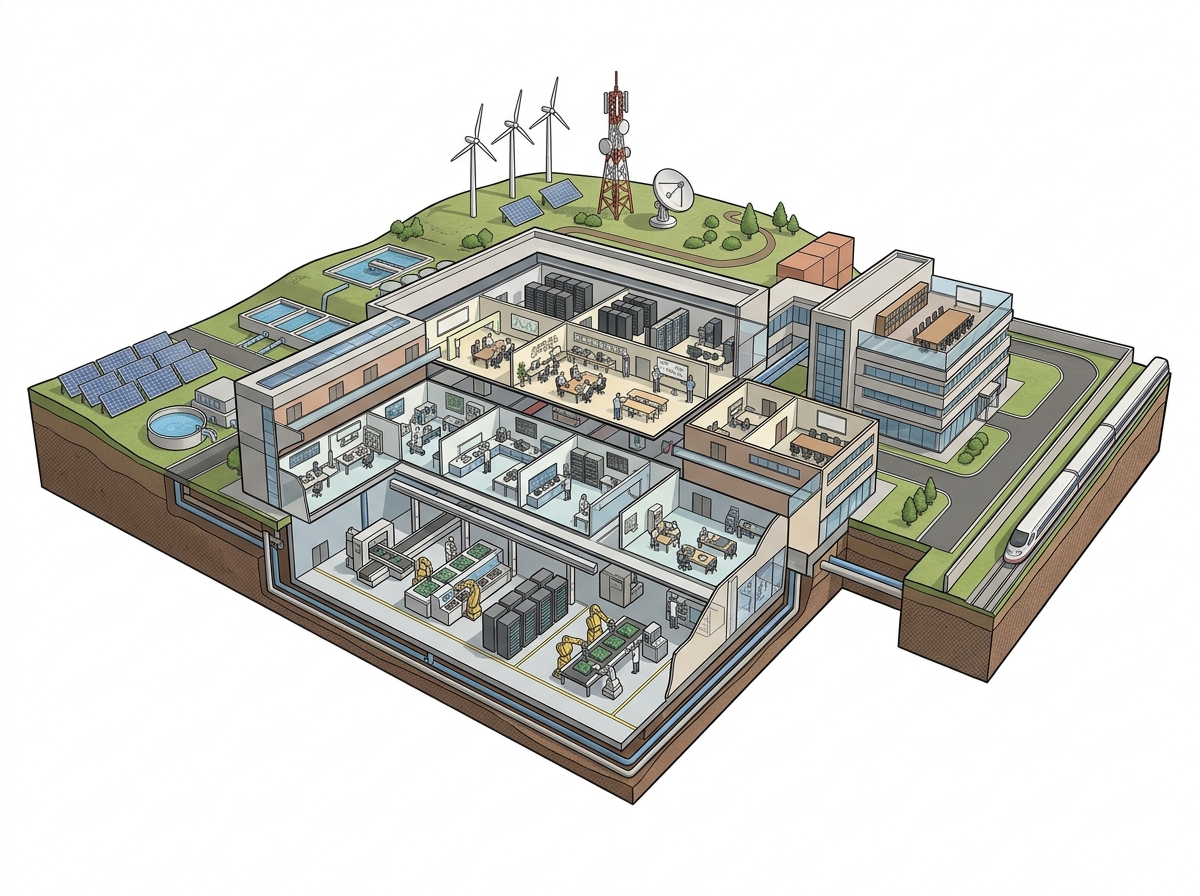
- The Gwalior TMZ is envisaged as Asia’s first integrated telecom manufacturing cluster spread over 170 acres, designed as a ‘plug-and-play’ industrial facility to facilitate ease of operations for investors.
- The zone will focus on manufacturing a range of telecom equipment, including mobile devices, optical fibre, telecom infrastructure hardware, and next-generation 5G/6G technologies.
- The TMZ aims to foster a self-sustaining ecosystem by integrating manufacturing, research and development (R&D), innovation, and supply chain logistics within a single cluster.
- The initiative is aligned with the broader ‘Make in India’ campaign to reduce import dependence and enhance India’s share in global telecom manufacturing.
- The zone is expected to create significant employment opportunities, particularly in high-skilled manufacturing, R&D, and ancillary services, thereby contributing to the ‘Atmanirbhar Bharat’ vision.
- The TMZ will also serve as a testbed for piloting advanced technologies such as 6G, edge computing, and IoT-enabled telecom solutions, positioning India as a leader in next-generation telecom innovation.
Key Features
| Feature | Significance |
|---|---|
| Asia’s first Telecom Manufacturing Zone (TMZ) in Gwalior | Establishes India as a pioneer in indigenous telecom hardware production, reducing import dependence and fostering self-reliance in critical infrastructure. |
| Plug-and-play industrial cluster of 170 acres | Provides pre-developed infrastructure with utilities, reducing setup time and capital expenditure for investors. |
| 100% central funding (₹493 crore) for Phase-I | Demonstrates government commitment to de-risking investment and accelerating project implementation. |
| Free land allocation by Madhya Pradesh government | Reduces land acquisition costs, a major barrier in large-scale manufacturing projects. |
| Special Purpose Vehicle (SPV) with 51% state equity | Ensures coordinated governance between central and state authorities for streamlined decision-making. |
| Focus on 5G/6G and optical fibre technologies | Aligns with global telecom standards, positioning India as a hub for next-generation communications. |
Why it Matters
Economic
- Creates a high-value manufacturing ecosystem, reducing reliance on telecom equipment imports valued at over ₹30,000 crore annually.
- Expected to generate 18,000+ direct and indirect jobs, addressing youth unemployment in industrial corridors.
- Boosts ancillary industries (electronics components, logistics, R&D) through backward and forward linkages.
- Enhances India’s share in global telecom manufacturing, currently dominated by China and Vietnam.
Strategic
- Strengthens India’s digital sovereignty by securing critical telecom supply chains against geopolitical disruptions.
- Supports the vision of ‘Atmanirbhar Bharat’ in high-tech manufacturing, aligning with Production-Linked Incentive (PLI) schemes.
- Facilitates indigenous development of 5G/6G technologies, reducing dependency on foreign vendors for network infrastructure.
Technological
- Encourages R&D in telecom hardware, positioning India as a hub for innovation in next-generation connectivity solutions.
- Promotes integration of domestic and global telecom ecosystems, fostering technology transfer and skill development.
- Supports the deployment of optical fibre networks, critical for India’s BharatNet and Digital India initiatives.
Policy & Governance
- Demonstrates Centre-State collaboration through SPV model, ensuring policy coherence and ease of doing business.
- Complements existing schemes like PLI for Telecom and Electronics, providing a focused manufacturing cluster.
- Sets a precedent for sector-specific industrial corridors, replicable in other high-tech sectors.
Challenges
1. Infrastructure Bottlenecks
- Reliance on external funding for Phase-II and beyond, given limited fiscal space post-PLI disbursements.
- Need for robust power, water, and logistics infrastructure in Gwalior to support large-scale manufacturing.
- Connectivity gaps in surrounding regions may deter investor confidence in ancillary industries.
UPSC Link: GS-III: Infrastructure & Investment Models
2. Skill Development & Employment
- Shortage of skilled labour in telecom hardware manufacturing, requiring upskilling initiatives under PMKVY or NSDC.
- Competition from existing electronics manufacturing hubs (e.g., Tamil Nadu, Karnataka) may divert talent.
- Ensuring inclusive employment opportunities for local youth in Madhya Pradesh.
UPSC Link: GS-II: Skill Development & Employment
3. Global Competition & Market Access
- Competing with established telecom manufacturing giants (China, Vietnam) in cost and scalability.
- Need for export-oriented policies to penetrate global markets, especially in Africa and Southeast Asia.
- Compliance with international standards (e.g., IEC, ISO) for telecom equipment certification.
UPSC Link: GS-III: Global Trade & WTO
4. Regulatory & Compliance Hurdles
- Streamlining approvals for land use, environmental clearances, and labour laws in a time-bound manner.
- Ensuring seamless integration with existing telecom policies (e.g., TRAI regulations, spectrum allocation).
- Addressing intellectual property concerns in collaborative R&D ventures.
UPSC Link: GS-II: Governance & Ease of Doing Business
5. Supply Chain Vulnerabilities
- Dependence on imported raw materials (e.g., semiconductor chips, rare earth metals) for telecom hardware.
- Need for domestic supply chain resilience, including local sourcing of critical components.
- Mitigating risks of global supply chain disruptions (e.g., geopolitical tensions, pandemics).
UPSC Link: GS-III: Supply Chain & Logistics
Challenges — UPSC Perspective
| Issue | Concern |
|---|---|
| Land acquisition & environmental clearances | Delays in project timelines due to regulatory and ecological assessments. |
| Cost competitiveness with global peers | Higher production costs in India may deter price-sensitive investors. |
| Talent retention in high-tech manufacturing | Risk of brain drain to established tech hubs or foreign firms. |
| Integration with global telecom standards | Ensuring interoperability with international networks and equipment. |
| Policy stability for long-term investments | Need for consistent incentives and tariff policies over 10-15 years. |
| Cybersecurity & data localisation norms | Compliance with evolving data protection laws for telecom hardware manufacturing. |
Government Initiatives — Must-Memorise for Prelims
- Production-Linked Incentive (PLI) Scheme for Telecom and Networking Products
- Modified Electronics Manufacturing Clusters (EMC 2.0) Scheme
- Digital India initiative (for broadband and optical fibre deployment)
- BharatNet Programme (for rural connectivity infrastructure)
Way Forward
- Accelerate Phase-I infrastructure development in Gwalior TMZ to meet investor timelines.
- Launch targeted skill development programs in telecom hardware manufacturing under PMKVY.
- Establish a dedicated export promotion cell to facilitate market access for Indian telecom products.
- Strengthen supply chain resilience by incentivizing local sourcing of critical components (e.g., PCBs, semiconductors).
- Streamline regulatory approvals through a single-window clearance mechanism for TMZ investors.
- Collaborate with IITs/IISc for R&D in 5G/6G technologies and indigenous telecom protocols.
- Develop a telecom manufacturing policy roadmap with clear milestones for 2025-2030.
- Enhance digital infrastructure in Gwalior (e.g., data centres, high-speed internet) to support manufacturing operations.
UPSC Value Addition
Keywords for Mains Answer-Writing
Telecom Manufacturing Zone (TMZ) · Make in India in telecom sector · Production-Linked Incentive (PLI) Scheme for Telecom · Self-Reliant India (Atmanirbhar Bharat) in electronics manufacturing · Foreign Direct Investment (FDI) in telecom sector · Industrial corridors and plug-and-play industrial clusters · Research and Development (R&D) in telecom · 5G/6G technology manufacturing ecosystem · Special Purpose Vehicle (SPV) for industrial projects · State-level incentives for manufacturing industries
Constitutional & Policy Linkages
- Article 246 (7th Schedule): Distribution of legislative powers between Centre and States in industrial development.
- Article 299: Contractual obligations of the Union and States in public-private partnerships.
Concept Flow
Policy Vision → Atmanirbhar Bharat in Telecom Manufacturing → Establishment of TMZ in Gwalior → Centre-State Collaboration → SPV Model → 100% Central Funding + State Land Allocation → Investor Engagement → B2B Meetings in Bengaluru → Commitment of ₹5,500 Crore Investments → Infrastructure Development → Plug-and-Play Cluster → Pre-Built Utilities & Logistics → Manufacturing Ecosystem → Local Value Addition → Reduction in Import Dependence → Technology Integration → 5G/6G R&D → Positioning India as Global Telecom Hub → Economic Impact → Job Creation → Enhanced Exports & Digital Sovereignty
Prelims Practice Questions
Q1. Consider the following statements regarding the Telecom Manufacturing Zone (TMZ) proposed in Gwalior, Madhya Pradesh:
1. The TMZ is envisaged as a 170-acre integrated industrial cluster for telecom manufacturing, R&D, and innovation.
2. The central government will provide 100% funding for Phase-I of the TMZ, amounting to ₹493 crore.
3. The TMZ will exclusively focus on manufacturing 4G-enabled mobile handsets and will not include 5G/6G technologies.
How many of the above statements are correct?
- Only one
- Only two
- All three
- None
Answer: Only two — Statements 1 and 2 are correct as per the official announcement. Statement 3 is incorrect because the TMZ is designed to include next-generation 5G/6G technologies alongside mobile devices and optical fibre equipment.
Q2. Assertion (A): The Telecom Manufacturing Zone (TMZ) in Gwalior is being established as Asia’s first dedicated telecom manufacturing hub.
Reason (R): The TMZ aims to reduce India’s dependence on imported telecom equipment and promote indigenous design and manufacturing capabilities.
Options:
A. Both A and R are true, and R is the correct explanation of A.
B. Both A and R are true, but R is not the correct explanation of A.
C. A is true, but R is false.
D. A is false, but R is true.
Answer: ? — Assertion (A) is true as the TMZ is explicitly described as Asia’s first telecom manufacturing zone. Reason (R) is also true and correctly explains the purpose of the TMZ, which is to enhance domestic manufacturing and reduce import dependence.
Q3. Match the following initiatives with their respective objectives:
Column I
1. Production-Linked Incentive (PLI) Scheme for Telecom
2. National Electronics Policy 2020
3. Digital India Mission
4. Atmanirbhar Bharat Abhiyaan
Column II
A. Promote large-scale manufacturing of core and non-core electronic components, including telecom equipment
B. Enhance domestic manufacturing of electronic products and reduce import dependence
C. Foster innovation, R&D, and manufacturing in next-generation telecom technologies like 5G/6G
D. Transform India into a digitally empowered society and knowledge economy
Options:
1. 1-C, 2-A, 3-D, 4-B
2. 1-A, 2-B, 3-D, 4-C
3. 1-B, 2-A, 3-C, 4-D
4. 1-D, 2-C, 3-B, 4-A
Answer: ? — 1-C: PLI Scheme for Telecom focuses on next-generation technologies like 5G/6G. 2-A: National Electronics Policy 2020 aims to promote large-scale manufacturing of electronic components, including telecom. 3-D: Digital India Mission aims to create a digitally empowered society. 4-B: Atmanirbhar Bharat Abhiyaan seeks to reduce import dependence and boost domestic manufacturing.
Mains Practice Question
✍ The establishment of Asia’s first Telecom Manufacturing Zone (TMZ) in Gwalior, Madhya Pradesh, represents a strategic intervention to transform India into a global hub for telecom manufacturing and innovation. Critically examine the significance of this initiative in the context of India’s broader policy framework for self-reliance in the telecom sector. Also, analyse the potential challenges in achieving the stated objectives of the TMZ. (15 Marks)
Approach: MODEL-ANSWER SKELETON:
1. **Context and Policy Framework (4 Marks)**
– Define the TMZ and its objectives: integrated 170-acre plug-and-play industrial cluster for telecom manufacturing, R&D, and innovation, including 5G/6G technologies.
– Link to broader policies: Atmanirbhar Bharat Abhiyaan, Make in India, National Electronics Policy 2020, and Production-Linked Incentive (PLI) Scheme for Telecom.
– Mention the government’s vision to shift from a telecom service provider to a global telecom product manufacturing and innovation centre.
2. **Significance of the TMZ Initiative (6 Marks)**
– **Economic Significance:** Reduction in import dependence, enhancement of domestic value chains, and creation of employment opportunities (reference to ₹5,500 crore investment commitments and 18,000 jobs from recent investor meets).
– **Technological Significance:** Promotion of indigenous design and manufacturing of next-generation telecom technologies (5G/6G), optical fibre, and mobile devices.
– **Strategic Significance:** Strengthening India’s position in the global telecom supply chain and reducing reliance on foreign manufacturers.
– **Institutional Mechanism:** Role of the Special Purpose Vehicle (SPV) with 51% equity by Madhya Pradesh and 49% by the Department of Telecommunications (DoT) for efficient project execution.
3. **Potential Challenges (5 Marks)**
– **Infrastructure and Land Acquisition:** Ensuring timely provision of land (170 acres) and development of plug-and-play infrastructure.
– **Skill Development:** Addressing the skill gap in advanced telecom manufacturing and R&D to meet industry demands.
– **Competition and Market Dynamics:** Ensuring the TMZ’s products remain globally competitive in terms of cost, quality, and innovation.
– **Policy Implementation:** Effective coordination between central and state governments, and alignment of state-level incentives with central schemes like PLI.
– **Sustainability and ESG Compliance:** Ensuring the TMZ adheres to environmental, social, and governance (ESG) standards to attract global investors.
Source: PIB (Press Information Bureau)
Karnataka PCS (KPSC) — State PCS Practice
Prelims: Which of the following initiatives was recently launched by the Union Minister of Communications, Shri Jyotiraditya Scindia, in collaboration with the Chief Minister of Madhya Pradesh, Dr. Mohan Yadav, to boost the telecom manufacturing sector?
- A. ‘Digital India Mission 2.0’ for rural connectivity
- B. Investment attraction drive for telecom manufacturing in Gwalior
- C. ‘Make in India’ telecom policy for Karnataka
- D. National Broadband Mission for urban areas
Answer: B. Investment attraction drive for telecom manufacturing in Gwalior — The initiative was a joint effort to attract investments in the telecom manufacturing sector in Gwalior, Madhya Pradesh, as announced by the Union Minister.
Mains: Discuss the significance of the telecom manufacturing sector for Karnataka’s economy and how state-level policies can complement national initiatives like the one launched in Gwalior to foster growth in this sector. (150-200 words)
Generated by AanyaAi for educational purpose.
Related guides on our sites
- Current affairs for upsc 2026
- How to prepare for GS paper 1 for UPSC CSE mains exam
- Best UPSC coaching for IFOS exam
- Best mentorship programme for upsc

- संयुक्त राष्ट्र पैनल ने AI एजेंटों की बढ़ती शक्ति पर सुरक्षा बढ़ाने की चेतावनी दी - September 21, 2026
- UN Panel Warns: AI Agents May Outpace Human Control Safeguards - September 21, 2026
- तमिलनाडु में मुर्गे की लड़ाई पर पूर्ण प्रतिबंध नहीं: डीजीपी कार्यालय ने मद्रास उच्च न्यायालय को बताया - September 21, 2026

No Comments