


11 Nov Karnataka’s Guarantee Schemes: Expenditure & Impact
✎ State guarantee schemes are welfare initiatives with significant fiscal implications, implemented through direct benefit transfers and multi-tiered governance structures to achieve socio-economic empowerment and inclusive growth.
Subject Relevance — Where This Topic Fits
- GS Paper II — Governance, Social Justice | GS Paper III — Indian Economy and issues relating to Planning, Mobilization of Resources, Growth, Development and Employment
- Prelims: Guarantee Schemes, Fiscal Policy, Direct Benefit Transfer (DBT), Per Capita Income, Social Welfare Schemes, Gram Panchayat Committees
- Essay: The role of welfare schemes in economic empowerment and social equity., Balancing fiscal prudence with social welfare objectives in state governance.
Quick Revision: State guarantee schemes are welfare initiatives with significant fiscal implications, implemented through direct benefit transfers and multi-tiered governance structures to achieve socio-economic empowerment and inclusive growth.
Why is this in the news?
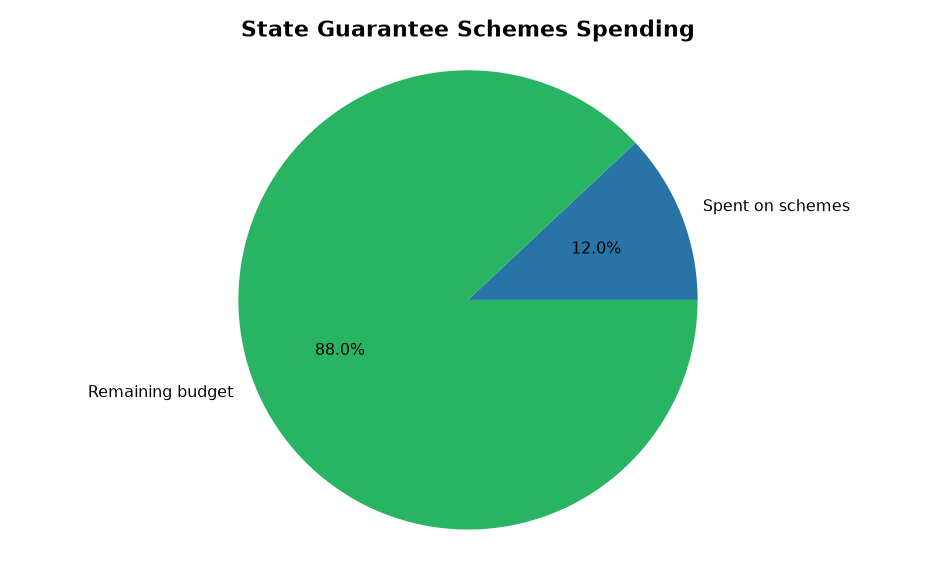
The Karnataka State Guarantee Schemes Implementation Authority announced that the State government has expended ₹1.85 lakh crore on its five guarantee schemes, constituting approximately 12% of the State budget. This expenditure highlights the significant financial commitment towards these welfare initiatives, with benefits reportedly reaching beneficiaries directly and contributing to the state’s per capita income.
Background
- State guarantee schemes are welfare programs initiated by state governments to provide various forms of support, including financial assistance, essential services, or subsidies, to specific segments of the population.
- These schemes are often designed to address socio-economic disparities, enhance living standards, and promote inclusive growth.
- The implementation typically involves direct transfer mechanisms to ensure that benefits reach the intended recipients without intermediaries, thereby reducing corruption and enhancing efficiency.
- Fiscal implications of such large-scale schemes are a critical aspect, requiring careful budgetary allocation and management to ensure sustainability and avoid undue strain on state finances.
- The efficacy of these schemes is often evaluated based on their impact on beneficiaries’ economic empowerment, particularly for vulnerable groups such as women, and their contribution to overall state development indicators like per capita income.
- Governance structures, including committees at various administrative levels (e.g., gram panchayat, ward), are established to oversee the implementation, address grievances, and ensure the continuous delivery of benefits.
Understanding State Guarantee Schemes and their Governance
- State Guarantee Schemes are government-backed welfare initiatives providing assured benefits or services to eligible citizens, often with a focus on social security and economic upliftment.
- The Direct Benefit Transfer (DBT) mechanism is frequently employed to disburse funds or benefits directly into the accounts of beneficiaries, minimizing leakages and enhancing transparency.
- Fiscal sustainability is a key consideration for such schemes, as substantial budgetary allocations are required, necessitating a balance between welfare objectives and prudent financial management.
- Implementation involves multi-tiered administrative structures, including state-level authorities and local committees (e.g., gram panchayat, ward-level), responsible for beneficiary identification, grievance redressal, and scheme monitoring.
- Economic empowerment, particularly for women, is a stated objective of many guarantee schemes, aiming to enhance their financial independence and decision-making capacity within households.
- The impact of these schemes on state economic indicators, such as per capita income, is often cited as a measure of their success in fostering broader economic development.
- Continuous monitoring and adaptation are crucial, including provisions for beneficiary changes (e.g., due to demise) to ensure uninterrupted access to benefits for eligible families.
- Addressing operational challenges, such as technical difficulties in fund withdrawal or the timely issuance of essential documents like BPL cards, is integral to effective scheme delivery.
Key Features
| Feature | Significance |
|---|---|
| Direct Benefit Transfer (DBT) | Ensures efficient delivery of benefits to eligible recipients, minimising leakages and corruption by eliminating intermediaries. |
| Inclusivity | Schemes are designed to benefit eligible individuals irrespective of caste, promoting social equity and broad-based welfare. |
| Economic Empowerment of Women | Specific schemes like ‘Gruha Lakshmi’ aim to provide financial assistance directly to women, enhancing their economic independence and household decision-making power. |
| Decentralised Implementation Committees | Formation of committees at gram panchayat and ward levels facilitates local oversight, grievance redressal, and effective outreach of schemes. |
| Adaptability for Beneficiary Changes | Provision for nominating new beneficiaries, particularly the eldest woman in the family, upon the death of an existing beneficiary ensures continuity of support. |
Why it Matters
Economic Implications
- The substantial expenditure on guarantee schemes, accounting for 12% of the State budget, indicates a significant fiscal commitment towards welfare, potentially influencing state finances and resource allocation.
- Direct financial transfers to beneficiaries, averaging ₹5,000 to ₹6,000 per family, can stimulate local demand and consumption, contributing to economic activity at the grassroots level.
- The focus on women’s economic empowerment through schemes like ‘Gruha Lakshmi’ can lead to improved household financial stability and gender equality indicators.
Social Impact
- The inclusive nature of the schemes, benefiting individuals across caste lines, promotes social cohesion and reduces disparities in access to welfare provisions.
- Direct benefit delivery without intermediaries enhances trust in government welfare programmes and ensures that intended support reaches vulnerable populations.
- The provision for beneficiary changes upon death, prioritising women, reinforces social security nets for families and acknowledges women’s pivotal role in household welfare.
Governance and Administration
- The establishment of Guarantee Schemes Implementation Authorities and committees at various administrative levels demonstrates a structured approach to programme delivery and monitoring.
- Addressing technical difficulties in fund withdrawal and prioritising BPL card issuance for those with serious health conditions reflects an adaptive and responsive governance mechanism.
- The emphasis on direct benefit transfer (DBT) underscores a commitment to transparency and accountability in public expenditure, aligning with principles of good governance.
Challenges
1. Fiscal Sustainability
- The substantial allocation of ₹1.85 lakh crore, representing 12% of the State budget, raises concerns regarding long-term fiscal health and the potential for crowding out other essential developmental expenditures.
- Sustaining such high levels of expenditure on welfare schemes may necessitate careful financial management and revenue generation strategies to avoid fiscal imbalances.
UPSC Link: GS Paper 3: Indian Economy and issues relating to planning, mobilization of resources, growth, development and employment.
2. Implementation Efficacy
- Ensuring that benefits consistently reach all eligible beneficiaries, particularly in remote areas, requires robust administrative machinery and effective grievance redressal mechanisms.
- Addressing technical difficulties faced by beneficiaries in accessing funds from banks highlights the need for improved financial inclusion and digital literacy.
UPSC Link: GS Paper 2: Governance, Transparency and Accountability; Welfare Schemes for Vulnerable Sections.
3. Targeting and Exclusion Errors
- Despite efforts for inclusivity, there remains a risk of exclusion errors where eligible beneficiaries are left out, or inclusion errors where ineligible individuals receive benefits.
- The process of identifying and verifying beneficiaries, especially for schemes requiring BPL cards, needs to be streamlined and transparent to minimise such errors.
UPSC Link: GS Paper 2: Welfare Schemes for Vulnerable Sections of the population by the Centre and States and the performance of these schemes.
4. Administrative Burden
- The formation and functioning of numerous committees at gram panchayat and ward levels, each comprising six members, can place a significant administrative burden on local governance structures.
- Ensuring adequate training and resources for these committees is crucial for their effective operation and to prevent bureaucratic inefficiencies.
UPSC Link: GS Paper 2: Structure, Organization and Functioning of the Executive and the Judiciary; Ministries and Departments of the Government; Pressure Groups and Formal/Informal Associations and their Role in the Polity.
Challenges — UPSC Perspective
| Issue | Concern |
|---|---|
| High Fiscal Outlay | Potential strain on state finances and opportunity cost for other developmental projects. |
| Technical Access Barriers | Beneficiaries facing difficulties in withdrawing money from banks, indicating gaps in financial literacy or banking infrastructure. |
| Beneficiary Identification | Ensuring accurate identification of eligible beneficiaries and timely issuance of necessary documents like BPL cards. |
| Committee Functionality | Effective operationalisation and coordination of numerous village and ward-level guarantee committees. |
| Long-term Economic Impact | Debate among economists regarding the sustained impact of such schemes on per capita income and overall economic growth. |
Government Initiatives — Must-Memorise for Prelims
- Gruha Lakshmi scheme
Way Forward
- Implement robust fiscal management strategies to ensure the long-term sustainability of guarantee schemes without compromising other critical developmental expenditures.
- Strengthen the Direct Benefit Transfer (DBT) infrastructure to minimise technical glitches and enhance the accessibility of funds for all beneficiaries, including those in remote areas.
- Conduct regular audits and impact assessments of the schemes to evaluate their effectiveness, identify areas for improvement, and ensure optimal resource utilisation.
- Enhance financial literacy and digital inclusion initiatives, particularly for women and vulnerable groups, to empower them to effectively access and manage their benefits.
- Streamline the process for issuing BPL cards and other eligibility documents, ensuring transparency and reducing bureaucratic hurdles for deserving beneficiaries.
- Provide comprehensive training and adequate resources to the decentralised guarantee committees at gram panchayat and ward levels to ensure their efficient functioning and effective grievance redressal.
- Foster a continuous dialogue with economists and policy experts to refine scheme designs and ensure that welfare initiatives contribute positively to sustainable economic growth and human development.
UPSC Value Addition
Keywords for Mains Answer-Writing
Guarantee schemes · Fiscal implications · State budget · Per capita income · Direct Benefit Transfer (DBT) · Economic empowerment · Social welfare policies · Targeted delivery · Poverty alleviation · Fiscal sustainability · Subsidies · Welfare economics
Constitutional & Policy Linkages
- Article 38: State to secure a social order for the promotion of welfare of the people.
- Article 39: Certain principles of policy to be followed by the State, including securing adequate means of livelihood and equal pay for equal work.
- Article 41: Right to work, to education and to public assistance in certain cases.
- Article 46: Promotion of educational and economic interests of Scheduled Castes, Scheduled Tribes and other weaker sections.
Concept Flow
State government allocates significant funds for guarantee schemes. → Benefits are disbursed directly to eligible beneficiaries. → Decentralised committees oversee implementation and grievance redressal. → Schemes aim to empower women and provide social security. → Impact on state finances and per capita income is observed. → Continuous monitoring and adaptation ensure scheme efficacy.
Prelims Practice Questions
Q1. Consider the following statements regarding ‘guarantee schemes’ in the context of state welfare initiatives:
1. Guarantee schemes typically involve direct financial or in-kind benefits to eligible beneficiaries.
2. The implementation of such schemes often necessitates significant allocation from the state budget.
3. Economists generally agree on the universally positive fiscal impact of all guarantee schemes, irrespective of their design or scale.
How many of the above statements are correct?
- Only one
- Only two
- Only three
- None
Answer: Only two — Statement 1 is correct: Guarantee schemes are designed to provide direct benefits, either monetary or in the form of essential goods/services, to specific beneficiary groups. Statement 2 is correct: These schemes, by their nature, require substantial financial outlay, impacting the state’s fiscal position and budget allocation. Statement 3 is incorrect: While some economists support well-designed guarantee schemes for their social benefits, there is no universal agreement on their positive fiscal impact; concerns about fiscal sustainability, potential for moral hazard, and crowding out of other public investments are often raised.
Q2. Which of the following mechanisms is most commonly associated with ensuring that benefits from welfare schemes reach beneficiaries directly, minimizing leakage and corruption?
- Public-Private Partnerships (PPPs)
- Direct Benefit Transfer (DBT)
- Centralized procurement systems
- Decentralized planning committees
Answer: Direct Benefit Transfer (DBT) — Direct Benefit Transfer (DBT) involves the direct transfer of subsidies and benefits to the bank accounts of beneficiaries, reducing the role of intermediaries and enhancing transparency and efficiency in welfare scheme delivery. PPPs are for infrastructure/service delivery, centralized procurement for government purchases, and decentralized planning for local governance, not primarily for direct benefit delivery to individuals.
Mains Practice Question
✍ Examine the fiscal implications of large-scale guarantee schemes on state finances. Discuss the challenges associated with their implementation and suggest measures to enhance their effectiveness and sustainability. (15 Marks)
Approach: INTRODUCTION: Define guarantee schemes as welfare initiatives providing direct benefits to specific beneficiary groups, often with a significant financial commitment from the state. Mention their growing prevalence in state policies.
BODY 1: FISCAL IMPLICATIONS
* Increased expenditure: Highlight the substantial allocation from the state budget, potentially diverting funds from other developmental sectors (e.g., infrastructure, education, health).
* Fiscal deficit: Discuss the potential for widening fiscal deficits if schemes are not adequately funded through revenue generation.
* Debt burden: Explain how increased borrowing to finance these schemes can lead to higher public debt and interest payment obligations.
* Impact on capital expenditure: Note the potential reduction in capital expenditure, which is crucial for long-term economic growth.
* Per capita income: Acknowledge the argument that such schemes can boost consumption and, in some cases, per capita income, but also consider the sustainability aspect.
BODY 2: CHALLENGES IN IMPLEMENTATION
* Targeting errors: Discuss issues of inclusion (eligible beneficiaries excluded) and exclusion (ineligible beneficiaries included) errors.
* Administrative burden: Explain the complexities in setting up and managing robust delivery mechanisms, including beneficiary identification and grievance redressal.
* Technical difficulties: Mention issues faced by beneficiaries in accessing benefits, such as banking infrastructure, digital literacy, and technical glitches in payment systems.
* Political economy: Briefly touch upon the political pressures influencing the design and continuation of such schemes, potentially overriding fiscal prudence.
* Leakage and corruption: Despite DBT, challenges in ensuring complete transparency and preventing malpractices can persist.
BODY 3: MEASURES TO ENHANCE EFFECTIVENESS AND SUSTAINABILITY
* Robust targeting mechanisms: Emphasize the need for accurate identification of beneficiaries using Aadhar, socio-economic caste census (SECC) data, and other reliable databases.
* Fiscal prudence: Suggest a clear fiscal roadmap for funding these schemes, including exploring revenue enhancement measures or rationalizing other expenditures.
* Regular impact assessment: Advocate for periodic evaluations to assess the socio-economic impact and cost-effectiveness of the schemes.
* Technological integration: Recommend leveraging technology (e.g., DBT, digital payment platforms) to improve delivery efficiency and reduce leakages.
* Capacity building: Focus on strengthening administrative capacity at all levels, including training for local committees and bank staff.
* Public awareness and grievance redressal: Stress the importance of educating beneficiaries about their entitlements and establishing accessible mechanisms for addressing complaints.
CONCLUSION: Summarize that while guarantee schemes can play a vital role in social welfare and poverty alleviation, their long-term effectiveness and sustainability depend critically on sound fiscal management, efficient implementation, and continuous evaluation to mitigate potential adverse fiscal impacts and ensure genuine benefit delivery.
Source: The Hindu
Generated by AanyaAi for educational purpose.
Related guides on our sites
- Best PSIR optional coaching for upsc
- Best sociology optional coaching for upsc
- Which is best sociology optional coaching for upsc
- Best economics optional coaching for upsc

- NAMASTE Scheme: Enhancing Sanitation Workers’ Livelihoods & Safety - November 14, 2026
- एमएसएमई का विशेष अभियान 6.0: स्वच्छता और लंबित मामलों का निपटारा - November 14, 2026
- Sea Vigil-26: Coastal Defence Drills Off Visakhapatnam - November 14, 2026

No Comments