


17 Sep Kerala Commission Flags Elderly Women’s Safety Crisis: UPSC Polity Analysis
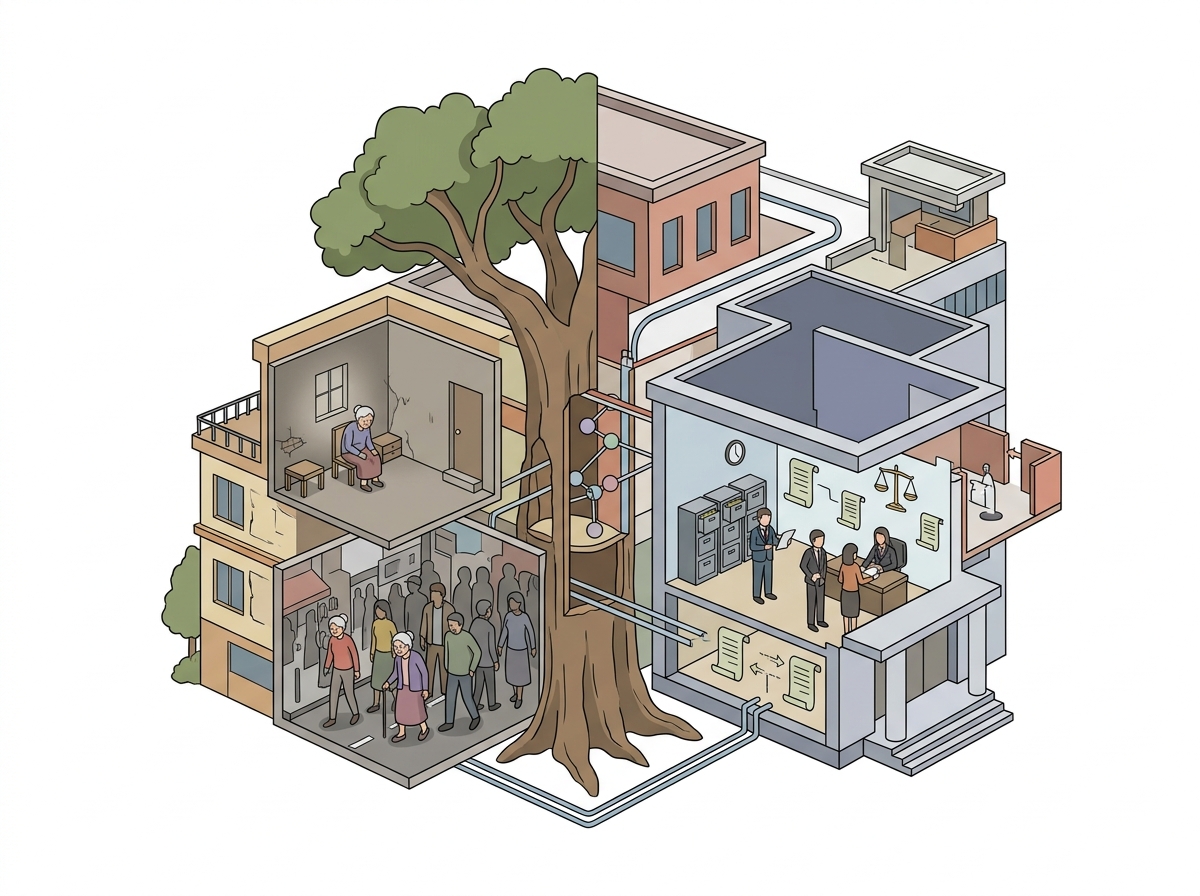
✎ Elderly women in India face systemic vulnerabilities due to weak enforcement of legal protections, economic dependence, social isolation, and rising cyber threats, necessitating a multi-dimensional governance response.
Subject Relevance — Where This Topic Fits
- GS Paper I — Social Empowerment | GS Paper II — Governance, Constitution, Polity, Social Justice and International Relations
- Prelims: Protection of Women from Domestic Violence Act, 2005, Maintenance and Welfare of Parents and Senior Citizens Act, 2007, National Policy for Senior Citizens, 2011, Kerala State Women’s Commission, Old Age Homes, Social Isolation, Property Rights of Women, Cybercrimes against Women
- Essay: The interplay between social values and state intervention in ensuring dignity for the elderly, Governance challenges in protecting vulnerable sections: A case study of elderly women
Quick Revision: Elderly women in India face systemic vulnerabilities due to weak enforcement of legal protections, economic dependence, social isolation, and rising cyber threats, necessitating a multi-dimensional governance response.
Why is this in the news?
The Kerala State Women’s Commission has highlighted systemic failures in ensuring the safety and social protection of elderly women, citing abandonment, social isolation, and inadequate enforcement of legal provisions as critical concerns. The issue underscores broader governance challenges in India’s social security architecture, particularly for women in their later years, and raises questions about the effectiveness of existing legal and institutional mechanisms.
Background
- India’s elderly population (aged 60 and above) is projected to reach 340 million by 2050, with women constituting a significant majority due to higher life expectancy.
- The Maintenance and Welfare of Parents and Senior Citizens Act, 2007, mandates financial support and protection for senior citizens, including elderly women, but enforcement remains weak.
- The Protection of Women from Domestic Violence Act, 2005, provides legal recourse for women facing abuse, including elderly women, but societal stigma and institutional apathy often impede justice.
- Kerala, despite its high Human Development Index, reports rising cases of elderly women facing abandonment, financial exploitation, and social isolation, reflecting a paradox in its progressive social indicators.
- The National Policy for Senior Citizens, 2011, emphasizes the need for integrated social security measures, but implementation gaps persist due to fragmented governance and resource constraints.
- Cybercrimes targeting elderly women, including financial fraud and harassment, have surged, exacerbating their vulnerability in an increasingly digital society.
What are the governance challenges in ensuring the safety and social protection of elderly women?
- Legal and Institutional Gaps: While laws such as the Maintenance and Welfare of Parents and Senior Citizens Act, 2007, and the Protection of Women from Domestic Violence Act, 2005, exist, their enforcement is hindered by inadequate institutional capacity, slow judicial processes, and societal normalization of family disputes.
- Economic Dependence and Property Rights: Elderly women often face abandonment after inheriting property, as familial support systems erode due to changing social values, economic pressures, and lack of awareness about legal rights.
- Social Isolation: The breakdown of joint family systems and increasing nuclearization of households contribute to severe isolation for elderly women, particularly those without financial independence or social networks.
- Cyber Vulnerabilities: Elderly women are increasingly targeted by cybercriminals through fraud, harassment, and financial scams, often due to limited digital literacy and lack of protective mechanisms.
- Intersectional Vulnerabilities: Elderly women from marginalized communities (e.g., Scheduled Castes, Scheduled Tribes, or economically weaker sections) face compounded risks due to systemic discrimination and limited access to legal aid.
- Healthcare and Caregiving Deficits: The absence of affordable, accessible, and gender-sensitive healthcare, including mental health support, exacerbates the challenges faced by elderly women, particularly those living alone.
- Policy Implementation Bottlenecks: Despite national and state-level policies, implementation is marred by poor inter-departmental coordination, lack of dedicated funding, and insufficient monitoring mechanisms.
- Cultural and Structural Barriers: Patriarchal norms, stigma around seeking external help, and the perception of elderly women as a financial burden perpetuate their marginalization within families and communities.
Key Features
| Feature | Significance |
|---|---|
| Isolation of elderly women | Highlights the psychosocial vulnerabilities of elderly women, particularly those abandoned after property division, necessitating targeted social interventions. |
| Family abandonment post-property transfer | Exposes a systemic gap in intergenerational support systems, where legal rights may not translate into social security for elderly women. |
| Cybersecurity threats against elderly women | Underscores the evolving nature of gender-based violence, extending beyond physical abuse to digital spaces. |
| Police dismissal of domestic violence complaints | Reveals institutional biases in law enforcement, where domestic disputes are trivialised, undermining statutory protections. |
| Rise in substance abuse-related threats within families | Links substance dependency to heightened domestic insecurity, particularly for women in vulnerable age groups. |
Why it Matters
Social Justice
- The issue intersects with the constitutional mandate under Article 15(1) to prohibit discrimination on grounds of sex, including age-based discrimination in familial support systems.
- Violations of the Protection of Women from Domestic Violence Act, 2005, reflect systemic failures in implementing gender-sensitive legal frameworks.
- The phenomenon of ‘property abandonment’ after inheritance challenges the efficacy of succession laws in ensuring dignified ageing for women.
Public Policy
- The Women’s Commission’s observations serve as a diagnostic tool for policymakers to assess gaps in social protection schemes for elderly women.
- The rise in cybercrimes against elderly women necessitates integration of digital literacy programmes into existing welfare initiatives.
- Police responses to domestic violence complaints indicate the need for gender-sensitisation training in law enforcement agencies.
Demographic Impact
- Kerala’s high elderly dependency ratio amplifies the urgency of addressing isolation and abandonment among elderly women.
- The trend may exacerbate rural-urban disparities, as urbanisation often disrupts traditional family support structures.
- Increased longevity without corresponding social security measures risks reversing gender parity gains in older age cohorts.
Challenges
1. Institutional Bias in Law Enforcement
- Trivialisation of domestic violence complaints as ‘family issues’ undermines the Protection of Women from Domestic Violence Act, 2005.
- Police responses fail to align with the Act’s mandate for immediate protection and redressal mechanisms.
- Gender-insensitive handling of complaints perpetuates a culture of impunity for domestic offenders.
UPSC Link: GS-II: Role of Civil Services in Governance
2. Intergenerational Support Erosion
- Legal inheritance rights do not guarantee social security, leading to abandonment of elderly women post-property transfer.
- Declining familial values exacerbate isolation, particularly in nuclear family structures prevalent in Kerala.
- Absence of mandatory familial support obligations under existing laws creates a vacuum in elder care.
UPSC Link: GS-II: Social Justice & Welfare Schemes
3. Digital Vulnerability of Elderly Women
- Increased cyberattacks targeting elderly women reflect a lack of digital safety awareness and safeguards.
- Limited access to cybersecurity education among older women makes them easy targets for financial and emotional exploitation.
- Existing cybercrime laws (e.g., IT Act, 2000) require strengthening to address gender-specific digital threats.
UPSC Link: GS-III: Cyber Security & Digital Governance
4. Substance Abuse and Domestic Insecurity
- Alcohol and drug dependency among male family members correlates with heightened domestic violence risks for elderly women.
- Lack of rehabilitation programmes for offenders exacerbates cycles of abuse within households.
- Healthcare systems lack integrated mental health and addiction support for perpetrators of domestic violence.
UPSC Link: GS-II: Social Sector Health Services
5. Policy-Implementation Gaps
- Social protection schemes for elderly women (e.g., Indira Gandhi National Old Age Pension Scheme) are underutilised due to lack of awareness.
- Absence of mandatory reporting mechanisms for elder abuse hinders data collection and intervention.
- Kerala’s high literacy rate does not translate into proactive utilisation of welfare schemes by elderly women.
UPSC Link: GS-II: Welfare Schemes for Vulnerable Sections
Challenges — UPSC Perspective
| Issue | Concern |
|---|---|
| Trivialisation of domestic violence complaints | Undermines statutory protections and discourages reporting of abuse. |
| Property abandonment post-inheritance | Exposes a disconnect between legal rights and social security for elderly women. |
| Cybersecurity threats against elderly women | Highlights the need for digital literacy and safety measures tailored to older women. |
| Substance abuse in households | Correlates with increased domestic violence risks for elderly women. |
| Underutilisation of welfare schemes | Indicates gaps in awareness and accessibility of social protection measures. |
Way Forward
- Strengthen gender-sensitisation training for police personnel to ensure compliance with the Protection of Women from Domestic Violence Act, 2005.
- Expand digital literacy programmes for elderly women, with a focus on cybersecurity awareness and reporting mechanisms.
- Introduce mandatory familial support obligations under elder care laws to prevent abandonment post-property transfer.
- Integrate mental health and addiction rehabilitation programmes into domestic violence intervention strategies.
- Enhance outreach for existing social protection schemes (e.g., IGNOAPS) through community-based awareness campaigns.
- Establish a state-level helpline for elderly women, equipped with legal and psychosocial support services.
- Mandate regular home visits by anganwadi workers and ASHA workers to monitor the well-being of elderly women in rural areas.
- Collaborate with local self-government institutions (e.g., panchayats) to create elderly care support networks.
UPSC Value Addition
Keywords for Mains Answer-Writing
Elderly women safety · Social security for elderly · Protection of Women from Domestic Violence Act, 2005 · Old-age isolation · Property rights and elderly women · Institutional mechanisms for women’s safety · Kerala State Women’s Commission · Domestic violence against elderly women · Cyber threats to elderly women · Family abandonment of elderly women
Concept Flow
Property inheritance disputes → Legal rights secured but social abandonment → Isolation and psychosocial vulnerabilities → Increased domestic violence risks → Trivialisation of complaints by law enforcement → Systemic erosion of elder care → Policy-awareness gaps → Need for targeted interventions.
Prelims Practice Questions
Q1. Consider the following statements regarding the Protection of Women from Domestic Violence Act, 2005:
1. The Act defines domestic violence to include physical, emotional, sexual, and economic abuse.
2. The Act mandates the appointment of Protection Officers to assist women in filing complaints.
3. The Act applies only to married women and excludes live-in relationships.
4. The Act empowers the Magistrate to pass protection orders and residence orders.
How many of the above statements are correct?
- Only one
- Only two
- Only three
- All
Answer: Only three — Statements 1, 2, and 4 are correct. Statement 3 is incorrect as the Act covers women in live-in relationships under the definition of ‘aggrieved person’.
Q2. Assertion (A): The Kerala State Women’s Commission is a statutory body constituted under the Kerala Women’s Commission Act, 1990.
Reason (R): The Commission is empowered to investigate and examine matters relating to the safety and welfare of women in the state.
Options:
A. Both A and R are true, and R is the correct explanation of A.
B. Both A and R are true, but R is not the correct explanation of A.
C. A is true, but R is false.
D. A is false, but R is true.
Answer: ? — Both A and R are true. The Kerala Women’s Commission Act, 1990, establishes the Commission as a statutory body, and its powers include investigating matters related to women’s safety and welfare.
Q3. Match the following legal provisions with their respective objectives:
Column I (Provisions)
A. Section 498A of the Indian Penal Code
B. Domestic Violence Act, 2005
C. Maintenance and Welfare of Parents and Senior Citizens Act, 2007
D. Protection of Women from Sexual Harassment at Workplace Act, 2013
Column II (Objectives)
1. Protection of elderly parents and senior citizens from abandonment and neglect
2. Criminalisation of cruelty by husband or relatives of a woman
3. Prevention and redressal of domestic violence against women
4. Protection of women from sexual harassment at the workplace
Select the correct match:
A-2, B-3, C-1, D-4
A-1, B-2, C-3, D-4
A-4, B-3, C-2, D-1
A-2, B-4, C-1, D-3
- A-2, B-3, C-1, D-4
- A-1, B-2, C-3, D-4
- A-4, B-3, C-2, D-1
- A-2, B-4, C-1, D-3
Answer: A-2, B-3, C-1, D-4 — The correct matches are: A-2 (Section 498A IPC deals with cruelty by husband/relatives), B-3 (Domestic Violence Act, 2005), C-1 (Maintenance and Welfare of Parents and Senior Citizens Act, 2007), and D-4 (Protection of Women from Sexual Harassment at Workplace Act, 2013).
Mains Practice Question
✍ The safety and social protection of elderly women in India remains a critical governance challenge, often exacerbated by familial abandonment, economic insecurity, and institutional gaps. Critically examine the legal, social, and institutional frameworks that address these issues. Also, analyse the role of State Women’s Commissions in safeguarding the rights of elderly women. (15 Marks)
Approach: MODEL-ANSWER SKELETON:
1. **Introduction (2 marks)**
– Define the scope: Elderly women as a vulnerable group; key concerns—abandonment, isolation, economic insecurity, domestic violence.
– Cite the Kerala State Women’s Commission’s observations as a contemporary example.
2. **Legal Frameworks (5 marks)**
– **Protection of Women from Domestic Violence Act, 2005**: Define domestic violence (physical, emotional, economic, sexual); role of Protection Officers; Magistrate’s powers (protection/residence orders).
– **Maintenance and Welfare of Parents and Senior Citizens Act, 2007**: State obligations of children/relatives; maintenance tribunals; penalties for abandonment.
– **Section 498A IPC**: Criminalisation of cruelty by husband/relatives; limitations (high acquittal rates, misuse concerns).
– **Digital Personal Data Protection Act, 2023**: Relevance to cyber threats against elderly women.
3. **Institutional Mechanisms (4 marks)**
– **State Women’s Commissions**: Constitutional basis (Article 243D for Panchayats; analogous statutory bodies for women); powers—inquiring into complaints, recommending measures, monitoring implementation.
– **National Commission for Women (NCW)**: Role in policy advocacy, grievance redressal, and awareness.
– **Senior Citizen Helplines and Shelters**: Government schemes (e.g., Integrated Programme for Senior Citizens); challenges in implementation.
– **Police and Judicial System**: Role of FIRs, Section 125 CrPC (maintenance), and fast-track courts; issues like underreporting and dismissive attitudes.
4. **Social and Economic Dimensions (3 marks)**
– **Property Rights and Inheritance**: Link to abandonment post-property transfer; reference to Hindu Succession Act, 1956 (amended 2005) and Kerala’s joint family system.
– **Economic Security**: Pension schemes (e.g., Indira Gandhi National Old Age Pension Scheme); gaps in coverage.
– **Social Isolation**: Impact of urbanisation, nuclear families, and lack of intergenerational support; reference to studies on elderly loneliness.
5. **Challenges and Way Forward (3 marks)**
– **Implementation Gaps**: Underreporting, lack of awareness, slow judicial processes.
– **Policy Recommendations**: Strengthening State Commissions, mandatory reporting of elder abuse, community-based support systems, and digital literacy programmes.
– **Balanced View**: Acknowledge progress (e.g., expansion of maintenance tribunals) while critiquing systemic failures.
6. **Conclusion (1 mark)**
– Reiterate the need for a multi-stakeholder approach—legal, institutional, and societal—to ensure dignity and safety for elderly women.
Source: The Hindu
Kerala PCS (Kerala PSC (KAS)) — State PCS Practice
Prelims: Which of the following initiatives has the Kerala State Women’s Commission recently highlighted to address the safety concerns of elderly women in the state?
- A. Launch of ‘Snehapoorvam’ scheme for elderly women
- B. Implementation of ‘Safe Home’ projects under the Kudumbashree Mission
- C. Expansion of ‘Snehitha’ helpline for senior citizens
- D. Introduction of ‘Sthree Suraksha’ mobile app for women’s safety
Answer: C. Expansion of ‘Snehitha’ helpline for senior citizens — The Kerala State Women’s Commission has emphasized the need to expand the ‘Snehitha’ helpline, a dedicated support system for elderly women facing safety issues, to ensure timely intervention and assistance.
Mains: Critically analyze the role of the Kerala State Women’s Commission in addressing the safety concerns of elderly women. Suggest policy measures to enhance their protection and well-being, with a focus on Kerala’s socio-cultural context.
Generated by AanyaAi for educational purpose.
Related guides on our sites
- Current affairs for upsc 2026
- Best PSIR optional coaching for upsc
- Best sociology optional coaching for upsc
- Which is best sociology optional coaching for upsc

- स्वच्छता ही सेवा अभियान 2026: सामाजिक न्याय विभाग की बड़ी पहल, जानिए क्या है लक्ष्य - September 17, 2026
- Social Justice Dept Launches ‘Swachhata Hi Seva’ Campaign 2026 for UPSC & PCS - September 17, 2026
- प्रधानमंत्री मोदी ने पश्चिम बंगाल में अन्नपूर्णा योजना की चौथी किस्त जारी की - September 17, 2026

No Comments