


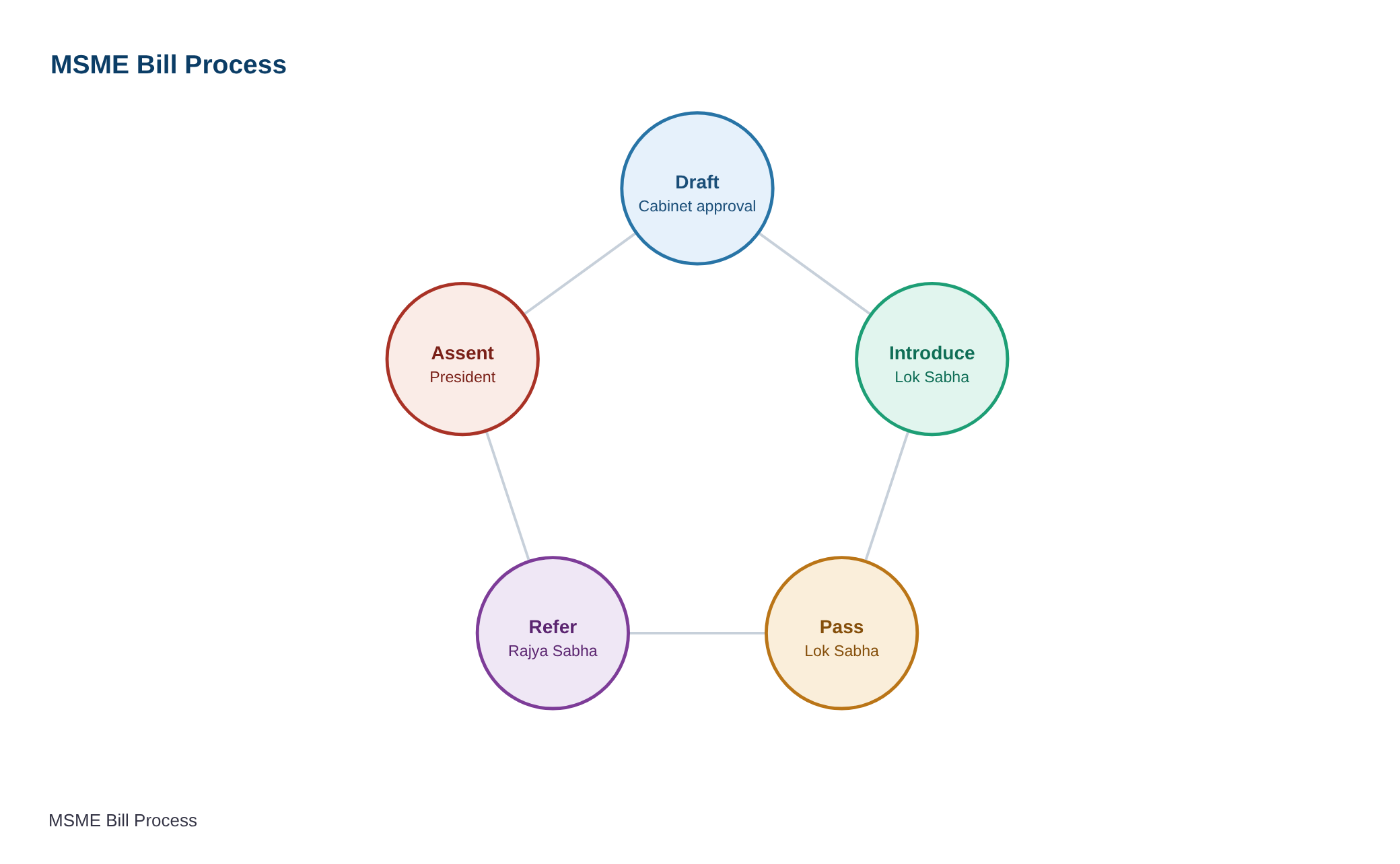
07 Aug Lok Sabha Passes MSME Bill 2024: Key Features & UPSC Exam Relevance
✎ MSME Bill 2024 ensures timely payments to MSMEs, reducing financial stress and disputes.
Relevance for UPSC & State PCS: Polity
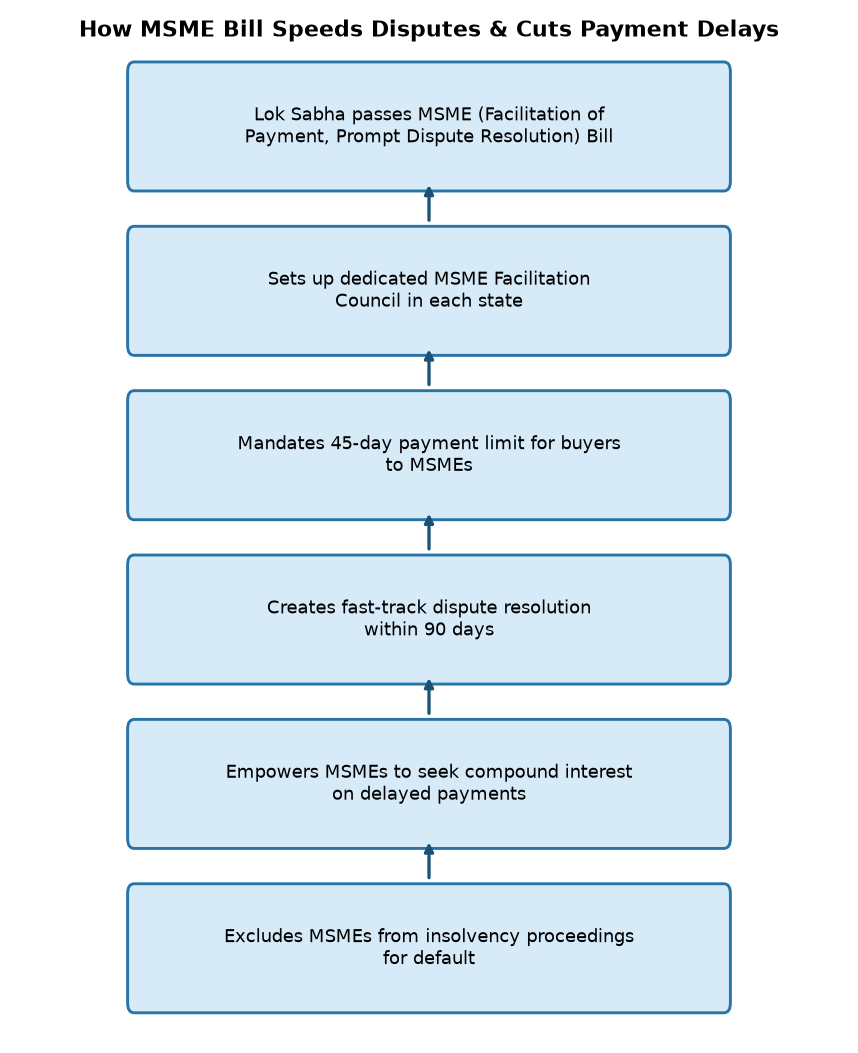
The Lok Sabha’s recent passage of the Micro, Small and Medium Enterprises (MSME) Development (Amendment) Bill, 2024 marks a significant step toward addressing long-standing structural challenges faced by India’s MSME sector, which contributes nearly 30% to the country’s GDP and employs over 110 million people. The bill introduces critical amendments to the MSMED Act, 2006, focusing on two key areas: reducing payment delays by large corporations to MSMEs and expediting the resolution of disputes arising from delayed payments. Under the amended provisions, buyers will be required to settle invoices within a stipulated timeframe, failing which they will be liable to pay compound interest at three times the bank rate notified by the Reserve Bank of India. This move aligns with the government’s broader push to formalize the MSME ecosystem, enhance liquidity for small businesses, and curb the practice of wilful defaults that have historically crippled the sector’s growth.
For UPSC aspirants, the bill underscores the intersection of economic governance and constitutional provisions, particularly Articles 19(1)(g) and 21, which guarantee the right to carry on trade and the right to livelihood. The amendments reflect a judicial trend—seen in cases like *Union of India v. M/s. Micro, Small and Medium Enterprises Facilitation Council*—where courts have emphasized the state’s duty to protect MSMEs from exploitation by larger entities. The bill’s emphasis on statutory timelines and penal provisions also ties into the broader discourse on ease of doing business, a recurring theme in UPSC’s syllabus under economic reforms and governance. State PCS aspirants, particularly those preparing for exams like the Uttar Pradesh or Maharashtra Public Service Commission, should note how such central legislations interact with state-level MSME policies, such as the Uttar Pradesh MSME Policy 2022, which offers subsidies and infrastructure support to align with national objectives.
The bill’s focus on dispute resolution mechanisms is equally noteworthy, as it mandates the establishment of dedicated Facilitation Councils at the state level to adjudicate payment disputes within 90 days. This mirrors the recommendations of the Uday Kotak Committee on Corporate Governance, which highlighted the need for specialized tribunals to reduce pendency in commercial disputes. For UPSC mains, this presents an opportunity to discuss the efficacy of quasi-judicial bodies in India, comparing them with tribunals like the National Company Law Tribunal (NCLT) or the Debt Recovery Tribunals (DRT). State PCS candidates should examine how their respective states are implementing these councils, as some, like Gujarat, have already integrated digital platforms to streamline dispute resolution, offering a case study for other regions.
From a policy perspective, the bill also signals India’s commitment to global best practices, such as the United Nations Commission on International Trade Law (UNCITRAL
Source: ndtv.com
Practice Questions
Q1. What is the primary objective of the MSME Bill recently passed by the Lok Sabha?
- To provide financial subsidies to MSMEs for technological upgrades
- To tackle payment delays and expedite dispute resolution for MSMEs
- To mandate a minimum wage for all MSME employees across India
- To establish new MSME clusters in rural and urban areas
Answer
To tackle payment delays and expedite dispute resolution for MSMEs — The MSME Bill, passed by the Lok Sabha, primarily aims to address payment delays faced by Micro, Small, and Medium Enterprises (MSMEs) and to speed up the resolution of disputes related to such payments.
Q2. Which legislative body passed the MSME Bill to tackle payment delays?
- Rajya Sabha
- Lok Sabha
- President of India
- Supreme Court
Answer
Lok Sabha — The MSME Bill was passed by the Lok Sabha, which is the lower house of the Parliament of India.
Generated by AanyaAi for educational purpose.

- एनजीटी ने आगरा के प्रदूषित तालाबों पर 10 सप्ताह में रिपोर्ट मांगी, अतिक्रमण हटाने के निर्देश - September 22, 2026
- NGT Orders Probe into Agra’s Encroached & Polluted Water Bodies in 10 Weeks - September 22, 2026
- यूएनजीए 2026: युद्ध, एआई और सुधार – दुनिया के नेता क्या करेंगे? (UPSC दृष्टिकोण) - September 22, 2026

No Comments