


07 Aug Lok Sabha Passes Taxation Amendment Bill for Data Centres: Key Implications for UPSC
✎ New taxation policies aim to boost India's data centre sector and digital infrastructure growth.
Relevance for UPSC & State PCS: Polity & Governance
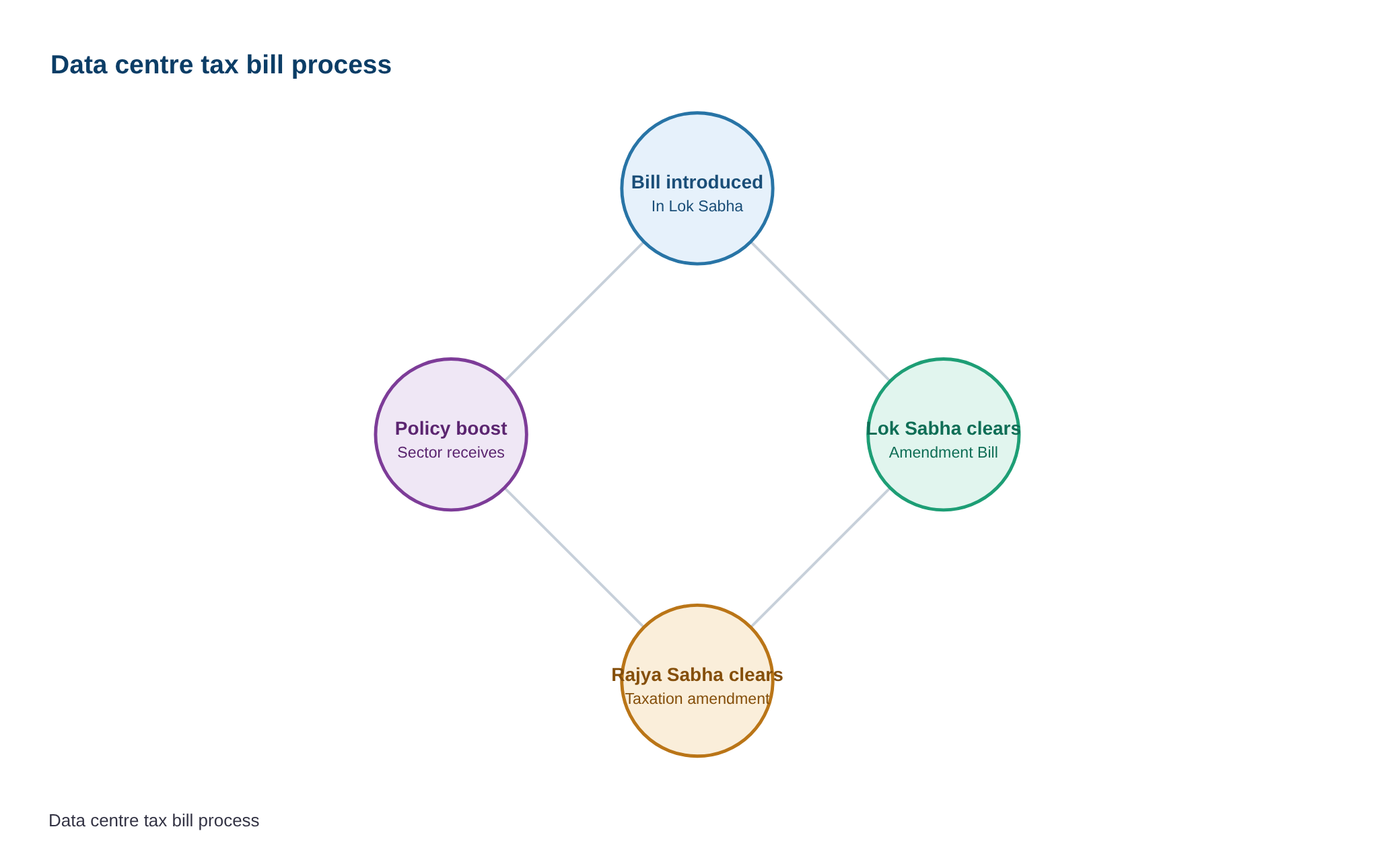
The Lok Sabha’s recent approval of the Taxation Laws (Amendment) Bill, 2024 has provided a significant policy impetus to India’s data centre industry, which has been grappling with high operational costs and regulatory hurdles. The amendment introduces a reduced Goods and Services Tax (GST) rate of 12% on data centre services, down from the previous slab of 18%, aiming to align India’s tax regime with global standards and enhance the sector’s competitiveness. This move is expected to attract foreign investments, particularly from multinational corporations seeking to establish hyperscale data centres in India, thereby boosting digital infrastructure and supporting the government’s vision of a ‘Digital India’. For UPSC and State PCS aspirants, this development underscores the interplay between fiscal policy and economic growth, highlighting how tax reforms can shape strategic sectors like technology and infrastructure.
The bill’s passage also reflects the government’s broader efforts to streamline the ease of doing business in India, a critical theme in governance studies for civil service aspirants. By lowering the tax burden on data centre operators, the amendment addresses long-standing concerns about India’s high operational costs, which have deterred investments despite the country’s growing digital economy. This policy shift is particularly relevant for aspirants preparing for the GS-III (Economy) and GS-II (Governance) papers, as it exemplifies how legislative changes can foster sector-specific growth while aligning with national priorities such as data sovereignty and digital transformation.
From a federalism perspective, the amendment also raises questions about the distribution of fiscal powers between the Centre and states, a recurring topic in polity syllabi. While the GST Council, dominated by the Centre, has the authority to recommend tax rates, states often resist reductions in revenue-sharing mechanisms. The Lok Sabha’s approval of this amendment, despite potential fiscal implications for states, demonstrates the Centre’s commitment to prioritising long-term economic benefits over short-term revenue concerns. This dynamic is crucial for aspirants studying the Indian federal structure and the challenges of cooperative federalism in policy implementation.
For State PCS aspirants, the bill’s implications extend beyond taxation, touching upon the role of state governments in attracting investments and developing ancillary infrastructure. States like Maharashtra, Tamil Nadu, and Telangana, which host major data centre hubs, must now align their policies with the Centre’s incentives to fully leverage this opportunity. The amendment thus serves as a case study for aspirants on how national policies interact with state-level governance, a key dimension in the State PCS syllabus. Additionally, the sector’s growth aligns with India’s broader push for data localisation and cybersecurity, themes that resonate in both UPSC and State PCS examinations.
Source: Business Standard
Practice Questions
Q1. Which legislative body recently cleared a taxation amendment Bill aimed at boosting the data centre sector in India?
- Rajya Sabha
- Lok Sabha
- President of India
- Supreme Court
Answer
Lok Sabha — The Lok Sabha (House of the People) cleared the taxation amendment Bill to provide a policy boost to the data centre sector in India.
Q2. What is the primary objective of the taxation amendment Bill cleared by the Lok Sabha for the data centre sector?
- To impose higher taxes on data centres
- To provide a policy boost to the data centre sector
- To ban foreign investments in data centres
- To regulate data privacy laws
Answer
To provide a policy boost to the data centre sector — The Bill aims to provide a policy boost to the data centre sector by addressing taxation-related issues to encourage growth and investment.
Generated by AanyaAi for educational purpose.

- PLI Scheme for Bulk Drugs: Boosting India’s Pharma Self-Reliance in UPSC 2026 - August 7, 2026
- डीएमके ने खोले नहीं पत्ते, परिसीमन बिल पर संसद में क्या होगी रणनीति? - August 7, 2026
- अकाल तख्त ने कहा- विरोध बिल पर बात तभी जब अनुपालन रिपोर्ट आए - August 7, 2026

No Comments