


20 Sep Madras HC Rejects Bogus Reservation Claim: Key Polity Implications for UPSC
✎ The misuse of reservation benefits through bogus caste certificates is a violation of constitutional morality and procedural justice, and such claims do not entitle individuals to terminal benefits.
Subject Relevance — Where This Topic Fits
- GS Paper II — Constitutional and Non-Constitutional Bodies (Role of Judiciary) | GS Paper II — Fundamental Rights and Directive Principles of State Policy | GS Paper III — Issues Relating to Poverty and Hunger (Social Justice)
- Prelims: Scheduled Tribes (ST) reservation, Community certificate verification, State Level Scrutiny Committee (SLSC), Terminal benefits (pension, gratuity, leave salary), Article 16(4) of the Constitution, Constitutional morality, Procedural justice, Superannuation age
- Essay: The Role of Constitutional Morality in Upholding Social Justice, Balancing Efficiency and Equity in Reservation Policies
Quick Revision: The misuse of reservation benefits through bogus caste certificates is a violation of constitutional morality and procedural justice, and such claims do not entitle individuals to terminal benefits.
Why is this in the news?
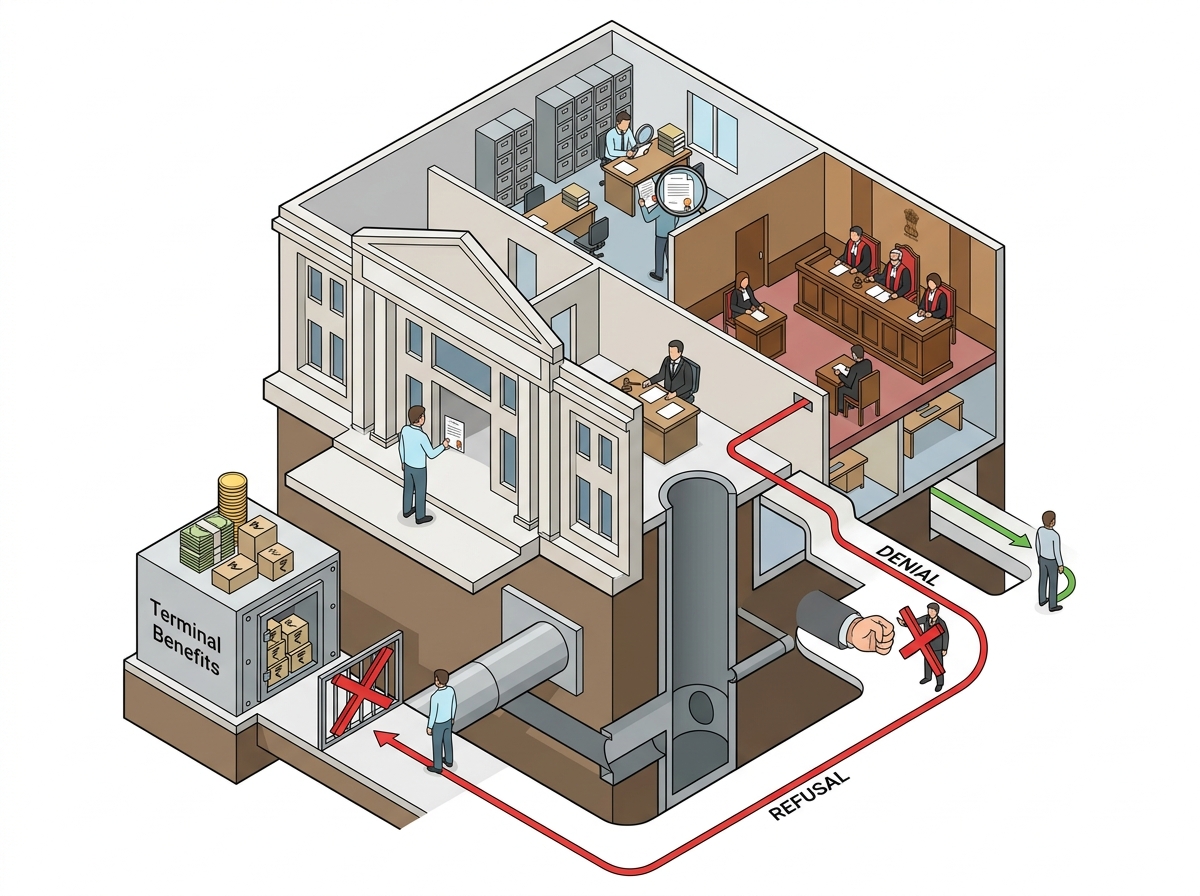
The Madras High Court’s refusal to direct the Chennai Port Trust (CPT) to release terminal benefits to a Caste Hindu employee who fraudulently obtained a Scheduled Tribe (ST) reservation certificate underscores the judiciary’s stringent stance against the misuse of reservation benefits. The case, spanning over four decades, highlights systemic delays in verification processes, the erosion of genuine reservation opportunities for deserving candidates, and the legal consequences of producing bogus caste certificates. It serves as a critical reminder of the constitutional imperative to prevent the exploitation of reservation systems while ensuring procedural fairness.
Background
- Community certificates issued by state authorities are the primary documentary evidence used to claim reservation benefits. These certificates are subject to verification by scrutiny committees to prevent fraudulent claims.
- The State Level Scrutiny Committee (SLSC) is a statutory body established under state-specific rules to verify the authenticity of caste certificates for reservation purposes.
- The case involves a Caste Hindu employee who joined the Chennai Port Trust (CPT) in 1982 under an ST reservation quota, despite belonging to the Urali Gounder community, a non-tribal group.
- The employee’s fraudulent claim deprived a genuine ST candidate of reservation benefits, leading to prolonged litigation and systemic delays in verification.
- The case exemplifies the challenges in balancing the need for timely justice with the procedural safeguards required to uphold constitutional morality.
What are Community Certificates and Reservation Verification Mechanisms?
- Community certificates are official documents issued by state authorities to certify a person’s caste or tribe status, enabling them to avail reservation benefits in education and employment.
- These certificates are issued based on caste/tribe lists notified by the President under Articles 341 and 342 of the Constitution, and state-specific notifications.
- Verification of community certificates is conducted by State Level Scrutiny Committees (SLSCs) or District Level Scrutiny Committees (DLSCs) to prevent fraudulent claims.
- The verification process involves cross-referencing school records, revenue records, and other documentary evidence to confirm the applicant’s caste or tribal status.
- If a certificate is found to be bogus, the concerned authority may cancel the benefits and initiate disciplinary action against the individual, including dismissal from service.
- The judiciary plays a pivotal role in adjudicating disputes arising from verification processes, ensuring that constitutional provisions are upheld without compromising procedural justice.
- The misuse of reservation benefits undermines the very purpose of affirmative action, which is to uplift marginalized sections of society and promote social equity.
- Terminal benefits such as pension, gratuity, and leave salary are contingent upon the validity of the service rendered, and fraudulent claims do not entitle individuals to such benefits.
Key Features
| Feature | Significance |
|---|---|
| Bogus Community Certificate | Undermines the integrity of reservation system by enabling ineligible individuals to access constitutional benefits reserved for Scheduled Tribes. |
| State Level Scrutiny Committee (SLSC) | Institutional mechanism to verify caste/community claims, ensuring only genuine beneficiaries avail reservation benefits. |
| Judicial Delay and Superannuation | Prolonged legal and administrative processes can result in loss of terminal benefits due to age-related retirement, even when fraud is later proven. |
| Documentary Verification | Primary tool for caste verification, relying on school records, revenue documents, and official records to establish community identity. |
| Constitutional Benevolence | Reservation policies aim to address historical social discrimination and promote inclusion, but their misuse erodes public trust in affirmative action. |
Why it Matters
Constitutional and Legal
- The case underscores the constitutional obligation to ensure reservation benefits reach only the intended beneficiaries, as mandated under Articles 15(4) and 16(4) of the Constitution.
- Judicial intervention in verifying caste claims highlights the role of courts in upholding the integrity of reservation policies.
- The prolonged litigation and delayed verification process demonstrate the need for expeditious dispute resolution mechanisms in reservation-related matters.
Administrative and Institutional
- The role of the State Level Scrutiny Committee (SLSC) in verifying caste certificates is critical to prevent fraudulent claims and maintain the credibility of reservation systems.
- The case highlights administrative inefficiencies, including prolonged inquiries and repeated verifications, which can lead to unintended consequences such as loss of terminal benefits.
- Institutions like the Chennai Port Trust must implement robust verification mechanisms at the time of recruitment to prevent misuse of reservation quotas.
Social and Ethical
- Misuse of reservation benefits by ineligible individuals deprives genuine beneficiaries of their constitutional rights, exacerbating social inequities.
- The case reflects the ethical imperative of ensuring that affirmative action policies serve their intended purpose without being exploited for personal gain.
- Public trust in reservation systems is eroded when instances of fraud come to light, necessitating transparent and accountable verification processes.
Challenges
1. Fraudulent Claims in Reservation Systems
- Bogus community certificates enable ineligible individuals to avail reservation benefits, undermining the constitutional intent of affirmative action.
- Fraudulent claims reduce the availability of reserved posts for genuine beneficiaries, particularly in marginalised communities.
- Detection and verification of such frauds require extensive documentary evidence and institutional scrutiny, which can be time-consuming and resource-intensive.
UPSC Link: GS-II: Welfare schemes for vulnerable sections
2. Administrative Delays and Legal Processes
- Prolonged inquiries and repeated verifications can lead to loss of terminal benefits due to superannuation, even when fraud is proven.
- Judicial delays in resolving reservation disputes further exacerbate the issue, delaying justice for genuine beneficiaries.
- Institutions must balance thorough verification with expeditious resolution to prevent unintended consequences.
UPSC Link: GS-II: Government policies and interventions
3. Institutional Credibility and Public Trust
- Instances of fraud erode public trust in reservation systems, leading to scepticism about their effectiveness and necessity.
- Institutions like the SLSC must ensure transparency and accountability in their verification processes to maintain public confidence.
- The judiciary plays a crucial role in upholding the integrity of reservation policies through timely and impartial adjudication.
UPSC Link: GS-II: Mechanisms, laws, institutions and Bodies
4. Documentary Verification Challenges
- Reliance on documentary evidence, such as school records and revenue documents, can be challenging due to inconsistencies or lack of records.
- Fraudsters may manipulate or fabricate documents to support false claims, making verification difficult.
- Institutions must adopt multi-layered verification mechanisms, including field inquiries and cross-referencing, to ensure authenticity.
UPSC Link: GS-II: Welfare schemes for vulnerable sections
5. Loss of Terminal Benefits Due to Delay
- Prolonged legal and administrative processes can result in employees attaining superannuation before disputes are resolved, leading to loss of terminal benefits.
- This issue highlights the need for time-bound resolution mechanisms in reservation-related disputes.
- Institutions must ensure that employees are not penalised for administrative or judicial delays.
UPSC Link: GS-II: Government policies and interventions
Challenges — UPSC Perspective
| Issue | Concern |
|---|---|
| Fraudulent Community Certificates | Undermines the reservation system by enabling ineligible individuals to access benefits. |
| Administrative Delays | Prolonged verification and legal processes can lead to loss of terminal benefits due to superannuation. |
| Documentary Verification Challenges | Inconsistencies or lack of records can hinder accurate verification of caste claims. |
| Institutional Credibility | Instances of fraud erode public trust in reservation systems and their implementation. |
| Judicial Delays | Prolonged legal processes can delay justice and exacerbate the issue for genuine beneficiaries. |
| Loss of Terminal Benefits | Employees may lose terminal benefits due to administrative or judicial delays, even when fraud is proven. |
Way Forward
- Strengthen verification mechanisms at the recruitment stage to prevent fraudulent claims of caste/community identity.
- Implement time-bound processes for verification and dispute resolution to avoid prolonged legal and administrative delays.
- Enhance transparency in the functioning of State Level Scrutiny Committees (SLSCs) to ensure accountability and public trust.
- Promote awareness among institutions and employees about the consequences of misuse of reservation benefits.
- Develop multi-layered verification systems, including field inquiries and cross-referencing of documents, to ensure authenticity.
- Encourage institutions to adopt digital record-keeping and verification systems to streamline the process and reduce delays.
- Ensure that employees are not penalised for administrative or judicial delays, particularly in terminal benefit disbursement.
- Conduct periodic audits of reservation systems to identify and rectify loopholes that enable fraudulent claims.
UPSC Value Addition
Keywords for Mains Answer-Writing
Constitutional reservations · Scheduled Tribes (ST) status · bogus community certificates · State Level Scrutiny Committee (SLSC) · reservation policy enforcement · constitutional benevolence · terminal benefits · social justice · constitutional morality · procedural safeguards in reservation · Madras High Court · Chennai Port Trust (CPT) · superannuation benefits · fraudulent reservation claims · procedural delays in justice delivery
Constitutional & Policy Linkages
- Article 15(4): Empowers the State to make special provisions for the advancement of socially and educationally backward classes.
- Article 16(4): Permits the State to make reservations in public employment for backward classes.
- Article 46: Directs the State to promote the educational and economic interests of weaker sections.
- Constitution (Scheduled Tribes) Order, 1950: Defines the list of Scheduled Tribes and their entitlements.
Concept Flow
Misrepresentation of caste identity → Fraudulent community certificate obtained → Recruitment in reserved post → Prolonged verification process → Discovery of fraud → Legal challenges and judicial intervention → Delay in resolution → Superannuation → Loss of terminal benefits → Judicial refusal to grant relief → Reinforcement of need for robust verification mechanisms.
Prelims Practice Questions
Q1. Consider the following statements regarding the constitutional provisions for Scheduled Tribes (ST) in India:
1. The President of India, in consultation with the Governor of the State, specifies the STs in relation to that State under Article 342.
2. The State Level Scrutiny Committee (SLSC) is empowered to issue community certificates to ST candidates without any verification.
3. The Supreme Court, in Indra Sawhney v. Union of India (1992), held that the creamy layer concept does not apply to STs.
4. The Constitution (Scheduled Tribes) Order, 1950, was amended in 2023 to include new tribes.
How many of the above statements are correct?
- Only one
- Only two
- Only three
- All
Answer: Only three — Statements 1 and 3 are correct. Statement 2 is incorrect because SLSCs verify community certificates. Statement 4 is incorrect as no such amendment occurred in 2023.
Q2. Assertion (A): The Madras High Court, in the case of A. Jegannathan v. State Level Scrutiny Committee, refused to direct the Chennai Port Trust to release terminal benefits to a candidate who had fraudulently obtained ST reservation.
Reason (R): The court held that the candidate had prolonged the inquiry into his caste status, thereby depriving a genuine ST candidate of the constitutional benefit.
Options:
A. Both A and R are true, and R is the correct explanation of A.
B. Both A and R are true, but R is not the correct explanation of A.
C. A is true, but R is false.
D. A is false, but R is true.
- A
- B
- C
- D
Answer: A — Both A and R are true, and R correctly explains the court’s refusal to grant terminal benefits due to the fraudulent claim.
Mains Practice Question
✍ The misuse of community certificates to claim reservations under the Scheduled Tribes (ST) category undermines the constitutional objective of social justice. Critically examine the procedural and institutional safeguards required to prevent such fraudulent claims, with reference to the recent Madras High Court judgment in A. Jegannathan v. State Level Scrutiny Committee. Also, discuss the consequences of such fraud on the efficacy of reservation policies. (15 Marks)
Approach: MODEL-ANSWER SKELETON:
1. **Introduction**: Define constitutional reservations for STs under Articles 15(4), 16(4), and 342, and the objective of social justice.
2. **Procedural Safeguards**:
– Role of State Level Scrutiny Committees (SLSCs) as per the 1993 Supreme Court guidelines in *K.S. Puttaswamy v. Union of India*.
– Verification mechanisms: scrutiny of school records, revenue records, and field inquiries.
– Time-bound disposal of verification requests to prevent delays.
3. **Institutional Safeguards**:
– Periodic updating of ST lists by the President under Article 342.
– Digitalisation of caste certificates and integration with Aadhaar for cross-verification.
– Strict penalties for fraudulent claims, including cancellation of certificates, recovery of benefits, and criminal prosecution under the Indian Penal Code (Sections 417, 420).
4. **Judicial Precedents**:
– *Indra Sawhney v. Union of India (1992)*: Clarified the creamy layer concept and the need for anti-creamy layer measures.
– *E.V. Chinnaiah v. State of Andhra Pradesh (2004)*: Held that sub-classification within STs is permissible.
– *State of Kerala v. N.M. Thomas (1976)*: Emphasised the importance of reservations in achieving social justice.
5. **Consequences of Fraudulent Claims**:
– Deprivation of genuine ST candidates of opportunities.
– Erosion of public trust in reservation policies.
– Judicial delays and prolonged litigation, as seen in the present case.
6. **Way Forward**:
– Strengthening SLSCs with dedicated staff and technological tools.
– Mandatory re-verification of community certificates at periodic intervals.
– Awareness campaigns to educate beneficiaries about the legal consequences of fraud.
7. **Conclusion**: Balance between preventing misuse and ensuring genuine beneficiaries are not deprived, in line with constitutional morality.
Source: The Hindu
Generated by AanyaAi for educational purpose.
Related guides on our sites
- Best PSIR optional coaching for upsc
- Best PSIR optional teacher for upsc
- Best teacher of PSIR optional for upsc
- Best PSIR optional coaching in delhi for UPSC

- कुल्लू: NHPC की पार्वती-2 परियोजना के खिलाफ एफआईआर, 12 सदस्यीय जांच समिति गठित - September 21, 2026
- NHPC Tunnel Leak in Kullu: FIR Filed, 5-Day Probe Deadline for Project Failures - September 21, 2026
- भारत ने जी20 ऊर्जा सहमति में किया शामिल, जानिए प्रमुख समझौते - September 21, 2026

No Comments