


08 Sep MP High Court’s Key Recommendations to RBI on Cyber Fraud ATM Withdrawals
✎ Mule accounts facilitate cyber fraud by layering illicit proceeds; RBI’s regulatory oversight must prioritise biometric and facial recognition for ATM withdrawals of suspicious amounts to curb money laundering.
Subject Relevance — Where This Topic Fits
- GS Paper III — Security and Cyber Crimes | GS Paper III — Role of Financial Institutions
- Prelims: Cyber fraud, Mule accounts, ATM fraud, RBI regulations, biometric authentication, digital payment security
Quick Revision: Mule accounts facilitate cyber fraud by layering illicit proceeds; RBI’s regulatory oversight must prioritise biometric and facial recognition for ATM withdrawals of suspicious amounts to curb money laundering.
Why is this in the news?
The Jabalpur Bench of the Madhya Pradesh High Court, while hearing a cyber fraud case involving the misuse of mule accounts and ATM withdrawals, directed the Reserve Bank of India (RBI) to explore enhanced authentication mechanisms for suspicious cash withdrawals. The directive underscores the judiciary’s proactive role in addressing gaps in financial transaction monitoring and identity verification, particularly in cases where fraudulent proceeds are laundered through rented bank accounts and withdrawn via ATMs.
Background
- Cyber fraud in India has surged with the proliferation of digital payment systems, particularly through mule accounts—bank accounts opened or rented by individuals for illicit fund transfers.
- Mule accounts are frequently exploited by fraudsters to layer illicit proceeds, making tracing difficult due to rapid fund movement across multiple accounts.
- ATM withdrawals of fraudulent proceeds often occur after funds are layered through mule accounts, complicating the evidentiary trail for law enforcement agencies.
- Judicial interventions in financial crimes are increasingly addressing systemic vulnerabilities, as seen in recent High Court and Supreme Court rulings on digital fraud and money laundering.
- The case highlights the intersection of cybersecurity, financial regulation, and judicial oversight in combating organised financial crime.
What are Mule Accounts and Their Role in Cyber Fraud?
- A mule account is a bank account opened or rented by an individual, often unwittingly, to facilitate the transfer of illicit funds on behalf of fraudsters.
- Fraudsters recruit account holders through deceptive means, including social engineering, phishing, or financial incentives, to open or share account details.
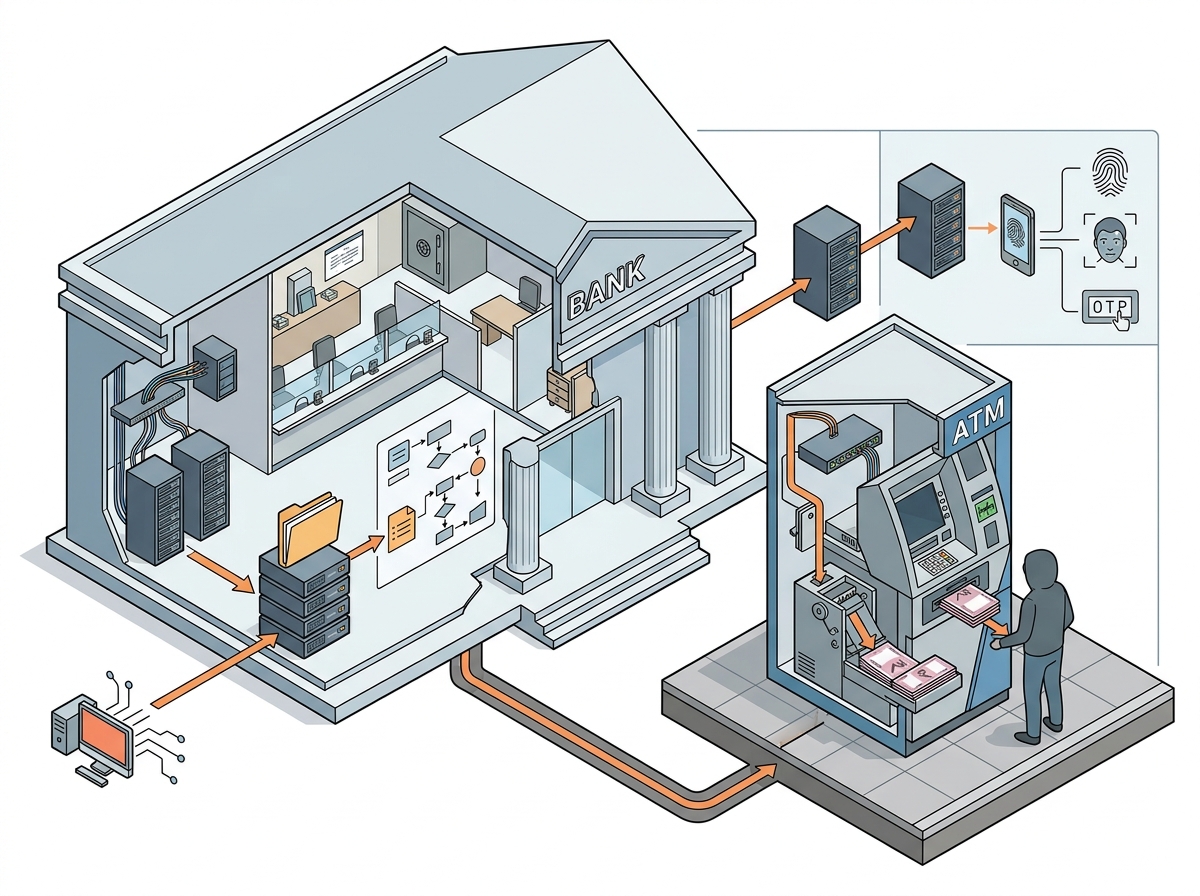
- Mule accounts serve as intermediaries in the money laundering cycle, where fraudulent proceeds are deposited, layered through multiple accounts, and ultimately withdrawn in cash.
- The use of mule accounts complicates law enforcement efforts due to the rapid movement of funds across jurisdictions and the anonymity provided by rented accounts.
- ATM withdrawals of fraudulent proceeds are a critical vulnerability, as they often occur without robust identity verification, enabling fraudsters to convert digital funds into untraceable cash.
- Biometric authentication, facial recognition, and multi-factor authentication (MFA) are emerging tools to enhance identity verification during high-risk transactions, including ATM withdrawals.
- The High Court’s suggestion to integrate such technologies aligns with global best practices in combating financial crime, as seen in frameworks like the FATF Recommendations.
Key Features
| Feature | Significance |
|---|---|
| Mule accounts | Bank accounts operated by individuals who allow fraudsters to use them for illicit transactions, often in exchange for a fee, complicating the tracing of illicit funds. |
| ATM-based cash withdrawal | Enables the conversion of digital fraud proceeds into physical currency, erasing digital trails and hindering investigative efforts. |
| Biometric authentication | Enhances identity verification by linking transactions to unique biological traits, reducing the risk of impersonation in fraudulent withdrawals. |
| Facial recognition technology | Provides an additional layer of identity verification by matching live or recorded images against stored biometric data. |
| Digital record-keeping | Mandates the documentation of transactions involving third-party withdrawals, ensuring traceability and accountability. |
Why it Matters
Economic
- Undermines public trust in digital financial systems, potentially discouraging adoption of cashless transactions and digital banking services.
- Increases the cost of financial intermediation due to heightened security measures and fraud mitigation efforts by banks and financial institutions.
- Disrupts the integrity of financial markets by facilitating illicit fund flows, which may be used for money laundering or other criminal activities.
Legal and Regulatory
- Highlights gaps in existing regulatory frameworks governing the use of mule accounts and third-party withdrawals, necessitating stricter compliance and enforcement mechanisms.
- Demonstrates the judiciary’s proactive role in addressing emerging financial crimes through judicial directives to regulatory bodies like the RBI.
- Emphasizes the need for harmonized legal standards across jurisdictions to combat cross-border cyber fraud and money laundering.
Technological
- Accelerates the adoption of advanced authentication technologies, such as biometrics and facial recognition, to secure digital transactions.
- Drives innovation in fraud detection algorithms and real-time monitoring systems to identify and flag suspicious transactions.
- Encourages the development of interoperable databases for sharing fraud-related intelligence between financial institutions and law enforcement agencies.
Institutional
- Strengthens the role of the Reserve Bank of India (RBI) in setting guidelines for secure banking practices and fraud prevention.
- Enhances collaboration between judiciary, law enforcement, and financial institutions to address cyber fraud holistically.
- Promotes capacity-building within investigative agencies to handle complex digital financial crimes.
Challenges
1. Traceability of Illicit Funds
- Mule accounts and layered transactions obscure the origin and destination of fraudulent funds, making it difficult to trace and recover stolen money.
- ATM-based withdrawals further complicate investigations by converting digital trails into physical cash, which is harder to track.
- Limited digital evidence, such as CCTV footage, often serves as the sole proof, leaving gaps in the evidentiary chain.
UPSC Link: GS3: Money Laundering, Financial Crimes
2. Identity Verification Gaps
- Existing authentication systems, such as OTP-based verification, are vulnerable to SIM swapping and other fraudulent techniques.
- Third-party withdrawals lack robust identity checks, enabling fraudsters to exploit mule accounts without detection.
- Biometric and facial recognition technologies, while promising, require standardization and widespread adoption to be effective.
UPSC Link: GS3: Cyber Security, Digital Payments
3. Regulatory and Compliance Burden
- Financial institutions face high compliance costs to implement advanced authentication and monitoring systems.
- Balancing customer convenience with stringent security measures remains a persistent challenge for banks.
- Cross-border nature of cyber fraud necessitates international cooperation, which is often hindered by differing legal frameworks.
UPSC Link: GS3: Financial Regulation, RBI Guidelines
4. Investigative and Enforcement Challenges
- Law enforcement agencies often lack the technical expertise and resources to investigate sophisticated cyber fraud cases.
- Delayed reporting of fraud incidents by victims and financial institutions hampers timely intervention.
- Prosecution of cyber fraud cases is complicated by the transient nature of digital evidence and the involvement of foreign jurisdictions.
UPSC Link: GS3: Cyber Crimes, Law Enforcement
5. Public Awareness and Behavioral Risks
- Lack of awareness among the public about the risks of sharing bank account details or participating in mule account schemes.
- Growing reliance on digital transactions increases vulnerability to phishing, vishing, and other social engineering attacks.
- Overconfidence in digital banking services may lead to complacency in verifying transaction legitimacy.
UPSC Link: GS3: Digital Literacy, Consumer Protection
Challenges — UPSC Perspective
| Issue | Concern |
|---|---|
| Mule Account Exploitation | Facilitates layering of illicit funds, making traceability nearly impossible without advanced forensic techniques. |
| ATM Withdrawal Loopholes | Enables conversion of digital fraud proceeds into untraceable cash, complicating investigations. |
| Biometric Authentication Limitations | Requires robust infrastructure and standardization to prevent spoofing or data breaches. |
| Cross-Border Cyber Fraud | Jurisdictional challenges hinder coordinated action between domestic and international agencies. |
| Public Participation in Fraud | Unaware individuals unknowingly facilitate fraud by renting out bank accounts, exacerbating the problem. |
Way Forward
- Enhance RBI guidelines to mandate multi-factor authentication (MFA) for high-value or suspicious ATM withdrawals, including biometric or facial recognition verification.
- Develop a centralized digital database for tracking mule accounts and suspicious transactions, accessible to law enforcement and financial institutions.
- Strengthen public awareness campaigns to educate citizens about the risks of participating in mule account schemes and sharing banking credentials.
- Invest in advanced fraud detection algorithms and real-time monitoring systems to identify and flag anomalous transactions proactively.
- Establish dedicated cyber fraud investigation units within state and central law enforcement agencies, equipped with technical expertise and resources.
- Promote international cooperation through bilateral and multilateral agreements to address cross-border cyber fraud and money laundering.
- Encourage financial institutions to adopt blockchain-based transaction monitoring for enhanced traceability and transparency.
- Mandate banks to maintain detailed digital records of all third-party withdrawals, including timestamps, device IDs, and biometric verifications.
UPSC Value Addition
Keywords for Mains Answer-Writing
Cyber fraud · Money mule accounts · ATM cash withdrawals · Biometric authentication · Facial recognition technology · Reserve Bank of India · Digital payment security · Banking fraud investigation · High Court directives · Financial crime prevention · Multi-factor authentication · Digital trail in financial crimes · Banking regulation · Cyber security measures
Constitutional & Policy Linkages
- Article 21 (Right to Life and Personal Liberty) – Protection against arbitrary financial surveillance and data misuse.
- Article 19(1)(g) (Freedom to Practice Any Profession) – Balancing banking sector regulations with economic freedoms.
Concept Flow
Cyber fraud initiates with phishing/vishing attacks → Illicit funds are layered through mule accounts → Funds are withdrawn via ATMs → Digital trails weaken → Law enforcement faces traceability challenges → Judiciary directs RBI to enhance authentication → RBI mandates stricter measures → Financial institutions adopt advanced technologies → Public awareness reduces mule account participation.
Prelims Practice Questions
Q1. Consider the following statements regarding cyber fraud and money mule accounts in India:
1. Money mule accounts are typically used to transfer illicit funds through multiple bank accounts to obscure their origin.
2. The Reserve Bank of India (RBI) has mandated the use of biometric authentication for all ATM withdrawals above ₹50,000.
3. Cyber fraud investigations often rely on CCTV footage as primary evidence due to the weak digital trail left by money mules.
4. The use of facial recognition technology for ATM withdrawals is currently prohibited under Indian banking regulations.
How many of the above statements are correct?
- Only one
- Only two
- Only three
- All
Answer: Only three — Statements 1 and 3 are correct. Statement 2 is incorrect as RBI has not mandated biometric authentication for all ATM withdrawals above ₹50,000. Statement 4 is incorrect as facial recognition technology is being considered as a potential measure but is not prohibited.
Q2. Assertion (A): The Reserve Bank of India (RBI) has issued guidelines to banks to strengthen the authentication process for large or suspicious ATM withdrawals.
Reason (R): The RBI aims to curb the misuse of money mule accounts in cyber fraud cases by ensuring robust identification of individuals making such withdrawals.
Options:
A. Both A and R are true, and R is the correct explanation of A.
B. Both A and R are true, but R is not the correct explanation of A.
C. A is true, but R is false.
D. A is false, but R is true.
- A
- B
- C
- D
Answer: B — Both the assertion and reason are true. The RBI has indeed issued guidelines to enhance authentication for large or suspicious withdrawals, and the reason correctly explains the purpose behind these guidelines.
Mains Practice Question
✍ The High Court of Madhya Pradesh has directed the Reserve Bank of India (RBI) to explore advanced authentication mechanisms, including biometric and facial recognition technologies, for large or suspicious ATM withdrawals linked to cyber fraud. Critically examine the constitutional and legal framework governing digital financial transactions in India, and analyse the efficacy of such technological interventions in mitigating cyber fraud. (15 Marks)
Approach: MODEL-ANSWER SKELETON:
1. **Constitutional and Legal Framework:**
– Article 300A (Right to Property) and the contractual relationship between banks and customers.
– RBI’s regulatory powers under the Banking Regulation Act, 1949, and the Payment and Settlement Systems Act, 2007.
– The Information Technology Act, 2000, and its provisions on cyber security, data protection, and electronic evidence.
– The Reserve Bank of India Act, 1934, and the Payment and Settlement Systems Regulations, 2008.
2. **Technological Interventions and Challenges:**
– **Biometric Authentication:** Legal validity under the Aadhaar Act, 2016, and the Personal Data Protection Bill (PDP Bill) implications. Discuss the balance between convenience and privacy.
– **Facial Recognition Technology:** Admissibility of evidence under the Indian Evidence Act, 1872, and concerns regarding false positives and data misuse.
– **Multi-Factor Authentication (MFA):** Existing RBI guidelines on MFA for digital payments (e.g., RBI’s Master Direction on Issuance and Operation of Prepaid Payment Instruments, 2021).
3. **Efficacy and Limitations:**
– **Strengths:** Enhanced traceability, reduced anonymity in transactions, and deterrence against fraud.
– **Limitations:** High implementation costs, privacy concerns, potential for data breaches, and the risk of exclusion for marginalised groups lacking biometric data.
– **Case Law:** Reference to the Supreme Court’s judgment in *Justice K.S. Puttaswamy (Retd.) v. Union of India* (2017) on the right to privacy and proportionality.
4. **Comparative Perspective:**
– Global best practices: EU’s General Data Protection Regulation (GDPR) and Singapore’s Personal Data Protection Act (PDPA) on biometric data.
– India’s progress: The Digital Personal Data Protection Act, 2023, and its implications for financial data security.
5. **Recommendations:**
– Strengthening the digital forensic capabilities of law enforcement agencies.
– Public-private partnerships for developing cost-effective and inclusive authentication solutions.
– Awareness campaigns to educate customers on secure banking practices.
Source: amarujala.com
Generated by AanyaAi for educational purpose.
Related guides on our sites
- Best economics optional coaching for upsc
- Best economics optional teacher for upsc
- How to prepare for GS paper 1 for UPSC CSE mains exam
- Best UPSC coaching for IFOS exam

- ‘स्वच्छता ही सेवा-2026’ अभियान: सरकारी विभागों में स्वच्छता क्रांति, जानिए मुख्य बिंदु - September 22, 2026
- DFPD Launches ‘Swachhata Hi Seva-2026’ Campaign for Clean India Mission - September 22, 2026
- नमस्ते योजना से स्वच्छता कर्मियों को मिली सुरक्षा, गरिमा और आजीविका सहायता - September 22, 2026

No Comments