


21 Oct National Unity Day 2026: Key Preparations & Significance for UPSC
✎ National Unity Day (31 October) commemorates Sardar Patel’s legacy, while the 2026 event in Ekta Nagar will highlight counter-naxal achievements, cultural integration, and the Statue of Unity’s role in symbolizing national unity.
Subject Relevance — Where This Topic Fits
- GS Paper II — Polity and Governance (Constitutional Provisions, National Integration) | GS Paper III — Internal Security (Naxalism, CAPFs, State Police Forces)
- Prelims: National Unity Day, Ekta Nagar, Sardar Vallabhbhai Patel, Naxalism, CAPFs, CPOs, Statue of Unity, National School of Drama, Bharat Parv
- Essay: National Integration and Cultural Diversity, Role of Symbolism in Nation-Building
Quick Revision: National Unity Day (31 October) commemorates Sardar Patel’s legacy, while the 2026 event in Ekta Nagar will highlight counter-naxal achievements, cultural integration, and the Statue of Unity’s role in symbolizing national unity.
Why is this in the news?
The Central Home Secretary, Shri Govind Mohan, addressed a press conference in New Delhi on 21 October 2026, outlining preparations for National Unity Day 2026 and Bharat Parv 2026 to be held in Ekta Nagar, Gujarat. The event, scheduled for 31 October 2026, will feature a grand parade showcasing achievements in counter-naxal operations, cultural performances, and thematic tableaux, underscoring the government’s emphasis on national integration, security, and cultural heritage.
Background
- National Unity Day is celebrated annually on 31 October to commemorate the birth anniversary of Sardar Vallabhbhai Patel, the ‘Iron Man of India,’ who played a pivotal role in the integration of princely states into the Union of India post-independence.
- Ekta Nagar in Gujarat is the site of the Statue of Unity, the world’s tallest statue, dedicated to Sardar Patel, symbolizing national unity and integration.
- The Naxalite-Maoist insurgency has been a significant internal security challenge in India, primarily affecting central and eastern states, with the government implementing multi-pronged strategies including security operations, development initiatives, and surrender policies.
- The Central Armed Police Forces (CAPFs) and Central Police Organizations (CPOs) are paramilitary and police organizations under the Ministry of Home Affairs, tasked with maintaining internal security and counter-insurgency operations.
- Bharat Parv is an annual cultural festival organized by the Ministry of Culture to promote national integration, cultural diversity, and tourism, often held in conjunction with National Unity Day.
What are National Unity Day and Bharat Parv?
- National Unity Day is observed on 31 October to honor Sardar Vallabhbhai Patel’s contributions to national integration and to foster a sense of unity among citizens.
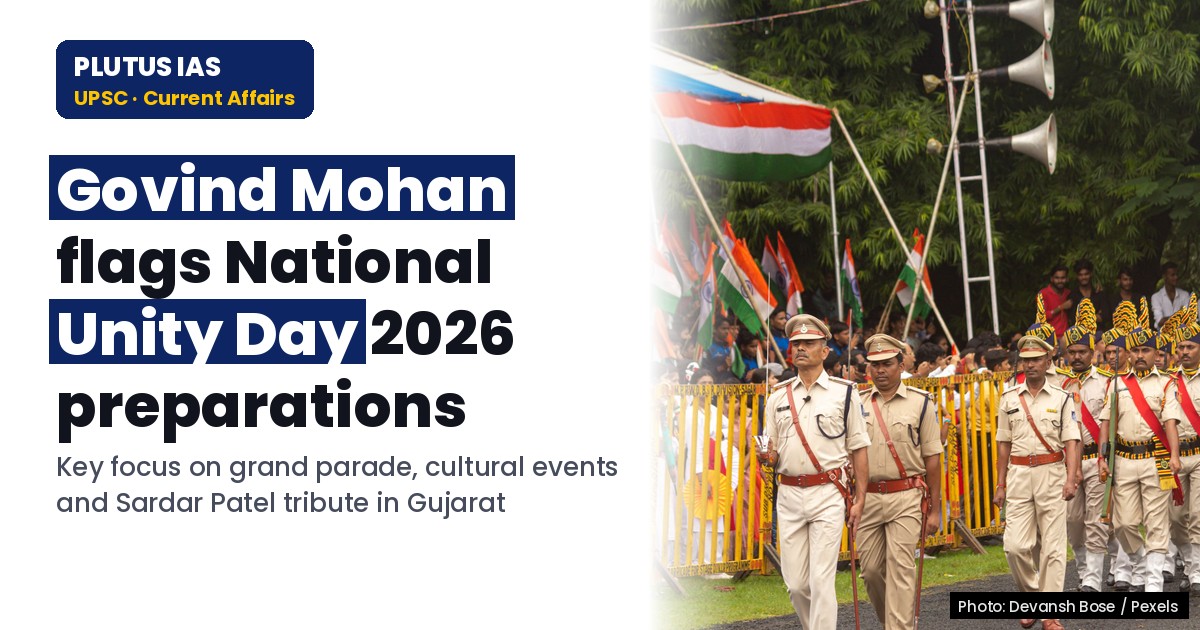
- The event in Ekta Nagar, Gujarat, includes a grand parade featuring state police forces, CAPFs, and CPOs, highlighting their role in counter-naxal operations and internal security.
- A theatrical performance by the National School of Drama (NSD) will depict the struggles of regions affected by Naxalism, with 2,000 artists from 126 districts where the insurgency was prevalent.
- The parade will also showcase tableaux themed on ‘Vande Mataram,’ with 5,000 invited guests from these districts to witness the cultural and security achievements.
- The event aims to celebrate India’s progress toward a ‘Naxal-free India’ and promote Ekta Nagar as a major cultural and tourist destination, symbolizing Patel’s vision of a united India.
- Bharat Parv, held alongside National Unity Day, emphasizes cultural diversity through performances, exhibitions, and thematic displays, reinforcing the theme ‘Ek Bharat Shreshtha Bharat’.
- The 2026 edition will feature a theatrical performance based on Bankim Chandra Chattopadhyay’s novel ‘Anandamath,’ highlighting themes of national responsibility and resilience.
Key Features
| Feature | Significance |
|---|---|
| National Integration Day (31 October) | Commemorates Sardar Vallabhbhai Patel’s birth anniversary, symbolising national unity and integration efforts. |
| Ekta Nagar (Statue of Unity) as venue | Hosts the event due to its symbolic representation of Patel’s vision for a united India. |
| Ekta Parade with LED screen projections | Showcases achievements of state police forces, CAPFs, and CPOs in countering left-wing extremism. |
| Theatrical presentation by NSD on ‘Anandamath’ | Reinforces the theme of national responsibility for India’s progress, drawing from Bankim Chandra Chattopadhyay’s literary work. |
| Cultural performances by artists from 126 districts | Highlights resilience of communities affected by left-wing extremism, promoting inclusivity and regional representation. |
Why it Matters
Symbolic and National Integration
- Reaffirms constitutional values of unity and integrity under Article 1 of the Constitution.
- Celebrates the symbolic end of armed left-wing extremism, aligning with the state’s commitment to internal security.
- Promotes cultural synthesis by featuring artists from regions historically affected by extremism.
Security and Governance
- Showcases operational successes of security forces in counter-insurgency operations.
- Demonstrates the state’s capacity to integrate diverse security apparatuses (state police, CAPFs, CPOs) in a unified display.
- Highlights the role of central agencies in maintaining internal security and law enforcement.
Tourism and Public Diplomacy
- Enhances Ekta Nagar’s status as a premier tourist destination, aligning with the ‘Dekho Apna Desh’ initiative.
- Leverages Patel’s legacy to foster national pride and soft power diplomacy.
- Encourages public participation in national events, reinforcing civic engagement.
Challenges
1. Left-Wing Extremism (LWE) and Residual Threats
- Despite significant operational successes, residual pockets of LWE persist in certain districts, requiring sustained counter-insurgency efforts.
- Rehabilitation and reintegration of affected communities remain critical for long-term stability.
- Ensuring the symbolic representation of LWE-affected regions does not overshadow ground-level challenges in those areas.
UPSC Link: GS 3: Security Challenges
2. Logistical and Administrative Coordination
- Managing a large-scale event involving 5,000 participants, 2,000 artists, and security forces requires meticulous planning.
- Ensuring seamless execution of cultural performances, parades, and LED projections demands inter-agency coordination.
- Balancing security imperatives with public accessibility and inclusivity poses operational challenges.
UPSC Link: GS 2: Centre-State Relations
3. Cultural Representation and Inclusivity
- Ensuring fair and representative selection of artists and participants from 126 districts without bias.
- Addressing potential sensitivities in depicting historical struggles of affected communities.
- Maintaining authenticity in thematic presentations (e.g., ‘Anandamath’) while aligning with modern governance narratives.
UPSC Link: GS 1: Indian Culture
Challenges — UPSC Perspective
| Issue | Concern |
|---|---|
| Residual LWE presence | Risk of relapse in districts with historical extremism, necessitating continued vigilance. |
| Event logistics | Complexity of coordinating diverse stakeholders across security, culture, and tourism sectors. |
| Cultural authenticity | Balancing artistic representation with factual accuracy in depicting extremism-affected regions. |
| Public participation | Ensuring equitable representation of participants from all regions, including marginalised communities. |
Way Forward
- Strengthen inter-agency coordination between state police, CAPFs, and central ministries for seamless event execution.
- Expand rehabilitation programmes for LWE-affected communities to ensure sustainable peace and development.
- Enhance Ekta Nagar’s infrastructure and tourist amenities to sustain long-term engagement with national events.
- Institutionalise cultural exchanges with LWE-affected districts to promote inclusivity and regional pride.
- Leverage digital platforms to document and disseminate event highlights, fostering wider national participation.
- Conduct post-event evaluations to assess impact on public perception and security narratives.
- Integrate lessons from event planning into broader governance frameworks for large-scale public initiatives.
UPSC Value Addition
Keywords for Mains Answer-Writing
National Unity Day 2026 · Ekta Nagar · Statue of Unity · Sardar Vallabhbhai Patel · Naxalism eradication · Central Armed Police Forces (CAPFs) · National School of Drama (NSD) · Ekta Parade · Cultural diplomacy · Internal security · National integration · Government public outreach
Constitutional & Policy Linkages
- Article 1: Union and Territory of India (National Integration).
- Article 51A: Fundamental Duties (Promotion of harmony).
Concept Flow
Left-Wing Extremism (LWE) as a governance challenge → Operational successes by security forces → Symbolic celebration via Ekta Parade → Cultural representation of affected regions → National integration and public participation → Reinforcement of constitutional values.
Prelims Practice Questions
Q1. Consider the following statements regarding the National Unity Day (Ekta Diwas) celebrations in India:
1. The National Unity Day is celebrated on 31st October every year.
2. The event is organised at the Statue of Unity in Ekta Nagar, Gujarat.
3. The celebrations include a cultural performance by the National School of Drama (NSD) based on the novel ‘Anandamath’.
4. The event commemorates the birth anniversary of Sardar Vallabhbhai Patel.
How many of the above statements are correct?
- Only one
- Only two
- Only three
- All four
Answer: All four — Statements 1, 2, and 4 are correct. Statement 3 is incorrect as the cultural performance is based on ‘Vande Mataram’ and ‘Anandamath’ themes but not exclusively on the novel ‘Anandamath’.
Q2. Assertion (A): The ‘Ekta Parade’ during National Unity Day celebrations includes participation from state police forces and Central Armed Police Forces (CAPFs) involved in counter-Naxal operations.
Reason (R): The parade aims to showcase the achievements of security forces in eradicating Naxalism and promoting national integration.
Options:
A. Both A and R are true, and R is the correct explanation of A.
B. Both A and R are true, but R is not the correct explanation of A.
C. A is true, but R is false.
D. A is false, but R is true.
Answer: ? — Both the Assertion and Reason are true, and the Reason correctly explains the Assertion as the parade is designed to highlight the contributions of security forces in counter-Naxal operations and national integration.
Q3. Match the following pairs related to the National Unity Day 2026 celebrations:
Column I (Theme/Component) Column II (Description)
A. ‘Vande Mataram’ theme 1. Cultural performances by artists from Naxal-affected districts
B. ‘Anandamath’ theme 2. Thematic focus of the cultural presentations in Ekta Nagar
C. Naxal-mukt Bharat presentation 3. Based on Bankim Chandra Chattopadhyay’s novel
D. Ekta Parade 4. Showcasing achievements of police forces and CAPFs
Options:
A. A-2, B-3, C-1, D-4
B. A-1, B-2, C-3, D-4
C. A-3, B-1, C-2, D-4
D. A-2, B-1, C-3, D-4
- A
- B
- C
- D
Answer: A — Correct matching: A-2 (Vande Mataram is the thematic focus of cultural presentations), B-3 (‘Anandamath’ theme is based on the novel), C-1 (Naxal-mukt Bharat presentation involves artists from Naxal-affected districts), D-4 (Ekta Parade showcases achievements of security forces).
Mains Practice Question
✍ The National Unity Day (Ekta Diwas) celebrations at Ekta Nagar, Gujarat, are designed to foster national integration while showcasing the achievements of security forces in counter-insurgency operations. Critically analyse the significance of such cultural and symbolic state-led initiatives in promoting national unity and internal security. Also, examine the role of the Central Armed Police Forces (CAPFs) and state police forces in this context. (15 Marks)
Approach: MODEL-ANSWER SKELETON:
1. Introduction: Define National Unity Day and its objectives (national integration, commemoration of Sardar Patel, showcasing security forces’ achievements).
2. Significance of cultural and symbolic initiatives:
a. Symbolic unity: Statue of Unity as a unifying national symbol.
b. Cultural diplomacy: Use of themes like ‘Vande Mataram’ and ‘Anandamath’ to evoke national pride.
c. Public outreach: Engaging citizens, especially from Naxal-affected districts, to foster inclusivity.
3. Role of CAPFs and state police forces:
a. Counter-insurgency achievements: Highlighting operations against Naxalism.
b. Parade and presentations: Showcasing operational successes via LED screens and cultural performances.
c. Psychological impact: Boosting morale and public confidence in security forces.
4. Challenges and critiques:
a. Overemphasis on symbolism vs. ground realities.
b. Sustainability of public engagement beyond the event.
c. Balancing national integration with regional identities.
5. Conclusion: Reaffirm the role of such initiatives in strengthening national unity and internal security, while acknowledging the need for continuous efforts.
Source: PIB (Press Information Bureau)
Gujarat PCS (GPSC) — State PCS Practice
Prelims: Which of the following is a key objective of the ‘National Unity Day 2026’ and ‘Bharat Parv 2026’ events being planned in Ekta Nagar, Gujarat, as per the recent review by the Union Home Secretary?
- A. To promote cultural integration and national harmony through exhibitions and performances
- B. To exclusively focus on industrial development in Gujarat’s tribal districts
- C. To launch a new state-specific welfare scheme for farmers
- D. To organize a military parade showcasing Gujarat’s defense capabilities
Answer: A. To promote cultural integration and national harmony through exhibitions and performances — The events aim to celebrate national unity and showcase India’s cultural diversity through exhibitions, performances, and public participation.
Mains: Discuss the significance of organizing ‘National Unity Day 2026’ and ‘Bharat Parv 2026’ in Ekta Nagar, Gujarat, from the perspective of promoting national integration and Gujarat’s role in fostering cultural unity. (200 words)
Generated by AanyaAi for educational purpose.
Related guides on our sites
- Current affairs for upsc 2026
- How to prepare for GS paper 1 for UPSC CSE mains exam
- Best UPSC coaching for IFOS exam
- Best mentorship programme for upsc

- National Unity Day 2026: Key Preparations & Significance for UPSC - October 21, 2026
- 14वां इंडिया केम 2026: मुंबई में वैश्विक रसायन उद्योग का महाकुंभ - October 21, 2026
- डीआरआई ने गुजरात में 19 करोड़ रुपये सोने की तस्करी गिरोह का भंडाफोड़ किया - October 21, 2026

No Comments