


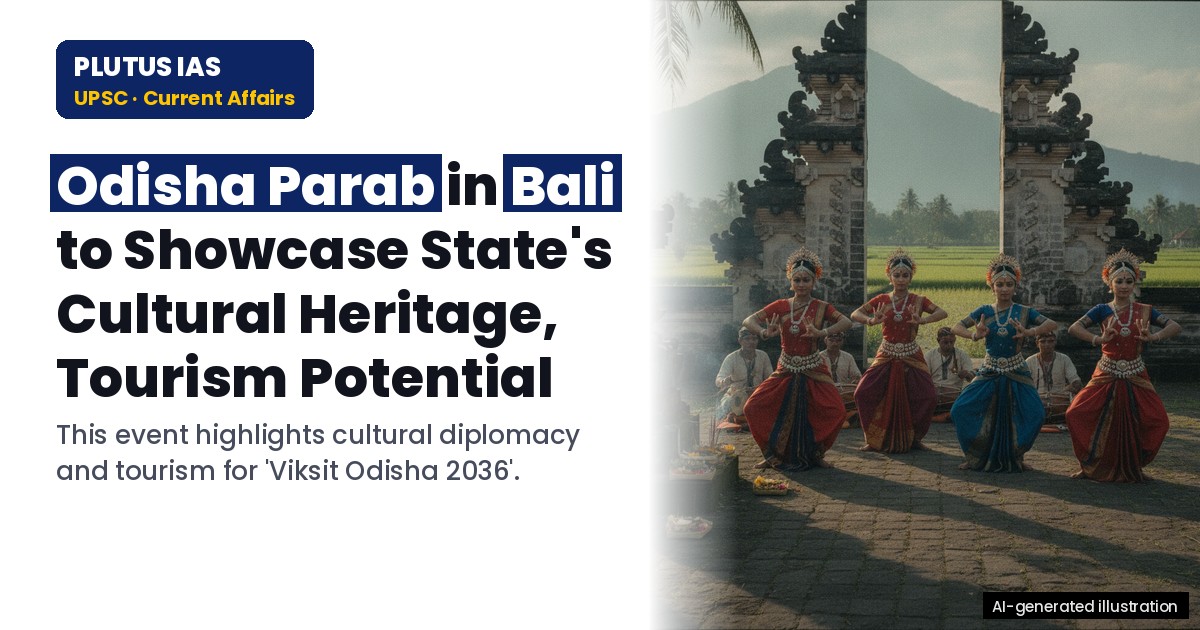
12 Nov Odisha Parab in Bali: Cultural Diplomacy & Tourism Boost
✎ Odisha Parab in Bali is a strategic initiative to leverage cultural heritage and tourism for economic development and international soft power projection, aligning with 'Viksit Bharat 2047' goals.
Subject Relevance — Where This Topic Fits
- GS Paper I — Art and Culture | GS Paper II — International Relations | GS Paper III — Economy
- Prelims: Odisha Parab, Bali, Cultural Diplomacy, Tourism Promotion, Handicrafts, Handlooms, Viksit Odisha 2036, Viksit Bharat 2047
- Essay: Cultural Diplomacy as a Tool for Soft Power and Economic Growth, The Role of Tourism in Achieving Sustainable Development Goals
Quick Revision: Odisha Parab in Bali is a strategic initiative to leverage cultural heritage and tourism for economic development and international soft power projection, aligning with ‘Viksit Bharat 2047’ goals.
Why is this in the news?
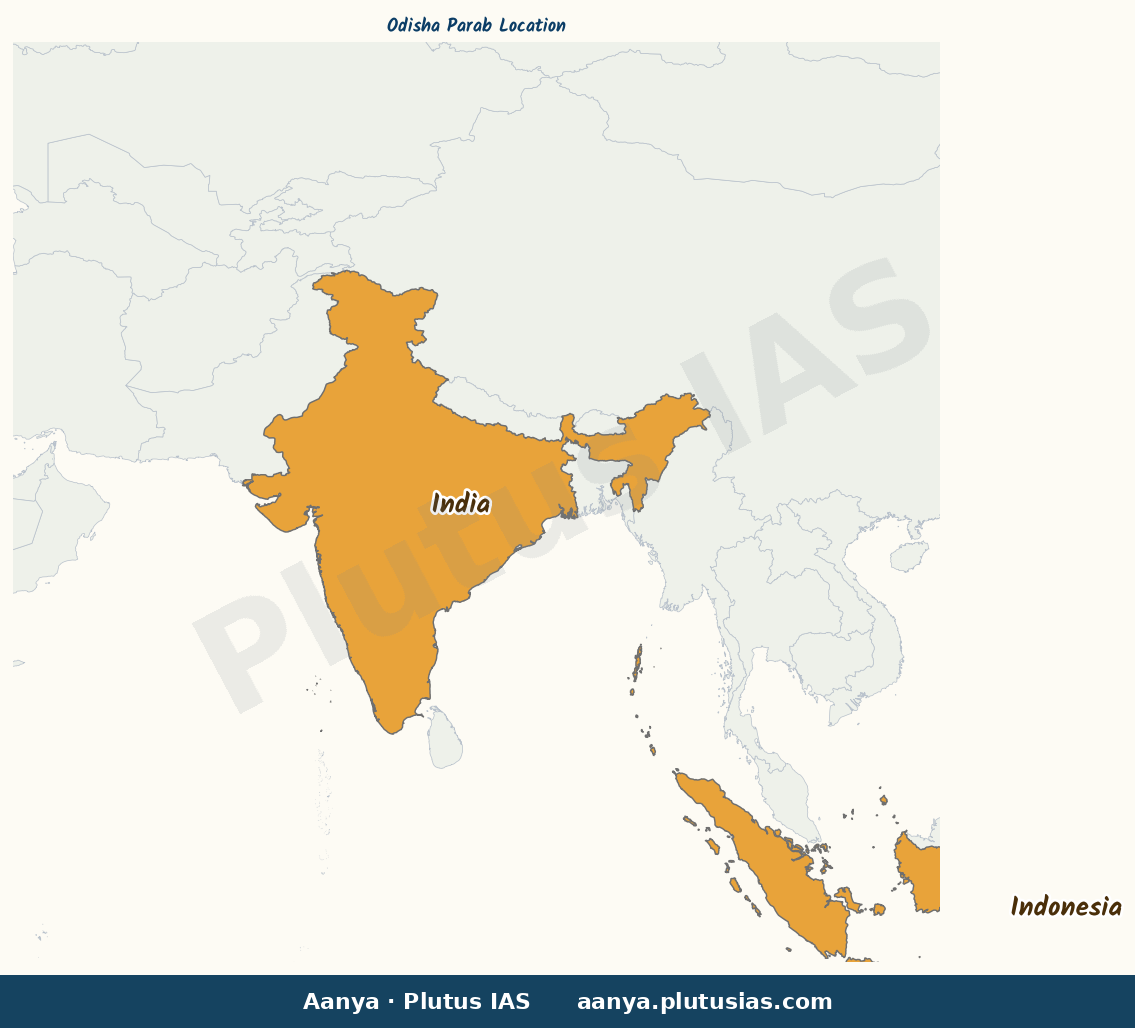
Odisha is set to host ‘Odisha Parab’ in Bali, Indonesia, from November 23 to 24, 2026. This international event aims to showcase the state’s rich cultural heritage, diverse tourism potential, traditional handicrafts, handlooms, and distinct cuisine, thereby enhancing its global profile and contributing to the state’s and national development objectives.
Background
- The initiative aligns with the broader vision of ‘Viksit Odisha 2036’ and the national aspiration of ‘Viksit Bharat 2047’, recognising tourism’s pivotal role in economic growth and cultural exchange.
- The State Tourism Advisory Council (STAC) recently convened to deliberate on key priorities for strengthening Odisha’s tourism ecosystem, emphasising diversification of tourism experiences.
- Discussions at the STAC meeting included promoting eco-tourism, heritage and religious tourism, adventure tourism, MICE (Meetings, Incentives, Conferences, and Exhibitions) tourism, and destination weddings.
- Key infrastructural and policy considerations for tourism development, such as the creation of a tourism land bank, upgrading amenities, improving connectivity, ensuring tourist safety, sanitation, and skilled manpower development, were also addressed.
- Cultural events like ‘Odisha Parab’ serve as platforms for cultural diplomacy, fostering international understanding and promoting cross-cultural appreciation.
- Indonesia, particularly Bali, shares historical and cultural linkages with India, providing a conducive environment for such cultural exchange initiatives.
Significance of Cultural Promotion and Tourism Development
- Cultural promotion through international events provides an invaluable platform for showcasing a region’s unique heritage, art forms, and traditions to a global audience.
- Such initiatives contribute significantly to soft power diplomacy, enabling a nation or state to exert influence and build goodwill through cultural exchange rather than coercive means.
- Tourism development is a critical driver of economic growth, generating employment opportunities, fostering local entrepreneurship, and attracting foreign exchange.
- Diversifying tourism offerings, including eco-tourism, heritage tourism, and adventure tourism, caters to a wider range of preferences and enhances the overall visitor experience.
- Investment in tourism infrastructure, such as improved connectivity, accommodation facilities, and basic amenities, is essential for sustainable growth in the sector.
- The promotion of traditional handicrafts and handlooms through international exhibitions supports local artisans, preserves traditional crafts, and provides market access for their products.
- Cultural events can strengthen bilateral ties and foster a deeper understanding between participating nations, building bridges of friendship and cooperation.
- The ‘Viksit Bharat 2047’ vision underscores the importance of all sectors, including tourism and culture, in achieving comprehensive national development and prosperity.
Key Features
| Feature | Significance |
|---|---|
| Odisha Parab in Bali | International platform for showcasing Odisha’s cultural heritage, tourism potential, handicrafts, handlooms, and cuisine. |
| State Tourism Advisory Council (STAC) Meeting | Deliberation on key priorities for strengthening Odisha’s tourism ecosystem and achieving ‘Viksit Odisha 2036’ and ‘Viksit Bharat 2047’ goals. |
| Diversification of Tourism Experiences | Emphasis on eco-tourism, heritage and religious tourism, adventure tourism, MICE tourism, destination weddings, and new tourism circuits. |
| Infrastructure and Connectivity Development | Discussion on creating a tourism land bank, upgrading infrastructure, improving basic amenities, and enhancing connectivity at major destinations. |
| Skill Development and Safety | Focus on developing skilled manpower and ensuring tourist safety and sanitation. |
Why it Matters
Economic Development
- Promotion of tourism directly contributes to state revenue through tourist expenditure on accommodation, transport, food, and local goods.
- Supports local economies by creating employment opportunities in hospitality, handicrafts, and ancillary services.
- Enhances the market for traditional crafts and handlooms, providing livelihoods for artisans and preserving cultural practices.
Cultural Diplomacy and Soft Power
- Showcasing cultural heritage internationally fosters cross-cultural understanding and strengthens bilateral ties.
- Projects India’s rich cultural diversity on a global stage, enhancing its soft power and international image.
- Encourages cultural exchange and appreciation, which can lead to increased international tourist arrivals.
Regional Development and Infrastructure
- Investment in tourism infrastructure, such as roads, airports, and accommodation, benefits local communities beyond just tourists.
- Development of specific tourism circuits can lead to balanced regional growth, reducing disparities.
- Improved sanitation and basic amenities at tourist sites enhance the quality of life for residents as well.
Achieving National Development Goals
- Tourism’s contribution to GDP and employment aligns with the objectives of ‘Viksit Bharat 2047’ by fostering economic growth and human development.
- Sustainable tourism practices, including eco-tourism, support environmental conservation goals.
- Preservation and promotion of heritage through tourism contribute to the cultural dimension of national development.
Challenges
1. Infrastructure Deficiencies
- Inadequate road, rail, and air connectivity to remote tourist destinations can deter visitors.
- Limited availability of quality accommodation, especially in emerging tourist circuits, impacts visitor experience.
- Insufficient basic amenities such as clean public restrooms, waste management, and reliable internet access at many sites.
UPSC Link: GS-III: Infrastructure; GS-I: Urbanization
2. Skilled Manpower Shortage
- Lack of trained professionals in hospitality, guiding, and service sectors affects the quality of tourist services.
- Inadequate language proficiency among service providers can hinder effective communication with international tourists.
- Limited opportunities for skill development and vocational training in tourism-specific areas.
UPSC Link: GS-II: Human Resource; GS-III: Skill Development
3. Marketing and Promotion
- Insufficient international marketing and branding efforts to position Odisha as a premier global tourist destination.
- Lack of diversified promotional strategies targeting various tourist segments (e.g., adventure, MICE, wellness).
- Limited digital presence and effective use of social media for showcasing tourism offerings.
UPSC Link: GS-III: Economy; GS-I: Culture
4. Sustainability and Environmental Impact
- Potential for over-tourism in popular areas leading to environmental degradation and strain on local resources.
- Challenges in balancing tourism development with the preservation of fragile ecosystems and cultural heritage sites.
- Need for effective waste management and pollution control measures at tourist destinations.
UPSC Link: GS-III: Environment; GS-I: Heritage
5. Tourist Safety and Security
- Ensuring the safety and security of tourists, especially women and international visitors, is crucial for reputation.
- Addressing issues like touting, harassment, and fraudulent practices that can negatively impact tourist experience.
- Establishing efficient emergency response mechanisms and grievance redressal systems for tourists.
UPSC Link: GS-II: Governance; GS-III: Internal Security
Challenges — UPSC Perspective
| Issue | Concern |
|---|---|
| Connectivity to Remote Areas | Limited accessibility hinders the development of lesser-known but potentially rich tourist destinations. |
| Quality of Tourist Amenities | Substandard facilities, including accommodation and sanitation, can detract from the overall tourist experience. |
| Preservation of Heritage Sites | Balancing increased tourist footfall with the imperative of conserving delicate historical and cultural monuments. |
| Local Community Engagement | Ensuring that tourism development benefits local communities and respects their cultural practices and livelihoods. |
| Seasonal Tourism Dependence | Over-reliance on specific seasons for tourism revenue, leading to economic instability for stakeholders during off-peak periods. |
Way Forward
- Develop a comprehensive, long-term tourism master plan with clear objectives, timelines, and measurable outcomes.
- Prioritize investment in critical infrastructure, including last-mile connectivity, quality accommodation, and modern amenities at tourist sites.
- Implement targeted skill development programs for local communities to enhance service quality and create employment opportunities in the tourism sector.
- Leverage digital platforms and international collaborations for aggressive marketing and branding of Odisha’s diverse tourism offerings.
- Promote sustainable and responsible tourism practices, including eco-tourism and community-based tourism, to minimize environmental impact and maximize local benefits.
- Establish robust safety and security protocols for tourists, coupled with efficient grievance redressal mechanisms.
- Encourage private sector investment through attractive incentives and a streamlined regulatory framework to boost tourism infrastructure and services.
- Diversify tourism products to include niche segments like MICE tourism, wellness tourism, and adventure tourism, reducing reliance on traditional circuits.
UPSC Value Addition
Keywords for Mains Answer-Writing
Cultural Diplomacy · Tourism Promotion · Viksit Bharat 2047 · Viksit Odisha 2036 · Soft Power · Handicrafts and Handlooms · Economic Development · Sustainable Tourism · International Relations · State Tourism Advisory Council
Concept Flow
International cultural event (Odisha Parab in Bali) → Showcasing cultural heritage and tourism potential → Enhanced global tourism profile and international recognition → Increased tourist footfall and foreign exchange earnings → Stimulation of local economy and employment generation → Contribution to ‘Viksit Odisha 2036’ and ‘Viksit Bharat 2047’ goals
Prelims Practice Questions
Q1. Consider the following statements regarding cultural promotion initiatives:
1. Cultural events abroad primarily aim to increase foreign direct investment in the host country.
2. The concept of ‘soft power’ involves a nation’s ability to influence others through attraction rather than coercion.
3. Promoting handicrafts and handlooms internationally contributes to the economic empowerment of local artisans.
- Only one
- Only two
- Only three
- None
Answer: Only two — Statement 1 is incorrect; cultural events abroad primarily aim to showcase cultural heritage, promote tourism, and foster international relations, not primarily to increase foreign direct investment in the host country. Statement 2 is correct; ‘soft power’ is indeed the ability to attract and co-opt rather than coerce, using cultural and political values. Statement 3 is correct; international promotion of handicrafts and handlooms provides market access and income opportunities for artisans, thereby contributing to their economic empowerment.
Q2. Which of the following statements accurately describes the ‘Viksit Bharat 2047’ vision?
- It is a national goal focused solely on achieving military superiority by 2047.
- It envisions India as a developed nation by the 100th year of its independence, encompassing economic prosperity, social progress, and good governance.
- It is a state-specific initiative aimed at doubling agricultural income by 2047.
- It primarily focuses on promoting cultural heritage and tourism in specific regions of India.
Answer: It envisions India as a developed nation by the 100th year of its independence, encompassing economic prosperity, social progress, and good governance. — The ‘Viksit Bharat 2047’ vision is a national objective to transform India into a developed nation by 2047, coinciding with the centenary of its independence. This vision encompasses various facets of development, including economic growth, social advancement, environmental sustainability, and effective governance. It is not limited to military aspects, agriculture, or specific regional tourism.
Mains Practice Question
✍ Examine the significance of cultural diplomacy and tourism promotion initiatives, such as the ‘Odisha Parab’ in Bali, in achieving national development goals like ‘Viksit Bharat 2047’. Discuss the challenges inherent in leveraging cultural heritage for sustainable tourism development. (15 Marks)
Approach: Introduction: Define cultural diplomacy and tourism promotion, briefly mentioning their role in soft power projection. Contextualise with the Odisha Parab event.
Significance in achieving national development goals:
1. Economic Contribution: Employment generation, foreign exchange earnings, support for local economies (handicrafts, cuisine).
2. Soft Power and International Relations: Enhancing global image, fostering goodwill, cultural exchange, strengthening bilateral ties.
3. Preservation of Heritage: Creating economic incentives for the conservation of cultural and natural heritage.
4. Brand Building: Positioning India/states as attractive destinations for tourism, investment, and cultural exchange.
5. Contribution to ‘Viksit Bharat 2047’ and ‘Viksit Odisha 2036’: Linking tourism’s role in overall economic growth, infrastructure development, and human resource development.
Challenges in leveraging cultural heritage for sustainable tourism:
1. Infrastructure Deficiencies: Inadequate connectivity, accommodation, and basic amenities at heritage sites.
2. Preservation vs. Commercialisation: Balancing the need for revenue generation with the imperative of heritage conservation.
3. Environmental Impact: Managing tourist footfall to prevent ecological degradation.
4. Skill Gap: Lack of trained manpower in hospitality, guiding, and heritage management.
5. Marketing and Branding: Effective global positioning and differentiation amidst intense competition.
6. Community Participation: Ensuring local communities benefit and are involved in tourism planning and management.
7. Safety and Security: Ensuring tourist safety and maintaining law and order.
Conclusion: Summarise the dual benefits of cultural promotion and tourism, reiterating the need for a balanced, sustainable, and inclusive approach to overcome challenges and maximise developmental impact.
Source: orissapost.com
Odisha PCS (OPSC (OAS)) — State PCS Practice
Prelims: The ‘Odisha Parab in Bali’ event, scheduled from November 23, aims to showcase which of the following aspects of Odisha?
- A. Its industrial growth and investment opportunities.
- B. Its cultural heritage and tourism potential.
- C. Its agricultural advancements and food processing industries.
- D. Its educational reforms and technological innovations.
Answer: B. Its cultural heritage and tourism potential. — The ‘Odisha Parab in Bali’ event specifically focuses on promoting Odisha’s rich cultural heritage and its potential for tourism.
Mains: Discuss how international cultural events like ‘Odisha Parab in Bali’ can contribute to promoting Odisha’s tourism sector and preserving its cultural heritage.
Generated by AanyaAi for educational purpose.
Related guides on our sites
- Current affairs for upsc 2026
- UPSC History optional
- Is history a good optional for upsc exam
- Best history optional teacher for UPSC

- NAMASTE Scheme: Enhancing Sanitation Workers’ Livelihoods & Safety - November 14, 2026
- एमएसएमई का विशेष अभियान 6.0: स्वच्छता और लंबित मामलों का निपटारा - November 14, 2026
- Sea Vigil-26: Coastal Defence Drills Off Visakhapatnam - November 14, 2026

No Comments