


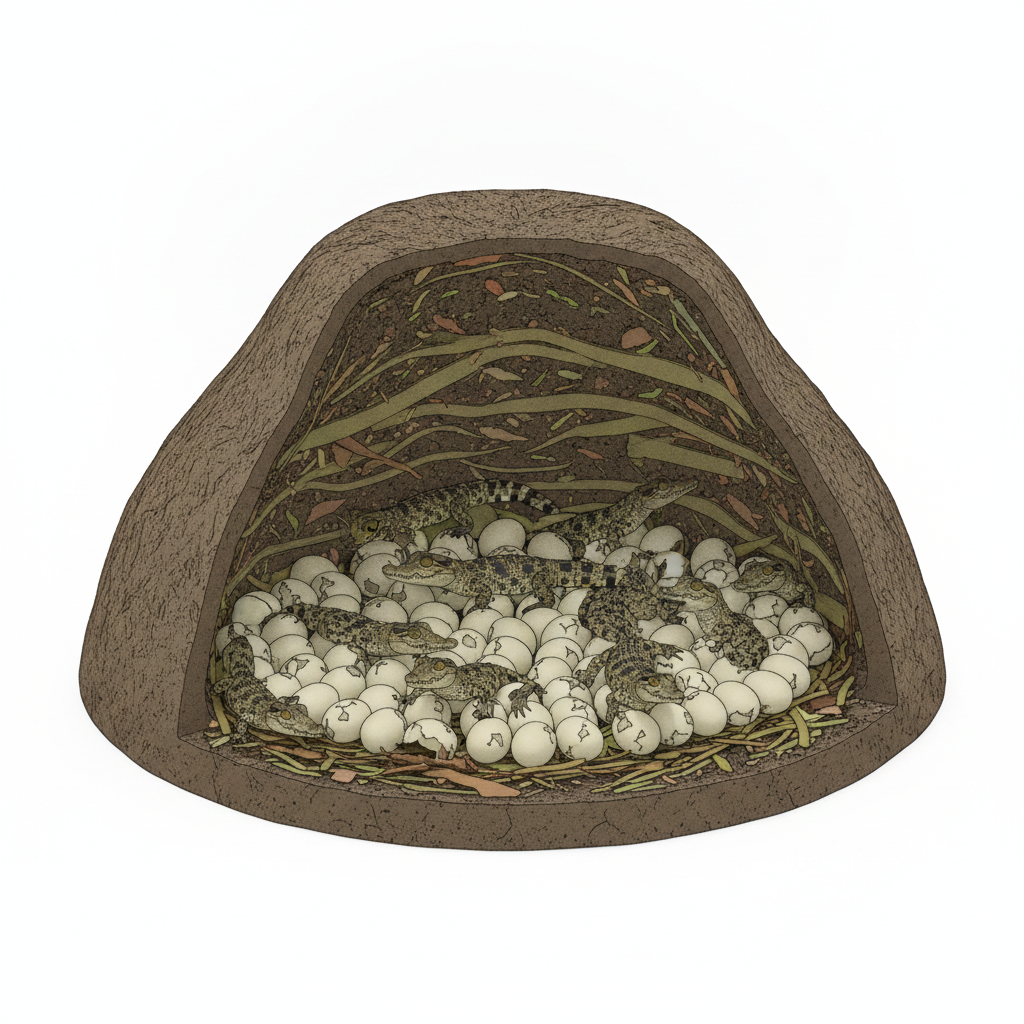
06 Sep Odisha’s Bhitarkanika sees record baby crocodile hatchlings emerge
✎ Estuarine crocodiles (Crocodylus porosus) are apex predators in mangrove ecosystems, with Bhitarkanika National Park hosting nearly 70% of India’s population; their conservation success exemplifies the effectiveness of long-term…
Subject Relevance — Where This Topic Fits
- GS Paper III — Environment, Ecology, Biodiversity and Climate Change
- Prelims: Bhitarkanika National Park, Estuarine crocodile (Crocodylus porosus), Mangrove ecosystems, Conservation of endangered species, IUCN Red List species, Project Crocodile
- Essay: Conservation of biodiversity as a moral and ecological imperative, The interplay between human activity and wildlife protection in fragile ecosystems
Quick Revision: Estuarine crocodiles (Crocodylus porosus) are apex predators in mangrove ecosystems, with Bhitarkanika National Park hosting nearly 70% of India’s population; their conservation success exemplifies the effectiveness of long-term habitat protection and species-specific management programmes.
Why is this in the news?
The recent emergence of hundreds of saltwater crocodile hatchlings in Bhitarkanika National Park, Odisha, marks the commencement of the annual breeding season for the species. This event is significant as it underscores the success of long-term conservation efforts in restoring a once-depleted population and highlights the ecological role of estuarine crocodiles in maintaining the health of mangrove ecosystems. The timing and scale of the hatchling emergence also provide an opportunity to examine the challenges faced by young crocodiles in the wild and the institutional mechanisms in place to protect critical habitats.
Background
- Bhitarkanika National Park, located in Odisha’s Kendrapada district, is one of the largest mangrove ecosystems in India.
- The estuarine crocodile (Crocodylus porosus), also known as the saltwater crocodile, is a keystone species in mangrove habitats, contributing to nutrient cycling and maintaining ecological balance.
- In 1975, the estuarine crocodile population in Bhitarkanika was critically low at 96 individuals, prompting the initiation of conservation measures.
- Over the past five decades, concerted efforts by the Odisha Forest Department, in collaboration with wildlife researchers and local communities, have led to a dramatic recovery of the crocodile population to approximately 1,858 individuals.
- The park’s mangrove forests are vital for coastal protection, carbon sequestration, and supporting biodiversity, including numerous avian, mammalian, and reptilian species.
- Bhitarkanika’s crocodile population constitutes nearly 70% of India’s estuarine crocodile population, making it a critical site for the species’ conservation.
What are Estuarine Crocodiles and Their Ecological Role?
- Estuarine crocodiles (Crocodylus porosus) are the largest living reptiles, with males reaching lengths of up to 7 metres and weighing over 1,000 kg; females are significantly smaller.
- They are apex predators in mangrove and estuarine ecosystems, regulating prey populations and maintaining ecological balance through top-down control.
- The species is highly adaptable, inhabiting brackish and freshwater environments, including rivers, estuaries, and coastal lagoons across South and Southeast Asia, Australia, and the Indian Ocean islands.
- Estuarine crocodiles are oviparous, with females laying 50–60 eggs in nests constructed from mangrove twigs, leaves, and mud on elevated ground to avoid monsoon inundation.
- Incubation lasts approximately 70–80 days, after which hatchlings emerge and immediately seek water bodies, often facing high predation rates from birds, fish, and other reptiles.
- The species is listed as Least Concern on the IUCN Red List but is protected under Schedule I of the Wildlife (Protection) Act, 1972, in India, reflecting its ecological importance and vulnerability to habitat loss.
- Estuarine crocodiles play a crucial role in seed dispersal and nutrient cycling within mangrove ecosystems, indirectly supporting the health of the entire habitat.
- Their presence in mangrove forests acts as a deterrent to illegal activities such as tree felling and poaching, thereby aiding in the conservation of the ecosystem.
Key Features
| Feature | Significance |
|---|---|
| Estuarine crocodile (*Crocodylus porosus*) population in Bhitarkanika | Represents approximately 70% of India’s estuarine crocodile population, serving as a critical conservation success story under the Wildlife (Protection) Act, 1972. |
| Annual hatchling emergence period | A cyclical biological process ensuring species recruitment; hatchlings emerge after 70-80 days of incubation, marking the transition from nesting sites to aquatic habitats. |
| Nesting site selection criteria | Elevated ground with mangrove twigs, leaves, and mud to avoid monsoon inundation and ensure adequate sunlight for incubation, reflecting ecological adaptation. |
| Tourism restriction during nesting season (May 31–July 31) | A conservation measure to minimise human disturbance, reducing stress on nesting females and hatchlings, thereby enhancing survival rates. |
| Predation pressure on hatchlings | High mortality rate (~99% of hatchlings do not survive to adulthood) due to predation by aquatic animals, birds, and other predators, highlighting natural population regulation mechanisms. |
Why it Matters
Ecological
- Bhitarkanika’s estuarine crocodile population acts as an apex predator, regulating prey populations and maintaining ecological balance in the mangrove ecosystem.
- Crocodiles indirectly protect mangrove forests by deterring human encroachment, illegal tree felling, and poaching in swampy areas.
- The species contributes to nutrient cycling through carcass decomposition, enriching soil and water quality in the estuarine environment.
Conservation
- Demonstrates the effectiveness of long-term conservation efforts under the Wildlife (Protection) Act, 1972, with population growth from 96 in 1975 to 1,858 in 2026.
- Highlights the role of protected areas (Bhitarkanika National Park) in preserving biodiversity and supporting flagship species conservation.
- Underscores the importance of habitat-specific management, including nesting site protection and seasonal restrictions.
Scientific
- Provides data for research on estuarine crocodile biology, nesting ecology, and hatchling survival strategies, aiding future conservation planning.
- Serves as a case study for reptile conservation in mangrove ecosystems, with relevance to similar habitats like the Sundarbans and Andaman Islands.
Socio-economic
- Supports local livelihoods through eco-tourism, with crocodile sightings attracting visitors to Bhitarkanika, contributing to regional tourism revenue.
- Enhances ecosystem services such as flood regulation and storm protection, benefiting coastal communities in Odisha.
Challenges
1. Habitat Fragmentation and Human-Wildlife Conflict
- Expansion of human settlements and infrastructure near Bhitarkanika increases the risk of habitat fragmentation and human-crocodile encounters.
- Poaching and illegal fishing within the park threaten both crocodiles and their prey, disrupting ecological balance.
UPSC Link: Environmental degradation; Wildlife Protection Act, 1972
2. Climate Change Impacts
- Rising sea levels and increased frequency of cyclones may inundate nesting sites, reducing successful incubation rates.
- Changes in monsoon patterns could alter water salinity and prey availability, affecting crocodile health and reproduction.
UPSC Link: Climate change; Coastal ecosystem vulnerability
3. Disease and Genetic Bottlenecks
- Emerging diseases in crocodile populations, such as bacterial infections, could reduce hatchling survival rates.
- Limited genetic diversity due to isolated populations may increase susceptibility to environmental stressors.
UPSC Link: Biodiversity conservation; Genetic diversity
4. Tourism and Visitor Management
- Unregulated tourism can disturb nesting sites and stress adult crocodiles, particularly during the critical hatchling emergence period.
- Lack of awareness among visitors about conservation protocols may lead to unintentional harm to habitats.
UPSC Link: Eco-tourism; Protected area management
5. Funding and Institutional Capacity
- Insufficient financial resources for long-term monitoring, research, and habitat restoration may hinder conservation efforts.
- Limited capacity of forest departments to enforce regulations and conduct anti-poaching patrols effectively.
UPSC Link: Wildlife conservation funding; Institutional frameworks
Challenges — UPSC Perspective
| Issue | Concern |
|---|---|
| Poaching and illegal fishing | Direct threat to crocodile populations and their prey, undermining conservation efforts. |
| Climate-induced habitat loss | Increased cyclones and sea-level rise may submerge nesting sites, reducing breeding success. |
| Human-wildlife conflict | Encroachment into crocodile habitats increases the likelihood of negative interactions. |
| Disease outbreaks | High-density crocodile populations may facilitate the spread of pathogens. |
| Tourism pressure | Unregulated visitation can disrupt nesting and stress wildlife. |
| Limited funding for conservation | Inadequate resources for research, monitoring, and habitat restoration. |
Way Forward
- Strengthen patrolling and surveillance in Bhitarkanika National Park to deter poaching and illegal activities, with a focus on nesting sites during the breeding season.
- Conduct scientific studies to assess the impact of climate change on crocodile habitats, including nesting site viability and prey availability.
- Develop and implement community-based conservation programs to raise awareness among local populations about the ecological importance of crocodiles and mangroves.
- Enhance eco-tourism infrastructure with strict visitor guidelines to minimise disturbance during critical periods like hatchling emergence.
- Expand research on hatchling survival rates and predation pressures to inform targeted conservation interventions.
- Collaborate with academic institutions and NGOs to monitor crocodile populations and genetic diversity for long-term viability.
- Integrate crocodile conservation into broader mangrove restoration and coastal zone management plans to address habitat fragmentation.
UPSC Value Addition
Keywords for Mains Answer-Writing
Bhitarkanika National Park · estuarine crocodile conservation · mangrove ecosystem services · wildlife breeding ecology · protected area management · species-specific conservation strategies · Odisha wildlife habitats · nesting ecology of reptiles · human-wildlife conflict mitigation · endangered species recovery · biodiversity hotspots in India · ecological balance in mangroves
Concept Flow
Estuarine crocodiles in Bhitarkanika select elevated nesting sites using mangrove materials to avoid monsoon inundation and ensure incubation success. → Female crocodiles lay 50-60 eggs, which incubate for 70-80 days before hatchlings emerge in a synchronized annual event. → Hatchlings face high predation pressure (~99% mortality) from aquatic and terrestrial predators during their initial dispersal to water bodies. → Surviving juveniles integrate into the mangrove ecosystem, where crocodiles act as apex predators regulating prey populations. → Conservation efforts under the Wildlife (Protection) Act, 1972, including protected area management and seasonal restrictions, contribute to population recovery. → Climate change and human activities (e.g., habitat fragmentation, poaching) pose emerging threats to the long-term viability of the crocodile population. → Effective management requires integrating ecological research, community engagement, and policy interventions to sustain the species and its habitat.
Prelims Practice Questions
Q1. Consider the following statements regarding estuarine crocodiles (Crocodylus porosus) in India:
1. Bhitarkanika National Park in Odisha accounts for nearly 70% of India’s estuarine crocodile population.
2. Estuarine crocodiles are primarily found in freshwater habitats such as rivers and lakes.
3. The species is listed as ‘Critically Endangered’ in the IUCN Red List.
4. Female estuarine crocodiles typically lay 50–60 eggs per clutch.
How many of the above statements are correct?
- Only one
- Only two
- Only three
- All four
Answer: Only three — Statements 1 and 4 are correct. Statement 2 is incorrect because estuarine crocodiles primarily inhabit brackish and saltwater environments like mangrove swamps and estuaries. Statement 3 is incorrect as the species is listed as ‘Least Concern’ by the IUCN, though it faces regional conservation concerns.
Q2. Assertion (A): The nesting sites of estuarine crocodiles in Bhitarkanika National Park are typically located on elevated ground using mangrove twigs, leaves, and mud.
Reason (R): These sites are selected to remain free from monsoon inundation and receive adequate sunlight for successful incubation of eggs.
Options:
A. Both A and R are true, and R is the correct explanation of A.
B. Both A and R are true, but R is NOT the correct explanation of A.
C. A is true, but R is false.
D. A is false, but R is true.
Answer: ? — Both the assertion (A) and reason (R) are true, and R correctly explains A. The elevated nesting sites in Bhitarkanika are designed to avoid monsoon flooding and ensure optimal sunlight for incubation.
Q3. Match the following pairs related to wildlife conservation in India:
Column I (Protected Area) Column II (State/Union Territory)
1. Bhitarkanika National Park A. West Bengal
2. Sundarbans National Park B. Odisha
3. Keoladeo National Park C. Rajasthan
4. Great Himalayan National Park D. Himachal Pradesh
Select the correct match using the codes below:
- 1-B, 2-A, 3-C, 4-D
- 1-A, 2-B, 3-C, 4-D
- 1-B, 2-A, 3-D, 4-C
- 1-C, 2-A, 3-B, 4-D
Answer: 1-B, 2-A, 3-C, 4-D — The correct matches are: 1-B (Bhitarkanika National Park in Odisha), 2-A (Sundarbans National Park in West Bengal), 3-C (Keoladeo National Park in Rajasthan), and 4-D (Great Himalayan National Park in Himachal Pradesh).
Mains Practice Question
✍ The conservation of estuarine crocodiles (Crocodylus porosus) in Bhitarkanika National Park exemplifies the interplay between species-specific conservation strategies and broader ecosystem management. Critically analyse the role of protected areas in maintaining ecological balance in mangrove ecosystems, with reference to the conservation success observed in Bhitarkanika. Also, examine the challenges in ensuring the long-term survival of hatchlings in the wild. (15 Marks)
Approach: MODEL-ANSWER SKELETON:
1. **Introduction (2 marks)**
– Define estuarine crocodiles and their ecological niche in mangrove ecosystems.
– Briefly introduce Bhitarkanika National Park as a biodiversity hotspot and its significance in crocodile conservation.
2. **Role of Protected Areas in Ecological Balance (5 marks)**
– Explain the concept of protected areas (IUCN Categories) and their importance in biodiversity conservation.
– Discuss how Bhitarkanika’s protected status (declared a wildlife sanctuary in 1975 and a national park in 1998) has contributed to the recovery of estuarine crocodile populations (from 96 in 1975 to 1,858 now).
– Highlight the role of mangroves as critical habitats for estuarine crocodiles and their broader ecosystem services (e.g., coastal protection, carbon sequestration, fisheries support).
– Reference the **Wildlife Protection Act, 1972** and **Project Crocodile** (launched in 1975) as institutional frameworks supporting conservation.
3. **Species-Specific Conservation Strategies (4 marks)**
– Discuss the nesting ecology of estuarine crocodiles (elevated nests, clutch size of 50–60 eggs, incubation period of 70–80 days).
– Explain the conservation measures in Bhitarkanika: seasonal restrictions on tourism (May 31–July 31), protection of nesting sites, and monitoring of hatchling emergence.
– Reference the **National Wildlife Action Plan (2017–2031)** and its emphasis on species-specific conservation.
4. **Challenges in Hatchling Survival (3 marks)**
– Analyze the low survival rate of hatchlings (1 in 100 survives to adulthood) due to predation, habitat loss, and environmental factors.
– Discuss anthropogenic pressures (e.g., illegal fishing, mangrove degradation) and natural threats (e.g., flooding, salinity changes).
– Highlight the need for community-based conservation and research on hatchling ecology.
5. **Conclusion (1 mark)**
– Summarize the importance of integrated conservation approaches (legal, institutional, ecological) in ensuring the long-term survival of estuarine crocodiles and mangrove ecosystems.
Source: orissapost.com
Odisha PCS (OPSC (OAS)) — State PCS Practice
Prelims: In the context of Odisha’s Bhitarkanika National Park, which of the following is the primary reason for the recent mass hatching of baby crocodiles observed in 2023?
- Increased mangrove cover due to afforestation drives
- Favorable monsoon conditions and reduced salinity in water bodies
- Strict anti-poaching measures implemented by the forest department
- Introduction of artificial nesting sites by conservationists
Answer: Favorable monsoon conditions and reduced salinity in water bodies — Favorable monsoon conditions and reduced salinity in water bodies are critical for crocodile nesting and hatching success in Bhitarkanika.
Mains: Examine the ecological significance of Bhitarkanika National Park in Odisha, with special reference to its role in crocodile conservation. Discuss the challenges faced in ensuring the survival of hatchlings and suggest measures for their long-term protection.
Generated by AanyaAi for educational purpose.
Related guides on our sites
- Current affairs for upsc 2026
- How to prepare for GS paper 1 for UPSC CSE mains exam
- Best UPSC coaching for IFOS exam
- Best geography optional coaching

- UPSC Alert: 40-Day ‘Khet Bachao Abhiyan’ Launch by Union Minister - October 22, 2026
- भारत ने बताया UN रिपोर्ट में दाऊद इब्राहिम को ‘भारत-आधारित’ बताना ‘गलत’ - October 22, 2026
- GRAP Stage I activated in Delhi-NCR amid rising AQI: Key actions for aspirants - October 22, 2026

No Comments