


01 Sep Odisha’s Ramachandi-Paradeep Coastal Corridor: NHAI Sees High Bidding Interest
✎ The Rameshwar-Paradip Coastal Highway in Odisha is a 160-km greenfield, access-controlled corridor approved at ₹8,300.79 crore under CCEA in June 2026, to be implemented via HAM, reducing travel time, improving logistics, and…
Subject Relevance — Where This Topic Fits
- GS Paper II — Government Policies and Interventions for Development in various sectors | GS Paper III — Infrastructure: Energy, Ports, Roads, Airports and Railways | GS Paper III — Effects of Liberalization on the Economy
- Prelims: National Highways Authority of India (NHAI), Hybrid Annuity Model (HAM), Cabinet Committee on Economic Affairs (CCEA), Economic corridors, Access-controlled highways, Greenfield projects, Port connectivity, Tourism infrastructure, Logistics cost reduction, Employment generation
- Essay: Infrastructure as a catalyst for regional development: Case of Odisha’s coastal corridor, Balancing economic growth with environmental sustainability in infrastructure projects
Quick Revision: The Rameshwar-Paradip Coastal Highway in Odisha is a 160-km greenfield, access-controlled corridor approved at ₹8,300.79 crore under CCEA in June 2026, to be implemented via HAM, reducing travel time, improving logistics, and generating substantial employment.
Why is this in the news?
The National Highways Authority of India (NHAI) has received an overwhelming response from bidders for the construction of a 160-kilometre greenfield, access-controlled coastal highway connecting Rameshwar to Paradip in Odisha. The project, approved by the Cabinet Committee on Economic Affairs in June 2026 at a capital cost of ₹8,300.79 crore, aims to enhance connectivity to key tourism hubs such as the Jagannath Temple in Puri, Puri Beach, and the Sun Temple in Konark, while reducing travel time between Rameshwar and Paradip to approximately 2 hours 30 minutes. The project is structured in two packages and will be implemented under the Hybrid Annuity Model (HAM), generating significant direct and indirect employment during construction.
Background
- The existing National Highway-16 (NH-16) is part of the Golden Quadrilateral and connects major cities such as Khordha, Bhubaneswar, and Cuttack, while NH-316 links Bhubaneswar to Puri and extends towards Satapada and Konark.
- Approximately 40% of the roads on the Puri-Satapada and Puri-Konark routes have already been constructed, but these routes experience high local traffic volumes, making them unsuitable for high-speed long-distance vehicular movement.
- The proposed Rameshwar-Paradip coastal corridor will serve as an alternative route to NH-16 and NH-316, improving connectivity to Puri, Konark, Paradip Port, the upcoming Puri International Airport, and emerging ports such as Astarang and Suvarnarekha.
- The corridor will traverse through the districts of Khordha, Puri, Kendrapara, and Jagatsinghpur in Odisha, integrating coastal and hinterland regions.
- The project aligns with the broader national strategy to develop economic corridors that enhance logistics efficiency, reduce transportation costs, and stimulate regional economic growth.
What is the Rameshwar-Paradip Coastal Highway Project?
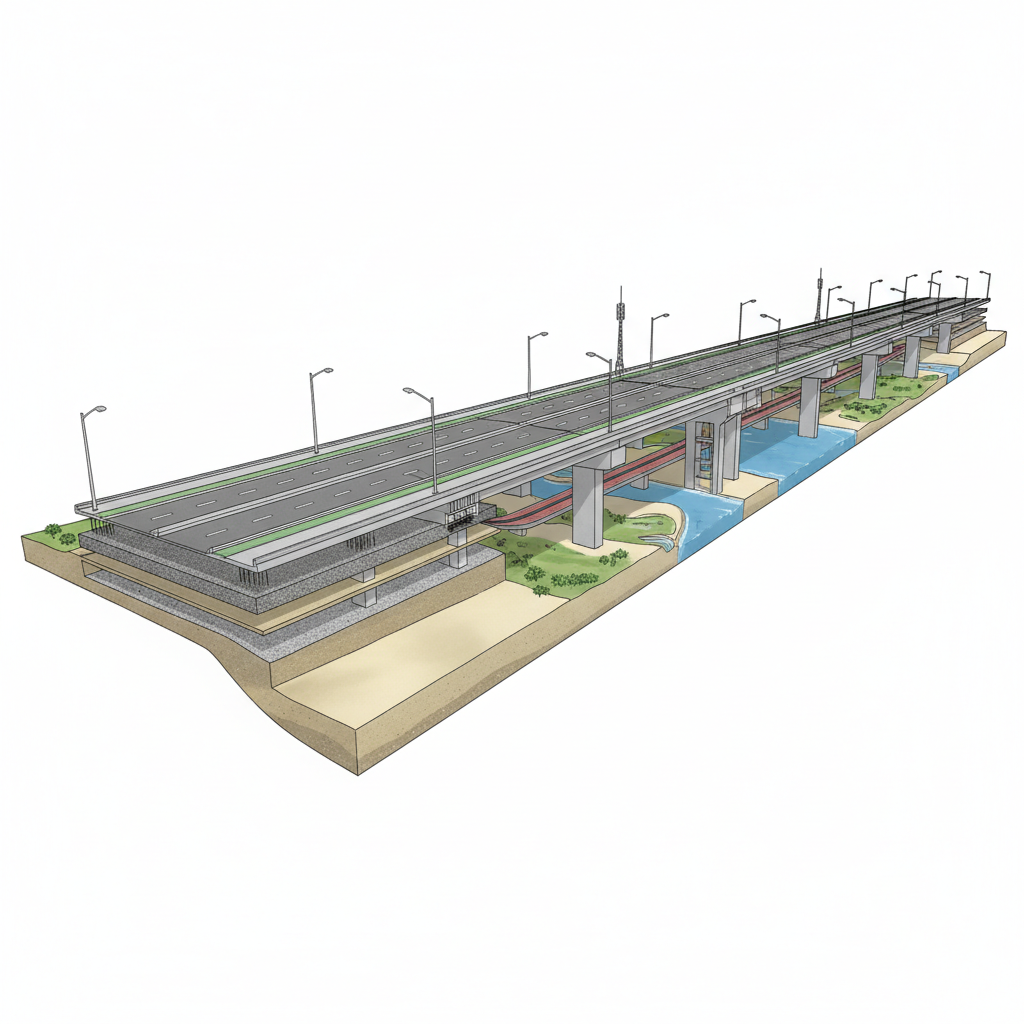
- The Rameshwar-Paradip Coastal Highway is a 160-kilometre greenfield, access-controlled national highway proposed to be constructed along the coast of Odisha, connecting Rameshwar in the south to Paradip in the north.
- The project is divided into two packages: Package-I (79.4 km) involves a four-lane, access-controlled road from Rameshwar to Konark, while Package-II (80.7 km) involves a two-lane road with paved shoulders from Konark to Paradip.
- The corridor is designed for a speed limit of 100 km/hour, ensuring high-speed connectivity between key tourism and economic hubs such as the Jagannath Temple in Puri, Puri Beach, and the Sun Temple in Konark.
- The project will reduce travel time between Rameshwar and Paradip from the current duration to approximately 2 hours 30 minutes, enhancing regional mobility and economic integration.
- The corridor will provide an alternative route to NH-16 and NH-316, alleviating congestion on existing highways and improving logistics efficiency for cargo movement to and from Paradip Port and other emerging ports.
- The project will be implemented under the Hybrid Annuity Model (HAM), a Public-Private Partnership (PPP) model where the government bears the construction cost and the private partner is responsible for operations and maintenance over a concession period.
- During construction, the project is expected to generate approximately 53.6 lakh direct man-days and 67 lakh indirect man-days of employment, contributing to local livelihoods and skill development.
- The corridor will enhance connectivity to the upcoming Puri International Airport, Paradip Port, and emerging ports such as Astarang and Suvarnarekha, fostering economic development in coastal Odisha.
Key Features
| Feature | Significance |
|---|---|
| Length and alignment | A 160 km greenfield controlled-access coastal corridor connecting Ramachandi to Paradip via Puri and Konark, providing direct and faster connectivity to major tourism hubs such as the Jagannath Temple, Puri Beach, and Sun Temple. |
| Design speed | 100 km/h design speed ensures high-speed travel, reducing travel time between Ramachandi and Paradip by approximately 2 hours 30 minutes. |
| Employment generation | Project envisages creation of 53.6 lakh direct man-days and 67 lakh indirect man-days of employment during construction. |
| Capital cost | Total capital cost approved by the Cabinet Committee on Economic Affairs is ₹8,300.79 crore, indicating a high-investment, high-impact infrastructure initiative. |
| Modal integration | Provides an alternative route to NH-16 and NH-316, enhancing connectivity to Paradip Port, proposed Puri International Airport, and emerging ports like Astarang and Subarnarekha. |
Why it Matters
Economic Development
- Reduces logistics costs by improving road connectivity between coastal districts (Khordha, Puri, Kendrapara, Jagatsinghpur) and major economic nodes such as ports and airports.
- Facilitates faster movement of goods and passengers, enhancing trade and tourism potential in Odisha’s coastal belt.
- Supports hinterland economic integration by linking hinterland districts to international gateways (Paradip Port) and tourism circuits.
Strategic Connectivity
- Provides an alternate, high-capacity corridor to NH-16 and NH-316, reducing congestion and improving resilience of the Golden Quadrilateral network.
- Enhances coastal resilience by offering a dedicated route less vulnerable to inland disruptions or seasonal flooding.
- Strengthens connectivity to emerging ports (Astarang, Subarnarekha) and the proposed Puri International Airport, supporting future trade and aviation growth.
Environmental and Operational Efficiency
- Controlled-access design reduces fuel consumption and carbon emissions by enabling smoother, higher-speed traffic flow.
- Minimises vehicle operating costs through reduced travel time and congestion, contributing to lower logistics costs for industries.
- Greenfield alignment avoids existing congested stretches (e.g., Puri–Sattapada, Puri–Konark), reducing environmental impact on sensitive coastal ecosystems.
Tourism and Cultural Integration
- Direct high-speed access to UNESCO World Heritage Sites (Konark Sun Temple) and major pilgrimage centres (Jagannath Temple, Puri), boosting tourism infrastructure and visitor experience.
- Facilitates last-mile connectivity for cruise tourism and coastal circuit development under the Swadesh Darshan scheme.
Challenges
1. Land Acquisition and R&R
- Coastal alignment may face land acquisition challenges due to dense habitation, religious sites, and environmental restrictions under CRZ norms.
- Ensuring fair and timely compensation for affected communities, including fishermen and small landholders, under the Right to Fair Compensation and Transparency in Land Acquisition Act, 2013.
- Mitigation requires proactive stakeholder consultations and adherence to the Coastal Regulation Zone (CRZ) Notification, 2019.
UPSC Link: Land Reforms & CRZ
2. Environmental and Ecological Concerns
- Risk of habitat fragmentation in coastal ecosystems, including mangroves and wetlands, necessitating environmental impact assessments (EIA) and mitigation measures.
- Compliance with the Environment Protection Act, 1986, and adherence to the National Green Tribunal (NGT) guidelines for linear infrastructure projects.
- Need for green construction practices, including use of recycled materials and noise/vibration control during construction.
UPSC Link: Environmental Governance
3. Traffic Diversion and Construction Logistics
- Managing traffic during construction to minimise disruption to existing NH-16 and NH-316 corridors, especially during peak tourist seasons.
- Ensuring uninterrupted connectivity to ports and airports during construction through phased road closures and temporary diversions.
- Coordination with multiple agencies (NHAI, state PWD, port authorities) for seamless project execution.
UPSC Link: Infrastructure Project Management
4. Financial Sustainability
- Ensuring viability of the Hybrid Annuity Model (HAM) in a coastal corridor with lower traffic density compared to national highways.
- Managing toll revenue risks and ensuring cost recovery over the concession period, especially given the high capital outlay.
- Exploring viability gap funding or blended finance models to enhance project bankability.
UPSC Link: Public-Private Partnerships
5. Socio-Cultural Sensitivity
- Balancing infrastructure development with preservation of cultural heritage sites and local traditions along the coastal route.
- Addressing concerns of local communities regarding displacement, livelihoods, and access to coastal resources.
- Ensuring inclusive planning through community participation and grievance redressal mechanisms.
UPSC Link: Inclusive Development
Challenges — UPSC Perspective
| Issue | Concern |
|---|---|
| Land acquisition delays | Potential delays due to CRZ restrictions, religious sites, and dense coastal habitation. |
| Environmental compliance | Need for rigorous EIA compliance and adherence to NGT directives for coastal ecosystems. |
| Traffic management during construction | Risk of congestion on existing NH corridors during project execution. |
| Financial viability under HAM | Uncertainty in toll revenue due to lower traffic density in coastal areas. |
| Community displacement | Risk of livelihood disruption for fishermen and small landholders. |
| Heritage conservation | Ensuring minimal impact on UNESCO-listed sites and religious structures. |
Government Initiatives — Must-Memorise for Prelims
- Bharatmala Pariyojana
- Swadesh Darshan Scheme (Coastal Circuit)
- Sagarmala Programme
Way Forward
- Conduct rapid environmental impact assessments (EIA) and obtain necessary clearances under CRZ Notification, 2019, and Environment Protection Act, 1986.
- Implement a robust land acquisition and rehabilitation plan in compliance with the Right to Fair Compensation and Transparency in Land Acquisition Act, 2013.
- Adopt green construction practices, including use of recycled materials and noise mitigation measures, to align with environmental sustainability goals.
- Establish a multi-stakeholder coordination committee comprising NHAI, state PWD, port authorities, and local bodies for seamless project execution.
- Develop a phased traffic management plan to minimise disruption to existing NH corridors during construction, especially during peak tourist seasons.
- Ensure financial viability by exploring blended finance models, viability gap funding, and toll revenue optimisation under the Hybrid Annuity Model.
- Incorporate community participation mechanisms, including grievance redressal and livelihood restoration programs, to address socio-cultural concerns.
- Monitor project progress through real-time dashboards and third-party audits to ensure adherence to timelines, cost, and quality benchmarks.
UPSC Value Addition
Keywords for Mains Answer-Writing
National Highways Authority of India (NHAI) · Hybrid Annuity Model (HAM) · Coastal Corridor · Greenfield Highway · Access Controlled Roads · Cabinet Committee on Economic Affairs (CCEA) · Employment Generation · Logistics Cost Reduction · Regional Connectivity · Sustainable Infrastructure · Public-Private Partnership (PPP) · Economic Corridors · Tourism Infrastructure · Port Connectivity · Odisha Coastal Highway Project
Constitutional & Policy Linkages
- Article 21 (Right to Life and Personal Liberty) — Protection of livelihoods and environmental rights of coastal communities.
Concept Flow
Coastal economic isolation → High logistics costs and congestion on NH-16/NH-316 → Government approves greenfield coastal corridor under Bharatmala Pariyojana → NHAI invites bids in two packages → High investor interest reflects market confidence → Hybrid Annuity Model (HAM) ensures risk-sharing → Construction generates direct and indirect employment → Enhanced connectivity boosts tourism and trade → Reduced travel time and emissions improve operational efficiency.
Prelims Practice Questions
Q1. Consider the following statements regarding the Hybrid Annuity Model (HAM) used in highway construction in India:
1. HAM is a type of Public-Private Partnership (PPP) model.
2. Under HAM, the government bears 40% of the project cost during the construction phase.
3. The private partner is responsible for the operation and maintenance of the highway for the entire concession period.
4. HAM ensures zero risk transfer to the private sector.
How many of the above statements are correct?
- Only one
- Only two
- Only three
- All four
Answer: Only three — Statements 1 and 3 are correct. HAM is indeed a PPP model where the government bears 40% of the project cost during construction (Statement 2 is incorrect). The private partner is responsible for O&M, but risk is not entirely zero (Statement 4 is incorrect).
Q2. Which of the following pairs is correctly matched regarding the coastal highway project in Odisha?
- A. Ramachandi to Konark — 79.4 km, 4-lane, access-controlled
- B. Konark to Puri — 80.7 km, 2-lane, paved shoulders
- C. Ramachandi to Paradip — 160 km, 6-lane, access-controlled
- D. Puri to Satapada — 10 km, 2-lane, unpaved
Answer: A. Ramachandi to Konark — 79.4 km, 4-lane, access-controlled — The correct pair is A. The Ramachandi to Konark segment (79.4 km) is 4-lane and access-controlled, while the Konark to Puri segment (80.7 km) is 2-lane with paved shoulders. The total length is 160 km, not 6-lane.
Q3. Assertion (A): The Cabinet Committee on Economic Affairs (CCEA) approved the Odisha coastal highway project with a total capital cost of ₹8,300.79 crore.
Reason (R): The project is expected to generate 53.6 lakh direct and 67 lakh indirect man-days of employment during construction.
- Both A and R are true, and R is the correct explanation of A
- Both A and R are true, but R is NOT the correct explanation of A
- A is true but R is false
- A is false but R is true
Answer: Both A and R are true, but R is NOT the correct explanation of A — Both A and R are true, but R is not the explanation for A. The CCEA approved the project for its economic and connectivity benefits, not solely for employment generation.
Mains Practice Question
✍ The construction of the Ramachandi-Paradip coastal corridor exemplifies the strategic shift towards greenfield highways and access-controlled roads in India’s infrastructure development. Critically examine the significance of such projects in enhancing regional connectivity, economic integration, and sustainable development. Also discuss the institutional and financial mechanisms that enable their implementation. (15 Marks)
Approach: MODEL-ANSWER SKELETON:
1. **Introduction (2 Marks)**
– Define greenfield highways and access-controlled roads.
– Context: NHAI’s role, HAM model, and the Odisha coastal corridor (160 km, ₹8,300.79 crore).
2. **Regional Connectivity (3 Marks)**
– **Direct Connectivity**: Linking Ramachandi, Konark, Puri, Paradip, and future ports (Puri International Airport, Astarang, Suvarna Rekha).
– **Alternative Routes**: Reducing dependence on NH-16 and NH-316; time savings (2.5 hours reduced travel time).
– **Tourism Integration**: Connecting Jagannath Temple, Puri Beach, Konark Sun Temple.
3. **Economic Integration (3 Marks)**
– **Logistics Efficiency**: Lower fuel consumption, reduced carbon emissions, and lower vehicle operating costs.
– **Port Connectivity**: Enhancing cargo movement to Paradip Port and emerging ports (Astarang, Suvarna Rekha).
– **Employment Generation**: 53.6 lakh direct and 67 lakh indirect man-days of employment.
– **Regional Development**: Boosting economic activity in Khurda, Puri, Kendrapara, and Jagatsinghpur districts.
4. **Sustainable Development (2 Marks)**
– **Environmental Benefits**: Reduced emissions due to controlled access and efficient routing.
– **Social Infrastructure**: Improved access to healthcare, education, and markets for coastal communities.
– **Resilience**: Mitigating climate risks (cyclones, flooding) through robust engineering standards.
5. **Institutional and Financial Mechanisms (3 Marks)**
– **NHAI and PPP Framework**: Role of NHAI in project execution; HAM model (40% government funding, O&M responsibility with private sector).
– **Cabinet Committee on Economic Affairs (CCEA)**: Approval of ₹8,300.79 crore capital cost.
– **Bidding Process**: Competitive bidding (10 bids for Package-I, 7 for Package-II) reflecting market confidence.
– **Regulatory Oversight**: Compliance with environmental norms, land acquisition policies, and safety standards.
6. **Challenges and Criticisms (2 Marks)**
– **Land Acquisition**: Potential delays due to coastal regulations and local resistance.
– **Cost Overruns**: Risk of delays impacting financial viability under HAM.
– **Environmental Concerns**: Balancing infrastructure growth with coastal ecosystem preservation.
– **Equity Issues**: Ensuring benefits reach marginalized coastal communities.
7. **Conclusion (1 Mark)**
– Summarize the transformative potential of such projects in India’s infrastructure landscape.
– Emphasize the need for balanced implementation to maximize socio-economic benefits while mitigating risks.
Source: PIB (Press Information Bureau)
Odisha PCS (OPSC (OAS)) — State PCS Practice
Prelims: Which of the following statements is correct regarding the coastal corridor project from Rameshwar to Paradip in Odisha, as recently highlighted by NHAI’s overwhelming response from bidders?
- The project aims to connect Rameshwar in Puri district to Paradip in Jagatsinghpur district, enhancing coastal connectivity and economic integration.
- The corridor is being developed under the Sagarmala initiative to reduce logistics costs and improve port connectivity in Odisha.
- NHAI received bids from over 50 consortia for the project, indicating high investor confidence in Odisha’s infrastructure sector.
- All of the above.
Answer: All of the above. — The coastal corridor project from Rameshwar to Paradip in Odisha is part of the Sagarmala initiative, aims to enhance coastal connectivity, and has received significant interest from bidders, reflecting investor confidence in the state’s infrastructure development.
Mains: Discuss the significance of the coastal corridor project from Rameshwar to Paradip in Odisha in the context of the Sagarmala initiative. How will this project contribute to economic integration, logistics efficiency, and coastal resilience in the state? (250 words)
Generated by AanyaAi for educational purpose.
Related guides on our sites
- How to prepare for GS paper 1 for UPSC CSE mains exam
- Best UPSC coaching for IFOS exam
- Best mentorship programme for upsc
- UPSC+BA degree

- UPSC Alert: 40-Day ‘Khet Bachao Abhiyan’ Launch by Union Minister - October 22, 2026
- भारत ने बताया UN रिपोर्ट में दाऊद इब्राहिम को ‘भारत-आधारित’ बताना ‘गलत’ - October 22, 2026
- GRAP Stage I activated in Delhi-NCR amid rising AQI: Key actions for aspirants - October 22, 2026

No Comments