


12 May PM Modi’s 7 Guidelines to Battle the Global Uncertainties
This article covers “Daily Current Affairs”
SYLLABUS MAPPING : GS Paper 2,3 : IR , Economy , Security
FOR PRELIMS : Current Account Deficit (CAD) , Rupee & Forex Reserves , Remittances , Inflation
FOR MAINS : “PM Modi’s appeal to citizens to voluntarily adopt austerity measures during the Iran war crisis represents a governance model that blends democratic legitimacy with citizen responsibility — echoing the COVID-era Janta Curfew approach.” Critically evaluate the effectiveness and limitations of this citizen-mobilisation governance model, and compare India’s response with that of other oil-importing nations. (15 M)
Why in News?
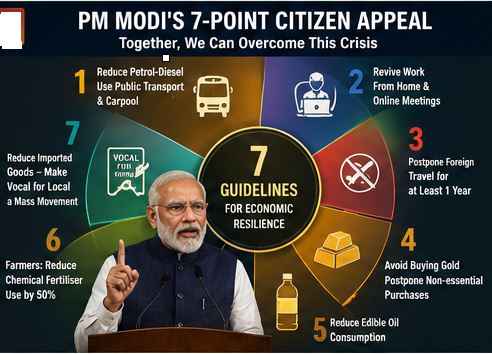
Addressing the inauguration of the Sardardham Hostel in Vadodara, Gujarat, on May 11, 2026, Prime Minister Narendra Modi issued a 7-point citizen appeal to minimise the long-term consequences of the ongoing US-Iran war on India’s economy. Describing the West Asia conflict as “the biggest crisis of this decade” — comparable in national disruption to the COVID-19 pandemic — PM Modi called on ordinary citizens, farmers, and businesses to make collective behavioural changes in fuel use, foreign travel, gold purchases, edible oil consumption, fertiliser dependence, and import habits. The appeal reflects the gravity of India’s structural exposure: India imports 88% of its crude oil, with nearly 60% sourced from the Middle East, spends $72 billion annually on gold imports, and depends on the Gulf for over 50% of its urea imports. UBS Securities has already downgraded India’s FY27 GDP growth forecast from 6.7% to 6.2% as a direct result of the conflict’s cascading effects.
The Context — Why PM Modi Issued This Appeal
The US-Iran War and India’s Triple Squeeze
The US-Iran war, which entered its third month in May 2026, has triggered what the FAO describes as a “triple squeeze” on India’s economy — simultaneous disruptions to fuel, fertiliser, and agricultural export markets, all flowing from the closure of the Strait of Hormuz. The Strait — through which approximately 20% of global oil trade and an equal share of global internet traffic flows — has been closed since March 3, 2026, when the IRGC formally blocked commercial traffic. At the same time, Houthi solidarity attacks have resumed in the Red Sea, closing both of India’s primary import chokepoints simultaneously for the first time in history.
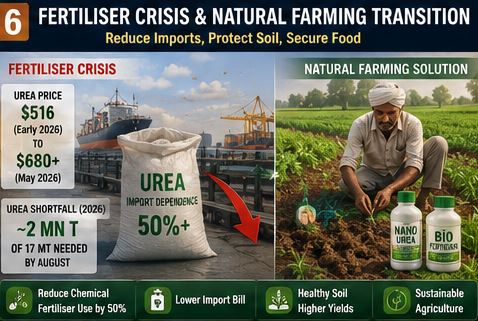
Crude oil prices surged 55% from $72.48 to $112.57 per barrel between late February and late March 2026. Urea prices jumped from $516 to over $680 per tonne. LNG spot prices in Asia rose over 140% after Iran struck Qatar’s Ras Laffan LNG facility in March. Each of these shocks feeds directly into India’s import bill, inflation, the rupee’s exchange rate, and the current account deficit — the precise vulnerabilities that PM Modi’s 7 guidelines are designed to address at the citizen level.
Historical Parallel — Modi’s COVID Framework Applied to Economic Crisis
PM Modi explicitly drew a parallel between this crisis and COVID-19 — noting that the WFH infrastructure, online meeting culture, and collective behavioural discipline forged during the pandemic must now be reactivated for a different but equally serious disruption. The framing is significant: it positions citizen behaviour as a co-producer of national resilience, not merely as a passive recipient of government relief. This echoes PM Modi’s earlier citizen mobilisations — the Janta Curfew (March 22, 2020), the Diya Jalao appeal, and the COVID vaccine national drive — all of which positioned collective voluntary action as a form of national service.
The 7 Guidelines — In Full Detail
PM Modi’s 7-point appeal was issued across two public addresses — in Hyderabad (May 10) and Vadodara (May 11). Together, they constitute India’s most comprehensive citizen-level economic resilience framework since the COVID lockdown. Each guideline targets a specific import vulnerability.
“I appeal to every citizen of my country to reduce the use of petrol-diesel as much as possible. Use the metro, make greater use of electric buses and public transport, and promote carpooling. Those who have a car should use it thoughtfully.”
India spent $174.9 billion on crude and petroleum products in FY26 — 22% of all imports. With 88% of crude imported and ~60% from the Middle East (now disrupted), even a 5% reduction in fuel demand could save billions in forex annually. The guideline also serves as indirect support for India’s EV push — PM Modi separately noted the need for greater adoption of electric buses and vehicles.
Addresses: Crude Oil Import Dependence
“During COVID-19 pandemic, facilities like work from home, online meetings, video conferencing were used. Today, we should start using them again. WFH, online meetings, video conferencing must be prioritised again.”
WFH directly reduces commuter fuel consumption. For India’s 54 million-strong formal workforce, even partial WFH adoption could cut urban petrol and diesel demand measurably. Industry body NASSCOM has already backed the appeal, confirming that Indian IT companies are enabling remote work at scale.
Addresses: Crude Oil Import Dependence
“The growing culture of weddings abroad, travelling abroad, and vacationing abroad is becoming prevalent among the middle class. We must decide that during this time of crisis, we should postpone travelling abroad for at least a year.”
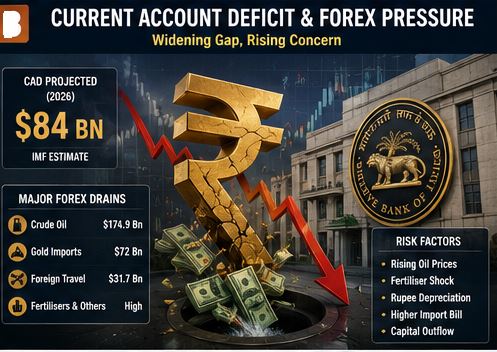
In 2025, 32.7 million Indians travelled abroad, spending approximately $31.7 billion in foreign exchange. This represents the third-largest drain on India’s forex reserves after crude oil and gold. A significant reduction in outbound tourism would directly reduce demand for foreign currency, supporting the rupee during a period of extraordinary import pressure. The appeal is particularly directed at leisure and wedding tourism, which has grown explosively in India’s post-COVID middle class.
Addresses: Foreign Exchange Reserves Pressure
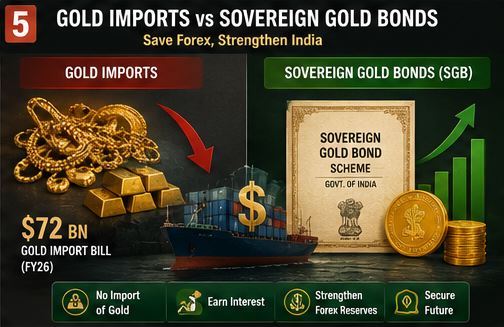
“Gold is not necessary at this time. A large amount of national resources is spent on gold. People should avoid buying gold for at least a year.”
India is the world’s second-largest gold buyer after China, importing gold worth $72 billion in FY26. Gold is almost entirely imported — there are no significant domestic gold mines. Every rupee spent on gold is a direct forex outflow. India’s gold import bill is the second-largest single contributor to its current account deficit — after crude oil. Structurally, reducing gold import dependence is one of the key goals of schemes like the Sovereign Gold Bond Scheme and the Gold Monetisation Scheme — PM Modi’s appeal gives these a timely urgency.
Addresses: Foreign Exchange Reserves & CAD
“Besides, I also advise families to reduce the consumption of edible oil, stressing that it is key to better health.”
India imports approximately 60% of its edible oil requirement, primarily palm oil from Indonesia and Malaysia, and sunflower oil from Ukraine and Russia. The Iran war has disrupted shipping routes, pushing edible oil prices upward globally. India’s edible oil import bill runs to approximately $15–20 billion annually. Reduced consumption simultaneously serves public health goals (lower saturated fat intake) and foreign exchange conservation — making this the most dual-purpose of the 7 guidelines. PM Modi has previously linked edible oil reduction to the Mission Palm Oil initiative for domestic oilseed production.
Addresses: Edible Oil Imports + Public Health
“Farmers should focus on reducing the usage of chemical fertiliser by 50 per cent. Natural farming practices must be adopted. Soil protection and sustainability are essential for long-term agricultural health.”
This is the most ambitious and structurally significant guideline. India imports over 50% of its urea and 80%+ of its ammonia from the Gulf — the very region now disrupted. Urea prices have risen from $516 to $680+ per tonne. India’s fertiliser subsidy bill runs to over ₹1.5 lakh crore annually. A 50% reduction in chemical fertiliser use would simultaneously reduce the import bill, cut the subsidy burden, and advance the PM Pranam Yojana (promoting alternative fertilisers) and the Natural Farming Mission. The 2 million tonne urea shortfall projected through August 2026 makes this guideline urgent.
Addresses: Fertiliser Import Dependence & Food Security
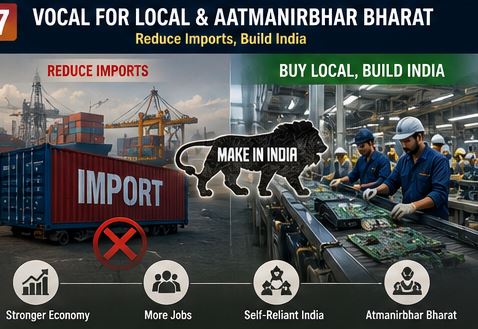
“We must reduce the use of products that come from abroad and avoid unnecessary dependence on imported goods in our daily lives. Today’s need is to make Vocal for Local a mass movement.”
This broadest guideline revives PM Modi’sAatmanirbhar Bharatframework in a crisis context. The appeal covers electronics, lifestyle goods, fast fashion, and non-essential consumer imports. India’strade deficit widened significantly in 2025–26; Chief Economic Adviser Anantha Nageswaran warned that the trade deficit will “rise significantly” in FY27 due to the Iran war’s effects. Supporting domestic industry also reinforcesPLI (Production Linked Incentive) schemesfor electronics, textiles, and pharmaceuticals.
India’s Structural Import Vulnerabilities — The Economic Backdrop
| Import category | Annual value (FY26) | % imported | Gulf dependence | Crisis-specific impact |
|---|---|---|---|---|
| Crude oil & petroleum | $174.9 Bn (22% of imports) | 88% imported | ~60% from Middle East | Brent crude surged 55% (Feb–Mar 2026); domestic urea production fell 800,000 T/month |
| Gold | $72 Bn | ~100% imported | Indirect (dollar-denominated) | CAD widening; rupee pressure; no domestic substitute |
| Edible oil | ~$15–20 Bn | ~60% imported | Routes disrupted | Global palm & sunflower oil prices elevated; shipping disruptions |
| Urea (fertiliser) | Approx. 10 MT imported annually | ~50%+ imported | 60%+ from Gulf | Urea price: $516 → $680+/tonne; 2 MT shortfall projected by Aug 2026; 3 urea plants reduced output |
| Ammonia | Significant qty | ~80%+ imported | Gulf-dominant | Ammonia: $495 → $600/tonne; domestic LNG-based production constrained |
| LNG | Significant qty | High dependence | Qatar (17% LNG capacity hit) | LNG spot prices in Asia up 140%+ after Ras Laffan strike; 3 urea plants supply-constrained |
| Foreign travel | $31.7 Bn forex outflow (FY24) | N/A | N/A | Forex drain; 32.7 mn Indians abroad in 2025; rupee pressure |
Macro Impact on India’s Economy
IMF projects India’s CAD at$84 billion in 2026. A negative CAD means India is spending more abroad than it earns. Crude oil is the single largest contributor; gold is second. PM Modi’s guidelines directly target both. CEA Nageswaran warned CAD will “rise significantly” in FY27 absent corrective measures
UBS Securities downgraded India’s FY27 GDP growth forecast from6.7% to 6.2%on May 4, 2026, citing the Iran war as a “historically large energy shock with asymmetric macro risks.” The Sensex fell1,312 points (1.7%)on May 11 alone, as consumption-linked sectors sold off on PM Modi’s austerity appeal
India requires~17 million tonnes of urea by August 2026. With stocks of 6.2 MT and domestic production of ~10 MT, a2 MT shortfallremains. Urea subsidy bill already over ₹1.5 lakh crore/year — price spikes further strain fiscal consolidation. Risk to kharif crop (rice, soybean, cotton) sowing if fertiliser unavailable on time
Higher crude and fertiliser import bills increase demand for dollars, weakening the rupee. Capital inflows are dampened by geopolitical risk aversion. Currency markets have already begun adjusting. The government cut fuel excise duty to zero on diesel — absorbing ~$1.18 billion/monthin lost tax revenue to keep pump prices stable
Global food prices rising: nitrogen fertiliser prices projected to nearly double from 2024 levels; phosphate up 50%. Combined with higher fuel prices, this threatens India’s retail inflation trajectory — which the RBI is already monitoring cautiously under its 4% inflation targeting framework
India’s Gulf diaspora — approximately9 million workers— sends over$125 billion annuallyin remittances. War-disrupted Gulf economies, business closures, and job losses in Bahrain, UAE, and Saudi Arabia could significantly reduce remittance inflows, adding a fourth dimension to India’s external balance pressure.
Government Measures — Policy Response Alongside Citizen Appeals
- Excise duty cut on fuel:Diesel excise duty cut to zero; petrol duty cut by ₹10/litre — absorbing ~$1.18 billion/month in revenue to keep pump prices stable
- E20 mandate:20% ethanol blending with petrol mandated from April 2026 — reduces crude import requirement and supports domestic sugarcane and maize farmers
- Strategic Petroleum Reserve:India’s SPR (stored at Vishakhapatnam, Padur, Mangalore) being managed carefully; Petroleum Ministry has assured no shortage of petrol, diesel, or LPG
- Urea buffer stock:Government mobilising alternative urea suppliers outside the Gulf; exploring spot purchases from Canada, Egypt, and Algeria
- Sovereign Gold Bonds:New SGB tranches being pushed to redirect household savings from physical gold imports to domestic paper gold instruments
- NASSCOM WFH framework:IT industry body activated remote work enablement across member companies following PM Modi’s appeal
- EV push:PM’s appeal indirectly accelerated EV adoption messaging — Ola Electric, Ather, and JBM Auto stocks rallied sharply after the address
Comparing India to Other Import-Dependent Economies
| Country | Hormuz crude dependence | Government response to Iran war | India comparison |
|---|---|---|---|
| Japan | ~90% crude from Middle East via Hormuz | Activated emergency oil stock releases; airline emergency mode; government rationing discussions | Japan more dependent than India on crude but has larger strategic reserves (90-day IEA mandate) |
| South Korea | ~70% crude from Middle East, 95%+ via Hormuz | 100 trillion won ($68 Bn) market stabilisation programme activated | South Korea has larger fiscal buffer; India has larger domestic renewable capacity |
| Philippines | 98% oil imported from Middle East | First country to declare national energy emergency (March 24, 2026) | Philippines more acute; India buffered by domestic coal and growing renewables |
| Egypt | Moderate oil import dependence | Mandatory business closure at 9pm; street light dimming; fuel price hike; transit fare hike | Egypt’s measures more coercive; India relying on voluntary citizen compliance — consistent with democratic governance |
| USA | Net oil exporter; minimal Hormuz dependence | Benefiting from oil price surge — exports rose to 12.9 Mn bpd in April 2026 | India cannot self-supply oil at scale; accelerating renewables + domestic crude development is the only long-term answer |
Schemes Underpinning the 7 Guidelines — Policy Connect
| PM’s guideline | Existing government scheme / policy | Alignment |
|---|---|---|
| Reduce petrol/diesel | PM Electric Bus Scheme; FAME-II; E20 ethanol blending; Metro rail expansion | The appeal drives immediate behavioural demand for clean transport alternatives India has invested billions in building |
| Work from Home | BharatNet (rural broadband); Digital India; NASSCOM WFH framework | Leverages digital infrastructure already built; reduces oil demand without economic shutdown |
| Avoid foreign travel | Dekho Apna Desh (domestic tourism); SWADESH Darshan; Passport issuance reforms | Redirects leisure spending to domestic tourism — double benefit: forex saving + domestic economic stimulus |
| Reduce gold purchases | Sovereign Gold Bond Scheme; Gold Monetisation Scheme; India Gold Coin | Paper gold instruments substitute physical gold imports; monetises idle domestic gold stocks |
| Reduce edible oil | National Mission on Edible Oils (NMEO-Oil Palm); PM Pranam Yojana | Demand reduction + supply-side investment in domestic oilseed (mustard, groundnut, palm) production |
| Reduce chemical fertilisers | PM Pranam Yojana; Natural Farming Mission; Nano Urea (IFFCO); PM-KISAN | Reduces import bill, subsidy burden, and soil health degradation simultaneously |
| Vocal for Local / reduce imports | Aatmanirbhar Bharat; PLI Schemes (14 sectors); Make in India; Startup India | Demand-side pull for domestically manufactured goods accelerates supply-side PLI investment returns |
Q. With reference to PM Modi’s 7 guidelines issued in May 2026 in response to the Iran war’s economic impact on India, consider the following statements:
1. India’s crude oil and petroleum product imports accounted for approximately 22% of its total imports in the financial year ended March 2026.
2. India is the world’s largest buyer of gold, importing gold worth $72 billion in FY2025–26.
3. The Sovereign Gold Bond Scheme, Gold Monetisation Scheme, and Nano Urea (IFFCO) are among the existing government initiatives that directly align with PM Modi’s guidelines on reducing gold purchases and chemical fertiliser use respectively.
4. PM Modi’s guideline on reducing chemical fertiliser use by 50% is directly linked to India’s dependence on Gulf countries for over 60% of its urea imports and the 2-million-tonne urea shortfall projected through August 2026.
Which of the statements given above are correct?
Statement 1 is CORRECT. India spent $174.9 billion on crude oil and petroleum products in the financial year ended March 2026, representing approximately 22% of the country’s total imports. This makes crude oil India’s single largest import category and the primary driver of the current account deficit — which is exactly why PM Modi’s first two guidelines specifically target fuel consumption reduction.
Statement 2 is INCORRECT. India is the world’s second-largest buyer of gold — not the largest. China is the world’s largest gold buyer. India imported gold worth approximately $72 billion in FY26, a figure so substantial that it is the second-largest contributor to India’s current account deficit (after crude oil). PM Modi’s guideline 4 specifically targets this $72 billion drain by appealing to citizens to avoid non-essential gold purchases for at least one year.
Statement 3 is CORRECT. The Sovereign Gold Bond Scheme (SGB) and Gold Monetisation Scheme are specifically designed to reduce India’s physical gold import dependence by channelling household savings into paper gold instruments — directly aligned with Guideline 4. IFFCO’s Nano Urea (a domestic alternative to imported urea) is directly aligned with Guideline 6 on reducing chemical fertiliser use by 50% and shifting toward natural farming.
Statement 4 is CORRECT. India sources over 60% of its urea imports from Gulf countries — the very region disrupted by the US-Iran war and Strait of Hormuz closure since March 2026. Urea prices surged from $516 to over $680 per tonne following the disruption. India faces a projected shortfall of approximately 2 million tonnes of urea through August 2026, making PM Modi’s guideline to reduce chemical fertiliser use by 50% both an economic necessity and a long-term food security imperative.
Mains Questions

- India’s Youth Unemployment and Education Crisis - August 5, 2026
- India’s Sports Infrastructure and the 2036 Olympics Ambition - August 5, 2026
- Critical Minerals: The Foundation of Strategic Power - August 4, 2026

No Comments