


07 Aug Rajya Sabha Chairman Urges Centre to Allow Amit Shah’s Presence in House
Rajya Sabha ChairmanUnion Home MinisterOpposition MembersParliamentary ProceedingsExecutive Accountability✎ The Rajya Sabha Chairman, as the presiding officer, holds the constitutional responsibility to balance parliamentary accountability with legislative decorum, ensuring that procedural rules (e.g., Rules 235 and 240) are enforced…
Subject Relevance — Where This Topic Fits
- GS Paper II — Parliament and State Legislatures — Structure, Functioning, Conduct of Business, Powers & Privileges and Issues Arising out of these | GS Paper II — Role of the Vice-President of India as the Chairman of the Rajya Sabha
- Prelims: Rajya Sabha Chairman, Rules 235 and 240 of the Rajya Sabha Rules of Procedure, Zero Hour, Leader of Opposition, Parliamentary Affairs Minister, Union Home Minister, Parliamentary Privileges, Motion of Adjournment, Censure Motion
- Essay: Parliamentary democracy: The balance between accountability and disruption, The role of constitutional functionaries in preserving legislative decorum
Quick Revision: The Rajya Sabha Chairman, as the presiding officer, holds the constitutional responsibility to balance parliamentary accountability with legislative decorum, ensuring that procedural rules (e.g., Rules 235 and 240) are enforced while facilitating meaningful debate on issues of national importance.
Why is this in the news?
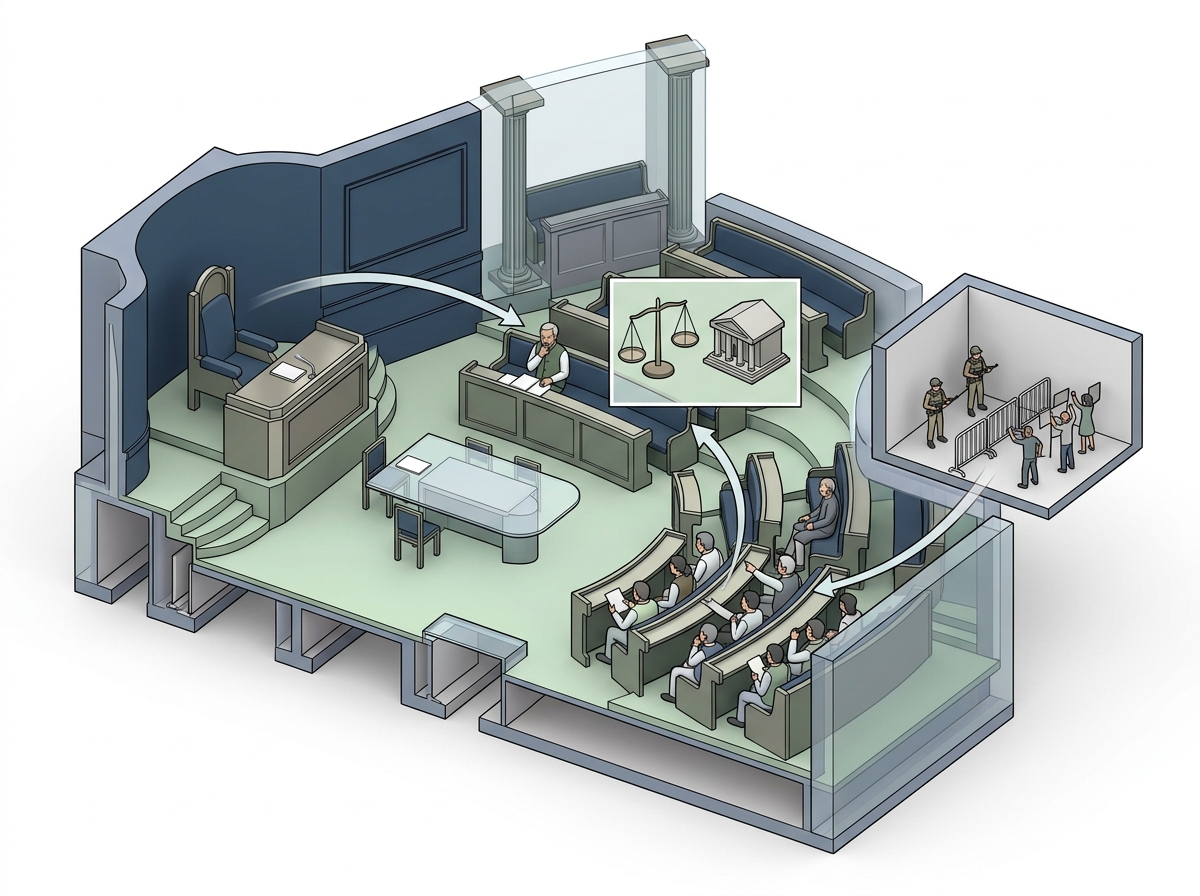
The Rajya Sabha Chairman’s intervention in directing the Centre to ‘consider the request’ for Union Home Minister Amit Shah’s presence in the House to address Opposition concerns over alleged security force excesses during a July 20 protest has brought into sharp focus the procedural, constitutional, and ethical dimensions of parliamentary accountability. This incident underscores the tension between legislative decorum and the demand for executive accountability, while also highlighting the procedural rules governing parliamentary proceedings and the role of the Chairman in maintaining order.
Background
- The demand for Union Home Minister Amit Shah’s presence in the Rajya Sabha stems from Opposition allegations of excessive use of force by security personnel during a protest on July 20, 2026, where young protesters marched towards Parliament to voice grievances over paper leaks.
- The Opposition, led by the Congress, has consistently raised the issue in the House, demanding a statement from the Home Minister to address their concerns, invoking slogans such as ‘Amit Shah jawaab do, Sadan mein aao’ (Amit Shah must answer, come to the House).
- Parliamentary Affairs Minister Kiren Rijiju invoked Rules 235 and 240 of the Rajya Sabha Rules of Procedure to argue that the Leader of the Opposition, Mallikarjun Kharge, was repeating his remarks and raising irrelevant issues, thereby disrupting House proceedings.
- The incident reflects broader tensions in Parliament over the balance between executive accountability and legislative disruption, a recurring theme in recent parliamentary sessions.
- The role of the Rajya Sabha Chairman as the presiding officer and guardian of parliamentary decorum has been highlighted, particularly in ensuring that procedural rules are adhered to while facilitating democratic discourse.
What is the Role of the Rajya Sabha Chairman in Ensuring Accountability and Order?
- The Rajya Sabha Chairman, who is also the Vice-President of India, serves as the presiding officer of the House and is responsible for maintaining order, decorum, and adherence to parliamentary rules and procedures.
- The Chairman’s role includes interpreting the Rules of Procedure, deciding on points of order, and ensuring that the business of the House is conducted smoothly, without undue disruption or irrelevance.
- Under Rule 235 of the Rajya Sabha Rules, the Chairman may intervene to end interruptions or disorderly conduct, while Rule 240 empowers the Chairman to direct members to refrain from irrelevant or repetitive remarks that do not contribute to the proceedings.
- The Chairman also plays a crucial role in facilitating discussions on matters of public importance, including Zero Hour mentions, adjournment motions, and other parliamentary devices used by members to raise issues of concern.
- The Chairman’s decisions are final on matters of procedure and order, though they can be subject to review or appeal within the House, subject to the collective will of the members.
- The Chairman’s role extends to ensuring that the executive is held accountable, particularly when members demand statements or clarifications from ministers on issues of national importance.
- The Chairman must balance the rights of members to raise issues with the need to maintain parliamentary decorum, ensuring that debates remain focused and constructive.
- In cases where the executive is reluctant to respond, the Chairman may use their discretion to direct the executive to appear or provide a statement, as seen in the current instance.
Key Features
| Feature | Significance |
|---|---|
| Rajya Sabha Chairman’s directive to the Centre | Demonstrates the Chairman’s constitutional role in ensuring parliamentary decorum and addressing Opposition demands, reinforcing the Rajya Sabha’s institutional authority. |
| Opposition’s demand for Home Minister’s presence | Highlights the Opposition’s constitutional right to seek accountability from the executive, particularly in matters of governance and alleged security force excesses. |
| Parliamentary Rules invoked (Rules 235 & 240) | Illustrates the procedural mechanisms within Parliament to manage disruptions and repetitive interventions, ensuring orderly conduct. |
| Leader of Opposition’s assertion of rights | Underscores the constitutional role of the Leader of Opposition in holding the government accountable and the tension between procedural rules and democratic rights. |
| Adjournment of Rajya Sabha due to protests | Reflects the procedural consequences of unaddressed demands and disruptions, impacting legislative productivity and accountability mechanisms. |
Why it Matters
Parliamentary Democracy
- The incident underscores the fundamental principle of parliamentary accountability, where the executive (Home Minister) is expected to respond to legislative queries, particularly on matters of national security and governance.
- The Opposition’s demand for the Home Minister’s presence aligns with the constitutional expectation of transparency and responsiveness from the government.
- The Chairman’s intervention highlights the delicate balance between maintaining parliamentary decorum and ensuring that Opposition voices are heard.
Constitutional Governance
- The Rajya Sabha’s functioning is governed by constitutional provisions (Article 80) and rules framed under Article 118, which empower the Chairman to regulate proceedings and address disruptions.
- The Opposition’s demand reflects the constitutional right to seek information and accountability from the executive, as enshrined in Articles 75(3) and 88.
- The procedural rules invoked (Rules 235 & 240) are designed to maintain order but also risk stifling legitimate democratic dissent if misapplied.
Institutional Authority
- The Chairman’s role in directing the Centre to consider the Opposition’s request reinforces the Rajya Sabha’s institutional authority in matters of governance and accountability.
- The exchange between the Leader of Opposition and the Parliamentary Affairs Minister highlights the tension between procedural compliance and the substantive demand for executive accountability.
- The adjournment of the House underscores the procedural consequences of unresolved conflicts, impacting legislative productivity and the public’s trust in parliamentary institutions.
Public Accountability
- The Opposition’s demand for the Home Minister’s presence is rooted in the public’s right to know and the government’s duty to explain its actions, particularly in cases of alleged security force excesses.
- The incident reflects broader concerns about transparency and accountability in governance, especially in matters involving law enforcement and public order.
- The procedural wrangling risks overshadowing the substantive issue of alleged excesses by security forces, which is central to the Opposition’s demand.
Challenges
1. Balancing Parliamentary Decorum and Democratic Dissent
- The procedural rules invoked (Rules 235 & 240) risk being used to suppress legitimate democratic dissent, particularly when Opposition demands are framed as repetitive or irrelevant.
- The Chairman’s role in regulating proceedings must balance the need for order with the constitutional right of Opposition MPs to seek accountability.
- The tension between procedural compliance and substantive demands for executive accountability poses a challenge to the effective functioning of Parliament.
UPSC Link: Parliamentary Procedures and Constitutional Provisions
2. Executive-Legislative Relations
- The Opposition’s demand for the Home Minister’s presence highlights the perennial challenge of ensuring that the executive remains accountable to the legislature.
- The procedural wrangling between the Leader of Opposition and the Parliamentary Affairs Minister reflects the broader tension between the executive’s discretion and the legislature’s oversight role.
- The incident underscores the need for mechanisms to ensure that the executive responds to legislative queries in a timely and substantive manner.
UPSC Link: Constitutional Framework of Executive-Legislative Relations
3. Public Trust in Parliamentary Institutions
- The procedural conflicts and adjournments risk eroding public trust in parliamentary institutions, particularly when substantive issues are overshadowed by procedural disputes.
- The Opposition’s demand for the Home Minister’s presence is rooted in public concerns about security force excesses, highlighting the need for transparency and accountability.
- The incident reflects broader concerns about the effectiveness of parliamentary institutions in addressing public grievances and ensuring good governance.
UPSC Link: Role of Parliament in Democratic Governance
4. Media and Public Perception
- The procedural conflicts and adjournments risk being sensationalized by the media, overshadowing the substantive issues at stake and distorting public perception.
- The Opposition’s demand for the Home Minister’s presence is framed as a matter of public accountability, highlighting the role of the media in shaping public discourse.
- The incident underscores the need for balanced and accurate reporting to ensure that parliamentary proceedings are understood in their proper context.
UPSC Link: Role of Media in Democratic Governance
Challenges — UPSC Perspective
| Issue | Concern |
|---|---|
| Procedural rules (Rules 235 & 240) | Risk of being misused to suppress legitimate democratic dissent and stifle Opposition voices. |
| Executive-Legislative relations | Tension between the executive’s discretion and the legislature’s oversight role, impacting accountability. |
| Public trust in Parliament | Procedural conflicts and adjournments risk eroding public confidence in parliamentary institutions. |
| Media and public perception | Risk of sensationalization overshadowing substantive issues and distorting public discourse. |
| Transparency and accountability | Alleged security force excesses demand timely and substantive responses from the executive. |
Way Forward
- The Rajya Sabha Chairman should issue clear guidelines on the application of procedural rules to ensure they do not stifle legitimate democratic dissent.
- Parliament should establish a mechanism for the timely and substantive response of the executive to legislative queries, particularly on matters of national security and governance.
- The Opposition and the government should engage in structured dialogues to address substantive issues, such as alleged security force excesses, rather than relying on procedural disputes.
- Parliamentary committees should be empowered to conduct independent inquiries into allegations of security force excesses and other governance issues, ensuring accountability.
- The media should adopt a balanced and responsible approach to reporting parliamentary proceedings, ensuring that substantive issues are not overshadowed by procedural conflicts.
- Citizens and civil society organizations should be encouraged to participate in parliamentary processes, such as consultations and public hearings, to enhance transparency and accountability.
- Parliament should review and update its procedural rules to ensure they align with the evolving needs of democratic governance and the public’s expectations of accountability.
UPSC Value Addition
Keywords for Mains Answer-Writing
Rajya Sabha Chairperson’s role · Parliamentary etiquette and decorum · Leader of Opposition in Parliament · Rules of Procedure and Conduct of Business in the Rajya Sabha (Rules 235 and 240) · Parliamentary Affairs Minister’s functions · Zero Hour and adjournment motions · Opposition’s rights in Parliament · Home Minister’s accountability in Parliament · Disruption versus legitimate protest in Parliament · Constitutional provisions governing parliamentary proceedings (Article 85, 86, 105, 118) · Parliamentary sovereignty and executive accountability · Parliamentary committees and their role in oversight · Ethics and decorum in legislative bodies · Federal structure and parliamentary federalism
Constitutional & Policy Linkages
- {‘Article 75(3)’: ‘Collective responsibility of the executive to Parliament.’}
- {‘Article 80’: ‘Composition and functions of the Rajya Sabha.’}
- {‘Article 88’: ‘Rights of MPs in Parliament.’}
- {‘Article 118’: ‘Power of Parliament to regulate its procedure.’}
- {‘Article 122’: ‘Courts not to inquire into parliamentary proceedings.’}
Concept Flow
Opposition’s demand for Home Minister’s presence → Allegations of security force excesses during July 20 protest → Procedural rules invoked (Rules 235 & 240) → Chairman’s directive to Centre → Procedural wrangling between Leader of Opposition and Parliamentary Affairs Minister → Adjournment of Rajya Sabha → Public accountability concerns → Need for transparency and institutional reforms.
Prelims Practice Questions
Q1. Consider the following statements regarding the Rules of Procedure and Conduct of Business in the Rajya Sabha:
1. Rule 235 empowers the Chair to direct the cessation of interruptions by members.
2. Rule 240 allows the Chair to intervene when a member repeats the same matter without new facts.
3. Rule 240 is applicable only to members of the Opposition and not to the ruling party.
How many of the above statements are correct?
- Only one
- Only two
- All three
- None
Answer: Only two — Statement 1 and 2 are correct as per the Rules of Procedure and Conduct of Business in the Rajya Sabha. Statement 3 is incorrect because Rule 240 applies to all members, irrespective of their political affiliation.
Q2. Assertion (A): The Rajya Sabha Chairman, as the ex-officio Vice-President of India, has the constitutional authority to adjourn the House in case of unruly conduct.
Reason (R): Article 89(1) of the Constitution vests the Chairman with the power to regulate the procedure and conduct of business in the Rajya Sabha.
Options:
A. Both A and R are true, and R is the correct explanation of A.
B. Both A and R are true, but R is not the correct explanation of A.
C. A is true, but R is false.
D. A is false, but R is true.
Answer: ? — Both A and R are true. The Chairman (Vice-President) has the constitutional authority under Article 89(1) to regulate the procedure and conduct of business, which includes adjourning the House in case of unruly conduct.
Q3. Match the following parliamentary terms with their correct descriptions:
Column I
A. Zero Hour
B. Adjournment Motion
C. Leader of the Opposition
D. Parliamentary Affairs Minister
Column II
1. A non-binding motion to draw the attention of the House to a matter of urgent public importance.
2. The time immediately following the Question Hour when members can raise matters without prior notice.
3. The cabinet minister responsible for coordinating government business in Parliament.
4. The leader of the largest Opposition party recognized by the Speaker/Chairman.
Options:
A. A-2, B-1, C-4, D-3
B. A-1, B-2, C-3, D-4
C. A-3, B-4, C-1, D-2
D. A-4, B-3, C-2, D-1
Answer: ? — A (Zero Hour) is the time immediately following the Question Hour when members can raise matters without prior notice (2). B (Adjournment Motion) is a non-binding motion to draw attention to urgent public importance (1). C (Leader of the Opposition) is the leader of the largest Opposition party recognized by the Speaker/Chairman (4). D (Parliamentary Affairs Minister) is the cabinet minister responsible for coordinating government business in Parliament (3).
Mains Practice Question
✍ The demand for the Union Home Minister’s presence in the Rajya Sabha to address allegations of excesses by security forces during a protest reflects a broader tension between legislative oversight and executive accountability. Critically analyse the constitutional and parliamentary mechanisms available to Parliament to ensure executive accountability, with particular reference to the role of the Chairman of the Rajya Sabha and the Leader of the Opposition. (15 Marks)
Approach: MODEL-ANSWER SKELETON:
1. **Constitutional Framework for Executive Accountability**
– Cite Article 75(3) (collective responsibility of the Council of Ministers), Article 85 (summoning and proroguing Parliament), and Article 118 (rules of procedure).
– Highlight the doctrine of parliamentary sovereignty and the principle of ministerial accountability.
2. **Role of the Rajya Sabha Chairman**
– Article 89(1): Power to regulate procedure and conduct of business.
– Rule 235 and Rule 240 of the Rules of Procedure and Conduct of Business in the Rajya Sabha: Powers to maintain decorum and address repetitions.
– Recent instance: Chairman’s intervention in directing the Centre to consider the Opposition’s request for the Home Minister’s presence (August 7, 2026).
3. **Leader of the Opposition’s Role**
– Recognition under the Salary and Allowances of Leaders of Opposition in Parliament Act, 1977.
– Constitutional right to participate in key committees (e.g., Public Accounts Committee, Committee on Public Undertakings) and to hold the executive accountable.
– Recent exchange: Mallikarjun Kharge’s assertion of the Opposition’s right to demand the Home Minister’s presence and his defence of parliamentary norms.
4. **Parliamentary Mechanisms for Oversight**
– Zero Hour and Adjournment Motions: Mechanisms for raising urgent matters.
– Parliamentary Committees: Role of the Standing Committee on Home Affairs and the Committee on Public Accounts in scrutinizing executive actions.
– Censure motions and no-confidence motions: Tools to hold the executive accountable.
5. **Tensions and Challenges**
– Executive dominance: The PMO and Home Ministry’s reluctance to appear in Parliament despite Opposition demands.
– Disruption vs. legitimate protest: Balancing the right to protest with parliamentary decorum (cite Arun Jaitley’s stance on disruption as part of democracy).
– Political polarization: How partisan politics may hinder constructive oversight.
6. **Way Forward**
– Strengthening parliamentary committees to ensure regular and substantive discussions on executive actions.
– Institutionalizing mechanisms for the executive to respond to Opposition demands in a timely manner.
– Upholding the spirit of constitutional morality and parliamentary democracy.
Source: The Indian Express
Generated by AanyaAi for educational purpose.

- Gujarat HC orders FIR in ITS officer’s 2023 custodial death - October 3, 2026
- डीआरआई ने मुंबई एयरपोर्ट पर सोने-हीरे की तस्करी गिरोह का किया पर्दाफाश, 8 गिरफ्तार - October 3, 2026
- Chhattisgarh CM Rural Bus Scheme: 850 Villages Connected in 1 Year - October 3, 2026

No Comments