


07 Aug SEBI Simplifies Inspection Process for Market Intermediaries: Key Changes Explained
✎ SEBI’s new inspection norms aim to improve market transparency and reduce compliance costs for intermediaries.
Relevance for UPSC & State PCS: Economy
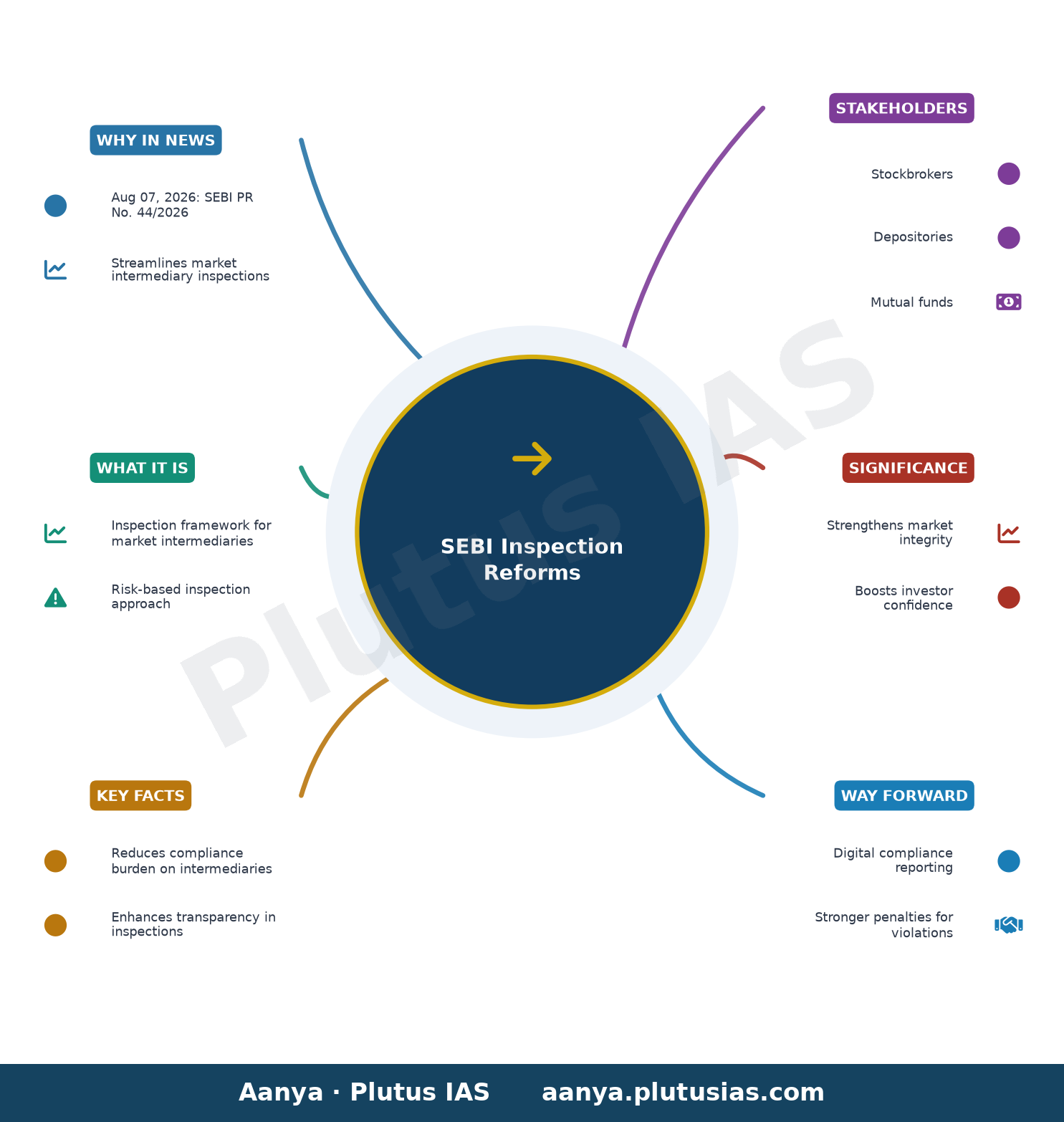
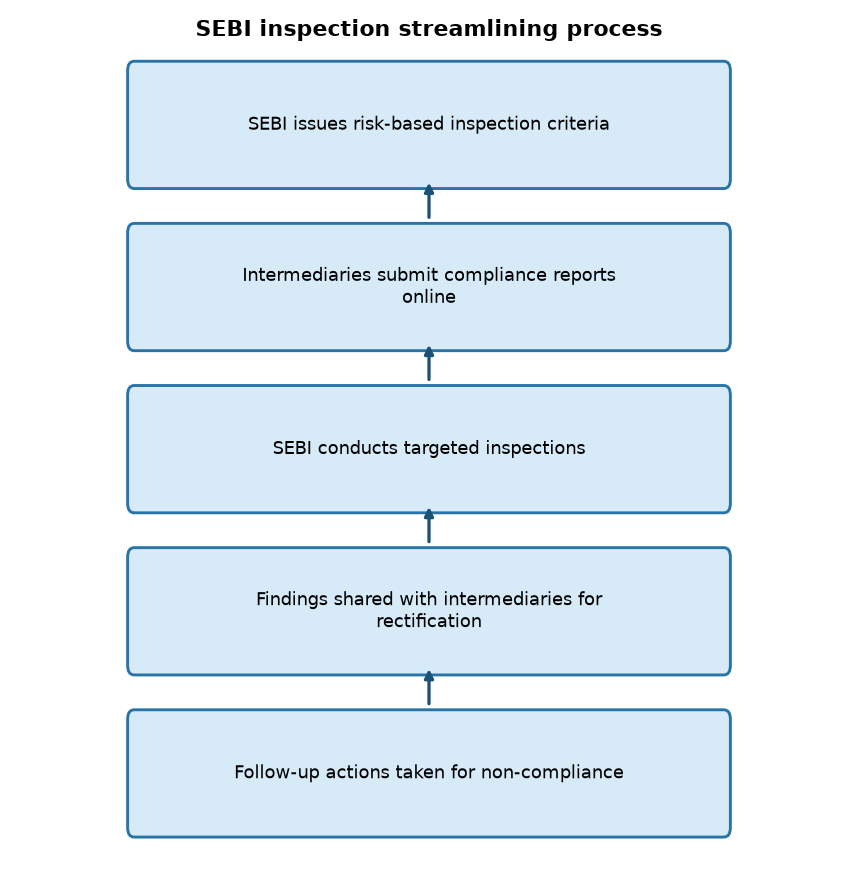
The Securities and Exchange Board of India (SEBI) has recently introduced a streamlined framework for the inspection of market intermediaries, aiming to enhance regulatory efficiency and reduce compliance burdens. The new system integrates a risk-based approach, prioritizing high-risk entities while reducing the frequency of inspections for compliant intermediaries. This move aligns with SEBI’s broader objective of fostering a more dynamic and investor-friendly regulatory environment. By leveraging technology and data analytics, the regulator seeks to identify potential violations more effectively, ensuring timely intervention and deterring misconduct in the capital markets.
For UPSC and State PCS aspirants, this development holds significant relevance as it reflects India’s evolving regulatory landscape in the financial sector. Questions on SEBI’s role in market regulation, its powers under the SEBI Act, and the impact of such reforms on investor protection could feature in prelims or mains examinations. The streamlined inspection process also underscores the government’s push for ease of doing business while maintaining stringent oversight, a theme often tested in governance and economic policy questions. Understanding SEBI’s functions and its impact on market integrity is crucial for aspirants preparing for civil services examinations.
The reform is particularly pertinent for State PCS candidates focusing on economic administration, as it demonstrates how central regulators collaborate with market participants to balance growth and compliance. The risk-based inspection model could be cited in answers related to financial sector reforms, regulatory arbitrage, or the role of autonomous bodies in governance. Additionally, aspirants should note how SEBI’s initiatives align with broader economic policies, such as the government’s push for digitalization and transparency in financial markets. This knowledge can enrich answers in essays or interviews, showcasing an awareness of contemporary economic governance.
The timing of this reform is also noteworthy, as it coincides with global trends in financial regulation, where regulators increasingly rely on technology to enhance supervision. For UPSC aspirants, this provides an opportunity to draw parallels with international best practices, such as the use of AI in regulatory oversight. The move also highlights SEBI’s proactive stance in addressing emerging risks, such as cyber fraud or market manipulation, which are critical topics in current affairs. Aspirants should be prepared to discuss how such reforms contribute to India’s financial stability and investor confidence, themes that are frequently examined in both prelims and mains papers.
Source: SEBI
Practice Questions
Q1. What is the primary objective of SEBI’s recent initiative to streamline the inspection of market intermediaries?
- To reduce the number of market intermediaries in the financial sector
- To enhance the efficiency and effectiveness of inspections while reducing compliance burden
- To merge all market intermediaries into a single regulatory body
- To eliminate the need for inspections altogether
Answer
To enhance the efficiency and effectiveness of inspections while reducing compliance burden — SEBI’s initiative aims to streamline inspections to improve their efficiency and effectiveness while minimizing the compliance burden on market intermediaries. This is part of SEBI’s broader efforts to modernize regulatory processes.
Q2. Which of the following is NOT a likely outcome of SEBI’s streamlined inspection process for market intermediaries?
- Faster resolution of compliance issues
- Reduced paperwork for market intermediaries
- Increased frequency of inspections
- Improved transparency in regulatory oversight
Answer
Increased frequency of inspections — The streamlined process is expected to improve efficiency and reduce compliance burden, but it does not imply an increase in the frequency of inspections. The focus is on optimizing the inspection process rather than increasing its frequency.
Generated by AanyaAi for educational purpose.

- राजस्थान पंचायत चुनाव 2026: सरपंच-वार्ड पदों की आरक्षण लॉटरी आज, जानिए आरक्षण तय करने की प्रक्रिया - September 24, 2026
- Rajasthan Panchayat Polls 2026: Reservation Lottery for Sarpanch & Ward Panch Seats Today - September 24, 2026
- यूपी में पहली बार तेंदुओं का बधियाकरण: मानव-वन्यजीव संघर्ष रोकेगा अभियान - September 24, 2026

No Comments