


13 Aug SEBI’s Accredited Investor Framework Review: Key Changes Ahead for UPSC Aspirants
✎ SEBI’s review of the Accredited Investor Framework aims to balance investor access and market protection through public consultation.
Relevance for UPSC & State PCS: Economy
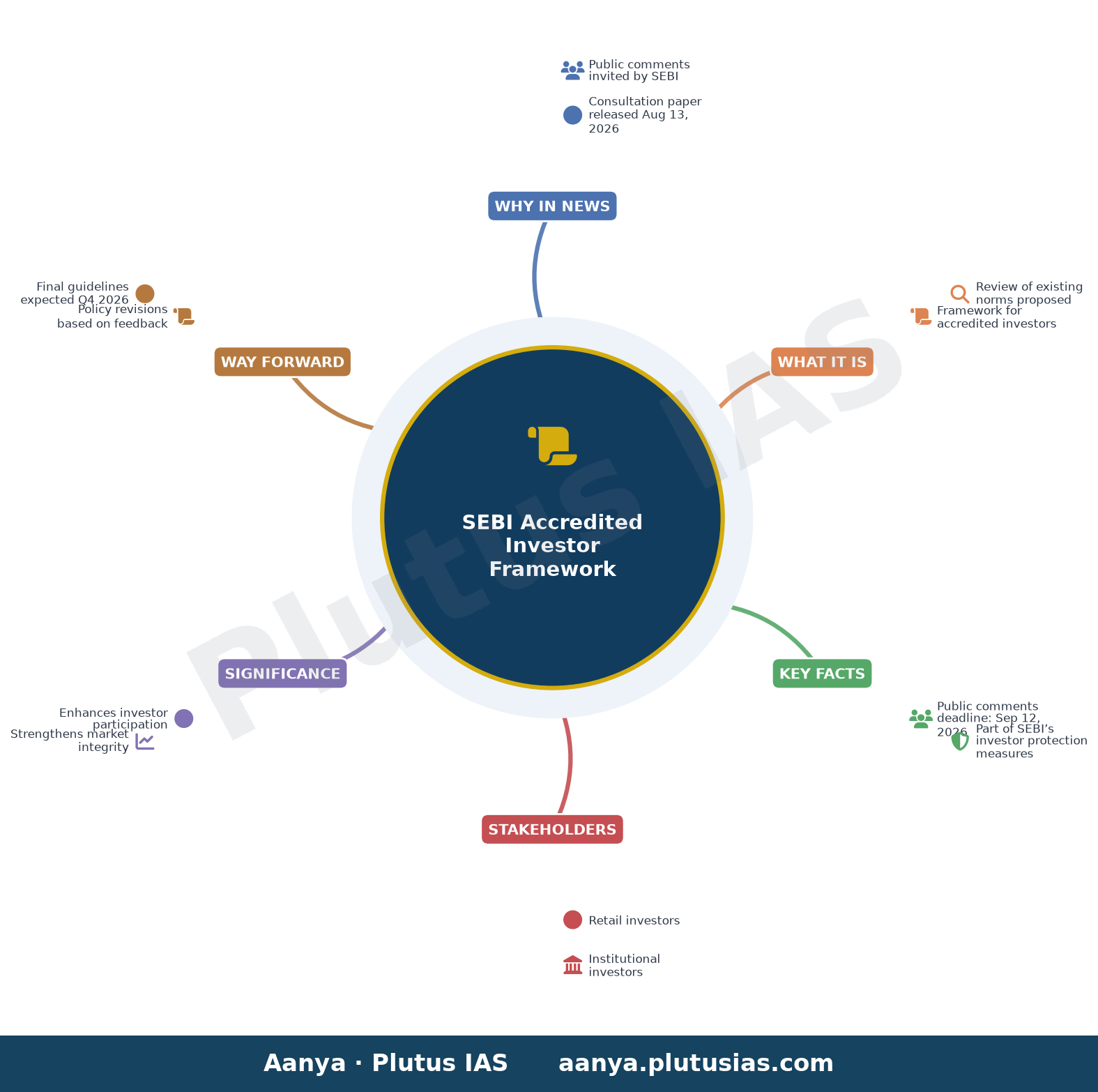
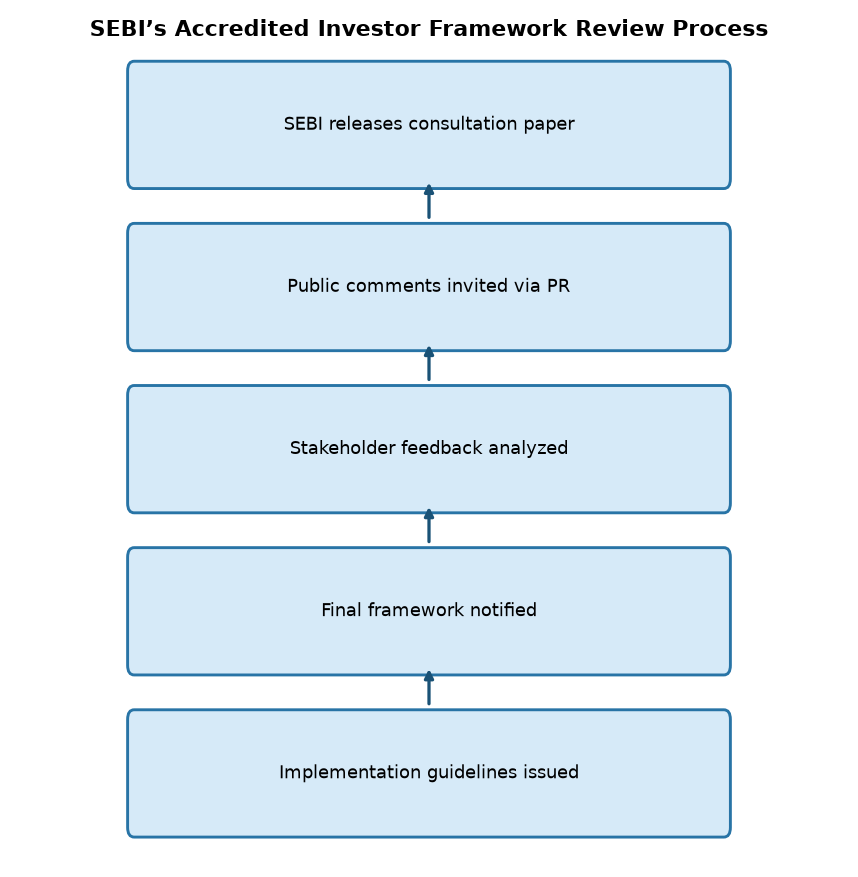
The Securities and Exchange Board of India (SEBI) has invited public comments on its *Consultation Paper on Review of the Accredited Investor Framework*, marking a significant step toward refining the regulatory landscape for high-net-worth individuals (HNIs) and institutional investors. The consultation paper proposes revisions to the eligibility criteria for accredited investors, who currently enjoy relaxed regulatory norms in accessing sophisticated investment products such as alternative investment funds (AIFs), real estate investment trusts (REITs), and private placements. The proposed changes aim to broaden the definition of accredited investors while ensuring robustness in investor protection, particularly in the context of India’s evolving financial markets and growing participation of retail investors in high-risk asset classes.
For UPSC and State PCS aspirants, this development is crucial as it intersects with broader themes of financial market regulation, investor protection, and economic liberalization. The review of the accredited investor framework reflects SEBI’s ongoing efforts to balance market inclusivity with prudential safeguards, a balance that often features in UPSC’s GS-III syllabus under topics like financial sector reforms, regulatory bodies, and consumer protection. Understanding the nuances of such consultations can help aspirants analyze how regulatory bodies adapt to market dynamics, especially in the wake of increasing retail participation and the rise of complex financial instruments.
The consultation paper also highlights SEBI’s focus on aligning India’s regulatory framework with global best practices, particularly in defining accredited investors—a concept widely used in jurisdictions like the US and Singapore to facilitate access to high-risk, high-reward investments. For State PCS aspirants, this is relevant in the context of state-level economic policies, as financial market regulations often influence state-level investment flows, startup ecosystems, and infrastructure financing. The review could potentially impact state governments’ strategies for attracting investments or promoting local financial markets, making it a pertinent topic for those preparing for state-specific civil service examinations.
Moreover, the public consultation process itself is a key aspect of SEBI’s governance model, emphasizing transparency and stakeholder engagement. Aspirants should note how such consultations reflect democratic principles in policymaking, a theme that resonates with UPSC’s emphasis on governance and ethical considerations in administration. The outcome of this review could set precedents for future regulatory reforms, making it essential for aspirants to follow SEBI’s deliberations closely, as they may appear in both prelims and mains examinations under sections covering economic governance and financial sector reforms.
Source: SEBI
Practice Questions
Q1. What is the primary objective of SEBI’s Consultation Paper on Review of the Accredited Investor Framework?
- To simplify the process of stock market investments for retail investors
- To enhance investor protection by imposing stricter regulations on accredited investors
- To broaden the definition and scope of accredited investors to include more categories of investors
- To deregulate the securities market entirely for accredited investors
Answer
To broaden the definition and scope of accredited investors to include more categories of investors — The primary objective of SEBI’s Consultation Paper on Review of the Accredited Investor Framework is to broaden the definition and scope of accredited investors, allowing more categories of investors to qualify for relaxed regulatory requirements, thereby promoting investment opportunities while maintaining investor protection.
Q2. Which regulatory body released the Consultation Paper on Review of the Accredited Investor Framework?
- Reserve Bank of India (RBI)
- Securities and Exchange Board of India (SEBI)
- Ministry of Finance, Government of India
- Insurance Regulatory and Development Authority of India (IRDAI)
Answer
Securities and Exchange Board of India (SEBI) — The Consultation Paper on Review of the Accredited Investor Framework was released by the Securities and Exchange Board of India (SEBI), India’s primary regulator for the securities market.
Generated by AanyaAi for educational purpose.

- मद्रास उच्च न्यायालय में ‘वेट्ट्री पयणम’ योजना को असंवैधानिक घोषित करने की मांग - October 4, 2026
- Gurugram’s groundwater extraction exceeds limit by 212%; HC seeks ban - October 4, 2026
- स्वतंत्रता सेनानी श्यामजी कृष्ण वर्मा की जन्म जयंती पर पीएम का श्रद्धांजलि - October 4, 2026

No Comments