


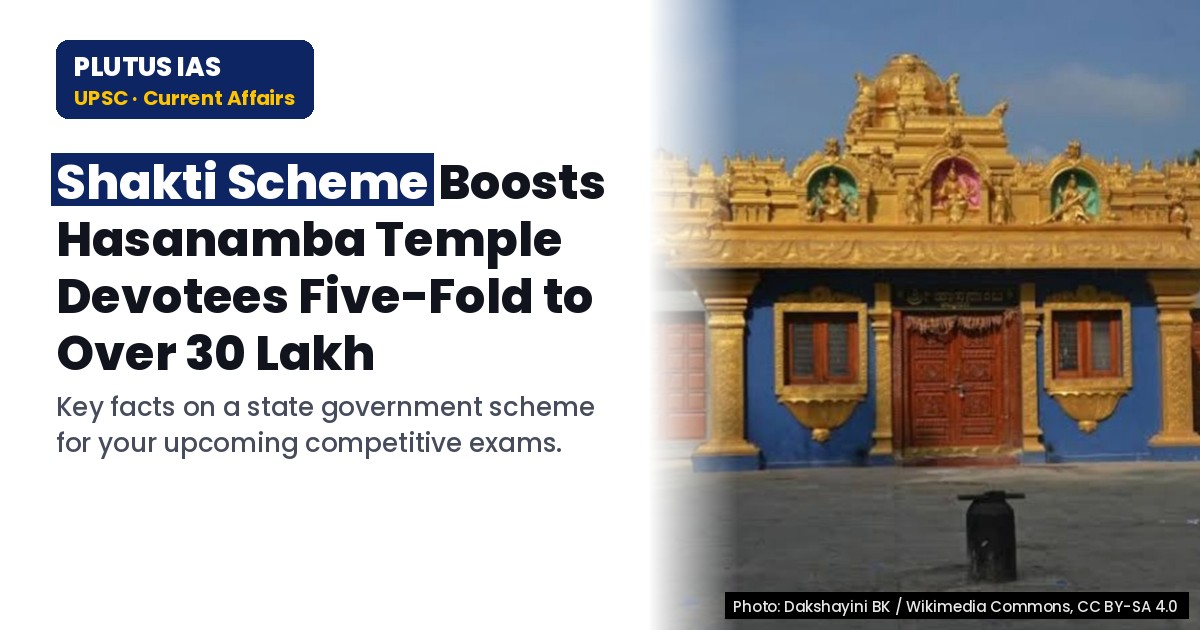
11 Nov Shakti Scheme’s Impact on Devotee Numbers at Hasanamba Temple
✎ The Shakti scheme facilitates women's free travel on state buses, aiming to enhance their mobility, economic participation, and access to social opportunities by removing transport cost barriers.
Subject Relevance — Where This Topic Fits
- GS Paper I — Social Issues (Role of women and women’s organization, population and associated issues, poverty and developmental issues, urbanization, their problems and their remedies) | GS Paper II — Governance (Government policies and interventions for development in various sectors and issues arising out of their design and implementation) | GS Paper III — Economy (Indian Economy and issues relating to planning, mobilization of resources, growth, development and employment)
- Prelims: Shakti scheme, Women’s empowerment, Free public transport, Socio-economic impact, Government welfare schemes, Gender budgeting
- Essay: The transformative potential of government schemes in fostering inclusive growth and social equity., Women’s empowerment as a cornerstone of national development: evaluating policy interventions.
Quick Revision: The Shakti scheme facilitates women’s free travel on state buses, aiming to enhance their mobility, economic participation, and access to social opportunities by removing transport cost barriers.
Why is this in the news?
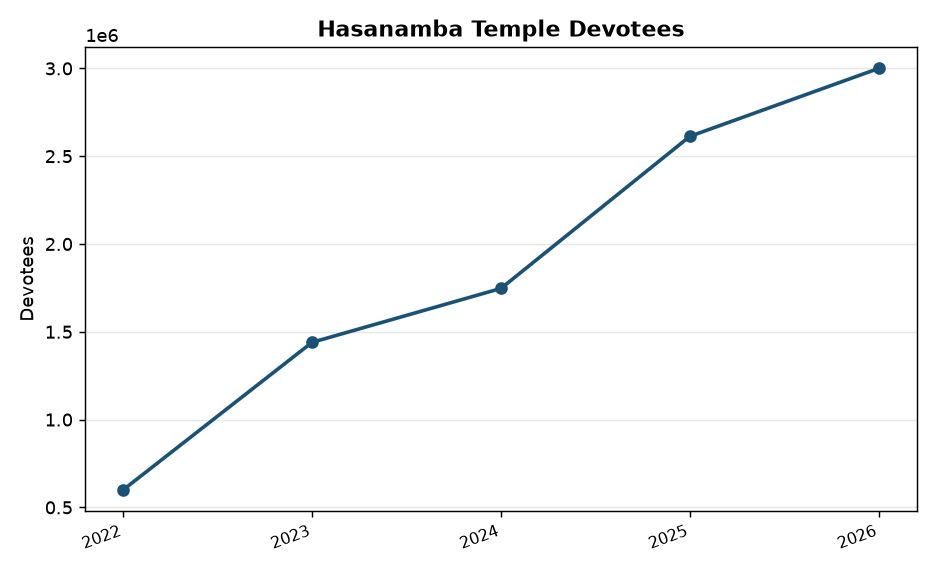
The Shakti scheme, a state government initiative providing free bus travel for women, has been credited by an MLC and Vice-Chairman of the State Guarantee Schemes Implementation Authority for a significant increase in devotees visiting the Hasanamba Temple in Hassan. This attribution highlights the scheme’s perceived positive impact on facilitating access to religious sites and, more broadly, on women’s mobility and participation in various social and economic activities.
Background
- The Shakti scheme is a welfare initiative launched by a state government in India, aimed at enhancing women’s mobility and economic participation.
- It provides free travel for women in state-run ordinary public transport buses, thereby reducing their daily commuting expenses.
- The scheme is part of a broader set of ‘guarantee schemes’ introduced by the state government, focusing on social welfare and economic support.
- Such initiatives are often designed to address gender disparities, promote women’s empowerment, and alleviate the financial burden on households.
- The reported increase in temple visitors, particularly women, suggests a direct correlation between reduced transport costs and increased participation in social and religious activities.
- Government expenditure on such schemes reflects a commitment to social welfare and investment in human capital, particularly for vulnerable sections of society.
What is the Shakti Scheme?
- The Shakti scheme is a state government initiative that offers free travel to women in ordinary public transport buses operated by state road transport corporations.
- The primary objective of the scheme is to enhance women’s access to education, employment, healthcare, and social activities by eliminating transport cost as a barrier.
- It aims to promote women’s mobility, independence, and participation in the formal and informal economies.
- The scheme is implemented through state transport undertakings, with the government reimbursing the corporations for the revenue foregone due to free travel.
- Beneficiaries typically include all women, including transgender individuals, domiciled within the state, subject to specific operational guidelines.
- The scheme is often viewed as a measure towards gender budgeting, allocating resources specifically to address gender-specific needs and promote equality.
- It is anticipated to have a multi-faceted impact, including economic benefits for women, increased footfall in various sectors, and a boost to local economies.
- The scheme’s success is often measured by metrics such as the number of free trips availed, total expenditure incurred, and reported changes in women’s social and economic participation.
Key Features
| Feature | Significance |
|---|---|
| Free Bus Travel for Women | A core component of the Shakti scheme, it eliminates transportation costs for women utilising public transport services. |
| Increased Accessibility to Religious Sites | The scheme facilitates greater participation of women in religious pilgrimages by reducing financial barriers to travel. |
| Promotion of Women’s Mobility | By subsidising travel, the scheme enhances women’s freedom of movement for various purposes, including social and cultural engagements. |
| Financial Empowerment of Women | Savings on transport expenditure can be redirected by women towards other essential needs or personal development. |
| Stimulation of Local Economies | Increased footfall at destinations, including religious sites, can boost local businesses dependent on tourism and visitor spending. |
Why it Matters
Social Empowerment
- The Shakti scheme enhances women’s autonomy and participation in social and cultural activities by reducing travel-related financial constraints.
- Increased access to public spaces and religious sites fosters greater social inclusion for women, particularly those from economically disadvantaged backgrounds.
Economic Impact
- The scheme alleviates the financial burden of transportation for women, potentially freeing up household income for other expenditures.
- By promoting travel, the scheme indirectly supports local economies, including small businesses, vendors, and service providers at popular destinations.
Governance and Policy Implementation
- The reported success of the Shakti scheme demonstrates the potential for targeted social welfare programmes to achieve measurable outcomes.
- The data on increased ridership and expenditure highlights the significant financial commitment required for large-scale public welfare initiatives.
Challenges
1. Fiscal Sustainability
- The substantial expenditure incurred by the government for free travel raises concerns about the long-term financial viability of the scheme.
- Balancing welfare objectives with fiscal prudence is crucial to ensure the continued operation of such programmes without undue strain on state finances.
UPSC Link: Government Budgeting
2. Infrastructure Strain
- A significant increase in ridership can place considerable pressure on existing public transport infrastructure, potentially leading to overcrowding and service degradation.
- Adequate investment in expanding and upgrading public transport fleets and facilities is necessary to meet the increased demand effectively.
UPSC Link: Infrastructure Development
3. Equitable Access
- Ensuring that the benefits of the scheme reach all eligible women, including those in remote or underserved areas, remains a logistical challenge.
- Addressing disparities in public transport availability across different regions is essential for comprehensive coverage and equitable impact.
UPSC Link: Social Justice
4. Operational Efficiency
- Managing the logistics of such a large-scale free travel programme, including ticketing, revenue reconciliation, and fleet management, requires robust administrative mechanisms.
- Minimising misuse and ensuring efficient resource allocation are critical for the scheme’s integrity and effectiveness.
UPSC Link: Public Administration
Challenges — UPSC Perspective
| Issue | Concern |
|---|---|
| Financial Burden | The substantial government expenditure (₹23,202.22 crore) for free trips necessitates careful fiscal management to ensure long-term sustainability. |
| Infrastructure Overload | An increase of 875.89 crore free trips by women can strain existing public transport capacity, potentially leading to overcrowding and reduced service quality. |
| Operational Complexities | Managing the logistics of free travel for a vast number of beneficiaries across a large network requires sophisticated administrative and monitoring systems. |
| Equity of Access | Ensuring that women in rural and remote areas, where public transport options may be limited, also benefit from the scheme poses a challenge. |
| Impact on Private Operators | The scheme’s effect on private transport operators, if any, and the overall competitive landscape of public transport need to be assessed. |
Government Initiatives — Must-Memorise for Prelims
- Shakti scheme
Way Forward
- Conduct regular fiscal impact assessments to ensure the long-term financial sustainability of the scheme without compromising other essential public services.
- Invest in upgrading and expanding public transport infrastructure, including increasing fleet size and improving route connectivity, to accommodate rising demand.
- Implement robust monitoring and evaluation mechanisms to track the scheme’s effectiveness, identify areas for improvement, and prevent potential misuse.
- Explore innovative funding models or public-private partnerships to share the financial burden and enhance the efficiency of public transport services.
- Undertake comprehensive surveys to understand the socio-economic impact of the scheme on women beneficiaries, beyond just travel statistics.
- Develop strategies to extend the benefits of free travel to women in underserved rural and remote areas, ensuring equitable access.
- Integrate the scheme with broader urban planning and transport policies to create a holistic and sustainable public mobility ecosystem.
UPSC Value Addition
Keywords for Mains Answer-Writing
Shakti scheme · women empowerment · gender budgeting · public transport accessibility · socio-economic impact of welfare schemes · inclusive development · state-sponsored welfare initiatives · regional tourism promotion · fiscal implications of free services · social welfare policy
Constitutional & Policy Linkages
- Article 38: State to secure a social order for the promotion of welfare of the people.
- Article 39(a): Right to an adequate means of livelihood.
- Article 46: Promotion of educational and economic interests of weaker sections.
- Article 15(3): Special provisions for women and children.
Concept Flow
Government launches Shakti scheme offering free bus travel for women. → Reduced transport costs remove financial barriers for women’s mobility. → Increased accessibility encourages women to travel for various purposes. → Rise in women devotees visiting religious sites like Hasanamba Temple. → Scheme contributes to women’s empowerment and social inclusion. → Increased footfall potentially stimulates local economies around destinations.
Prelims Practice Questions
Q1. Consider the following statements regarding welfare schemes aimed at women’s empowerment:
1. Direct Benefit Transfer (DBT) schemes primarily focus on providing financial assistance directly to beneficiaries.
2. Schemes offering free public transport for women aim to enhance mobility and reduce household expenditure.
3. The success of such schemes can be measured by their impact on social indicators like female labour force participation and access to public services.
- Only one
- Only two
- All three
- None
Answer: All three — Statement 1 is correct: DBT schemes are designed to transfer benefits directly to the bank accounts of beneficiaries, reducing leakages. Statement 2 is correct: Providing free public transport for women directly addresses the cost barrier to mobility, facilitating access to education, employment, and social activities, thereby reducing household transport costs. Statement 3 is correct: The effectiveness of women-centric welfare schemes extends beyond immediate financial relief to broader socio-economic impacts, including improved access to opportunities and enhanced social participation.
Q2. Which of the following is a primary objective of state-sponsored schemes providing free public transport for specific demographic groups?
- To increase government revenue through indirect taxation.
- To promote private vehicle ownership among beneficiaries.
- To enhance accessibility, reduce financial burden, and foster social inclusion.
- To discourage the use of public transportation in urban areas.
Answer: To enhance accessibility, reduce financial burden, and foster social inclusion. — The primary objective of such schemes is to improve accessibility to essential services, reduce the financial strain on beneficiaries, and promote greater social inclusion by removing transport cost barriers. It is not aimed at increasing government revenue, promoting private vehicle ownership, or discouraging public transport use.
Mains Practice Question
✍ Examine the socio-economic implications of state-sponsored schemes providing free public transport for women. Discuss how such initiatives contribute to women’s empowerment and inclusive development, citing relevant examples. (15 Marks)
Approach: Introduction: Briefly define state-sponsored free public transport schemes for women and their general objective. Body: Part 1: Socio-economic implications – Discuss reduced financial burden on households, increased access to education, employment, healthcare, and social activities. Mention potential impacts on female labour force participation, safety, and overall mobility. Part 2: Contribution to women’s empowerment – Elaborate on enhanced autonomy, decision-making power, and breaking down gender-specific mobility barriers. Discuss how it fosters greater participation in public life. Part 3: Contribution to inclusive development – Explain how these schemes address inequalities, promote regional tourism (as per the news context), and contribute to broader societal benefits. Provide examples like the Shakti scheme (Karnataka) or similar initiatives. Conclusion: Summarise the positive impacts while briefly acknowledging potential challenges like fiscal sustainability or infrastructure demands.
Source: The Hindu
Generated by AanyaAi for educational purpose.
Related guides on our sites
- Best PSIR optional coaching for upsc
- Best sociology optional coaching for upsc
- Which is best sociology optional coaching for upsc
- Best PSIR optional teacher for upsc

- NAMASTE Scheme: Enhancing Sanitation Workers’ Livelihoods & Safety - November 14, 2026
- एमएसएमई का विशेष अभियान 6.0: स्वच्छता और लंबित मामलों का निपटारा - November 14, 2026
- Sea Vigil-26: Coastal Defence Drills Off Visakhapatnam - November 14, 2026

No Comments