


08 Aug Supreme Court order on super-speciality seats: Tamil Nadu doctors’ victory explained for UPSC
✎ The Supreme Court’s conditional directive on super-speciality seats in Tamil Nadu highlights the interplay between judicial review, state-level reservation policies, and the AIQ counselling system, with implications for service…
Subject Relevance — Where This Topic Fits
- GS Paper II — Polity and Governance (Judicial Review, Federalism, Reservation Policies) | GS Paper III — Health and Human Resource Development (Medical Education, All India Quota Counselling, Reservation in Higher Education)
- Prelims: All India Quota (AIQ) counselling, super-speciality medical seats, Tamil Nadu Government Doctors Association (TNGDA), Supreme Court directives on reservation, service candidates reservation in medical education, Directorate General of Health Services (DGHS), qualifying percentile in NEET-SS
- Essay: Role of judiciary in balancing merit and social justice in medical education, Federalism and cooperative federalism in healthcare governance: Centre-State dynamics in medical seat allocation
Quick Revision: The Supreme Court’s conditional directive on super-speciality seats in Tamil Nadu highlights the interplay between judicial review, state-level reservation policies, and the AIQ counselling system, with implications for service doctors and public health infrastructure.
Why is this in the news?
The Supreme Court’s recent order on the allocation of super-speciality medical seats in Tamil Nadu has reignited debates on reservation policies, judicial intervention in medical education, and the rights of service doctors. The order directs Tamil Nadu to surrender 151 unfilled super-speciality seats reserved for service candidates to the All India Quota (AIQ) pool, with a conditional provision for their partial reversion if the qualifying percentile is reduced. This development underscores the tension between judicial directives, state-level reservation policies, and the equitable distribution of medical seats in India.
Background
- The Supreme Court has consistently ruled against caste or religion-based reservation in super-speciality medical seats, emphasizing meritocracy in higher medical education.
- Tamil Nadu had legally secured a 50% reservation for service candidates (government doctors) in super-speciality seats after prolonged litigation, reflecting the state’s commitment to retaining skilled doctors within its public health system.
- The All India Quota (AIQ) counselling system, managed by the Directorate General of Health Services (DGHS), allocates 50% of super-speciality seats in government medical colleges to candidates from across India, based on NEET-SS scores.
- Unfilled super-speciality seats reserved for service candidates in Tamil Nadu were surrendered to the AIQ pool, leading to concerns over the loss of opportunities for government doctors in the state.
- The Supreme Court’s conditional directive—allowing reversion of 50% of vacant seats if the qualifying percentile is reduced—has provided a temporary reprieve for Tamil Nadu’s service doctors, pending the outcome of the second round of AIQ counselling.
- The Tamil Nadu Government Doctors Association (TNGDA) has actively lobbied for the restoration of these seats, highlighting the state’s critical need for specialist doctors in its public health infrastructure.
What are Super-Speciality Medical Seats and the All India Quota (AIQ) System?
- Super-speciality medical seats refer to postgraduate medical courses in highly specialized fields such as Cardiology, Neurosurgery, and Gastroenterology, typically offered at the DM/MCh level after completing an MD/MS degree.
- These seats are highly competitive, with admissions conducted through the National Eligibility cum Entrance Test for Super-Speciality (NEET-SS), a national-level examination.
- The All India Quota (AIQ) system ensures equitable distribution of medical seats across states, reserving 50% of seats in government medical colleges for candidates from any state in India, based on merit.
- State governments retain the remaining 50% of seats, which can be filled through state-level counselling, often with reservations for domicile candidates, economically weaker sections (EWS), and other categories as per state policies.
- In Tamil Nadu, the state government had secured a 50% reservation for service candidates (government doctors) in super-speciality seats, a policy aimed at retaining specialists within the public health system to address critical shortages.
- The AIQ counselling is conducted in multiple rounds, with the qualifying percentile adjusted based on seat availability and demand, which can impact the number of seats filled in each round.
- The recent Supreme Court order reflects a delicate balance between judicial directives, state autonomy in healthcare governance, and the need to address regional disparities in access to super-speciality medical education.
Key Features
| Feature | Significance |
|---|---|
| Supreme Court directive on 151 unfilled super-speciality seats | Ensures adherence to merit-based allocation while balancing service obligations, reinforcing the principle of equitable distribution in medical education. |
| Reduction of qualifying percentile in AIQ counselling | Facilitates broader access to super-speciality seats, potentially increasing opportunities for government doctors if Tamil Nadu reclaims seats post-second round. |
| 50% reversion clause for vacant seats to Tamil Nadu | Preserves state-level control over a portion of super-speciality seats, ensuring continued service-candidate participation in postgraduate medical training. |
| Tamil Nadu Government Doctors Association (TNGDA) advocacy | Demonstrates the role of professional bodies in shaping policy outcomes and safeguarding institutional interests within constitutional and judicial frameworks. |
| State government’s legal battle for 50% reservation in super-speciality seats | Highlights the persistent tension between state-level affirmative action policies and Supreme Court rulings prohibiting caste/religion-based reservations in super-speciality admissions. |
Why it Matters
Judicial-Executive Interface
- The Supreme Court’s intervention underscores the judiciary’s role in resolving inter-state disputes over medical seat allocation, particularly where constitutional principles of equality and merit are invoked.
- The verdict reaffirms the primacy of the All India Quota (AIQ) system in super-speciality admissions, limiting state-level reservations to 50% as per prior judicial precedents.
- The case exemplifies how judicial directives can reshape administrative and policy decisions in public health infrastructure, with implications for medical workforce distribution.
Healthcare Workforce Governance
- The dispute centres on the equitable distribution of super-speciality training seats, a critical component of India’s healthcare workforce policy, particularly for government doctors serving in underserved areas.
- The TNGDA’s stance reflects broader concerns about the attrition of skilled professionals from government service due to limited postgraduate opportunities, exacerbating regional healthcare disparities.
- The outcome may influence state governments’ strategies for retaining medical talent within public health systems, particularly in high-demand specialities like cardiology and neurology.
Constitutional and Legal Implications
- The case reinforces the constitutional prohibition against caste or religion-based reservations in super-speciality medical seats, as articulated in multiple Supreme Court judgments (e.g., *Indra Sawhney* and *M. Nagaraj*).
- The state’s pursuit of a 50% reservation for service candidates highlights the tension between affirmative action for public servants and the judiciary’s strict interpretation of equality in admissions.
- The verdict may set a precedent for future disputes over state-level reservations in technical and professional education, particularly where service obligations are invoked.
Public Health Policy
- The allocation of super-speciality seats directly impacts the availability of advanced medical care in Tamil Nadu, a state with a high burden of non-communicable diseases requiring specialised treatment.
- The case underscores the need for coordinated policy between the central and state governments to ensure equitable access to postgraduate medical education, particularly for doctors committed to public service.
- The outcome may prompt other states to revisit their reservation policies for super-speciality seats, with potential ripple effects on national medical workforce planning.
Challenges
1. Balancing Merit and Service Obligations
- The Supreme Court’s prohibition of caste/religion-based reservations in super-speciality seats conflicts with the state’s objective of reserving seats for government doctors, who often serve in rural and underserved areas.
- Reducing the qualifying percentile to reclaim seats risks diluting the meritocratic basis of admissions, potentially undermining the quality of super-speciality training.
- The state must navigate this tension without violating constitutional principles, which may require innovative policy solutions beyond traditional reservations.
UPSC Link: GS2: Judiciary – Role and Functions
2. Administrative and Logistical Hurdles
- The surrender of 151 seats to the AIQ pool and their potential reversion to Tamil Nadu requires meticulous coordination between the state health department, Directorate General of Health Services (DGHS), and medical institutions.
- Delays in counselling rounds or disputes over seat allocation could further reduce the number of seats available for service candidates, exacerbating workforce shortages.
- The state must ensure transparency in the reversion process to prevent allegations of favouritism or mismanagement.
UPSC Link: GS2: Centre-State Relations
3. Legal and Political Risks
- The state’s legal battle to secure 50% reservation for service candidates may invite further judicial scrutiny, particularly if the Supreme Court perceives it as an attempt to circumvent its rulings on reservations.
- Political pressure from medical associations and opposition parties could complicate the state government’s decision-making, risking policy incoherence.
- The association’s caution against demanding all 151 seats for service candidates highlights the need to avoid overreach that could undermine the state’s legal standing.
UPSC Link: GS2: Government Policies and Interventions
4. Healthcare Workforce Retention
- Limited access to super-speciality training for government doctors may accelerate their migration to private practice or other states, exacerbating shortages in public health institutions.
- The case underscores the need for the state to invest in infrastructure and incentives to retain skilled professionals within the public health system.
- Without adequate postgraduate opportunities, the state risks a brain drain of medical talent, particularly in high-demand specialities.
UPSC Link: GS2: Issues Relating to Development and Management of Social Sector/Services
5. Equitable Access to Super-Speciality Care
- The surrender of seats to the AIQ pool may reduce the availability of advanced medical training for doctors in Tamil Nadu, potentially limiting the state’s capacity to provide specialised care.
- The reversion of seats post-counselling could mitigate this impact, but the process must ensure that service candidates are not disproportionately disadvantaged.
- The case highlights the broader challenge of ensuring equitable access to super-speciality medical education across states, particularly in regions with high healthcare burdens.
UPSC Link: GS2: Social Justice and Empowerment
Challenges — UPSC Perspective
| Issue | Concern |
|---|---|
| Constitutional validity of state-level reservations | Risk of judicial rejection if perceived as violating Supreme Court rulings on merit-based admissions in super-speciality seats. |
| Operationalisation of seat reversion clause | Complexity in coordinating between state, central agencies, and medical institutions to ensure timely and fair seat allocation. |
| Political and bureaucratic delays | Potential for administrative bottlenecks to reduce the number of seats ultimately available for service candidates. |
| Quality vs. equity trade-offs in admissions | Balancing the need for meritocratic selection with the state’s goal of retaining doctors in public service. |
| Public perception and trust in the system | Risk of eroding confidence in the medical education system if the outcome is perceived as unfair or politically motivated. |
| Long-term workforce planning | Ensuring that short-term policy decisions do not exacerbate chronic shortages in specialised medical care. |
Way Forward
- The Tamil Nadu government should expedite the implementation of the Supreme Court’s directives to ensure timely counselling and seat allocation, minimising administrative delays.
- State health authorities must collaborate closely with the Directorate General of Health Services (DGHS) to streamline the reversion process for 50% of vacant seats to Tamil Nadu.
- The government should explore alternative mechanisms, such as merit-based quotas for service doctors within the AIQ pool, to reconcile constitutional constraints with workforce retention goals.
- A transparent monitoring mechanism should be established to track seat allocation and counselling outcomes, ensuring accountability and preventing misuse of the system.
- The state should invest in expanding super-speciality training infrastructure to reduce reliance on centralised seat allocation, thereby enhancing local capacity.
- Medical associations like TNGDA should engage in constructive dialogue with the judiciary and policymakers to advocate for balanced solutions that uphold both merit and service obligations.
- Long-term policy reforms should focus on incentivising doctors to remain in public service, such as through loan repayment schemes, rural postings with career progression, and improved working conditions.
- The government should conduct a comprehensive review of the state’s medical education policy to align it with national standards while addressing regional healthcare disparities.
UPSC Value Addition
Keywords for Mains Answer-Writing
All India Quota (AIQ) counselling · super-speciality medical seats · Supreme Court directives on medical education · reservation for service candidates in medical education · Tamil Nadu Government Doctors Association (TNGDA) · Directorate General of Health Services (DGHS) · medical education policy in India · constitutional provisions for medical admissions · apex court judgments on medical reservations · impact of Supreme Court orders on state medical services
Constitutional & Policy Linkages
- Article 14: Equality before law and equal protection of laws — invoked in prohibiting caste/religion-based reservations in super-speciality seats.
- Article 15(1): Prohibition of discrimination on grounds of religion, race, caste, sex, or place of birth — relevant to the Supreme Court’s stance on reservations.
Concept Flow
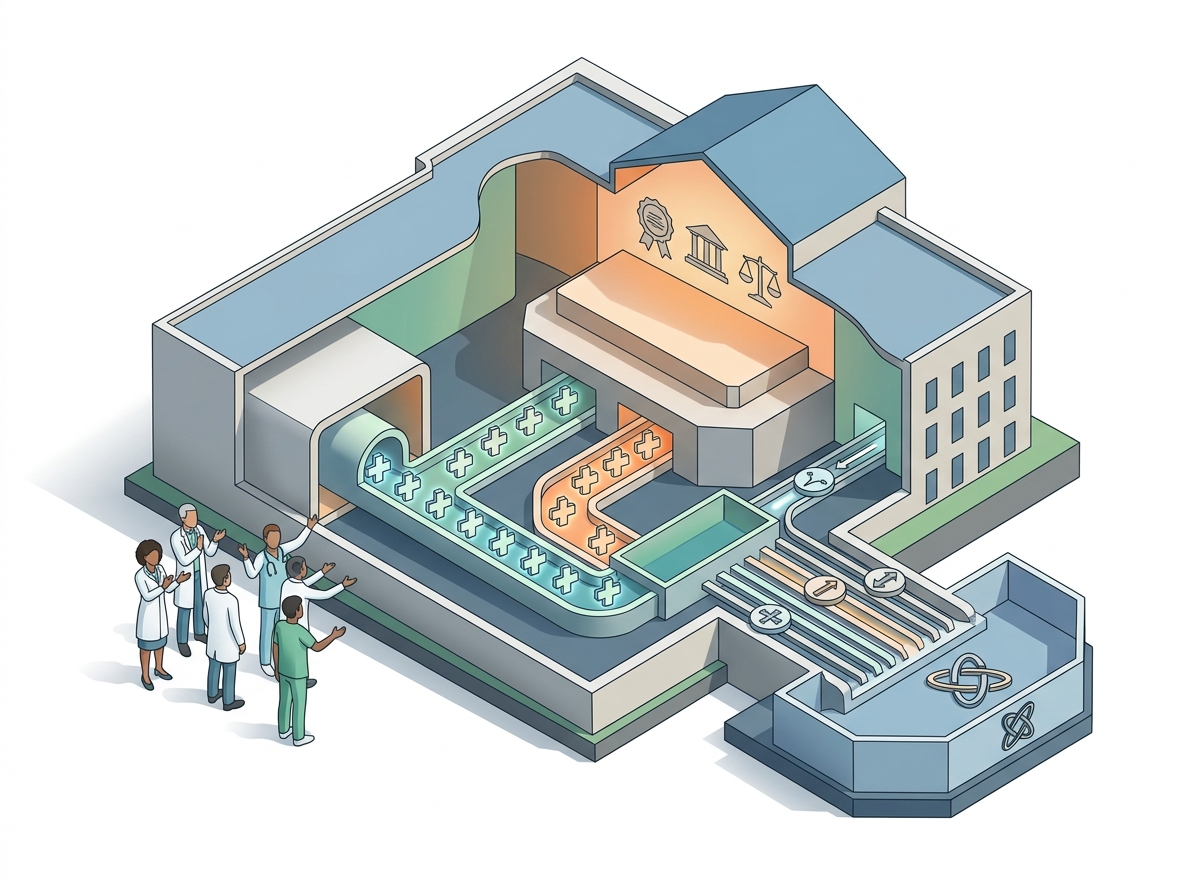
Supreme Court directs Tamil Nadu to surrender 151 unfilled super-speciality seats to AIQ pool → State government seeks 50% reversion of vacant seats post-counselling → TNGDA advocates for reduced qualifying percentile to reclaim seats → Potential availability of 75-100 seats for service doctors → State government balances constitutional constraints with workforce retention goals → Outcome influences national policy on super-speciality seat allocation and reservations.
Prelims Practice Questions
Q1. Consider the following statements regarding the All India Quota (AIQ) scheme for super-speciality medical seats in India:
1. The AIQ scheme was introduced to ensure uniform distribution of super-speciality seats across states.
2. The Supreme Court has consistently ruled against caste or religion-based reservations in super-speciality medical seats.
3. The AIQ counselling is conducted by the Directorate General of Health Services (DGHS) under the Ministry of Health and Family Welfare.
4. The AIQ scheme mandates that 50% of super-speciality seats must be reserved for service candidates in all states.
How many of the above statements are correct?
- Only one
- Only two
- Only three
- All four
Answer: Only three — Statements 2 and 3 are correct. The Supreme Court has ruled against caste or religion-based reservations in super-speciality seats (Statement 2). The AIQ counselling is indeed conducted by the DGHS (Statement 3). Statements 1 and 4 are incorrect as the AIQ scheme does not aim for uniform distribution nor mandates 50% reservation for service candidates universally.
Q2. Assertion (A): The Supreme Court has directed Tamil Nadu to surrender 151 unfilled super-speciality seats reserved for service candidates to the All India Quota (AIQ) pool.
Reason (R): The Supreme Court has consistently upheld that super-speciality medical seats cannot be reserved based on caste or religion, as per its earlier judgments.
In the context of the above two statements, which of the following is correct?
- Both A and R are true, and R is the correct explanation of A.
- Both A and R are true, but R is not the correct explanation of A.
- A is true, but R is false.
- A is false, but R is true.
Answer: A is true, but R is false. — Both Assertion (A) and Reason (R) are true. However, Reason (R) does not directly explain Assertion (A), as the surrender of seats is linked to the unfilled status and subsequent AIQ counselling, not solely to the Supreme Court’s stance on reservations.
Q3. Match the following institutions with their respective roles in the All India Quota (AIQ) counselling process for super-speciality medical seats:
Column I
1. Directorate General of Health Services (DGHS)
2. Tamil Nadu Government Doctors Association (TNGDA)
3. Supreme Court of India
4. State Health Departments
Column II
A. Conducts AIQ counselling for super-speciality seats
B. Represents government doctors’ interests and advocates for service candidates’ reservations
C. Issues directives on surrender of unfilled seats and reservation policies
D. Implements state-specific policies for medical admissions and service candidates’ reservations
- {‘1-A, 2-B, 3-C, 4-D’: True}
- {‘1-B, 2-A, 3-C, 4-D’: False}
- {‘1-C, 2-B, 3-A, 4-D’: False}
- {‘1-D, 2-C, 3-B, 4-A’: False}
Answer: {‘1-A, 2-B, 3-C, 4-D’: True} — The correct match is: 1-A (DGHS conducts AIQ counselling), 2-B (TNGDA represents government doctors’ interests), 3-C (Supreme Court issues directives), and 4-D (State Health Departments implement state-specific policies).
Mains Practice Question
✍ Critically examine the constitutional and judicial framework governing the reservation of super-speciality medical seats for service candidates in India. Also, analyse the implications of the recent Supreme Court order on Tamil Nadu’s super-speciality seats and its potential impact on state-level medical education policies. (15 Marks)
Approach: MODEL-ANSWER SKELETON:
1. **Constitutional and Legal Framework**:
– Article 15(4) and 15(5) of the Constitution empower the state to make special provisions for advancement of socially and educationally backward classes.
– The Supreme Court’s judgment in *T.M.A. Pai Foundation v. State of Karnataka* (2002) and *P.A. Inamdar v. State of Maharashtra* (2005) upheld the validity of reservations in private unaided institutions but prohibited caste-based reservations in super-speciality courses.
– The *Indra Sawhney v. Union of India* (1992) judgment capped reservations at 50%, though this does not directly apply to super-speciality seats.
2. **Judicial Precedents on Super-Speciality Seats**:
– The Supreme Court in *State of Kerala v. N.M. Thomas* (1976) and subsequent cases has ruled that reservations in super-speciality courses must not violate the principle of merit.
– The *Anand Bazar Patrika v. State of West Bengal* (2018) case reinforced that reservations in super-speciality seats cannot exceed 50% and must be based on rational criteria.
3. **Recent Supreme Court Order and Tamil Nadu’s Context**:
– The Supreme Court directed Tamil Nadu to surrender 151 unfilled super-speciality seats reserved for service candidates to the AIQ pool, citing the need for optimal utilisation of seats.
– The Court also stipulated that if the qualifying percentile is reduced in the second round of AIQ counselling, 50% of the vacant seats should revert to Tamil Nadu for service candidates.
– The Tamil Nadu Government Doctors Association (TNGDA) hailed this as a significant victory, highlighting the state’s long-standing demand for reservations for service candidates.
4. **Implications for State-Level Medical Education Policies**:
– **Merit vs. Reservation**: The order underscores the tension between merit-based admissions and affirmative action for service candidates, particularly in states with high demand for super-speciality doctors.
– **State Autonomy**: The Supreme Court’s intervention limits state autonomy in designing reservation policies for super-speciality seats, raising questions about federalism.
– **Impact on Healthcare Services**: Reduced availability of super-speciality seats for service candidates may exacerbate the shortage of specialists in government hospitals, particularly in Tamil Nadu.
– **Legal Risks**: Arguments advocating for all 151 seats to be allotted to service candidates post-qualifying percentile reduction could invite judicial scrutiny, as they may violate the Supreme Court’s rulings against caste-based reservations in super-speciality seats.
5. **Balanced View**:
– **Support for Reservations**: Proponents argue that reservations for service candidates are essential to retain doctors in government hospitals, ensuring equitable access to super-speciality care.
– **Opposition to Reservations**: Critics contend that such reservations compromise meritocracy and may lead to suboptimal patient outcomes in super-speciality care.
6. **Conclusion**:
– The Supreme Court’s order strikes a balance between utilising vacant seats and accommodating state-specific demands, but it also highlights the need for a nuanced approach to reservations in super-speciality medical education.
– States must align their policies with judicial precedents while addressing local healthcare workforce challenges.
Source: The Hindu
Generated by AanyaAi for educational purpose.

- हिमाचल में कचरा नियम तोड़ने वालों का बिजली-पानी होगा काटा, जानें पूरा मामला - September 23, 2026
- Himachal Pradesh’s Strict Action Against Bulk Waste Generators: Electricity & Water Cut - September 23, 2026
- आंध्र प्रदेश में चार नए पुलिस आयुक्तालयों को कैबिनेट की मंजूरी, जानिए क्या होंगे फायदे - September 23, 2026

No Comments