


08 Aug Tamil Nadu releases English version of Union-State Relations report for transparency
✎ The High-Level Committee on Union-State Relations in Tamil Nadu, led by Justice Kurian Joseph, was constituted to strengthen cooperative federalism and its report’s public release exemplifies the state’s commitment to…
Subject Relevance — Where This Topic Fits
- GS Paper II — Polity — Functions and Responsibilities of the Union and the States | GS Paper II — Polity — Issues and Challenges Pertaining to the Federal Structure
- Prelims: Federalism, Union-State Relations, Inter-State Council, Constitutional Provisions (Articles 263, 356), Public Access to Government Reports
- Essay: Federalism and Cooperative Governance: Challenges and Pathways for India
Quick Revision: The High-Level Committee on Union-State Relations in Tamil Nadu, led by Justice Kurian Joseph, was constituted to strengthen cooperative federalism and its report’s public release exemplifies the state’s commitment to transparency and constitutional governance.
Why is this in the news?
The Tamil Nadu government has directed the High-Level Committee on Union-State Relations to release the English version of Part I of its report into the public domain, aligning with the Tamil version to enhance transparency. This directive, issued via a Government Order on July 30, 2026, underscores the state’s commitment to open governance and the constitutional principle of federal accountability. The move follows the submission of the report to the Assembly in February 2026, highlighting the evolving discourse on inter-governmental relations in India.
Background
- The High-Level Committee on Union-State Relations was constituted by the Tamil Nadu government on April 15, 2025, under the leadership of retired Supreme Court judge Justice Kurian Joseph.
- The committee included retired IAS officer K. Ashok Vardhan Shetty and former Vice-Chairman of the Tamil Nadu State Planning Commission M. Naganathan as members.
- The committee submitted Part I of its report to the then Chief Minister M.K. Stalin on February 16, 2026, and the report was tabled in the Assembly on February 18, 2026.
- The Tamil Nadu government’s decision to release the English version of the report in the public domain reflects a broader trend towards greater transparency in governance and inter-state cooperation.
- The directive to cancel exclusive copyright for the English version aligns with the principles of open data and public accountability enshrined in the Right to Information (RTI) framework.
- This initiative is particularly significant in the context of evolving federal dynamics in India, where states are increasingly asserting their roles in policy formulation and implementation.
What is the High-Level Committee on Union-State Relations?
- A committee constituted by the Tamil Nadu government to examine and recommend measures for strengthening Union-State relations, particularly in the context of cooperative federalism.
- The committee is chaired by a retired Supreme Court judge, Justice Kurian Joseph, ensuring constitutional and judicial oversight in its deliberations.
- The committee’s mandate includes assessing the implementation of constitutional provisions related to federalism, such as Articles 263 (Inter-State Council) and 356 (President’s Rule), and suggesting reforms.
- The committee’s report, particularly Part I, is expected to address issues such as fiscal federalism, devolution of powers, and the role of states in national policymaking.
- The committee’s recommendations are likely to influence Tamil Nadu’s stance on inter-governmental disputes and its advocacy for state autonomy in key policy areas.
- The release of the report in the public domain is a step towards fostering greater public engagement and scrutiny of inter-governmental relations.
- The committee’s work is part of a broader effort by states to assert their constitutional rights and participate more actively in the federal policy discourse.
Key Features
| Feature | Significance |
|---|---|
| Open access to English version of Part I of the Union-State Relations report | Ensures transparency and democratic accountability by making the report accessible to all stakeholders, including researchers, policymakers, and the public, thereby facilitating informed discourse on federalism. |
| Cancellation of exclusive copyright for the English version | Prevents monopolistic control over the report, aligning with the principles of open governance and public ownership of government-commissioned documents. |
| Hosting on official portal (hlcusr.tn.gov.in) | Provides a centralized, reliable, and easily accessible platform for dissemination, ensuring authenticity and reducing misinformation risks. |
| Constitutional mandate for transparency in governance | Upholds the constitutional spirit of Article 19(1)(a) (Freedom of Speech and Expression) by ensuring that government reports are publicly available for scrutiny. |
| Multi-stakeholder committee composition | Ensures diverse expertise (judicial, administrative, and planning) in the report’s formulation, enhancing its credibility and comprehensiveness. |
Why it Matters
Federalism and Governance
- Reinforces the principles of cooperative federalism by ensuring that state-level reports on Union-State relations are publicly accessible, fostering mutual trust between the Centre and states.
- Demonstrates Tamil Nadu’s commitment to transparency in governance, setting a precedent for other states to follow in publishing critical reports.
- Highlights the role of High-Level Committees in addressing federal disputes and policy recommendations, which is crucial for maintaining intergovernmental harmony.
Legal and Administrative
- Affirms the government’s authority to waive copyright restrictions on official documents, aligning with the doctrine of public trust.
- Underscores the importance of judicial and administrative expertise in constitutional matters, as evidenced by the committee’s composition.
- Emphasizes the need for timely dissemination of government reports to ensure their utility in policy formulation and public debate.
Societal and Academic
- Enables researchers, academicians, and civil society to analyze the report for evidence-based policymaking and academic research.
- Promotes civic engagement by allowing citizens to scrutinize government reports, thereby strengthening democratic participation.
- Facilitates comparative studies on federalism across states, contributing to the broader discourse on constitutional governance.
Challenges
1. Ensuring Wider Dissemination and Accessibility
- Despite hosting the report online, ensuring equitable access for citizens without digital literacy or internet connectivity remains a challenge.
- The report’s technical language may limit its accessibility to the general public, necessitating simplified summaries or translations into regional languages.
- Preventing misinterpretation or misuse of the report by political or ideological groups requires proactive engagement by the government.
UPSC Link: GS-II: Federalism
2. Balancing Transparency with National Security
- Certain sections of the report may contain sensitive information that could compromise national security if disclosed publicly.
- The government must ensure that the report’s transparency does not inadvertently reveal confidential intergovernmental communications.
- Striking a balance between openness and security is critical to avoid legal or diplomatic complications.
UPSC Link: GS-II: Governance
3. Maintaining Consistency with Central Government Policies
- Tamil Nadu’s decision to publish the report independently may lead to tensions with the Central Government, particularly if the report contains dissenting views on federal issues.
- Ensuring that the report’s recommendations do not conflict with national policies while preserving state autonomy is a delicate task.
- The Centre may view such transparency as a challenge to its authority, necessitating diplomatic and constitutional safeguards.
UPSC Link: GS-II: Centre-State Relations
Challenges — UPSC Perspective
| Issue | Concern |
|---|---|
| Digital divide | Limited internet access in rural or marginalized communities may hinder the report’s reach. |
| Language barriers | The report’s English version may exclude non-English speakers, reducing its impact. |
| Political misuse | Partisan groups may selectively highlight portions of the report to serve their agendas. |
| Legal constraints | Certain sections of the report may be exempt from disclosure under Right to Information (RTI) exemptions. |
| Coordination with Centre | Potential friction with the Union Government over perceived overreach in state-level transparency measures. |
Way Forward
- The Tamil Nadu government should collaborate with NGOs and educational institutions to create simplified summaries of the report in Tamil and other regional languages.
- Conduct awareness campaigns through public libraries, gram panchayats, and digital kiosks to ensure the report reaches all sections of society.
- Establish a feedback mechanism for citizens to report issues or ambiguities in the report, ensuring continuous improvement in transparency efforts.
- The High-Level Committee should release periodic updates or supplementary reports to keep the discourse on Union-State relations dynamic.
- Encourage other states to emulate Tamil Nadu’s model by publishing their own reports on federalism and governance in the public domain.
- The Centre and states should engage in structured dialogues to align their transparency policies, reducing potential conflicts.
- Academic institutions should be incentivized to conduct research on the report’s findings, fostering a culture of evidence-based governance.
- The government should explore the use of AI tools to translate and summarize the report for broader accessibility.
UPSC Value Addition
Keywords for Mains Answer-Writing
Union-State Relations · High-Level Committee on Union-State Relations · Federalism in India · Constitutional provisions on Centre-State relations · Judicial review of Centre-State disputes · Transparency in governance · Public domain access to government reports · Federalism and cooperative governance · Intergovernmental relations · Constitutionalism and accountability
Constitutional & Policy Linkages
- Article 19(1)(a): Freedom of Speech and Expression (right to access government information)
- Article 262: Adjudication of disputes relating to inter-state rivers (context of federal disputes)
- Article 263: Inter-State Council (role in federal coordination)
- Article 356: Provisions in case of failure of constitutional machinery (indirect relevance to Centre-State tensions)
Concept Flow
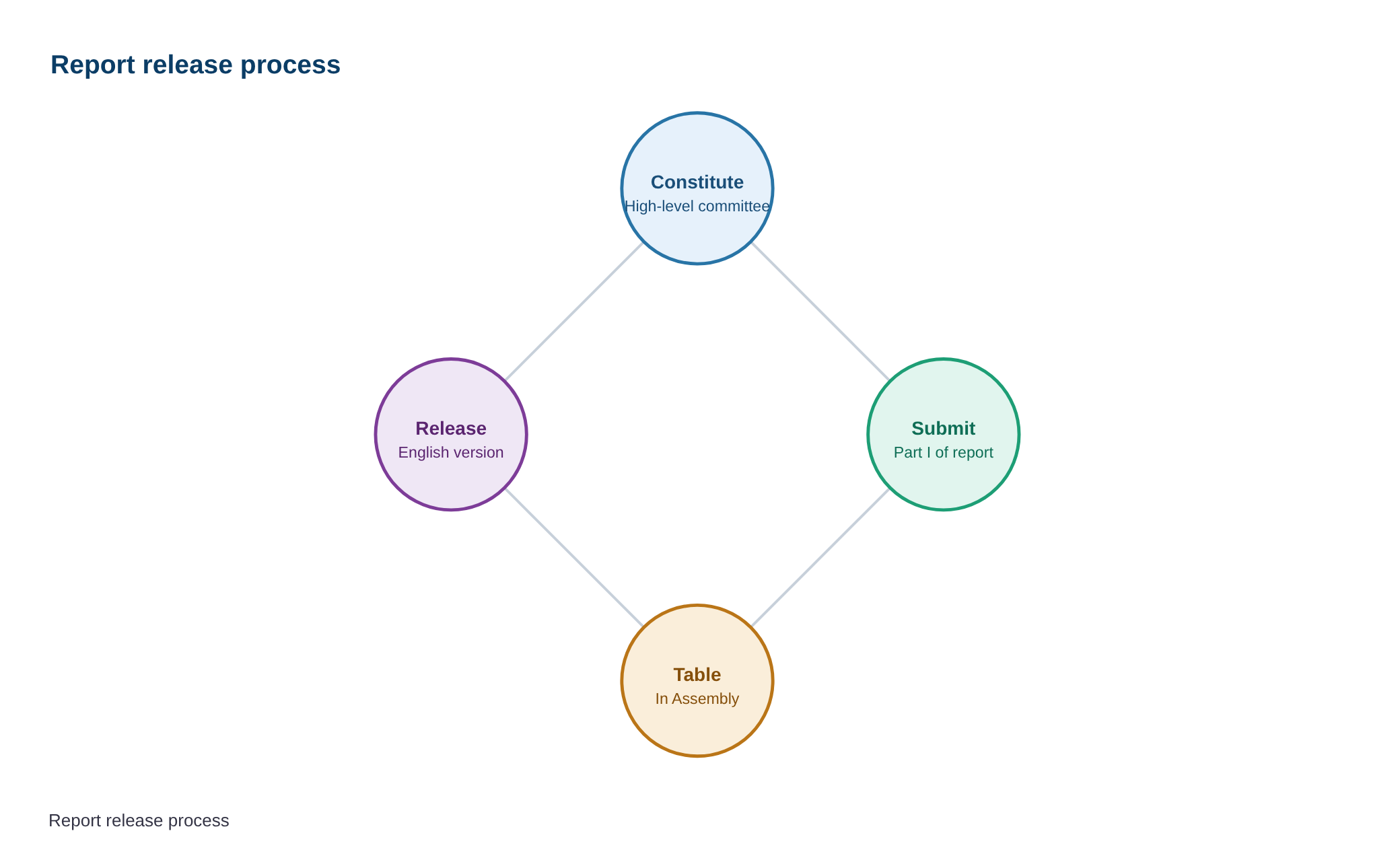
Constitutional mandate for transparency (Article 19(1)(a)) → → Tamil Nadu government constitutes High-Level Committee on Union-State Relations (April 2025) → → Committee submits Part I of the report (February 2026) → → Government issues GO for open access to English version (July 2026) → → Report hosted on official portal, copyright waived → → Public scrutiny and academic/research utilization → → Potential feedback loop for policy refinement and inter-state dialogue
Prelims Practice Questions
Q1. Consider the following statements regarding the High-Level Committee on Union-State Relations constituted by the Tamil Nadu government:
1. The committee was headed by a retired Supreme Court judge.
2. The committee submitted Part I of its report to the then Chief Minister M.K. Stalin on February 16, 2026.
3. The committee included a former Vice-Chairman of the Tamil Nadu State Planning Commission as a member.
How many of the above statements are correct?
- Only one
- Only two
- All three
- None
Answer: All three — Statements 1 and 3 are correct. Statement 2 is incorrect as the report was submitted on February 16, 2025, not 2026.
Q2. Assertion (A): The Tamil Nadu government directed the High-Level Committee on Union-State Relations to host the English version of Part I of its report in the public domain.
Reason (R): This directive was issued to ensure transparency and grant open access to the report.
Options:
A. Both A and R are true, and R is the correct explanation of A.
B. Both A and R are true, but R is not the correct explanation of A.
C. A is true, but R is false.
D. A is false, but R is true.
- A
- B
- C
- D
Answer: A — Both Assertion (A) and Reason (R) are true, and R correctly explains A as the directive was explicitly issued to ensure transparency.
Q3. Match the following committees with their respective constitutional or governance roles:
Column I (Committee) | Column II (Role)
1. Sarkaria Commission | A. Review of Centre-State relations
2. Punchhi Commission | B. Administrative reforms in India
3. Administrative Reforms Commission | C. Inter-State Council recommendations
4. Rajamannar Committee | D. Review of Centre-State relations in Tamil Nadu
Options:
A. 1-A, 2-C, 3-B, 4-D
B. 1-B, 2-A, 3-C, 4-D
C. 1-C, 2-B, 3-A, 4-D
D. 1-D, 2-C, 3-B, 4-A
- A
- B
- C
- D
Answer: A — 1-A (Sarkaria Commission reviewed Centre-State relations), 2-C (Punchhi Commission recommended Inter-State Council reforms), 3-B (Administrative Reforms Commission focused on administrative reforms), 4-D (Rajamannar Committee reviewed Centre-State relations in Tamil Nadu).
Mains Practice Question
✍ The Tamil Nadu government’s directive to host the English version of Part I of the High-Level Committee on Union-State Relations report in the public domain underscores the significance of transparency in governance. Critically examine the constitutional and institutional mechanisms that facilitate transparency in Centre-State relations in India. Also, assess the role of such committees in strengthening cooperative federalism. (15 Marks)
Approach: MODEL-ANSWER SKELETON:
1. **Constitutional and Institutional Mechanisms for Transparency**:
– Article 263 (Inter-State Council) and its role in facilitating dialogue and transparency.
– Article 356 (President’s Rule) and the need for transparency in its invocation (S.R. Bommai case, 1994).
– Right to Information Act, 2005 (RTI) and its application in Centre-State governance.
– Judicial review mechanisms (Article 136, 226, 32) ensuring accountability in Centre-State disputes.
2. **Role of High-Level Committees in Cooperative Federalism**:
– Sarkaria Commission (1983) and Punchhi Commission (2007) recommendations on Centre-State relations.
– The High-Level Committee on Union-State Relations (2025) as a mechanism for dialogue and policy coordination.
– Examples of committees resolving disputes (e.g., NITI Aayog’s role in cooperative federalism).
3. **Challenges and Criticisms**:
– Delay in constitution of Inter-State Council (not convened since 2016).
– Political misuse of constitutional provisions (e.g., frequent use of Article 356).
– Limited transparency in financial devolution (15th Finance Commission recommendations).
4. **Conclusion**:
– Emphasize the need for regular institutional mechanisms (e.g., Inter-State Council) and judicial oversight to ensure transparency.
– Highlight the Tamil Nadu government’s initiative as a positive step toward cooperative federalism.
Source: The Hindu
Generated by AanyaAi for educational purpose.

- आंध्र प्रदेश में चार नए पुलिस आयुक्तालयों को कैबिनेट की मंजूरी, जानिए क्या होंगे फायदे - September 23, 2026
- Andhra Pradesh to get 4 new Police Commissionerates: Key UPSC insights - September 23, 2026
- AI आधारित ‘HEADS’ से भारत में अवसाद जांच में क्रांति: जानिए कैसे होगा मदद - September 23, 2026

No Comments