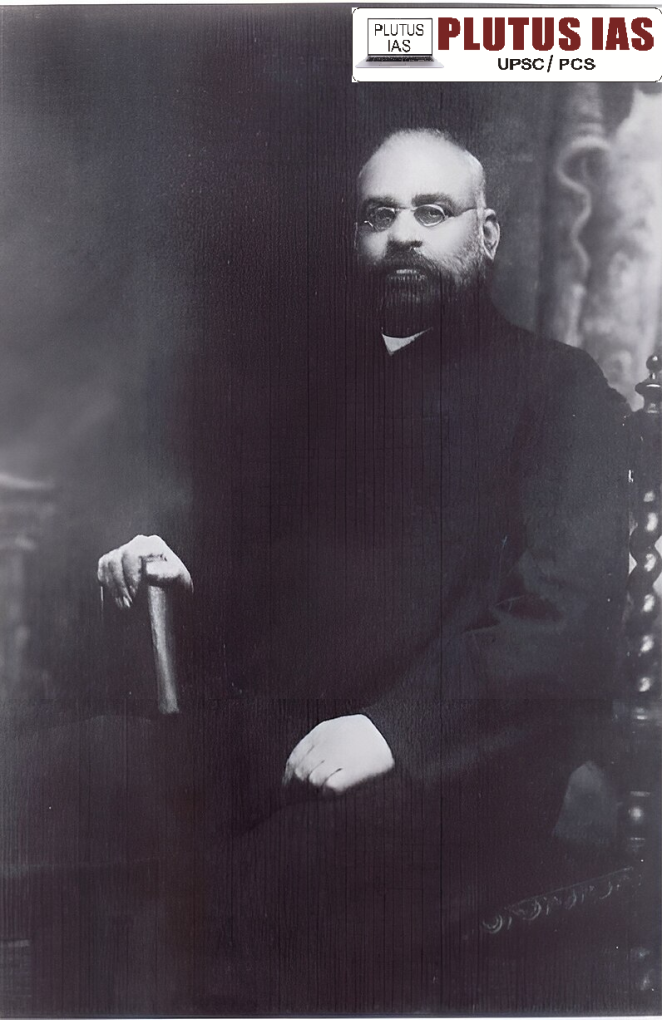
Prime Minister Shri Narendra Modi paid tribute to the great freedom fighter Shyamji Krishna Varma on his death anniversary today. Shyamji Krishna Varma was a revolutionary nationalist who played a crucial role in India’s freedom struggle, especially through his activities in London. PM Modi acknowledged his contributions and sacrifices in the fight against British rule.
Who was Shyamji Krishna Varma
Shyamji Krishna Varma (1857–1930) was an Indian freedom fighter, nationalist, lawyer, and journalist. He played a crucial role in India’s struggle for independence by promoting revolutionary nationalism against British rule.
Key Contributions:
1. Founder of India House (1905): A centre in London that nurtured Indian revolutionaries, including Vinayak Damodar Savarkar.
2. Established the Indian Home Rule Society: Advocated for India’s complete independence and self-rule.
3. Published The Indian Sociologist: A monthly journal that criticized British rule and inspired revolutionaries.
4. Influence of Swami Dayanand Saraswati: A disciple of Arya Samaj, he promoted cultural nationalism and Vedic ideals.
5. Legal and Political Activism: Served as Diwan (chief minister) of Ratlam and Junagadh but resigned due to British interference.
6. Advocated Armed Resistance: Believed that “Resistance to aggression is not simply justified, but imperative”, inspired by Herbert Spencer.
Contributions to Indian freedom struggle
1. Founder of India House (1905): Established India House in London as a base for Indian revolutionaries. Provided shelter, financial aid, and guidance to leaders like Savarkar, Madan Lal Dhingra, Lala Hardayal, and Virendranath Chattopadhyaya.
2. Formation of the Indian Home Rule Society (1905): Founded the Indian Home Rule Society to demand complete independence (Swaraj) from British rule. Promoted revolutionary nationalism instead of peaceful protests.
3. Publication of The Indian Sociologist: Launched The Indian Sociologist, a radical monthly journal spreading anti-British ideas. Encouraged armed revolution instead of petitions and compromises.
4. Support for Armed Struggle: Rejected moderate approaches of the Indian National Congress. Supported Lokmanya Tilak during the Age of Consent Bill controversy (1890). Encouraged the Chapekar brothers and Madan Lal Dhingra’s assassination of British officers.
5. Financial Support for Revolutionaries: Established Herbert Spencer Indian Fellowships to fund Indian students in Europe. Used personal wealth to finance revolutionary activities and Indian independence movements.
6. Opposition to British Rule: Exposed British oppression in India through speeches, writings, and activism. Inspired Indian students and political leaders to fight against colonial rule.
7. Exile and Continued Resistance: Forced to flee London to Paris in 1907 due to British persecution. Later moved to Geneva, Switzerland, and continued supporting Indian revolutionaries.
Remained under British surveillance but never stopped his mission.
8. Posthumous Recognition & Legacy: His ashes were repatriated to India in 2003 by Narendra Modi. The Kranti Teerth Memorial in Gujarat was built in his honour. In 2015, he was posthumously reinstated to the Inner Temple, London, from where he was disbarred in 1909.
Revolutionary stream of India’s national movement
1. Early Revolutionary Activities (1870s-1890s): Influenced by Swami Dayanand Saraswati and Bal Gangadhar Tilak. Chapekar Brothers (1897) assassinated British officer W.C. Rand in Pune, marking early armed resistance.
2. Formation of Secret Societies (1900s): Anushilan Samiti (1902) in Bengal and Abhinav Bharat Society (1904) by Vinayak Damodar Savarkar. Promoted revolutionary ideology and military training among Indian youth.
3. Role of India House & Shyamji Krishna Varma (1905-1909): India House in London became a hub for Indian revolutionaries. Madan Lal Dhingra (1909) assassinated British official Curzon Wyllie in London as an act of defiance.
4. Alipore Bomb Conspiracy (1908): Aurobindo Ghosh, Barindra Ghosh, and others planned to overthrow British rule using explosives. Khudiram Bose and Prafulla Chaki attempted to assassinate Judge Kingsford but were captured and executed.
5. Ghadar Movement (1913-1917): Lala Hardayal and Sohan Singh Bhakna founded the Ghadar Party in the USA to instigate an armed revolt in India. The Ghadar Mutiny (1915) was planned but failed due to British intelligence infiltration.
6. Hindustan Republican Association (HRA) & Kakori Conspiracy (1925): Ram Prasad Bismil, Ashfaqulla Khan, Chandrashekhar Azad led a train robbery at Kakori to fund revolutionary activities. The leaders were arrested and executed, inspiring future revolutionaries.
7. HSRA & Bhagat Singh’s Struggle (1928-1931): The Hindustan Socialist Republican Association (HSRA) was formed by Bhagat Singh, Rajguru, Sukhdev, Chandrashekhar Azad. Saunders’ assassination (1928) and the Central Assembly bombing (1929) were key acts of resistance.
8. Azad Hind Fauj & Subhas Chandra Bose (1943-1945): The Indian National Army (INA) was formed with Japanese support to fight the British. Bose’s famous slogan: “Give me blood, and I will give you freedom!” motivated Indians to join the struggle.
Contributions of Revolutionary to India’s National Movement
1. Ignited the Spirit of Resistance: Revolutionaries like Bhagat Singh, Chandrashekhar Azad, and Subhas Chandra Bose infused fearlessness and sacrifice into the freedom struggle.
2. Challenged British Rule: Assassination of British officials (e.g., Curzon Wyllie by Madan Lal Dhingra, Saunders by Bhagat Singh) shook British confidence. Bomb attacks and armed resistance (e.g., Kakori Conspiracy (1925), Delhi Assembly Bombing (1929)) demonstrated defiance against colonial rule.
4. Formed Revolutionary Organizations: Anushilan Samiti (1902) and Jugantar (1906) in Bengal spread revolutionary ideology. Hindustan Socialist Republican Association (HSRA) (1928), led by Bhagat Singh, promoted socialism and armed struggle.
5. Spread Nationalist Ideas: Newspapers like Bande Mataram, Ghadar, and The Indian Sociologist fueled anti-British sentiment.
6. Global Influence & Support: The Ghadar Movement (USA, Canada) and Subhas Chandra Bose’s INA sought international backing for independence.
7. Forced British Repressive Measures: Their activities led to harsh laws like the Rowlatt Act and the Defence of India Act, exposing British fear.
8. Radicalized the Freedom Struggle: Their demand for complete independence (Purna Swaraj) pushed Congress towards a more assertive stance.
9. Legacy of Sacrifice & Nationalism: Their martyrdom became a symbol of patriotism, inspiring future generations and post-independence policies.
Limitations of Revolutionary Nationalism
1. Lack of Mass Support: Revolutionary movements were largely confined to urban youth and students, failing to mobilize the broader masses, including peasants and workers.
2. Absence of a Clear Political Program: Unlike Congress-led movements, revolutionaries lacked a well-defined long-term strategy for governance post-independence.
3. Dependence on Armed Struggle: The focus on assassinations and bombings led to severe crackdowns, making the movement unsustainable in the long run.
4. Harsh British Repression: The colonial government responded with brutal measures like executions, deportations, and stricter laws (e.g., the Rowlatt Act), weakening revolutionary networks.
5. Lack of Unity & Coordination: Different revolutionary groups like Anushilan Samiti, HSRA, and Ghadar Party operated independently, limiting their collective impact.
6. Failure to Gain International Support: Unlike Gandhi’s diplomacy, revolutionaries struggled to secure significant foreign backing for India’s independence.
7. Financial & Resource Constraints: Limited funds and weapons made it difficult to sustain prolonged armed resistance against a well-equipped colonial government.
8. Overshadowed by Mass Movements: Non-violent mass movements led by Gandhi, Nehru, and Patel gained wider acceptance, sidelining the revolutionary approach over time.
Conclusion





No Comments