


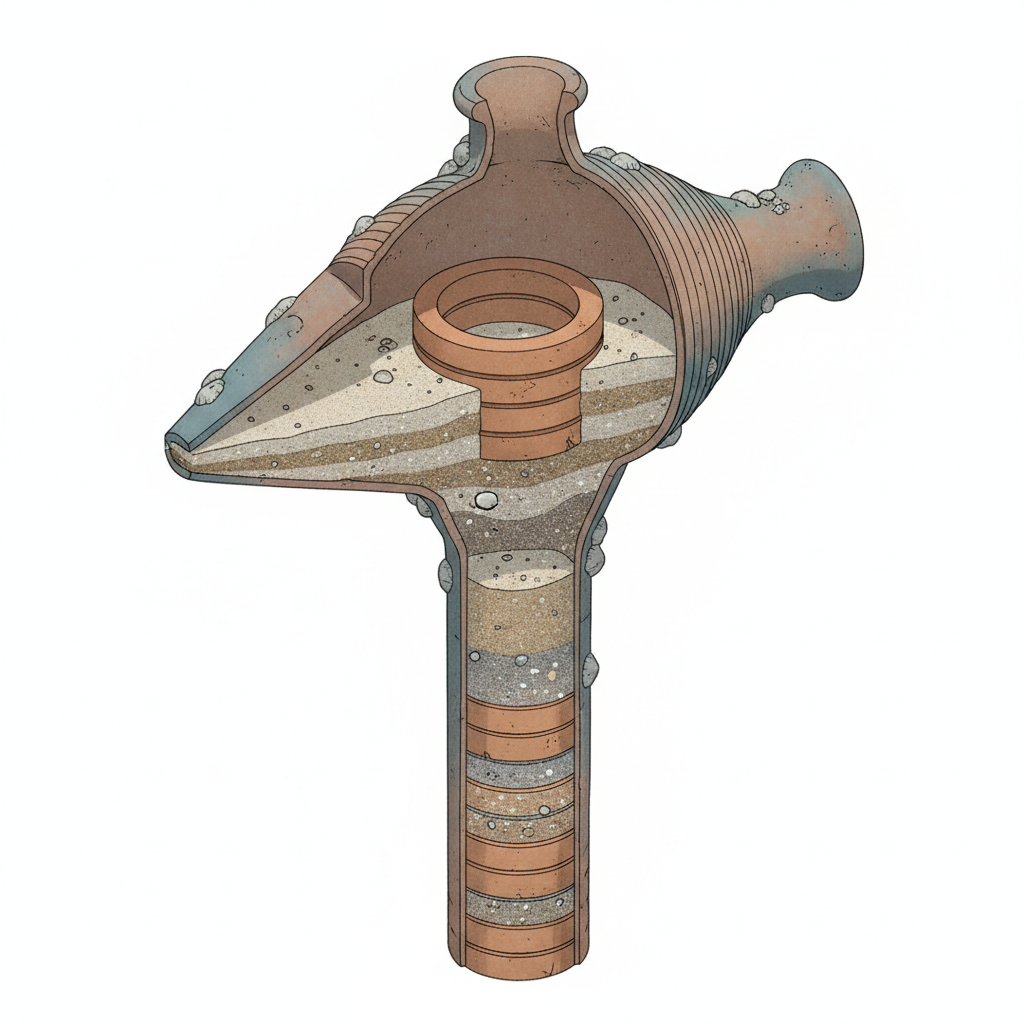
22 Sep Torpedo Jar Fragment & Ring Wells Unearthed Off Poompuhar Coast
✎ Underwater archaeological explorations off Poompuhar have yielded a torpedo jar fragment and ring wells, providing evidence of early historic maritime trade and palaeochannel hydrology in the region.
Subject Relevance — Where This Topic Fits
- GS Paper I — History and Culture of India
- Prelims: Poompuhar, Kaveripoompattinam, torpedo jar, ring wells, palaeochannel, underwater archaeology, Tamil Nadu State Department of Archaeology, early historic period, maritime trade
- Essay: Maritime heritage and its role in shaping ancient civilisations, The interplay between archaeology and environmental changes
Quick Revision: Underwater archaeological explorations off Poompuhar have yielded a torpedo jar fragment and ring wells, providing evidence of early historic maritime trade and palaeochannel hydrology in the region.
Why is this in the news?
The discovery of a torpedo jar fragment and ancient ring wells during the third phase of underwater archaeological exploration off the Poompuhar coast in Mayiladuthurai district, Tamil Nadu, provides significant evidence of early historic maritime trade and coastal hydrological patterns. This finding is noteworthy as it represents the first instance of such artefacts being recovered underwater in Tamil Nadu, offering insights into the region’s ancient port city, Kaveripoompattinam, and its connections with West Asian trade routes.
Background
- Poompuhar, historically known as Kaveripoompattinam, was a prominent port city during the Sangam period (300 BCE–300 CE) and served as a key hub for maritime trade between South India and regions such as Rome, Egypt, and West Asia.
- The Tamil Nadu State Department of Archaeology (TNSDA) has been conducting systematic archaeological surveys in the region to document and preserve underwater cultural heritage, particularly in light of coastal erosion and sea-level changes.
- Torpedo jars, also known as amphorae in Mediterranean contexts, were utilised for transporting liquids such as wine, oil, and perfumes due to their shape, which minimised spillage during transit.
- Ring wells, circular structures typically used for water storage or drainage, are commonly found in archaeological sites from the early historic period and provide clues about settlement patterns and hydrological conditions.
- The Poompuhar coast has been subjected to significant environmental changes, including erosion and sediment deposition, which have necessitated systematic underwater explorations to recover and document submerged cultural artefacts.
Key Aspects of the Underwater Archaeological Discoveries
- Torpedo Jar Fragment: A broken piece of a torpedo jar was recovered at a depth of 10 metres and 2 km from the Poompuhar coast. The estimated diameter of the complete torpedo jar was 30–35 cm. The fragment is made of fine ceramic and is believed to have originated from West Asia, indicating long-distance maritime trade during the early historic period.
- Maritime Trade: Torpedo jars were primarily used for transporting liquid commodities such as wine, oil, or perfumes. Their presence in Poompuhar underscores the city’s role as a major port in the Indian Ocean trade network, connecting South India with West Asia and the Mediterranean.
- Ring Wells: Four ancient ring wells, with diameters ranging from 60 cm to 65 cm, were discovered during the exploration. These structures are typically associated with water management systems and may indicate the presence of a palaeochannel, a former river or stream channel now submerged or altered by coastal processes.
- Palaeochannel Hypothesis: The discovery of ring wells suggests that a palaeochannel might have existed at the site, providing insights into the historical hydrology of the region. Such channels are often linked to the shifting courses of rivers like the Kaveri, which historically flowed through Poompuhar.
- Ceramic Assemblage: Over 250 ceramic fragments, including glazed ware, were recovered during the survey, expanding the corpus of material culture associated with Poompuhar’s maritime heritage. These artefacts contribute to the understanding of trade networks, craft production, and cultural exchanges in the region.
- Environmental Context: The findings are situated within the broader context of coastal erosion and sea-floor changes affecting Poompuhar. Systematic underwater archaeology is crucial for documenting submerged heritage before it is lost to natural processes.
- Methodology: The underwater exploration utilised advanced archaeological techniques, including systematic grid surveys and depth-based sampling, to recover artefacts while minimising disturbance to the underwater environment.
- Significance for Heritage Conservation: The discoveries highlight the importance of preserving underwater cultural heritage, particularly in regions prone to environmental degradation. Further investigations by the TNSDA are planned to contextualise these findings within the broader history of Poompuhar.
Key Features
| Feature | Significance |
|---|---|
| Torpedo jar fragment | Evidence of early historic maritime trade links between Tamil Nadu and West Asia, indicating the use of torpedo jars (cylindrical vessels) for transporting liquid commodities such as wine or oil. |
| Ring wells (60 cm–65 cm diameter) | Suggests the presence of a palaeochannel, providing insights into ancient water management systems and settlement patterns near the Poompuhar coast. |
| Depth of discovery (10 metres) | Highlights the challenges of underwater archaeology, including the need for specialised equipment and expertise to explore submerged heritage sites. |
| Ceramic pieces (250+ including glazed ware) | Indicates the diversity of traded goods and the technological sophistication of early historic pottery production and trade networks. |
| Location (Poompuhar, Mayiladuthurai district) | Reinforces the historical significance of Poompuhar (Kaveripoompattinam) as a major port city mentioned in Sangam literature and ancient Tamil texts. |
Why it Matters
Maritime Trade and Economy
- The discovery of a torpedo jar fragment, likely from West Asia, underscores Tamil Nadu’s integration into global trade networks during the early historic period (c. 300 BCE–300 CE).
- Torpedo jars were designed for efficient transport of liquids, suggesting the trade of high-value commodities like wine, oil, or perfumes, which were in demand in ancient Tamilakam.
- The presence of glazed ware among the ceramic fragments indicates advanced ceramic technology and the import of specialised goods, reflecting economic prosperity.
Historical and Archaeological Insights
- The findings corroborate historical accounts of Poompuhar (Kaveripoompattinam) as a thriving port city, mentioned in Sangam literature and early Tamil inscriptions.
- Ring wells provide evidence of ancient water management systems, suggesting organised settlements and agricultural practices near the coast.
- The palaeochannel hypothesis aligns with geological and hydrological studies of the region, offering clues to past river courses and coastal evolution.
Cultural and Technological Exchange
- The torpedo jar’s origin from West Asia highlights cross-cultural exchanges in material culture, technology, and trade practices during antiquity.
- The discovery of similar artefacts at sites like Alagankulam, Korkai, and Porpanaikottai reinforces the interconnectedness of Tamil Nadu’s port cities in the past.
Environmental and Geological Context
- The underwater exploration addresses the impact of coastal erosion and sea-level changes on submerged heritage, a critical concern for preserving India’s maritime archaeology.
- The findings contribute to understanding the dynamic relationship between human settlements and coastal geomorphology in the Bay of Bengal region.
Challenges
1. Underwater Archaeology Challenges
- Conducting archaeological surveys in submerged environments requires advanced equipment, technical expertise, and significant financial resources.
- Preservation of artefacts recovered from saline underwater conditions demands specialised conservation techniques to prevent degradation.
- Logistical challenges, including limited visibility and depth constraints, complicate the documentation and retrieval of artefacts.
UPSC Link: GS Paper 1: Ancient India
2. Preservation of Submerged Heritage
- Coastal erosion and natural disasters pose a constant threat to underwater archaeological sites, necessitating proactive conservation measures.
- Balancing the need for exploration with the protection of heritage sites is a recurring challenge in maritime archaeology.
- Public awareness and community involvement are essential to prevent looting or accidental damage to submerged cultural resources.
UPSC Link: GS Paper 1: Heritage Conservation
3. Interdisciplinary Research Gaps
- Integrating geological, archaeological, and historical data is essential but often hindered by limited collaboration between disciplines.
- The lack of a comprehensive national database for underwater archaeological findings complicates comparative studies and policy formulation.
UPSC Link: GS Paper 1: Interdisciplinary Studies
4. Policy and Institutional Framework
- The absence of a dedicated national policy for underwater archaeology creates ambiguity in jurisdiction, funding, and implementation.
- Strengthening the institutional capacity of state archaeological departments, such as the Tamil Nadu State Department of Archaeology, is critical for sustained research.
UPSC Link: GS Paper 2: Government Policies
Challenges — UPSC Perspective
| Issue | Concern |
|---|---|
| Funding constraints | Limited budget allocation for underwater archaeological explorations restricts the scope and duration of surveys. |
| Technical limitations | Inadequate equipment and expertise in state departments hinder comprehensive underwater documentation. |
| Legal ambiguities | Unclear regulatory frameworks for ownership and protection of submerged heritage complicate conservation efforts. |
| Climate change impacts | Rising sea levels and increased storm frequency threaten the stability of underwater archaeological sites. |
| Public engagement deficit | Low awareness among coastal communities about the significance of submerged heritage reduces stakeholder participation. |
Way Forward
- Enhance funding for state archaeological departments to support sustained underwater archaeological explorations, including procurement of advanced equipment.
- Develop a national database for underwater archaeological findings to facilitate research, policy-making, and public access to heritage data.
- Promote interdisciplinary collaboration between archaeologists, geologists, and historians to integrate diverse datasets for comprehensive analysis.
- Strengthen legal frameworks for the protection of submerged heritage, including clear guidelines for ownership, conservation, and public-private partnerships.
- Increase public awareness through educational programs, museum exhibits, and community engagement initiatives to foster stewardship of maritime heritage.
- Conduct regular training programs for archaeologists in underwater survey techniques, conservation methods, and documentation standards.
- Collaborate with international organisations and universities to leverage global expertise in maritime archaeology and conservation.
- Integrate findings from underwater archaeology into school and university curricula to enhance awareness of India’s maritime history.
UPSC Value Addition
Keywords for Mains Answer-Writing
Underwater archaeology · Poompuhar · Kaveripoompattinam · Torpedo jars · Maritime trade · Early historic period · Ring wells · Palaeochannels · Maritime archaeology · Maritime heritage · Cultural heritage conservation · Tamil Nadu State Department of Archaeology · Maritime trade routes · Maritime archaeology in India
Concept Flow
Ancient Tamilakam’s maritime trade networks → Evidence of torpedo jars from West Asia → Discovery of ring wells and ceramics → Underwater archaeological exploration off Poompuhar coast → Insights into early historic settlements and trade → Challenges in preservation and policy gaps → Need for interdisciplinary research and conservation.
Prelims Practice Questions
Q1. Consider the following statements regarding the recent underwater archaeological findings off the Poompuhar coast:
1. A fragment of a torpedo jar, believed to have been brought from West Asia, was discovered.
2. The torpedo jar fragment is estimated to have a diameter of 30 cm to 35 cm when complete.
3. The discovery of ring wells indicates the presence of a palaeochannel at the location.
4. The underwater exploration covered an area of approximately 20 square kilometres.
How many of the above statements are correct?
- Only one
- Only two
- Only three
- All four
Answer: Only three — Statements 1, 2, and 3 are correct. Statement 4 is incorrect as the exploration covered nearly two square kilometres, not 20.
Q2. Assertion (A): Torpedo jars were primarily used for transporting liquid commodities such as wine or oil by ship.
Reason (R): Their cylindrical body and narrow mouth prevented the contents from spilling during transport.
Options:
A. Both A and R are true, and R is the correct explanation of A.
B. Both A and R are true, but R is NOT the correct explanation of A.
C. A is true, but R is false.
D. A is false, but R is true.
Answer: ? — Both Assertion (A) and Reason (R) are true, and Reason (R) correctly explains Assertion (A). Torpedo jars were indeed designed to prevent spillage during maritime transport.
Q3. Match the following archaeological findings with their probable significance:
Column I (Finding)
A. Torpedo jar fragment
B. Ring wells
C. Glazed ware ceramics
Column II (Significance)
1. Indicates maritime trade connections with West Asia
2. Suggests the presence of a palaeochannel
3. Reflects advanced pottery techniques and trade
Select the correct match:
- A-1, B-2, C-3
- A-2, B-1, C-3
- A-3, B-1, C-2
- A-1, B-3, C-2
Answer: A-1, B-2, C-3 — A. Torpedo jar fragment (1) indicates maritime trade connections with West Asia. B. Ring wells (2) suggest the presence of a palaeochannel. C. Glazed ware ceramics (3) reflect advanced pottery techniques and trade.
Mains Practice Question
✍ Critically examine the significance of the recent underwater archaeological findings off the Poompuhar coast in the context of India’s maritime heritage and trade history during the early historic period. Also, discuss the role of underwater archaeology in preserving and interpreting submerged cultural heritage. (15 Marks)
Approach: MODEL-ANSWER SKELETON:
1. **Introduction (2 Marks)**
– Briefly define underwater archaeology and its relevance in India.
– Mention Poompuhar (Kaveripoompattinam) as an ancient port city and its historical significance in maritime trade.
2. **Significance of the Findings (6 Marks)**
– **Torpedo jar fragment**: Explain its role in maritime trade, particularly its West Asian origin, and its utility in transporting liquid commodities. Link to the Sangam period trade networks.
– **Ring wells**: Discuss their archaeological significance in indicating palaeochannels and ancient water management systems. Connect to the concept of submerged settlements.
– **Glazed ware ceramics**: Highlight their role in reflecting advanced pottery techniques and trade relations with distant regions.
3. **Maritime Heritage and Trade History (4 Marks)**
– Discuss the broader context of India’s maritime trade during the early historic period (e.g., Roman trade, Tamil-Brahmi inscriptions, Periplus of the Erythraean Sea).
– Explain how these findings corroborate historical accounts of Poompuhar as a major port.
4. **Role of Underwater Archaeology (3 Marks)**
– Define underwater archaeology and its methodologies (e.g., remote sensing, diving, GIS).
– Discuss its importance in preserving submerged cultural heritage, especially in the context of coastal erosion and climate change.
– Mention challenges such as funding, technology, and legal frameworks (e.g., UNESCO Convention on the Protection of the Underwater Cultural Heritage, 2001).
5. **Conclusion (2 Marks)**
– Summarize the findings’ contribution to understanding India’s maritime past.
– Emphasize the need for sustained research and conservation efforts.
Source: The Hindu
Generated by AanyaAi for educational purpose.
Related guides on our sites
- Sociology vs History
- Best history optional coaching in delhi
- UPSC History optional
- Is history a good optional for upsc exam

- Ministry Launches Swachhata Abhiyan 6.0 for National Highways & Toll Plazas - September 29, 2026
- उत्तराखंड में 54 धारा-नौलों का पारंपरिक विधि से पुनरुद्धार, सीमेंट का न्यूनतम प्रयोग - September 29, 2026
- Kerala doubles compensation for wildlife attacks, crop loss amid rising conflicts - September 29, 2026

No Comments