


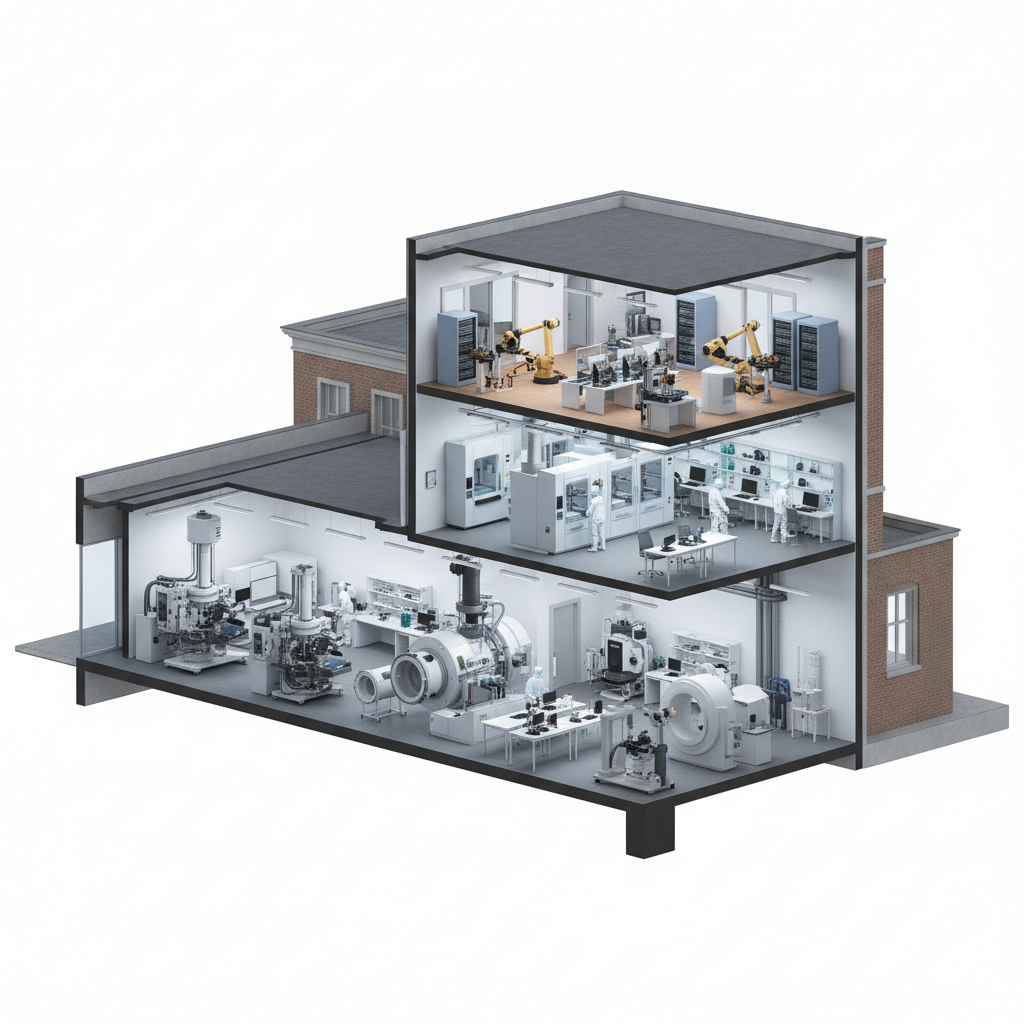
04 Sep UP Vice President Inaugurates Advanced Labs at Panjab University for UPSC 2026
✎ Sophisticated Analytical Instrument Facilities (SAIFs) and Central Instrumentation Laboratories (CILs) are university-based research infrastructure hubs providing access to advanced analytical tools, while Technology Business…
Subject Relevance — Where This Topic Fits
- GS Paper II — Governance, Administration and Challenges—Public Institutions and their Reforms | GS Paper III — Science and Technology—Development and Applications of Science and Technology | GS Paper III — Environment and Disaster Management—Research and Innovation in Environmental Sciences
- Prelims: Sophisticated Analytical Instrument Facility (SAIF), Central Instrumentation Laboratories (CIL), Atomic Force Microscope (AFM), Raman Spectrometer, DNA Sequencer, Flow Cytometer, FTIR Spectrometer, Technology Business Incubator (TBI), Section 8 Company under Companies Act, 2013, National Education Policy (NEP) 2020—Research and Innovation
- Essay: The interplay between academic research and societal transformation: A case for institutionalising innovation ecosystems, Higher education as a catalyst for national development: From knowledge creation to societal impact
Quick Revision: Sophisticated Analytical Instrument Facilities (SAIFs) and Central Instrumentation Laboratories (CILs) are university-based research infrastructure hubs providing access to advanced analytical tools, while Technology Business Incubators (TBIs) foster innovation and entrepreneurship by supporting startups in translating research into societal impact.
Why is this in the news?
The event underscores the broader national emphasis on strengthening higher education institutions as engines of scientific advancement and societal progress.
Background
- The establishment of Sophisticated Analytical Instrument Facilities (SAIFs) and Central Instrumentation Laboratories (CILs) in Indian universities dates back to the 1970s, initiated by the University Grants Commission (UGC) to provide advanced research infrastructure to academic institutions.
- Panjab University, established in 1882, is one of India’s oldest and most prestigious universities, with a legacy of contributing to nation-building through education, research, and public service.
- The National Education Policy (NEP) 2020 places significant emphasis on research, innovation, and the integration of academia with industry to address societal challenges.
- The transformation of university-based incubators into Section 8 companies under the Companies Act, 2013 is a recent policy shift aimed at enhancing operational autonomy, financial sustainability, and industry collaboration in technology transfer and entrepreneurship.
- The inauguration aligns with the broader national goal of positioning India as a global hub for quality education and cutting-edge research, as articulated in initiatives like the National Research Foundation (NRF) and the Atal Innovation Mission (AIM).
- Campus safety and security have emerged as critical governance priorities in higher education institutions, particularly in light of recent incidents that necessitate comprehensive audits and systemic reforms.
What are Sophisticated Analytical Instrument Facilities (SAIF)/Central Instrumentation Laboratories (CIL) and Technology Incubation Platforms?
- Sophisticated Analytical Instrument Facilities (SAIFs) and Central Instrumentation Laboratories (CILs) are university-based research infrastructure hubs established to provide advanced analytical instrumentation and technical support to researchers, faculty, and students across disciplines such as physics, chemistry, biology, materials science, and environmental studies.
- These facilities house high-end equipment such as Atomic Force Microscopes (AFM), Raman Spectrometers, DNA Sequencers, Flow Cytometers, and FTIR Spectrometers, which enable cutting-edge research in nanotechnology, genomics, environmental monitoring, and materials characterization.
- The primary objectives of SAIF/CIL include: (a) democratising access to advanced research tools, (b) promoting interdisciplinary collaboration, (c) enhancing the quality of research output, and (d) fostering industry-academia partnerships for technology transfer and commercialisation.
- Technology Business Incubators (TBIs) are institutional mechanisms designed to nurture early-stage startups by providing mentorship, infrastructure, funding linkages, and business development support. They often operate as Section 8 companies under the Companies Act, 2013 to ensure operational flexibility and financial sustainability.
- The Panjab University Tech Innovation Forum (PU-TIF), launched as a Section 8 company, represents a strategic shift towards institutionalising innovation ecosystems within universities, aligning with the National Innovation and Startup Policy (NISP) 2019.
- The integration of advanced instrumentation with technology incubation platforms creates a synergistic ecosystem where research findings can be translated into market-ready solutions, thereby enhancing the socio-economic impact of academic research.
- These initiatives are critical for achieving the goals of the National Education Policy (NEP) 2020, which advocates for a research-driven, innovation-oriented higher education system that addresses real-world challenges through evidence-based solutions.
Key Features
| Feature | Significance |
|---|---|
| Sophisticated Analytical Instrument Facility (SAIF)/Central Instrumentation Laboratories (CIL) | Provides advanced analytical instrumentation support for high-end research in fields such as nanotechnology, materials science, environmental science, and genomics, enhancing the university’s research infrastructure. |
| Advanced Instrumentation Facility | Equipped with five state-of-the-art scientific instruments—Atomic Force Microscope, Raman Spectrometer, DNA Sequencer, Flow Cytometer, and FTIR Spectrometer—enabling cutting-edge research and innovation. |
| Panjab University Tech Innovation Forum (PU-TIF) | A dedicated platform for fostering innovation, entrepreneurship, and translational research, bridging academia, industry, and investors to promote technology development and commercialization. |
| Bio-NEST (as a Section 8 Company) | Acts as an institutional framework within PU-TIF to support research, entrepreneurship, and technology development, aligning with the university’s goal of becoming a global research destination. |
| Campus Security Audit | A comprehensive security review mandated following a tragic incident, ensuring a safe and secure academic environment for students and researchers. |
Why it Matters
Higher Education Ecosystem
- Demonstrates India’s commitment to enhancing the quality of higher education and research infrastructure, aligning with global standards.
- Strengthens the role of central instrumentation facilities in enabling interdisciplinary research and innovation.
- Promotes the integration of academia, industry, and entrepreneurship to drive technological advancements and societal impact.
Research and Innovation
- Facilitates high-impact research in emerging fields such as nanotechnology, genomics, and materials science through advanced instrumentation.
- Encourages translational research and innovation by providing a structured platform (PU-TIF) for collaboration and commercialization.
- Supports the development of socially relevant and scalable innovations that address real-world challenges.
Institutional Governance
- Highlights the role of leadership in driving institutional reforms and creating an enabling environment for research and innovation.
- Emphasizes the importance of campus safety and security as a prerequisite for academic excellence and student well-being.
Challenges
1. Infrastructure and Resource Gaps
- Ensuring equitable access to advanced instrumentation facilities across institutions, particularly in tier-2 and tier-3 cities.
- Addressing the financial and operational sustainability of central instrumentation facilities to maintain cutting-edge equipment and expertise.
- Bridging the gap between research output and industry adoption to translate innovations into real-world applications.
UPSC Link: GS3: Science & Technology
2. Interdisciplinary Collaboration
- Fostering meaningful partnerships between academia, industry, and investors to create a robust innovation ecosystem.
- Overcoming silos within academic disciplines to promote collaborative research and knowledge sharing.
UPSC Link: GS2: Governance
3. Campus Safety and Security
- Implementing comprehensive security measures to prevent untoward incidents and ensure a safe learning environment.
- Strengthening grievance redressal mechanisms and mental health support systems for students and researchers.
UPSC Link: GS2: Governance
4. Research Commercialization
- Developing policies and incentives to encourage researchers to pursue translational research with societal impact.
- Creating a supportive ecosystem for startups and entrepreneurs emerging from academic research.
UPSC Link: GS3: Economic Development
Challenges — UPSC Perspective
| Issue | Concern |
|---|---|
| Sustainability of Central Instrumentation Facilities | High operational costs and maintenance requirements for advanced equipment may limit accessibility and longevity. |
| Industry-Academia Collaboration | Lack of structured frameworks for collaboration and knowledge transfer between academia and industry. |
| Security and Safety Protocols | Inadequate safety audits and preventive measures in academic institutions, as highlighted by recent incidents. |
| Interdisciplinary Research Barriers | Fragmented academic structures and rigid departmental boundaries hinder collaborative research efforts. |
| Funding and Resource Allocation | Insufficient public and private funding for high-end research infrastructure and innovation platforms. |
Way Forward
- Strengthen the operational and financial sustainability of central instrumentation facilities through public-private partnerships and government grants.
- Develop structured frameworks for industry-academia collaboration, including joint research projects, internships, and technology transfer policies.
- Establish dedicated innovation hubs within universities to provide mentorship, funding, and incubation support for student and faculty-led startups.
- Implement comprehensive campus safety protocols, including regular security audits, mental health support systems, and grievance redressal mechanisms.
- Promote interdisciplinary research by incentivizing cross-departmental projects and fostering a culture of collaboration.
- Enhance the visibility and accessibility of advanced instrumentation facilities to ensure equitable access across institutions.
- Encourage researchers to align their work with societal needs by providing incentives for translational research and impact assessment.
UPSC Value Addition
Keywords for Mains Answer-Writing
Higher Education in India · Scientific Research Ecosystem · Sophisticated Analytical Instrumentation Facilities · Central Instrumentation Laboratories · University-Industry Collaboration · Technology Innovation Platforms · Research & Development · Nanotechnology · Genomics · Environmental Science · Material Science · Atomic Force Microscopy · Raman Spectroscopy · DNA Sequencing · Flow Cytometry · FTIR Spectroscopy · Section 8 Companies · Institutional Governance in Higher Education · Campus Safety · Student Well-being
Concept Flow
Inauguration of advanced instrumentation facility and innovation platform at Panjab University → Enhancement of research infrastructure and capabilities through state-of-the-art equipment → Strengthening of academia-industry collaboration for translational research and innovation → Implementation of campus safety and security measures to ensure a conducive learning environment → Promotion of interdisciplinary research and institutional reforms for global academic excellence
Prelims Practice Questions
Q1. Consider the following statements regarding the Sophisticated Analytical Instrument Facility (SAIF) and Central Instrumentation Laboratories (CIL) in Indian universities:
1. SAIF/CIL facilities are primarily established to provide advanced analytical support for researchers in physical and biological sciences.
2. These facilities are funded exclusively by the state governments and do not receive central assistance.
3. The instruments typically include Atomic Force Microscopes, Raman Spectrometers, and DNA Sequencers.
4. SAIF/CIL facilities are managed under the aegis of the Department of Science and Technology, Government of India.
How many of the above statements are correct?
- Only one
- Only two
- Only three
- All four
Answer: Only three — Statements 1 and 3 are correct as SAIF/CIL facilities provide advanced analytical support and house instruments like Atomic Force Microscopes and DNA Sequencers. Statements 2 and 4 are incorrect because these facilities receive central funding (e.g., under DST’s Sophisticated Analytical Instrument Facilities programme) and are managed by host institutions, not exclusively by the Department of Science and Technology.
Q2. Assertion (A): The Panjab University Tech Innovation Forum (PU-TIF) has been registered as a Section 8 company under the Companies Act, 2013.
Reason (R): Section 8 companies are non-profit entities that promote research, innovation, and entrepreneurship without profit distribution to members.
In the context of the above two statements, which one of the following is correct?
- Both A and R are true, and R is the correct explanation of A.
- Both A and R are true, but R is not the correct explanation of A.
- A is true but R is false.
- A is false but R is true.
Answer: Both A and R are true, and R is the correct explanation of A. — Assertion (A) is true as PU-TIF has been converted into a Section 8 company. Reason (R) is also true and correctly explains that Section 8 companies are non-profit entities promoting research and innovation. Hence, R is the correct explanation of A.
Q3. Match the following advanced scientific instruments with their primary applications:
Column I (Instrument) Column II (Application Area)
A. Atomic Force Microscope 1. Genomic sequencing
B. Raman Spectrometer 2. Nanotechnology and material science
C. DNA Sequencer 3. Molecular vibrational analysis
D. Flow Cytometer 4. Cell analysis and sorting
Select the correct match:
- A-2, B-3, C-1, D-4
- A-1, B-2, C-3, D-4
- A-3, B-2, C-1, D-4
- A-4, B-1, C-2, D-3
Answer: A-2, B-3, C-1, D-4 — Atomic Force Microscope (A) is used in nanotechnology and material science (2). Raman Spectrometer (B) is used for molecular vibrational analysis (3). DNA Sequencer (C) is used for genomic sequencing (1). Flow Cytometer (D) is used for cell analysis and sorting (4).
Mains Practice Question
✍ The establishment of advanced instrumentation facilities and technology innovation platforms in universities represents a paradigm shift in India’s higher education and research ecosystem. Critically examine the role of such facilities in fostering interdisciplinary research, innovation, and societal impact. Also, discuss the institutional and governance challenges that may impede their optimal utilisation. (15 Marks)
Approach: MODEL-ANSWER SKELETON:
1. **Introduction (2 Marks)**
– Define advanced instrumentation facilities (SAIF/CIL) and technology innovation platforms (e.g., PU-TIF).
– Contextualise their emergence in the backdrop of India’s push for self-reliance in science and technology (e.g., National Education Policy 2020, National Research Foundation).
2. **Role in Fostering Interdisciplinary Research and Innovation (6 Marks)**
– **Interdisciplinary Research**: How instruments like Atomic Force Microscopes, Raman Spectrometers, and DNA Sequencers enable cross-disciplinary collaboration (e.g., nanotechnology + medicine, environmental science + material science).
– **Innovation Ecosystem**: Role of Section 8 companies (e.g., PU-TIF) in bridging academia-industry gaps, promoting entrepreneurship, and translating research into societal applications.
– **Global Competitiveness**: How such facilities position Indian universities as global research destinations (e.g., compared to MIT, Stanford).
– **Examples**: Cite specific instruments and their applications (e.g., FTIR Spectrometer for environmental monitoring, Flow Cytometer for biomedical research).
3. **Societal Impact (3 Marks)**
– **Public Health**: Genomic sequencing for disease surveillance and precision medicine.
– **Environmental Sustainability**: Pollution monitoring using advanced spectroscopy.
– **Economic Growth**: Spin-offs in start-ups, patents, and industry collaborations.
4. **Institutional and Governance Challenges (4 Marks)**
– **Funding and Sustainability**: Over-reliance on central schemes vs. institutional budget constraints; maintenance of high-end instruments.
– **Human Resource Gaps**: Shortage of skilled technicians and researchers to operate and maintain facilities.
– **Regulatory Hurdles**: Compliance with procurement norms, import duties for specialised equipment, and intellectual property management.
– **Equity and Access**: Regional disparities in access to such facilities; urban-rural divide.
– **Campus Safety and Governance**: Address the issue of campus security (as highlighted in the news) and its impact on research environment.
5. **Conclusion (2 Marks)**
– Summarise the transformative potential of such facilities.
– Emphasise the need for a multi-stakeholder approach (government, academia, industry) to overcome challenges and realise long-term benefits.
Source: PIB (Press Information Bureau)
Punjab PCS (PPSC) — State PCS Practice
Prelims: Which of the following institutions in Punjab was recently inaugurated with an advanced instrumentation facility and technology innovation platform by the Vice President of India?
- A) Guru Nanak Dev University, Amritsar
- B) Panjab University, Chandigarh
- C) Indian Institute of Technology, Ropar
- D) Punjab Agricultural University, Ludhiana
Answer: B) Panjab University, Chandigarh — The Vice President of India inaugurated the advanced instrumentation facility and technology innovation platform at Panjab University, Chandigarh.
Mains: Discuss the significance of the inauguration of the advanced instrumentation facility and technology innovation platform at Panjab University, Chandigarh, from the perspective of higher education and research development in Punjab.
Generated by AanyaAi for educational purpose.
Related guides on our sites
- Current affairs for upsc 2026
- How to prepare for GS paper 1 for UPSC CSE mains exam
- Best UPSC coaching for IFOS exam
- Best mentorship programme for upsc

- UPSC Alert: 40-Day ‘Khet Bachao Abhiyan’ Launch by Union Minister - October 22, 2026
- भारत ने बताया UN रिपोर्ट में दाऊद इब्राहिम को ‘भारत-आधारित’ बताना ‘गलत’ - October 22, 2026
- GRAP Stage I activated in Delhi-NCR amid rising AQI: Key actions for aspirants - October 22, 2026

No Comments