


09 Aug UPSC Alert: Akali Dal Backs Women Reservation Bill, Demands Immediate Implementation
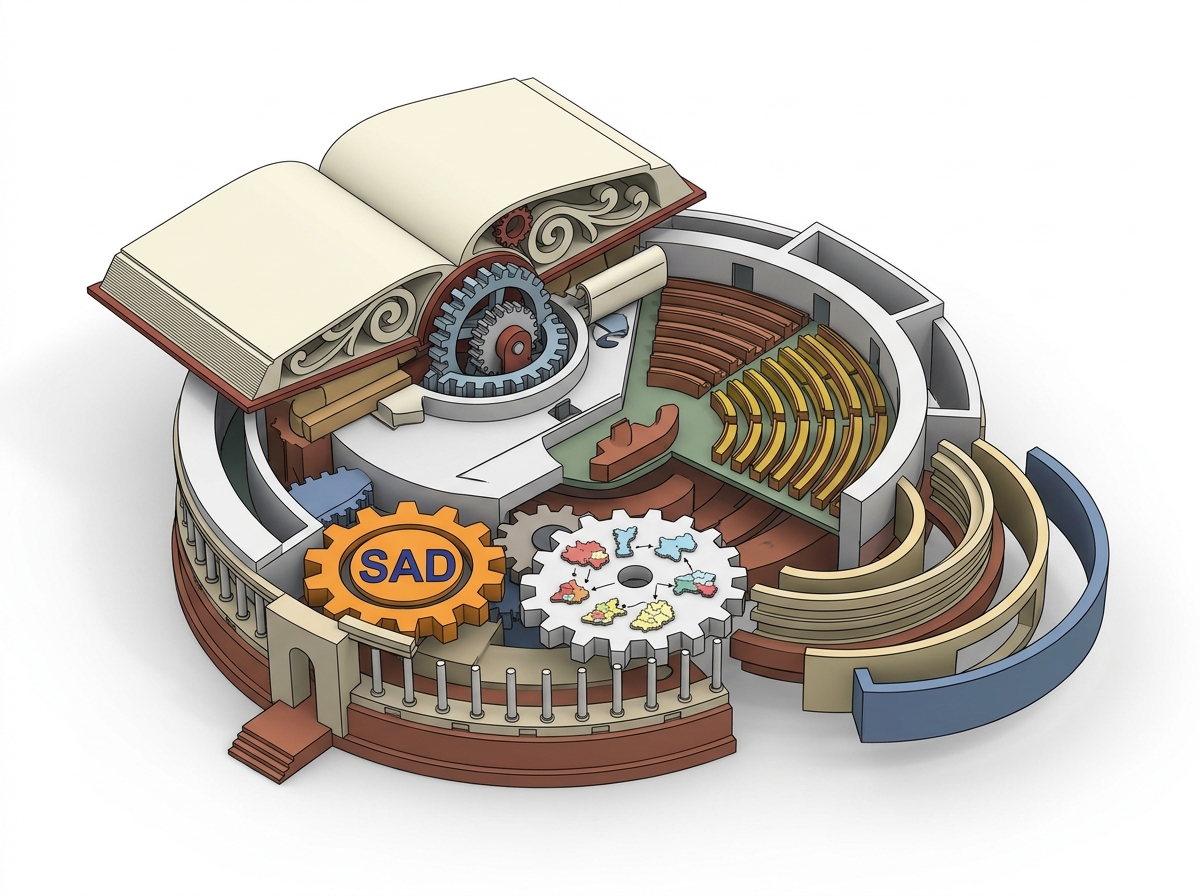
✎ The Women’s Reservation Bill (128th Amendment) reserves 33% of seats in Lok Sabha and State Legislatures for women, contingent on delimitation post-census; SAD’s recent support highlights the intersection of constitutional…
Subject Relevance — Where This Topic Fits
- GS Paper II — Constitutional Framework, Parliament and State Legislatures, Issues Relating to Development and Management of Social Sector/Services relating to Health, Education, Human Resources
- Prelims: 103rd Constitutional Amendment Act, 2019, Delimitation Commission, Women’s Reservation in Panchayats and Municipalities, Article 330A and 332A, Sikh Gurus’ teachings on gender equality
- Essay: Gender Equality as a Pillar of Inclusive Development, Federalism and Centre-State Relations in Legislative Reforms
Quick Revision: The Women’s Reservation Bill (128th Amendment) reserves 33% of seats in Lok Sabha and State Legislatures for women, contingent on delimitation post-census; SAD’s recent support highlights the intersection of constitutional reform, federalism, and electoral strategy.
Why is this in the news?
The Shiromani Akali Dal (SAD) has publicly endorsed the Women’s Reservation Bill and supported the Centre’s proposal to increase parliamentary seats by 50% across states, contingent upon the simultaneous implementation of delimitation. This endorsement, articulated by SAD leader Gulzar Singh Ranike and party president Sukhbir Singh Badal, marks a significant shift in the party’s stance and reflects broader political realignments ahead of the 2024 Lok Sabha elections. The demand for immediate implementation of the Bill, coupled with the emphasis on fair delimitation, underscores the intersection of constitutional reform, federalism, and electoral strategy.
Background
- The Women’s Reservation Bill, officially known as the Constitution (108th Amendment) Bill, was first introduced in the Rajya Sabha in 2008. It lapsed with the dissolution of the 14th Lok Sabha. It seeks to reserve one-third of seats in the Lok Sabha and State Legislative Assemblies for women, and in the Legislative Assembly of the National Capital Territory of Delhi.
- The Bill was introduced in the Lok Sabha in September 2023 as the Constitution (128th Amendment) Bill, 2023 and passed by both Houses in September 2023. However, its implementation is contingent upon the completion of delimitation, which has been delayed due to the absence of fresh census data post-2011.
- Delimitation refers to the process of redrawing the boundaries of parliamentary and assembly constituencies to reflect changes in population. The last delimitation exercise was conducted in 2002 based on the 1991 census data for the purpose of readjusting the number of seats and their reservation for SC/STs, and on the 2001 census data for the purpose of redrawing constituency boundaries.
- The SAD has stated that it supports the Women’s Reservation Bill.
Women’s Reservation Bill and Delimitation: Constitutional and Political Dimensions
- The Women’s Reservation Bill aims to reserve 33% of seats in the Lok Sabha and State Legislative Assemblies for women, ensuring greater political representation. This is a critical step toward achieving gender parity in governance, as women constitute nearly 48% of India’s population but hold less than 15% of parliamentary seats.
- The Bill is rooted in the constitutional principle of equality (Articles 14, 15, and 16) and seeks to address systemic gender disparities in political participation. It is also aligned with India’s commitments under the United Nations Sustainable Development Goal 5 (Gender Equality).
- Delimitation is a constitutional process (Article 82 and 170) that redraws constituency boundaries based on the latest census data. The 2021 census, originally scheduled for 2021, has been delayed.
- The linkage between the Women’s Reservation Bill and delimitation is critical. The Bill mandates that reservation for women be implemented only after delimitation is completed, as the reservation would be rotational and require reallocation of seats. This creates a procedural bottleneck, as delimitation cannot proceed without fresh census data.
- The SAD’s support for the Bill is significant given its historical opposition. The party’s endorsement reflects a pragmatic shift to align with national political narratives while addressing regional electoral imperatives.
- The Bill includes provisions for sub-reservation for women from Scheduled Castes (SCs) and Scheduled Tribes (STs), ensuring that the benefits of reservation are extended to marginalised sections within the women’s category. This addresses intersectional concerns of caste and gender.
- Critics argue that the Bill’s implementation could be delayed indefinitely due to the delimitation impasse, while proponents contend that it is a necessary step toward inclusive governance. The SAD’s demand for immediate implementation underscores the urgency of addressing this procedural hurdle.
- The Bill’s passage in Parliament was a landmark achievement, reflecting cross-party consensus on gender representation. However, its implementation remains a challenge, requiring coordination between the Centre, states, and the Delimitation Commission.
Key Features
| Feature | Significance |
|---|---|
| Women’s Reservation Bill (128th Constitutional Amendment Bill, 2023) | Seeks to reserve one-third of seats in the Lok Sabha and State Legislative Assemblies for women, including SC/ST sub-reservation within the women’s quota. |
| Delimitation Process | Redrawing of electoral boundaries based on the latest census data to ensure equitable representation; linked to the Women’s Reservation Bill as its operational prerequisite. |
| Shiromani Akali Dal (SAD) Support | Explicit endorsement of both the Women’s Reservation Bill and the delimitation process, citing public interest and alignment with Sikh principles of gender equality. |
| 50% Increase in Parliamentary Seats | Proposed expansion of Lok Sabha seats by 50% across all states to accommodate the delimitation process without altering the existing seat distribution ratios. |
| SAD-Sikh Gurudwara Linkage | Reference to Sikh Gurus’ teachings on gender equality and dignity, used to justify the party’s stance on women’s political representation. |
Why it Matters
Political Representation
- Advances gender parity in legislative bodies, addressing the historical under-representation of women in Indian politics (current ~15% in Lok Sabha).
- Aligns with global benchmarks, such as the UN Sustainable Development Goal 5 (Gender Equality), and India’s commitments under international conventions.
- Potential to reshape electoral dynamics by incentivizing parties to field more women candidates, thereby normalizing their political participation.
Constitutional Governance
- Reinforces the principle of ‘equal opportunity’ enshrined in the Preamble and Fundamental Rights (Articles 14, 15, and 16), though reservations are an exception to formal equality.
- Demonstrates the Parliament’s capacity to legislate on structural reforms in electoral democracy, albeit with delayed implementation.
Socio-Cultural Impact
- Legitimizes women’s leadership in public life, potentially influencing societal attitudes toward gender roles and political empowerment.
- Encourages grassroots mobilization of women in political processes, fostering long-term democratic resilience.
Federalism and State Autonomy
- Highlights the interplay between central legislation (Women’s Reservation Bill) and state-level implementation (delimitation), raising questions about cooperative federalism.
- Exemplifies how national policies can be tailored to regional contexts, as seen in SAD’s emphasis on Punjab’s interests.
Challenges
1. Implementation Delay and Uncertainty
- The Bill’s operationalisation hinges on the completion of delimitation, which is contingent upon the conduct of the next Census and subsequent data processing—a process historically delayed.
- Lack of a fixed timeline for implementation risks diluting the legislative intent, as seen with the 73rd and 74th Constitutional Amendments (1993) on local body reservations, which took over a decade to fully implement.
UPSC Link: GS-II: Constitutional and Non-Constitutional Bodies
2. Political and Electoral Concerns
- Potential resistance from political parties accustomed to male-dominated candidate selection, despite formal support for the Bill.
- Risk of delimitation exacerbating inter-state disparities if not conducted with rigorous fairness and transparency, leading to perceptions of bias.
UPSC Link: GS-II: Electoral Reforms
3. Legal and Procedural Hurdles
- Challenges in defining the sub-quota for SC/ST women within the women’s reservation, which may face judicial scrutiny for potential violation of equality principles.
- Need for consensus among states on the delimitation process, given the diversity in demographic patterns and political priorities.
UPSC Link: GS-II: Judiciary and Constitutional Provisions
4. Socio-Economic Disparities
- Uneven impact across states, with economically weaker regions potentially facing greater challenges in integrating women into political processes due to lower literacy rates or entrenched social norms.
- Risk of tokenism if women’s representation is confined to reserved seats without addressing systemic barriers to their participation in mainstream politics.
UPSC Link: GS-I: Social Empowerment
5. Coalition Dynamics and Partisan Politics
- SAD’s conditional support (tying implementation to delimitation) reflects broader coalition politics, where regional parties may prioritise state-specific agendas over national reforms.
- Potential for political bargaining to delay or dilute the Bill’s implementation, as seen in past instances of coalition governance.
UPSC Link: GS-II: Federalism and Centre-State Relations
Challenges — UPSC Perspective
| Issue | Concern |
|---|---|
| Census and Data Lag | The next Census is scheduled for 2026, but delays in data collection and processing could postpone delimitation beyond 2029, further delaying the Bill’s implementation. |
| Inter-State Disparities in Delimitation | Variations in population growth rates across states may lead to unequal seat adjustments, necessitating robust mechanisms to ensure fairness. |
| Judicial Scrutiny of Sub-Quotas | The legality of sub-reservations for SC/ST women within the women’s quota may be challenged on grounds of exceeding the 50% reservation cap (Indra Sawhney case). |
| Political Resistance to Change | Parties may resist fielding women candidates in unreserved seats, undermining the Bill’s long-term impact on political culture. |
| Resource Allocation for Women Candidates | Limited funding and support systems for women in politics may hinder their effective participation, even after reservation is implemented. |
| Public Perception and Awareness | Low awareness among women voters and candidates about the Bill’s provisions could reduce its intended impact on political empowerment. |
Way Forward
- Constitute a multi-stakeholder committee (including Election Commission, NITI Aayog, and state representatives) to finalise a transparent and time-bound roadmap for delimitation, aligned with the next Census.
- Amend the Representation of the People Act, 1951, to include explicit provisions for the sub-quota of SC/ST women within the women’s reservation, ensuring legal robustness.
- Launch nationwide awareness campaigns in collaboration with civil society organisations to educate women voters and candidates about the Bill’s provisions and their rights.
- Strengthen institutional support for women in politics through capacity-building programmes, mentorship initiatives, and financial assistance schemes (e.g., enhanced election funding for women candidates).
- Establish a monitoring mechanism under the Election Commission to track the implementation progress and address grievances related to delimitation and reservation.
- Encourage political parties to adopt internal gender quotas for candidate selection beyond reserved seats, fostering a culture of inclusion.
- Conduct periodic reviews of the Bill’s impact on gender representation in legislatures, with recommendations for mid-course corrections if necessary.
UPSC Value Addition
Keywords for Mains Answer-Writing
Women’s Reservation Bill 2023 · Constitution (106th Amendment) Act · Article 334A · Delimitation Commission · Women’s Political Representation · Sikh Gurus’ Teachings on Gender Equality · Shiromani Akali Dal (SAD) · Political Empowerment · Social Justice · Parliamentary Democracy · Representative Democracy · Gender Justice · Reservations in Legislatures · Constitutional Amendments · Federalism · Political Parties and Gender Inclusion
Constitutional & Policy Linkages
- {‘article’: ‘Article 14 (Right to Equality)’, ‘note’: ‘Equality before law and equal protection of laws.’}
- {‘article’: ‘Article 15(3)’, ‘note’: ‘Empowers state to make special provisions for women.’}
- {‘article’: ‘Article 243D (Panchayats)’, ‘note’: ‘One-third reservation for women in local bodies.’}
- {‘article’: ‘Article 243T (Municipalities)’, ‘note’: ‘One-third reservation for women in urban local bodies.’}
- {‘article’: ‘Article 326’, ‘note’: ‘Adult suffrage and electoral democracy.’}
Concept Flow
Women’s Reservation Bill introduced in Parliament → Requires delimitation for operationalisation → Delimitation delayed due to Census and data processing → SAD supports Bill and delimitation, citing public interest and Sikh principles → Potential resistance from political parties and legal challenges → Need for transparent implementation roadmap → Long-term impact on gender parity in politics.
Prelims Practice Questions
Q1. Consider the following statements regarding the Women’s Reservation Bill 2023:
1. The Bill seeks to reserve one-third of the seats for women in the Lok Sabha and State Legislative Assemblies.
2. The reservation will be implemented immediately after the Bill is passed.
3. The Bill amends Article 334A of the Constitution to extend the reservation for women in legislatures.
4. The reservation will be implemented after the delimitation process is completed.
How many of the above statements are correct?
- Only one
- Only two
- Only three
- All four
Answer: All four — Statements 1, 3, and 4 are correct. The Women’s Reservation Bill 2023 seeks to reserve one-third of the seats for women in the Lok Sabha and State Legislative Assemblies (Statement 1). The reservation will be implemented after the delimitation process is completed (Statement 4). The Bill amends Article 334A to extend the reservation for women in legislatures (Statement 3). Statement 2 is incorrect as the reservation will not be implemented immediately after the Bill is passed; it depends on the completion of the delimitation process.
Q2. Assertion (A): The Women’s Reservation Bill 2023 aims to ensure gender parity in political representation.
Reason (R): The Bill reserves one-third of the seats for women in the Lok Sabha and State Legislative Assemblies.
- Both A and R are true, and R is the correct explanation of A.
- Both A and R are true, but R is not the correct explanation of A.
- A is true, but R is false.
- A is false, but R is true.
Answer: Both A and R are true, but R is not the correct explanation of A. — Both the Assertion (A) and Reason (R) are true. The Women’s Reservation Bill 2023 aims to ensure gender parity in political representation by reserving one-third of the seats for women in the Lok Sabha and State Legislative Assemblies (Statement R). The Reason (R) correctly explains the Assertion (A).
Q3. Which of the following Articles of the Indian Constitution is amended by the Women’s Reservation Bill 2023 to extend the reservation for women in legislatures?
- Article 330
- Article 332
- Article 334A
- Article 335
Answer: Article 334A — The Women’s Reservation Bill 2023 amends Article 334A of the Indian Constitution to extend the reservation for women in legislatures. Article 334A was inserted by the Constitution (73rd Amendment) Act, 1992, and the Constitution (84th Amendment) Act, 2001, to provide for the reservation of seats for women in Panchayats and Municipalities, respectively.
Mains Practice Question
✍ The Women’s Reservation Bill 2023, which seeks to reserve one-third of the seats for women in the Lok Sabha and State Legislative Assemblies, remains pending for implementation despite its constitutional mandate. Critically examine the constitutional, political, and socio-cultural dimensions of this delay. Also, assess the role of political parties in advancing or obstructing gender justice in this context. (15 Marks)
Approach: Constitutional Mandate: Briefly explain the provisions of the Women’s Reservation Bill 2023, including the amendment to Article 334A and the timeline for implementation (delimitation process). Political Dimensions: Discuss the role of political parties, including the Shiromani Akali Dal’s recent stance, in either advancing or obstructing the Bill’s implementation. Highlight the federal and coalition dynamics in Parliament. Socio-Cultural Dimensions: Analyze the socio-cultural barriers to women’s political participation, including patriarchal norms, lack of family support, and violence against women in politics. Reference the Sikh Gurus’ teachings on gender equality as highlighted by the SAD. Judicial and Institutional Dimensions: Examine the role of the Judiciary and the Delimitation Commission in ensuring the Bill’s implementation. Reference any relevant Supreme Court judgments or constitutional principles. Way Forward: Suggest measures to expedite the implementation of the Bill, including political consensus, public awareness campaigns, and institutional reforms to empower women in politics. Balanced View: Present both the arguments in favor of immediate implementation (social justice, constitutional mandate) and the arguments against (political resistance, federal concerns, delimitation challenges).
Source: amarujala.com
Generated by AanyaAi for educational purpose.

- मद्रास उच्च न्यायालय में 15 नए न्यायाधीशों ने ली शपथ, कार्यबल बढ़कर 66 हुआ - August 9, 2026
- 15 New Judges Sworn In: Madras HC Strength Rises to 66 - August 9, 2026
- एआई से भारत में स्वास्थ्य सेवाओं की कमी दूर करने की संभावना: रिपोर्ट - August 9, 2026

No Comments