


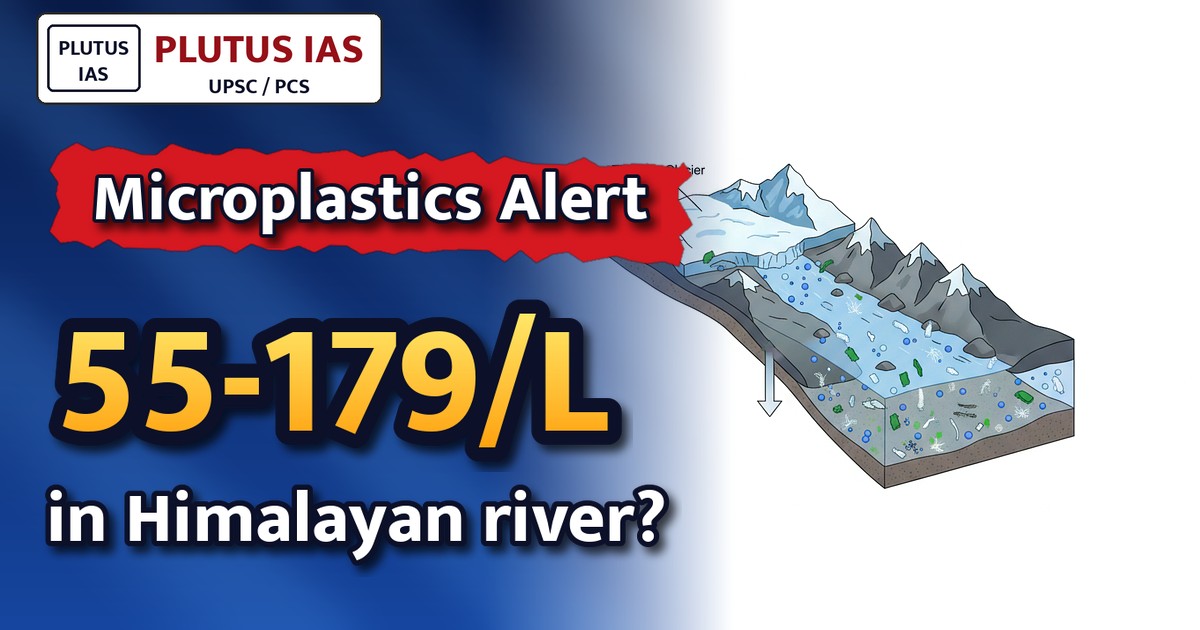
28 Sep UPSC Alert: Microplastic Pollution Found in Himachal’s Uhl River Study
✎ Microplastics (<5 mm) in Himalayan rivers originate from plastic waste fragmentation, synthetic textiles, and agricultural runoff, and are identified using FT-IR spectroscopy; their persistence and toxicity pose severe risks to…
Subject Relevance — Where This Topic Fits
- GS Paper III — Environment and Ecology (Environmental Pollution and Degradation, Conservation, Environmental Impact Assessment)
- Prelims: Microplastics, Plastic Waste Management Rules 2016, E-Waste (Management) Rules 2022, National Mission for Clean Ganga (NMCG), Himalayan Ecosystems, FT-IR Spectroscopy, River Basin Management, Sustainable Development Goals (SDG 6, 12, 14)
- Essay: Environmental Pollution: A Silent Threat to Himalayan Biodiversity, Balancing Development and Conservation: The Case of Plastic Pollution in Pristine Ecosystems
Quick Revision: Microplastics (<5 mm) in Himalayan rivers originate from plastic waste fragmentation, synthetic textiles, and agricultural runoff, and are identified using FT-IR spectroscopy; their persistence and toxicity pose severe risks to freshwater ecosystems and human health.
Why is this in the news?
A recent study published in *Discover Environment* (23 September 2026) has documented the presence of microplastic pollution in the Uhl River, a Himalayan freshwater system originating from the Thamsar Glacier in Himachal Pradesh. The study highlights the alarming penetration of microplastics—including polymers like polystyrene, polyethylene, polypropylene, PVC, and PET—into remote Himalayan regions, with concentrations ranging from 55–116 particles per litre in water and 89–179 particles per kilogram in sediment. This underscores the transboundary and persistent nature of plastic pollution, even in ecologically sensitive areas.
Background
- Microplastics, defined as plastic particles smaller than 5 mm, are a global environmental concern due to their persistence, toxicity, and ability to bioaccumulate in aquatic and terrestrial ecosystems.
- The Himalayas, often referred to as the ‘Third Pole,’ are a critical freshwater source for millions, housing glaciers that feed major river systems like the Ganga, Yamuna, and Indus.
- Plastic pollution in the Himalayas is exacerbated by tourism, agricultural runoff, and inadequate waste management infrastructure in high-altitude regions.
- India generates approximately 3.3 million tonnes of plastic waste annually (CPCB, 2022), with only about 60% being collected and processed, leading to widespread environmental contamination.
- The Plastic Waste Management Rules, 2016 (amended in 2022), mandate Extended Producer Responsibility (EPR) for plastic waste management, but enforcement remains uneven, particularly in remote areas.
- Microplastics have been detected in glaciers, rivers, and even the Arctic, indicating their global distribution via atmospheric and hydrological pathways.
What are Microplastics and How Do They Pollute Himalayan Rivers?
- Microplastics are synthetic polymer particles <5 mm in size, originating from the breakdown of larger plastics, synthetic textiles, cosmetics, and industrial processes.
- Primary microplastics include microbeads (used in cosmetics) and synthetic fibres (from laundry), while secondary microplastics form from the fragmentation of larger plastic debris due to UV radiation, mechanical abrasion, and chemical degradation.
- In the Uhl River study, microplastics were predominantly fragments (83.16% in water, 87.61% in sediment), followed by fibres and thin films, indicating sources such as plastic packaging, agricultural mulching, and synthetic textiles.
- Microplastics enter Himalayan rivers through multiple pathways: surface runoff from agricultural fields (plastic mulching, fertilisers), wastewater discharge from settlements, tourism-related littering, and atmospheric deposition from distant sources.
- The study used FT-IR spectroscopy to identify polymer types, revealing the presence of polystyrene (used in packaging), polyethylene (bags, bottles), polypropylene (food containers), PVC (pipes), and PET (bottles), confirming anthropogenic origins.
- Microplastics act as vectors for persistent organic pollutants (POPs) and heavy metals, which can bioaccumulate in aquatic organisms, disrupting food chains and posing risks to human health via contaminated water and fish consumption.
- Himalayan glaciers, such as the Thamsar Glacier, are particularly vulnerable to microplastic deposition due to their role as freshwater sources and their sensitivity to climate change-induced meltwater dynamics.
- Dams and reservoirs, such as those in the Uhl River basin, can alter microplastic distribution by trapping particles in sediments or redistributing them downstream, potentially exacerbating pollution in specific zones.
Key Features
| Feature | Significance |
|---|---|
| Microplastic detection in Uhla River | Presence confirmed in water and sediment at three sites (Kukkar Dhunga, Zero Point, Barot), indicating widespread contamination even in remote Himalayan regions. |
| Types of microplastics identified | Polystyrene, polyethylene, polypropylene, PVC, and PET polymers detected via FT-IR spectroscopy, revealing diverse sources of pollution. |
| Quantitative distribution | Microplastic concentration ranges from 55–116 particles per litre (water) and 89–179 particles per kg (sediment), with highest levels at Zero Point. |
| Particle morphology | Tubular fragments dominate (83.16% in water, 87.61% in sediment), followed by fibres and thin films, suggesting breakdown of larger plastic waste. |
| Color distribution | Colorless (41.08–42.26%) and blue (39.73–38.72%) particles most prevalent, indicating potential aesthetic and ecological impacts on aquatic ecosystems. |
Why it Matters
Environmental Impact
- Demonstrates the transboundary nature of plastic pollution, affecting pristine Himalayan ecosystems far from urban centres.
- Highlights the persistence of microplastics in river sediments, posing long-term risks to aquatic biodiversity and food chains.
- Underscores the vulnerability of glacial-fed rivers, which serve as critical freshwater sources for downstream communities.
Scientific & Research Implications
- Provides baseline data on microplastic pollution in Himalayan rivers, enabling future comparative studies and trend analysis.
- Validates FT-IR spectroscopy as a reliable method for identifying polymer types in environmental samples, aiding pollution source tracking.
Policy & Governance
- Reinforces the need for integrated river basin management plans to address plastic waste at source, including upstream interventions.
- Illustrates the role of dams (e.g., Barot) in altering microplastic distribution, necessitating infrastructure-specific mitigation strategies.
Challenges
1. Source Attribution and Prevention
- Identifying primary sources of microplastics (e.g., agricultural runoff, domestic waste, tourism) in remote Himalayan regions remains challenging due to limited monitoring infrastructure.
- Lack of standardized protocols for microplastic sampling and analysis in Indian river systems hampers comparability across studies.
UPSC Link: Environmental Pollution: Causes, Effects and Control
2. Technological and Logistical Constraints
- High costs and technical expertise required for advanced analytical tools (e.g., FT-IR spectroscopy) limit widespread adoption in regional laboratories.
- Difficult terrain and seasonal access constraints in Himalayan regions impede continuous monitoring and data collection.
UPSC Link: Science and Technology: Developments and Applications
3. Regulatory and Enforcement Gaps
- Existing plastic waste management rules (e.g., Plastic Waste Management Rules, 2016) face implementation challenges in remote areas due to logistical and awareness barriers.
- Weak enforcement of waste segregation and disposal norms at the community level exacerbates microplastic contamination.
UPSC Link: Environmental Laws and Policies in India
4. Ecosystem and Health Risks
- Bioaccumulation of microplastics in aquatic organisms may enter the food chain, posing potential risks to human health and wildlife.
- Long-term ecological impacts on Himalayan biodiversity, including endangered species, remain poorly understood and require further research.
UPSC Link: Environmental Conservation and Biodiversity
Challenges — UPSC Perspective
| Issue | Concern |
|---|---|
| Limited source tracking | Difficulty in pinpointing exact origins of microplastics due to multiple potential inputs (tourism, agriculture, waste disposal). |
| Monitoring infrastructure gaps | Sparse real-time data collection points and lack of standardized protocols for microplastic assessment in Indian rivers. |
| Regulatory enforcement challenges | Poor compliance with plastic waste management rules in remote Himalayan regions due to logistical and socio-economic barriers. |
| Ecological and health unknowns | Insufficient data on the long-term impacts of microplastics on Himalayan ecosystems and human health. |
| Technological barriers | High costs and expertise requirements for advanced analytical methods limit widespread adoption in regional laboratories. |
Way Forward
- Strengthen inter-state and inter-ministerial coordination (e.g., between MoEFCC, CPCB, and state pollution control boards) to develop a Himalayan river-specific microplastic monitoring framework.
- Invest in low-cost, portable microplastic detection technologies and capacity-building programs for regional laboratories and research institutions.
- Implement community-based waste management initiatives in Himalayan villages, focusing on plastic waste segregation and reduction at source.
- Integrate microplastic pollution control measures into existing river basin management plans, such as the National Mission for Clean Ganga (NMCG) for Himalayan tributaries.
- Conduct targeted studies to identify the dominant sources of microplastics in the Uhla River basin, using isotopic tracing and source apportionment techniques.
- Enhance public awareness campaigns on the ecological impacts of plastic pollution, leveraging local institutions and educational programs in Himalayan regions.
- Develop infrastructure-specific mitigation strategies, such as sediment traps at dams (e.g., Barot) to reduce microplastic downstream transport.
UPSC Value Addition
Keywords for Mains Answer-Writing
Microplastic pollution · Himalayan river ecosystems · Plastic waste management · Environmental governance · Sustainable development · Ecosystem services · Pollution control mechanisms · Remote Himalayan regions · Plastic polymer types · Environmental impact assessment
Concept Flow
Anthropogenic plastic waste generation in urban and rural areas → Transport and fragmentation of plastics via rivers and glacial meltwater → Deposition and accumulation of microplastics in Himalayan river sediments → Bioavailability and potential bioaccumulation in aquatic organisms → Ecological disruption and long-term risks to biodiversity and human health
Prelims Practice Questions
Q1. Consider the following statements regarding microplastic pollution in aquatic ecosystems:
1. Microplastics are defined as plastic particles smaller than 5 mm in size.
2. Polyethylene and polypropylene are common polymers found in microplastic pollution.
3. Microplastics are primarily sourced from industrial effluents and do not originate from domestic activities.
4. The presence of microplastics in remote Himalayan regions indicates limited human influence.
How many of the above statements are correct?
- Only one
- Only two
- Only three
- All
Answer: Only three — Statements 1 and 2 are correct. Microplastics are indeed particles smaller than 5 mm, and polyethylene and polypropylene are prevalent polymers. Statement 3 is incorrect as microplastics can originate from both industrial and domestic sources. Statement 4 is incorrect because the presence of microplastics in remote Himalayan regions suggests widespread contamination beyond localised human influence.
Q2. Assertion (A): The presence of microplastics in the Uhl River, originating from the Thamsar Glacier, indicates that plastic pollution has reached even the most remote Himalayan regions.
Reason (R): Microplastics are transported through glacial meltwater and atmospheric deposition, facilitating their spread to pristine environments.
Codes:
A. Both A and R are true, and R is the correct explanation of A.
B. Both A and R are true, but R is not the correct explanation of A.
C. A is true, but R is false.
D. A is false, but R is true.
- A
- B
- C
- D
Answer: A — Both the assertion and reason are true. Microplastics are indeed transported through glacial meltwater and atmospheric deposition, which explains their presence in remote Himalayan regions like the Uhl River basin.
Q3. Match the following polymer types with their common sources of microplastic pollution:
Column I (Polymer Type) | Column II (Common Source)
1. Polyethylene (PE) | A. Single-use plastic bags
2. Polypropylene (PP) | B. Packaging materials
3. Polyvinyl Chloride (PVC) | C. Synthetic textiles
4. Polyethylene Terephthalate (PET) | D. Pipes and construction materials
Choose the correct match:
- 1-A, 2-B, 3-D, 4-C
- 1-B, 2-A, 3-D, 4-C
- 1-A, 2-B, 3-C, 4-D
- 1-B, 2-A, 3-C, 4-D
Answer: 1-A, 2-B, 3-D, 4-C — Polyethylene (PE) is commonly used in single-use plastic bags, Polypropylene (PP) in packaging materials, Polyvinyl Chloride (PVC) in pipes and construction materials, and Polyethylene Terephthalate (PET) in synthetic textiles.
Mains Practice Question
✍ Microplastic pollution in Himalayan river ecosystems poses a significant threat to biodiversity and ecosystem services. Critically examine the sources, transport mechanisms, and ecological impacts of microplastic pollution in such remote regions. Also, suggest policy measures to mitigate this menace. (15 Marks)
Approach: MODEL-ANSWER SKELETON:
1. **Introduction (2 Marks)**
– Define microplastics and their classification (primary vs. secondary microplastics).
– Briefly highlight the significance of Himalayan river ecosystems as biodiversity hotspots and water sources.
2. **Sources of Microplastic Pollution (3 Marks)**
– Domestic sources: Single-use plastics, synthetic textiles (e.g., polyester clothing), and personal care products.
– Agricultural sources: Use of plastic mulching films and synthetic fertilisers/pesticides.
– Industrial sources: Plastic manufacturing units, packaging waste, and effluents.
– Tourist and pilgrimage activities: Plastic litter in high-altitude regions.
3. **Transport Mechanisms (3 Marks)**
– Glacial meltwater: Transport of microplastics from glaciers to river systems (e.g., Thamsar Glacier to Uhl River).
– Atmospheric deposition: Long-range transport of microplastics via wind currents.
– Riverine transport: Movement of microplastics through river networks to downstream ecosystems.
– Human activities: Improper waste disposal and lack of waste management infrastructure.
4. **Ecological Impacts (4 Marks)**
– Bioaccumulation and biomagnification: Entry into food chains via ingestion by aquatic organisms.
– Toxicity: Chemical leaching from microplastics (e.g., additives like phthalates, bisphenol A).
– Physical harm: Ingestion by aquatic fauna leading to digestive blockages and reduced reproductive success.
– Disruption of ecosystem services: Contamination of drinking water sources and impact on fisheries.
5. **Policy Measures (3 Marks)**
– Strengthening of the **Plastic Waste Management Rules, 2016**, and **Swachh Bharat Mission** to enforce source segregation and recycling.
– Promotion of **alternative materials** (e.g., biodegradable plastics, natural fibres) and **extended producer responsibility (EPR)** for plastic manufacturers.
– Implementation of **river basin management plans** with a focus on microplastic monitoring and control.
– Public awareness campaigns targeting tourists, pilgrims, and local communities.
– Research and development: Funding for studies on microplastic transport and impacts in Himalayan ecosystems.
6. **Conclusion (2 Marks)**
– Emphasise the need for a multi-stakeholder approach involving government, industries, and civil society.
– Highlight the role of international cooperation (e.g., Basel Convention) in addressing transboundary plastic pollution.
Source: amarujala.com
Himachal Pradesh PCS (HPPSC (HAS)) — State PCS Practice
Prelims: Which river in Himachal Pradesh has been recently reported to be contaminated with microplastics, even in its remote Himalayan stretches?
- A. Sutlej
- B. Beas
- C. Uhl
- D. Chenab
Answer: C. Uhl — The Uhl River in Himachal Pradesh has been identified as contaminated with microplastics, including in its remote Himalayan regions.
Mains: Discuss the environmental and ecological implications of microplastic pollution in Himalayan rivers like the Uhl in Himachal Pradesh. Suggest measures to mitigate this issue while balancing developmental needs.
Generated by AanyaAi for educational purpose.
Related guides on our sites
- How to prepare for GS paper 1 for UPSC CSE mains exam
- Best UPSC coaching for IFOS exam
- Best geography optional coaching
- Best geography optional coaching

- UPSC Alert: Microplastic Pollution Found in Himachal’s Uhl River Study - September 28, 2026
- सुप्रीम कोर्ट में डीजीपी चयन मामला: ओडिशा सरकार को कठघरे में खड़ा किया गया - September 28, 2026
- Delhi’s New Liquor Policy: Key Changes & UPSC Relevance Explained - September 28, 2026

No Comments