


20 Aug UPSC defers Odisha DGP selection: SC intervenes on Prakash Singh norms
Supreme CourtUPSC meetingDGP selection✎ The *Prakash Singh (2006)* judgment mandates that DGPs be selected from a UPSC-empanelled panel of three seniormost officers, with a fixed two-year tenure, to insulate police leadership from political interference.
Subject Relevance — Where This Topic Fits
- GS Paper II — Constitutional and Non-Constitutional Bodies (UPSC) | GS Paper III — Role of Civil Services in a Democracy | GS Paper IV — Ethical Governance and Political Neutrality in Bureaucracy
- Prelims: Prakash Singh vs Union of India (2006), Director General of Police (DGP) selection criteria, UPSC’s role in police appointments, Article 142 of the Constitution, Fixed tenure for DGP, Empanelment of senior officers by UPSC, Acting DGP vs permanent DGP, Constitutional provisions for police independence
- Essay: The doctrine of separation of powers and its application in police administration, Ethical governance: Balancing political accountability and institutional autonomy
Quick Revision: The *Prakash Singh (2006)* judgment mandates that DGPs be selected from a UPSC-empanelled panel of three seniormost officers, with a fixed two-year tenure, to insulate police leadership from political interference.
Why is this in the news?
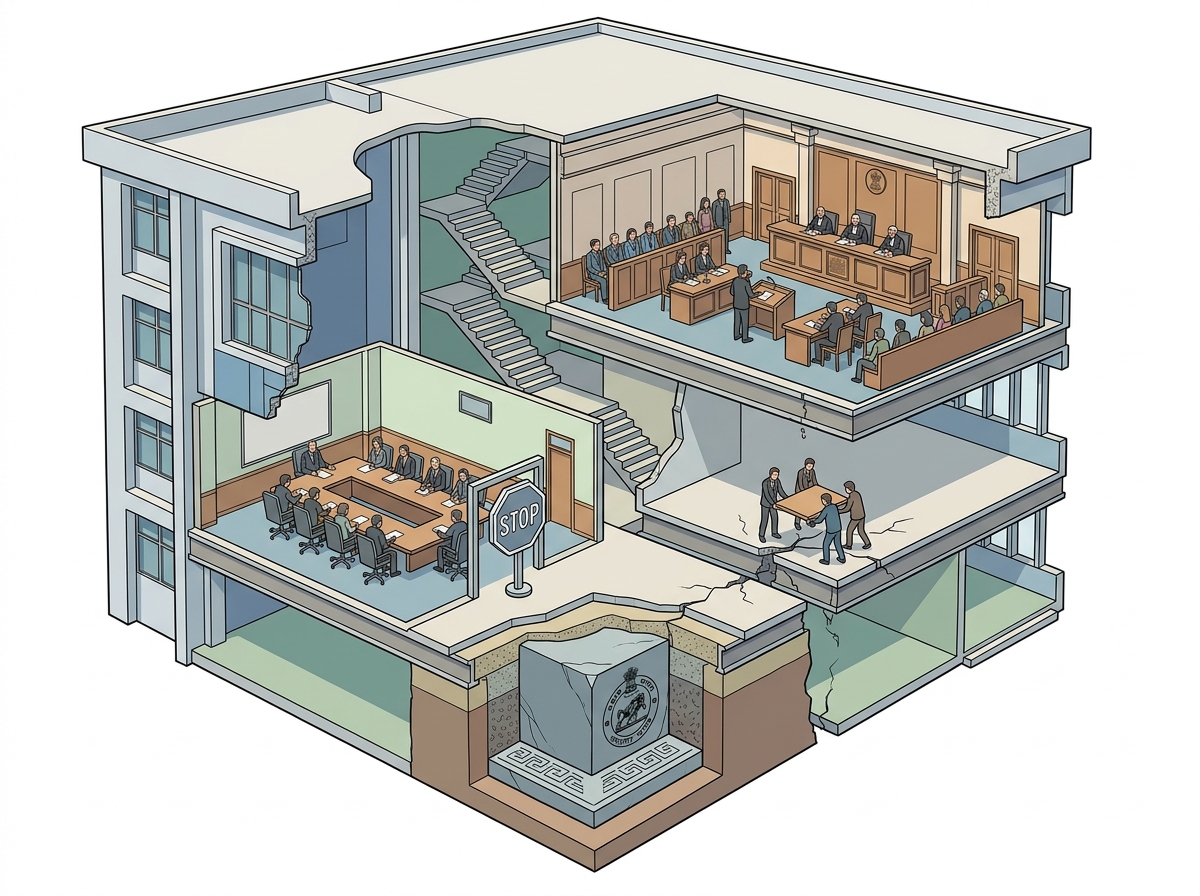
The Supreme Court has intervened in the selection process for the Director General of Police (DGP) in Odisha, deferring a UPSC meeting scheduled to finalise the appointment. The petition alleges that the state government attempted to include a junior officer in the candidate list by granting a premature promotion, potentially violating the Supreme Court’s landmark 2006 judgment in *Prakash Singh vs Union of India*, which established constitutional safeguards for police leadership. The case underscores the tension between political executive actions and judicial directives aimed at ensuring police autonomy and professional integrity.
Background
- The *Prakash Singh vs Union of India* (2006) judgment addressed systemic deficiencies in police administration, including arbitrary postings, transfers, and promotions.
- The judgment directed states to select DGPs from a panel of three seniormost officers empanelled by the UPSC, ensuring meritocracy and reducing political interference.
- Subsequent Supreme Court orders in 2018 and 2019 refined the appointment process, mandating that states submit proposals to the UPSC three months prior to the incumbent DGP’s retirement.
- The UPSC is constitutionally mandated to empanel officers based on seniority and merit, ensuring transparency and objectivity in police leadership selection.
- The concept of ‘acting DGPs’ was abolished, as it allowed temporary placements that could be influenced by political considerations.
- The judgment invoked Article 142 of the Constitution to enforce its directives, highlighting the judiciary’s role in upholding constitutional governance.
What is the Prakash Singh Judgment and its significance for police leadership?
- **Constitutional Mandate for Police Autonomy**: The 2006 judgment established that the office of DGP must be insulated from political or extraneous pressures, ensuring professional integrity and continuity in police administration.
- **Panel-Based Selection**: States are required to select the DGP from a panel of three seniormost officers recommended by the UPSC, eliminating arbitrary appointments and promoting meritocracy.
- **Fixed Tenure**: The judgment mandated a minimum fixed tenure of two years for the DGP, preventing frequent transfers that could disrupt law enforcement and erode institutional trust.
- **Abolition of Acting DGPs**: Temporary or acting DGPs were prohibited, as they allowed political interference in police leadership, undermining the principle of professional autonomy.
- **UPSC’s Role**: The Union Public Service Commission (UPSC) was tasked with empanelling officers based on seniority and merit, ensuring that selections are objective and free from bias.
- **Timely Proposals**: States must submit proposals to the UPSC at least three months before the incumbent DGP’s retirement, allowing sufficient time for empanelment and selection.
- **Judicial Enforcement**: The Supreme Court invoked Article 142 to enforce its directives, demonstrating the judiciary’s proactive role in ensuring constitutional governance in police administration.
- **Impact on Governance**: The judgment reinforced the separation of powers by limiting the executive’s discretion in police appointments, thereby strengthening democratic accountability and institutional independence.
Key Features
| Feature | Significance |
|---|---|
| Prakash Singh judgment (2006) | Established the principle that the DGP post must be insulated from political interference, mandating selection from the top three UPSC-empanelled officers with a fixed two-year tenure. |
| UPSC’s role in DGP selection | Constitutional body responsible for preparing a panel of eligible officers; ensures neutrality and meritocracy in the selection process. |
| Supreme Court’s intervention under Article 142 | Empowers the Court to ensure compliance with its directives when constitutional principles are violated, particularly in matters of police reforms. |
| Fixed tenure for DGP | Ensures operational stability and continuity in police leadership, reducing vulnerability to arbitrary transfers or political pressures. |
| Empanelment of officers by UPSC | Provides a transparent and merit-based shortlisting mechanism, preventing favouritism or arbitrary inclusions in the selection process. |
Why it Matters
Governance and Institutional Integrity
- The Supreme Court’s intervention underscores the judiciary’s role in upholding constitutional principles of neutrality and meritocracy in public appointments.
- The deferral of the Odisha DGP selection meeting highlights the judiciary’s proactive stance in preventing circumvention of established protocols.
- Ensures adherence to the Prakash Singh judgment, which is a landmark in police reform jurisprudence.
- Reinforces the independence of the UPSC as a constitutional body in matters of civil service appointments.
- Demonstrates the judiciary’s commitment to preventing arbitrary promotions or inclusions that could undermine the selection process.
Rule of Law and Judicial Review
- The case exemplifies the judiciary’s power to intervene in executive actions that contravene constitutional or statutory provisions.
- Article 142 of the Constitution empowers the Supreme Court to issue directions necessary for ensuring justice, even in the absence of specific statutory provisions.
- The Court’s scrutiny of the selection process ensures that the rule of law is upheld in matters of public office appointments.
- Judicial review acts as a safeguard against potential misuse of executive authority in sensitive appointments like the DGP.
Police Reforms and Professionalism
- The Prakash Singh judgment is a cornerstone of police reform, aiming to professionalise the police force by insulating it from political interference.
- Fixed tenure and merit-based selection processes enhance the credibility and operational efficiency of the police leadership.
- Ensures continuity in police administration, which is critical for maintaining law and order and public trust in the police force.
- Prevents the politicisation of police appointments, which can erode public confidence in the institution.
Challenges
1. Political Interference in Police Appointments
- Risk of executive overreach in the selection process, particularly in sensitive posts like DGP.
- Potential for arbitrary promotions or inclusions to bypass established protocols.
- Undermines the principles of neutrality and meritocracy in public appointments.
- Erodes public trust in the police force and its institutional integrity.
UPSC Link: GS-II: Role of Judiciary in ensuring good governance
2. Compliance with Supreme Court Directives
- Ensuring that State governments adhere to the Prakash Singh judgment and subsequent directives.
- Preventing circumvention of judicial orders through last-minute actions or promotions.
- Maintaining consistency in the interpretation and implementation of judicial directives across States.
UPSC Link: GS-II: Judicial Review and its significance
3. Operational Continuity in Police Leadership
- Risk of disruptions in police administration due to frequent changes in leadership.
- Need for fixed tenure to ensure stability and continuity in police operations.
- Balancing the need for accountability with the requirement for operational stability.
UPSC Link: GS-III: Challenges in Police Administration
4. Transparency and Meritocracy in Selection Processes
- Ensuring that selection processes are transparent and free from favouritism or nepotism.
- Preventing arbitrary inclusions or exclusions in the empanelment process.
- Maintaining the integrity of the UPSC’s role in preparing the panel of eligible officers.
UPSC Link: GS-II: Role of Constitutional Bodies
Challenges — UPSC Perspective
| Issue | Concern |
|---|---|
| Arbitrary promotions | Risk of last-minute promotions to influence the selection process and bypass established protocols. |
| Circumvention of judicial orders | Potential for State governments to undermine Supreme Court directives through procedural or administrative actions. |
| Political interference | Threat to the neutrality of police appointments, undermining the principles of meritocracy and institutional integrity. |
| Lack of transparency | Possibility of opaque processes in the selection or empanelment of officers, leading to allegations of favouritism. |
| Operational disruptions | Frequent changes in police leadership can disrupt law and order maintenance and erode public confidence. |
| Non-compliance with Prakash Singh directives | Failure to adhere to the Supreme Court’s landmark judgment on police reforms, leading to systemic vulnerabilities. |
Way Forward
- The Supreme Court must ensure strict adherence to the Prakash Singh judgment in the Odisha DGP selection process, including the empanelment of officers by the UPSC and the appointment of the DGP from the top three eligible officers.
- State governments should institutionalise transparent and merit-based selection processes for critical posts like DGP, with clear timelines and protocols.
- The UPSC should strengthen its empanelment process to prevent arbitrary inclusions or exclusions, ensuring a robust and neutral shortlisting mechanism.
- Judicial review mechanisms should be further strengthened to address any circumvention of constitutional or judicial directives in public appointments.
- Police reforms should be accelerated to ensure operational stability, including fixed tenures for key posts and insulation from political interference.
- Public awareness campaigns should be conducted to highlight the importance of neutrality and meritocracy in police appointments.
- State governments should collaborate with the UPSC and judiciary to develop standardised protocols for DGP selections, ensuring consistency across States.
- The judiciary should continue to monitor compliance with its directives in police appointments to uphold constitutional principles.
UPSC Value Addition
Keywords for Mains Answer-Writing
Prakash Singh judgment · Director General of Police (DGP) appointment · Article 142 of the Constitution · Supreme Court directives on police reforms · Union Public Service Commission (UPSC) role · State Police Act · Fixed tenure for DGP · Seniormost officers empanelment · Judicial review of executive actions · Constitutional governance and federalism
Constitutional & Policy Linkages
- Article 142 (Constitutional provisions empowering the Supreme Court to issue directions for ensuring justice)
Concept Flow
Supreme Court’s Prakash Singh judgment (2006) → Mandates fixed tenure and merit-based selection for DGP → State governments must adhere to directives → UPSC empanels top three officers → State selects DGP from the panel → Judicial review ensures compliance → Any circumvention triggers Supreme Court intervention → Deferral of selection meeting to uphold constitutional principles → Reinforcement of rule of law and institutional integrity.
Prelims Practice Questions
Q1. Consider the following statements regarding the appointment of the Director General of Police (DGP) in India:
1. The Supreme Court in the Prakash Singh case directed that the DGP should be selected from among the three seniormost officers empanelled by the UPSC.
2. The State government is required to send a proposal to the UPSC three months before the retirement of the incumbent DGP.
3. The DGP shall have a fixed tenure of two years as per the Supreme Court directives.
4. The concept of acting DGPs is constitutionally mandated.
How many of the above statements are correct?
- Only one
- Only two
- All three
- All four
Answer: All three — Statements 1, 2, and 3 are correct as per the Prakash Singh judgment and subsequent Supreme Court orders. Statement 4 is incorrect because the Supreme Court explicitly rejected the concept of acting DGPs.
Q2. Assertion (A): The Supreme Court invoked Article 142 of the Constitution to direct the appointment process of the DGP.
Reason (R): Article 142 empowers the Supreme Court to pass any order necessary for doing complete justice in any cause or matter pending before it.
Options:
A. Both A and R are true, and R is the correct explanation of A.
B. Both A and R are true, but R is not the correct explanation of A.
C. A is true, but R is false.
D. A is false, but R is true.
Answer: ? — Both A and R are true, and R correctly explains A. The Supreme Court invoked Article 142 to ensure compliance with its directives on DGP appointments.
Mains Practice Question
✍ The Supreme Court’s directives in the Prakash Singh case have sought to insulate the appointment of the Director General of Police (DGP) from extraneous influences. Critically examine the constitutional and institutional safeguards established by the judgment. Also, analyse the extent to which these safeguards have been adhered to in recent State practices. (15 Marks)
Approach: MODEL-ANSWER SKELETON:
1. **Judicial Framework and Constitutional Basis**:
– Article 142 of the Constitution and the Prakash Singh judgment (2006) as the foundational legal basis.
– Key directives: selection from three seniormost officers empanelled by UPSC, fixed tenure of two years, rejection of acting DGPs.
– Subsequent clarifications in 2018 and 2019 (appointment mechanism, timeline for proposals).
2. **Institutional Safeguards**:
– Role of the UPSC in empanelling officers and preparing a panel.
– Requirement for State governments to send proposals three months prior to retirement.
– Independence of the selection process from political interference.
3. **Recent State Practices and Adherence**:
– Case study of Odisha DGP selection controversy (2026) as an example of potential violations.
– Allegations of preemptive promotions and inclusion of junior officers.
– Judicial intervention and deferment of selection meetings.
4. **Critical Analysis**:
– Strengths: Judicial activism in ensuring police accountability and professionalism.
– Limitations: Challenges in enforcement, political pressures, and delays in compliance.
– Comparative perspective: How other States have implemented or circumvented the directives.
5. **Conclusion**:
– Need for stricter adherence to judicial directives.
– Role of the judiciary in monitoring compliance and ensuring systemic reforms.
Source: The Hindu
Generated by AanyaAi for educational purpose.

- UPSC Civil Services (Main) Examination 2026 — Tamil Literature Paper I: Question Paper | Plutus IAS - September 15, 2026
- उत्तराखंड सीएम धामी ने चारधाम यात्रा की ऑनलाइन समीक्षा बैठक की, जानिए तैयारी - September 15, 2026
- UPSC Alert: CM Dhami Reviews Char Dham Yatra 2026 Security & Logistics - September 15, 2026

No Comments