


24 Sep UPSC Exam: Coal Ministry’s Special Campaign 6 for E-Waste & Governance Reforms
✎ Special Campaign 6 (2 Oct–31 Oct 2026) by the Ministry of Coal aims to institutionalise e-waste disposal, scrap management, and workplace modernisation across its offices and PSUs, aligning with E-Waste Rules 2022, Circular…
Subject Relevance — Where This Topic Fits
- GS Paper II — Governance, Constitution, Polity, Social Justice and International Relations (Administrative Reforms and E-Governance) | GS Paper III — Environment, Ecology, Bio-diversity and Climate Change (Waste Management and Circular Economy)
- Prelims: Special Campaign 6, E-waste Management Rules, 2022, Circular Economy, Digital India Mission, Swachh Bharat Mission 2.0, National Green Tribunal (NGT), Public Sector Undertakings (PSUs), Record Management Rules, 1992
- Essay: Sustainable Development: Balancing Growth and Environmental Stewardship, Digital Transformation in Governance: Enhancing Efficiency and Transparency
Quick Revision: Special Campaign 6 (2 Oct–31 Oct 2026) by the Ministry of Coal aims to institutionalise e-waste disposal, scrap management, and workplace modernisation across its offices and PSUs, aligning with E-Waste Rules 2022, Circular Economy principles, and Digital India Mission.
Why is this in the news?
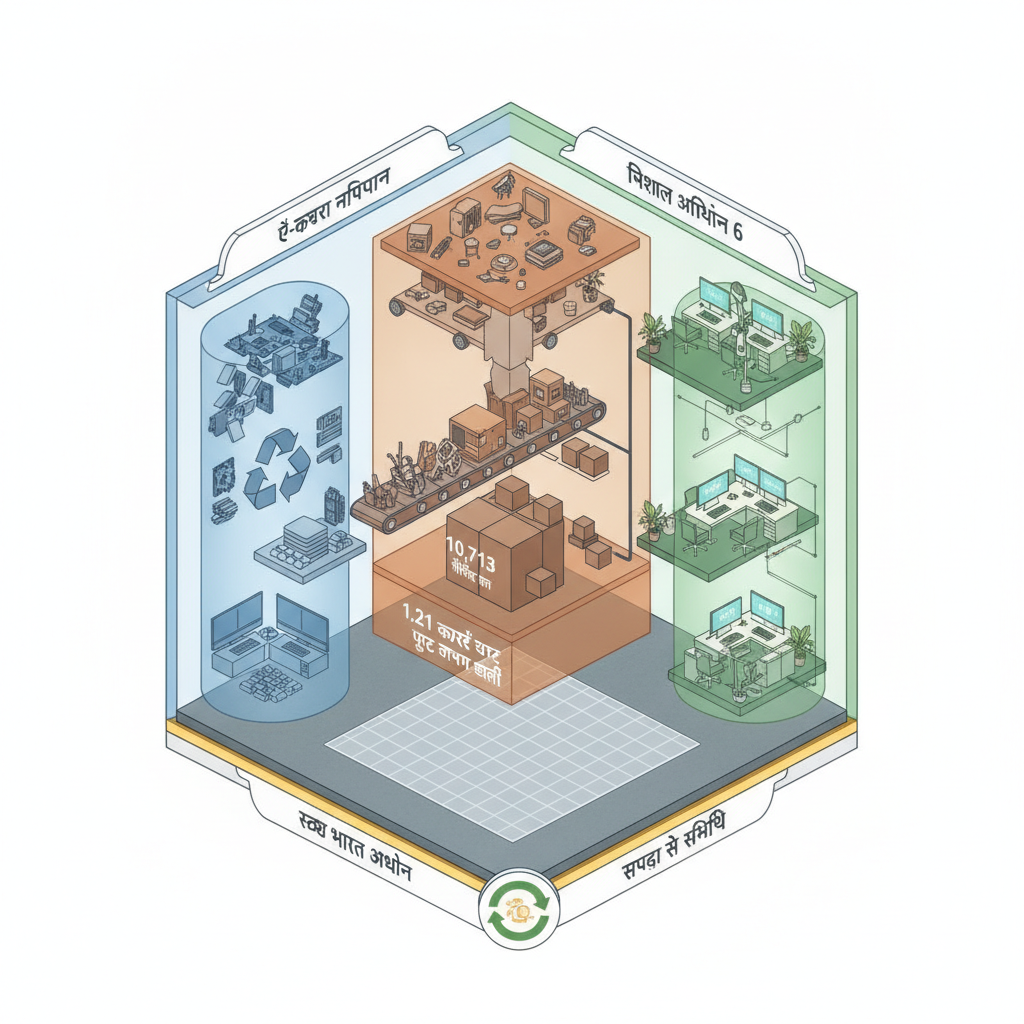
The Ministry of Coal, Government of India, is launching Special Campaign 6 (2 October to 31 October 2026) to institutionalise systematic e-waste disposal, scrap management, and workplace modernisation across its administrative offices and Public Sector Undertakings (PSUs). This initiative aligns with the national vision of transforming waste into wealth and underscores the government’s commitment to sustainable, citizen-centric governance through improved operational efficiency, transparency, and environmental responsibility. The campaign’s preparatory phase has already identified substantial targets, including the clearance of 1.21 crore square feet of space and disposal of 10,713 metric tonnes of scrap.
Background
- The Government of India has prioritised waste management and circular economy principles as key pillars of sustainable development, as reflected in initiatives such as Swachh Bharat Mission 2.0 and the National Clean Air Programme.
- The E-Waste (Management) Rules, 2022, mandate systematic collection, segregation, and environmentally sound disposal of e-waste, emphasising Extended Producer Responsibility (EPR) and formal recycling channels.
- The Ministry of Coal, through its PSUs like Coal India Limited (CIL), Western Coalfields Limited (WCL), and others, operates extensive administrative and operational infrastructure, necessitating robust waste management frameworks.
- Digital India Mission and the National e-Governance Plan (NeGP) aim to reduce physical file movement, enhance accessibility, and promote paperless governance, which this campaign seeks to accelerate.
- The National Green Tribunal (NGT) has repeatedly underscored the need for scientific waste disposal and compliance with environmental norms in public sector operations.
What is Special Campaign 6?
- Special Campaign 6 is a month-long (2 October to 31 October 2026) nationwide initiative led by the Ministry of Coal to institutionalise sustainable waste management, workplace modernisation, and digital transformation across its administrative offices and PSUs.
- The campaign focuses on three core objectives: (a) systematic e-waste collection, segregation, and scientific disposal; (b) scrap and redundant asset management; and (c) modernisation of workplaces through optimal space utilisation and digitalisation.
- E-waste management under the campaign adheres to the E-Waste (Management) Rules, 2022, ensuring compliance with Extended Producer Responsibility (EPR) and formal recycling channels to minimise environmental harm.
- Scrap management involves the identification, disposal, and recycling of redundant assets, including obsolete machinery, furniture, and electronic equipment, to free up valuable space and resources.
- Workplace modernisation includes the digitisation of records, optimisation of office spaces, and adoption of paperless workflows to enhance operational efficiency and transparency.
- The campaign is aligned with the national vision of transforming waste into wealth, promoting a circular economy, and reducing the carbon footprint of government operations.
- Institutional mechanisms such as dedicated task forces, periodic reviews, and public awareness drives (e.g., street plays by WCL) are employed to ensure effective implementation and community engagement.
Key Features
| Feature | Significance |
|---|---|
| Systematic e-waste collection and scientific disposal | Ensures compliance with the E-Waste (Management) Rules, 2022, reducing environmental pollution and promoting circular economy principles. |
| Scrap and redundant asset disposal | Optimises resource utilisation by eliminating non-functional assets, thereby reducing storage costs and enhancing operational efficiency. |
| Modernisation of workspaces | Improves employee productivity, safety, and ergonomics through digital infrastructure upgrades and space reconfiguration. |
| Digitisation acceleration | Facilitates paperless governance, reduces archival burden, and enhances accessibility of official records for citizens and officials alike. |
| Record management reform | Streamlines file handling, accelerates disposal of obsolete records, and improves institutional memory through structured archiving. |
Why it Matters
Governance Efficiency
- Demonstrates commitment to the vision of ‘Waste to Wealth’ by integrating sustainability into administrative processes.
- Enhances transparency and accountability through systematic disposal of redundant assets and digital record-keeping.
- Reduces bureaucratic delays by expediting the resolution of pending references, complaints, and appeals.
Environmental Stewardship
- Aligns with India’s Nationally Determined Contributions (NDCs) under the Paris Agreement by reducing e-waste-induced land and water pollution.
- Promotes the principles of Extended Producer Responsibility (EPR) in public sector enterprises.
- Supports the Swachh Bharat Mission’s objective of creating cleaner and greener workplaces.
Institutional Capacity Building
- Strengthens institutional mechanisms for waste management through inter-departmental coordination and capacity-building exercises.
- Fosters a culture of compliance with environmental and administrative regulations among public sector employees.
- Sets a precedent for other ministries to adopt similar initiatives, promoting uniform governance standards.
Economic Optimisation
- Generates revenue through the sale or recycling of scrap materials, contributing to the ministry’s operational budget.
- Reduces expenditure on storage and maintenance of obsolete assets and records.
- Enhances the marketability of public sector enterprises by demonstrating adherence to modern governance practices.
Challenges
1. Regulatory Compliance and Awareness
- Ensuring uniform adherence to the E-Waste (Management) Rules, 2022 across all administrative offices and PSUs.
- Addressing gaps in awareness among employees regarding the proper segregation, storage, and disposal of e-waste.
- Coordinating with state pollution control boards for certification and monitoring of disposal processes.
UPSC Link: GS-III: Environmental Pollution
2. Logistical and Infrastructure Constraints
- Managing the transportation and disposal of large volumes of scrap and e-waste, particularly in remote or logistically challenging locations.
- Investing in modern waste processing facilities and digital archiving systems to handle the scale of operations.
- Balancing the need for immediate disposal with the requirement for secure data erasure in e-waste containing sensitive information.
UPSC Link: GS-III: Infrastructure
3. Cultural and Behavioural Resistance
- Overcoming institutional inertia and resistance to change among employees accustomed to traditional record-keeping and asset management practices.
- Encouraging a shift towards digital-first governance by addressing concerns about data security and system reliability.
- Promoting behavioural change through training programmes and incentive mechanisms for compliance.
UPSC Link: GS-IV: Ethics and Governance
4. Resource Allocation and Prioritisation
- Allocating sufficient financial and human resources to sustain the campaign’s objectives beyond the one-month duration.
- Prioritising actions based on the urgency and environmental impact of waste disposal, rather than administrative convenience.
- Ensuring equitable distribution of benefits across all offices and PSUs, including those in less developed regions.
UPSC Link: GS-III: Resource Mobilisation
Challenges — UPSC Perspective
| Issue | Concern |
|---|---|
| E-waste segregation accuracy | Risk of improper categorisation leading to contamination and regulatory non-compliance. |
| Data security during disposal | Potential breach of sensitive information if e-waste containing confidential data is not securely erased. |
| Space optimisation trade-offs | Balancing the need for physical storage reduction with the requirement for temporary holding areas during disposal. |
| Employee participation | Low engagement due to lack of awareness or perceived irrelevance of the initiative to daily tasks. |
| Vendor coordination | Challenges in identifying certified recyclers and scrap dealers who adhere to environmental and labour standards. |
Way Forward
- Conduct mandatory training sessions for all employees on e-waste segregation, record management, and digital governance tools.
- Establish a dedicated task force within the ministry to oversee the implementation, monitoring, and reporting of the campaign’s progress.
- Collaborate with certified recyclers and waste management agencies to ensure environmentally sound disposal of e-waste and scrap.
- Develop a digital dashboard to track real-time progress on waste disposal, record digitisation, and space optimisation across offices.
- Incentivise compliance by recognising and rewarding departments or individuals who achieve significant milestones in the campaign.
- Integrate the campaign’s objectives into the annual performance appraisals of senior officials to ensure sustained commitment.
- Publish a quarterly report on the outcomes of the campaign, including metrics on waste reduction, digitisation, and cost savings.
- Extend the initiative beyond the ministry by sharing best practices with other government departments and PSUs.
UPSC Value Addition
Keywords for Mains Answer-Writing
Special Campaign 6 · E-waste management · Scrap disposal · Workplace modernisation · Sustainable governance · Digitalisation in administration · Record management reforms · Circular economy · Institutional efficiency · Public sector undertakings (PSUs) · Waste-to-wealth · Administrative reforms · Environmental governance · Optimal space utilisation
Concept Flow
Policy Vision (Waste to Wealth) → Ministry-level Campaign (Special Campaign 6) → Operational Implementation (E-waste disposal, scrap management, digitisation) → Institutional Capacity Building (Training, Task Forces) → Outcome Measurement (Metrics, Reports) → Policy Feedback Loop (Improvement in governance standards)
Prelims Practice Questions
Q1. Consider the following statements regarding Special Campaign 6 launched by the Ministry of Coal:
1. It focuses on systematic collection, segregation, and scientific disposal of e-waste.
2. The campaign includes workplace modernisation and optimal utilisation of office space.
3. It mandates the disposal of all physical files within 30 days of review.
4. The campaign is conducted exclusively in the Ministry of Coal’s headquarters in Delhi.
How many of the above statements are correct?
- Only one
- Only two
- Only three
- All
Answer: Only three — Statements 1 and 2 are correct as per the PIB release. Statement 3 is incorrect because the campaign does not mandate disposal of all physical files within 30 days; it involves systematic review and disposal. Statement 4 is incorrect as the campaign is a nationwide initiative across all administrative offices and PSUs under the Ministry of Coal.
Q2. Assertion (A): Special Campaign 6 aims to transform waste into wealth by promoting efficient e-waste management and scrap disposal.
Reason (R): The campaign aligns with the national vision of ‘waste to wealth’ and environmental responsibility.
Codes:
A. Both A and R are true, and R is the correct explanation of A.
B. Both A and R are true, but R is not the correct explanation of A.
C. A is true, but R is false.
D. A is false, but R is true.
- A
- B
- C
- D
Answer: A — Both Assertion (A) and Reason (R) are true, and Reason (R) correctly explains Assertion (A) as the campaign’s objectives explicitly include transforming waste into wealth through systematic e-waste and scrap management.
Q3. Match the following initiatives under Special Campaign 6 with their respective objectives:
Column I (Initiative)
A. E-waste management
B. Workplace modernisation
C. Record management reforms
D. Optimal space utilisation
Column II (Objective)
1. Systematic collection, segregation, and scientific disposal of electronic waste
2. Enhancing operational efficiency through digital and physical infrastructure upgrades
3. Streamlining file management and digitisation for improved accessibility
4. Maximising the productive use of office space by clearing redundant records
Select the correct match:
- A-1, B-2, C-3, D-4
- A-2, B-1, C-4, D-3
- A-3, B-4, C-1, D-2
- A-4, B-3, C-2, D-1
Answer: A-1, B-2, C-3, D-4 — The correct matching is: A-1 (E-waste management involves systematic collection and disposal), B-2 (Workplace modernisation focuses on infrastructure upgrades), C-3 (Record management reforms aim to streamline file management), and D-4 (Optimal space utilisation involves clearing redundant records).
Mains Practice Question
✍ The Ministry of Coal’s Special Campaign 6 exemplifies the government’s commitment to sustainable governance through administrative reforms. Critically examine the objectives, institutional mechanisms, and potential challenges in implementing such campaigns in the context of India’s public sector undertakings. Also, analyse how these initiatives align with the broader national vision of ‘waste to wealth’ and environmental governance. (15 Marks)
Approach: MODEL-ANSWER SKELETON:
1. **Introduction (2 Marks)**
– Define Special Campaign 6 and its timeline (2 Oct–31 Oct 2026).
– Contextualise the campaign within the broader framework of administrative reforms and sustainable governance.
2. **Objectives and Institutional Mechanisms (5 Marks)**
– **Primary Objectives**: Systematic e-waste management, scrap disposal, workplace modernisation, digitalisation, and optimal space utilisation.
– **Institutional Framework**: Role of the Ministry of Coal, PSUs (e.g., WCL), and centralised bodies like CMPFO and CCO.
– **Governance Tools**: Use of record management reforms, digitisation, and institutional audits (e.g., review of physical and e-files).
3. **Alignment with National Vision (3 Marks)**
– **Waste to Wealth**: Link to the circular economy, resource efficiency, and environmental sustainability.
– **Environmental Governance**: Compliance with the Solid Waste Management Rules, 2016, and E-Waste (Management) Rules, 2022.
– **Administrative Efficiency**: Reduction in redundant files, improved accessibility, and cost savings.
4. **Potential Challenges (3 Marks)**
– **Implementation Hurdles**: Resistance to change, lack of awareness, and logistical constraints in e-waste collection.
– **Institutional Capacity**: Need for trained personnel, technological infrastructure, and inter-departmental coordination.
– **Monitoring and Evaluation**: Ensuring sustained compliance beyond the campaign period.
5. **Conclusion (2 Marks)**
– Summarise the significance of such campaigns in promoting sustainable governance.
– Highlight the need for long-term institutionalisation of these practices in PSUs and government offices.
Source: PIB (Press Information Bureau)
Generated by AanyaAi for educational purpose.
Related guides on our sites
- Best PSIR optional coaching for upsc
- Best PSIR optional teacher for upsc
- Best teacher of PSIR optional for upsc
- Best PSIR optional coaching in delhi for UPSC

- UPSC Exam: Coal Ministry’s Special Campaign 6 for E-Waste & Governance Reforms - September 24, 2026
- आईएनएस त्रिशूल फ्रांस पहुंचा, ‘वरुण 2026’ अभ्यास में भाग लेने के लिए - September 24, 2026
- INS Trishul reaches Toulon for 24th Varuna Naval Exercise with France - September 24, 2026

No Comments