


17 Aug UPSC Focus: How Inter-Caste Marriage Scheme Helped Ashok & Sabita Overcome Social Barriers
Inter-Caste Marriage SchemeFinancial AssistanceSocial OppositionStable LivelihoodConstitutional Guarantees✎ The Inter-Caste Marriage Promotion Scheme provides financial incentives to inter-caste couples to overcome societal and economic barriers, thereby advancing constitutional ideals of equality and social justice.
Subject Relevance — Where This Topic Fits
- GS Paper II — Social Justice and Empowerment | GS Paper III — Poverty and Developmental Issues
- Prelims: Inter-Caste Marriage Promotion Scheme, Scheduled Castes and Scheduled Tribes (Prevention of Atrocities) Act, 1989, Constitutional Provisions on Equality (Articles 14, 15, 17), Social Justice and Empowerment Ministry, Direct Benefit Transfer (DBT)
- Essay: Social inclusion as a cornerstone of national development, The role of state intervention in fostering social harmony
Quick Revision: The Inter-Caste Marriage Promotion Scheme provides financial incentives to inter-caste couples to overcome societal and economic barriers, thereby advancing constitutional ideals of equality and social justice.
Why is this in the news?
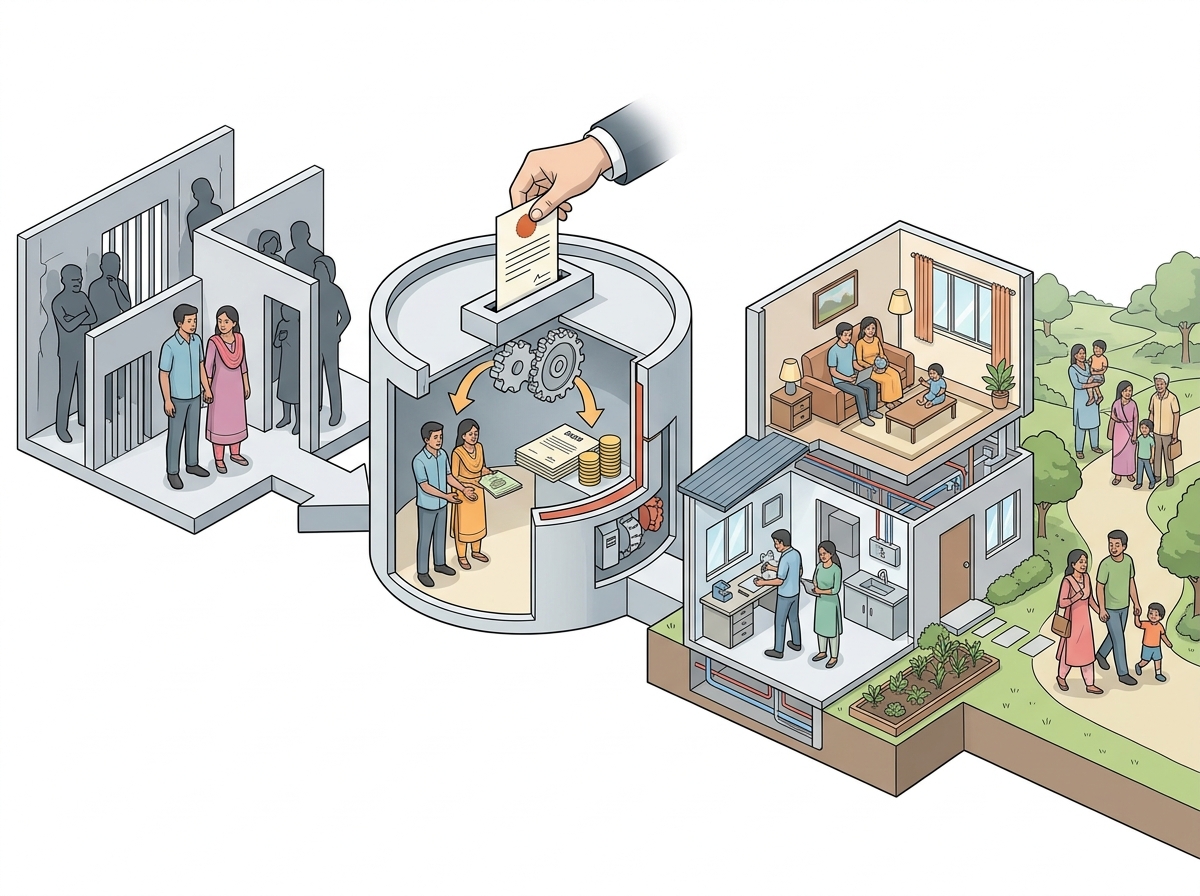
The Press Information Bureau (PIB) release dated 17 August 2026 highlights the case of a couple, Ashok Kumar Samantaray and Subita Das, who availed financial assistance under the Inter-Caste Marriage Promotion Scheme to overcome social opposition and economic challenges, thereby securing a stable livelihood. This exemplifies the scheme’s role in promoting inter-caste marriages through targeted welfare measures, aligning with broader constitutional and policy objectives of social justice and inclusion.
Background
- Inter-caste marriages in India often face societal resistance due to entrenched caste norms, despite constitutional guarantees of equality (Articles 14, 15, and 17 of the Indian Constitution).
- The Ministry of Social Justice and Empowerment, Government of India, implements the Inter-Caste Marriage Promotion Scheme to incentivize inter-caste unions by providing financial assistance to eligible couples.
- The scheme aims to reduce social stigma, promote gender equality, and foster economic stability for marginalized communities, particularly Scheduled Castes (SCs).
- Direct Benefit Transfer (DBT) mechanisms ensure transparent and efficient disbursal of financial aid, enhancing accountability and reducing leakages in welfare delivery.
What is the Inter-Caste Marriage Promotion Scheme?
- The scheme is a welfare initiative under the Ministry of Social Justice and Empowerment, designed to encourage inter-caste marriages by providing financial incentives to eligible couples.
- Eligibility criteria typically include marriage between a Scheduled Caste (SC) individual and a non-SC/ST individual.
- Financial assistance is provided as a one-time grant, often ranging from ₹1.5 lakh to ₹2.5 lakh, to support the couple’s economic independence and social integration.
- The scheme operates on the principle of positive discrimination, aiming to mitigate the economic and social barriers faced by inter-caste couples due to societal opposition.
- The incentive is disbursed through Direct Benefit Transfer (DBT) to ensure transparency, reduce delays, and prevent misuse of funds.
- Beyond financial aid, the scheme seeks to promote social inclusion by fostering acceptance of inter-caste marriages within families and communities.
- The scheme complements constitutional provisions such as Article 17, which abolishes untouchability.
- State governments may augment the central assistance with additional grants, tailored to local socio-economic conditions and caste dynamics.
Key Features
| Feature | Significance |
|---|---|
| Financial Assistance (₹2.5 lakh) | Provides immediate economic relief to inter-caste couples facing social and familial opposition, enabling them to establish a stable household. |
| Social Recognition and Acceptance | Formal government recognition of inter-caste marriages fosters societal acceptance and reduces stigma, contributing to long-term integration. |
| Targeted Benefit Delivery | Direct financial support to eligible couples ensures timely assistance, addressing economic vulnerabilities arising from social ostracization. |
| Empowerment of Marginalized Sections | Specifically benefits couples from Scheduled Caste and other marginalized backgrounds, aligning with constitutional goals of social justice. |
| Sustainable Livelihood Support | Assistance enables couples to invest in education and skill development, particularly for the upbringing of children, breaking intergenerational cycles of disadvantage. |
Why it Matters
Social Justice and Equality
- Promotes the constitutional ideal of fraternity and equality by incentivizing inter-caste marriages, reducing caste-based discrimination in social institutions.
- Contributes to the realization of Article 15(1) of the Constitution, which prohibits discrimination on grounds of religion, race, caste, sex, or place of birth.
- Encourages the dissolution of caste-based social hierarchies by normalizing mixed-caste unions in community perceptions.
Economic Empowerment
- Alleviates immediate financial burdens on inter-caste couples, who often face economic exclusion due to social ostracization.
- Facilitates long-term economic stability by enabling investment in education, housing, and entrepreneurship for the couple and their offspring.
- Reduces dependency on informal credit markets, which exploit marginalized sections during crises.
Governance and Policy
- Demonstrates the role of targeted welfare schemes in addressing structural social inequalities through fiscal measures.
- Highlights the importance of inter-departmental coordination (e.g., Social Justice Ministry, state governments) in implementing inclusive policies.
- Serves as a model for replication in other contexts where social stigma intersects with economic vulnerability.
Cultural and Behavioral Change
- Acts as a catalyst for shifting societal attitudes toward inter-caste marriages by providing institutional validation.
- Encourages community-level acceptance through visible government endorsement of mixed-caste unions.
- Contributes to the broader objective of building a cohesive, pluralistic society.
Challenges
1. Social Ostracization and Familial Opposition
- Inter-caste couples often face severe social backlash, including disownment by families and exclusion from community networks.
- Stigma may persist despite government support, requiring sustained sensitization efforts at the grassroots level.
- Economic vulnerability exacerbates social exclusion, creating a vicious cycle of deprivation.
UPSC Link: GS-II: Social Justice
2. Implementation Gaps in Welfare Schemes
- Awareness about the scheme remains limited among target beneficiaries, particularly in rural and tribal areas.
- Delays in disbursement of financial assistance can undermine the scheme’s effectiveness in addressing immediate needs.
- Monitoring and grievance redressal mechanisms require strengthening to ensure equitable access.
UPSC Link: GS-II: Governance
3. Sustainability of Economic Support
- One-time financial assistance may not suffice to address long-term economic challenges faced by inter-caste couples.
- Lack of complementary livelihood support (e.g., skill training, employment linkages) limits the scheme’s transformative potential.
- Dependence on government schemes for economic security may not align with market-driven economic empowerment.
UPSC Link: GS-III: Economic Development
4. Cultural and Structural Barriers
- Deep-rooted caste prejudices in social institutions (e.g., marriage markets, local governance) persist despite policy interventions.
- Legal protections against caste-based discrimination (e.g., under the Protection of Civil Rights Act, 1955) are often underutilized due to lack of awareness.
- Intersectionality of caste with other identities (e.g., gender, class) complicates the design of inclusive policies.
UPSC Link: GS-II: Social Justice
5. Data Gaps and Monitoring Challenges
- Limited disaggregated data on inter-caste marriages and their socio-economic outcomes hampers evidence-based policymaking.
- Lack of standardized metrics to assess the scheme’s impact on social acceptance and economic mobility.
- Need for periodic evaluations to identify gaps and refine implementation strategies.
UPSC Link: GS-II: Governance
Challenges — UPSC Perspective
| Issue | Concern |
|---|---|
| Limited Awareness | Beneficiaries in rural and tribal areas remain unaware of the scheme’s existence and eligibility criteria. |
| Delayed Disbursement | Administrative bottlenecks lead to delays in releasing financial assistance, exacerbating economic hardships. |
| Stigma Persistence | Social ostracization continues despite government support, requiring sustained sensitization efforts. |
| Lack of Livelihood Support | One-time financial aid does not address long-term economic vulnerabilities or skill gaps. |
| Monitoring Deficiencies | Inadequate tracking of beneficiaries and outcomes limits the scheme’s effectiveness and accountability. |
Way Forward
- Strengthen awareness campaigns in rural and tribal areas through local governance bodies (Panchayati Raj Institutions, Urban Local Bodies) to ensure wider reach.
- Streamline the disbursement process by leveraging digital platforms (e.g., Direct Benefit Transfer, Aadhaar-enabled systems) to reduce delays.
- Introduce complementary livelihood support, such as skill development programs and employment linkages, to enhance economic sustainability for beneficiaries.
- Establish grievance redressal mechanisms at the district level to address delays, disputes, or social pressures faced by beneficiaries.
- Conduct periodic evaluations of the scheme’s impact on social acceptance, economic mobility, and intergenerational outcomes to inform policy refinements.
- Promote inter-departmental coordination between the Ministry of Social Justice and Empowerment, state governments, and civil society organizations for holistic implementation.
- Integrate the scheme with existing social protection programs (e.g., PM-KISAN, Ayushman Bharat) to provide a safety net for vulnerable households.
- Encourage corporate social responsibility (CSR) initiatives to support inter-caste couples through mentorship, employment, and community integration programs.
UPSC Value Addition
Keywords for Mains Answer-Writing
Inter-caste marriage · Social justice · Scheduled Castes · Financial incentives for marriage · Social acceptance · Gender roles in marriage · Economic empowerment · Scheduled Castes and Scheduled Tribes (Prevention of Atrocities) Act, 1989 · Social harmony · Family welfare · Caste-based discrimination · Government welfare schemes · Marriage as a socio-economic institution · Empowerment of marginalised communities · Public policy for social equity
Constitutional & Policy Linkages
- Article 15(1): Prohibition of discrimination on grounds of religion, race, caste, sex, or place of birth.
- Article 17: Abolition of untouchability and its practice in any form.
- Article 46: Promotion of educational and economic interests of weaker sections of society.
- Directive Principles of State Policy (Part IV): Articles 38, 39, and 46 emphasize social justice and equality.
Concept Flow
Inter-caste marriages face social opposition due to entrenched caste prejudices and familial pressures. → Government schemes (e.g., ICMIS) provide financial assistance to eligible couples, addressing immediate economic vulnerabilities. → Financial support enables couples to establish stable households, reducing dependency on informal credit and social exclusion. → Institutional recognition fosters societal acceptance, gradually dismantling caste-based hierarchies. → Economic stability and social integration create enabling conditions for long-term livelihoods and child development. → Sustainable outcomes require complementary policies (e.g., skill development, employment linkages) to address structural inequalities.
Prelims Practice Questions
Q1. Consider the following statements regarding the Inter-Caste Marriage Promotion Scheme in India:
1. The scheme provides financial assistance to couples belonging to different castes who choose to marry.
2. The assistance amount is uniformly fixed across all states and union territories.
3. The scheme aims to promote social harmony and reduce caste-based discrimination.
How many of the above statements are correct?
- Only one
- Only two
- All three
- None
Answer: All three — Statements 1 and 3 are correct as the scheme provides financial assistance to inter-caste couples and aims to promote social harmony. Statement 2 is incorrect because the assistance amount varies by state and is not uniform.
Q2. Assertion (A): The Inter-Caste Marriage Promotion Scheme is implemented under the Ministry of Social Justice and Empowerment.
Reason (R): The scheme aligns with the constitutional mandate to promote equality and social justice as enshrined in Articles 15 and 17 of the Indian Constitution.
Options:
A. Both A and R are true, and R is the correct explanation of A.
B. Both A and R are true, but R is not the correct explanation of A.
C. A is true, but R is false.
D. A is false, but R is true.
Answer: ? — Assertion (A) is true as the scheme is indeed implemented by the Ministry of Social Justice and Empowerment. Reason (R) is also true and correctly explains the constitutional basis for the scheme, as Articles 15 and 17 prohibit discrimination and promote equality.
Q3. Match the following pairs related to social welfare schemes in India:
Column I (Scheme) | Column II (Ministry/Department)
——————|—————————
A. Inter-Caste Marriage Promotion Scheme | 1. Ministry of Women and Child Development
B. PM-KISAN Scheme | 2. Ministry of Rural Development
C. Pradhan Mantri Matru Vandana Yojana | 3. Ministry of Social Justice and Empowerment
D. MGNREGA | 4. Ministry of Agriculture and Farmers’ Welfare
Options:
A B C D
1 4 2 3
2 1 4 3
3 4 1 2
4 3 2 1
- 1
- 2
- 3
- 4
Answer: 4 — A-3 (Inter-Caste Marriage Promotion Scheme is under the Ministry of Social Justice and Empowerment), B-4 (PM-KISAN is under the Ministry of Agriculture and Farmers’ Welfare), C-1 (PM Matru Vandana Yojana is under the Ministry of Women and Child Development), D-2 (MGNREGA is under the Ministry of Rural Development).
Mains Practice Question
✍ The Inter-Caste Marriage Promotion Scheme represents a policy intervention aimed at addressing caste-based discrimination and promoting social harmony in India. Critically examine the rationale, implementation challenges, and potential impact of such schemes on marginalised communities. Also, discuss how these schemes align with constitutional provisions and judicial interpretations on equality and social justice. (15 Marks)
Approach: MODEL-ANSWER SKELETON:
1. **Rationale for the Scheme** (3 Marks):
– Constitutional basis: Articles 15 (prohibition of discrimination), 17 (abolition of untouchability), and 46 (promotion of educational and economic interests of SCs/STs).
– Sociological justification: Caste-based discrimination persists despite legal prohibitions; inter-caste marriages challenge caste hierarchies and foster social integration.
– Economic rationale: Financial incentives can mitigate economic barriers to inter-caste marriages, particularly for marginalised groups.
2. **Implementation Challenges** (4 Marks):
– **Bureaucratic hurdles**: Delays in disbursement of funds, complex eligibility criteria, and lack of awareness among target groups.
– **Social resistance**: Persistent caste-based prejudices within families and communities may undermine acceptance of inter-caste marriages.
– **Regional disparities**: Variation in state-level implementation, with some states providing higher incentives than others.
– **Gender dynamics**: Potential for schemes to reinforce traditional gender roles (e.g., financial assistance may not address intra-household power imbalances).
3. **Potential Impact on Marginalised Communities** (4 Marks):
– **Empowerment**: Financial assistance can reduce economic vulnerability, enabling couples to establish stable households (e.g., the case of Ashok and Sabita).
– **Social acceptance**: Gradual normalisation of inter-caste marriages through government recognition and incentives.
– **Intergenerational benefits**: Children of inter-caste couples may face reduced caste-based discrimination, improving their socio-economic prospects.
– **Limitations**: Schemes may not address systemic caste-based discrimination in education, employment, or political representation.
4. **Constitutional and Judicial Alignment** (4 Marks):
– **Judicial precedents**: Supreme Court judgments such as *Indra Sawhney v. Union of India* (1992) and *State of Kerala v. N.M. Thomas* (1976) affirm the state’s role in promoting equality and social justice.
– **Policy coherence**: The scheme aligns with the Directive Principles of State Policy (DPSP) under Part IV of the Constitution, particularly Articles 38 (promotion of welfare) and 39 (equal pay for equal work).
– **Critique of judicial approach**: Courts have historically been cautious in intervening in personal laws, which may limit the enforceability of such schemes.
5. **Conclusion** (1 Mark):
– While the scheme is a step toward addressing caste-based discrimination, its success depends on robust implementation, societal attitudinal change, and integration with broader anti-discrimination policies.
Source: PIB (Press Information Bureau)
Generated by AanyaAi for educational purpose.

- मद्रास उच्च न्यायालय में ‘वेट्ट्री पयणम’ योजना को असंवैधानिक घोषित करने की मांग - October 4, 2026
- Gurugram’s groundwater extraction exceeds limit by 212%; HC seeks ban - October 4, 2026
- स्वतंत्रता सेनानी श्यामजी कृष्ण वर्मा की जन्म जयंती पर पीएम का श्रद्धांजलि - October 4, 2026

No Comments