


29 Sep Why Anthropology can be considered as one of best optional subject for UPSC
Why Anthropology Can Be Considered as One of the Best Optional Subjects for UPSC?
1. Concise and Well-Defined Syllabus
Unlike subjects such as History or Public Administration, which have vast and overlapping syllabi, Anthropology offers a crisp and well-defined syllabus. The subject matter can be covered within a reasonable time frame of 4 to 5 months if planned properly. Its clearly structured topics like Physical Anthropology, Social Anthropology, Tribal Studies, Indian Anthropology, and Evolutionary Theory make preparation more focused and manageable.
who is best anthropology optional teacher
Which is best anthropology optional coaching for upsc
2. Scoring Potential in Mains Examination
Anthropology has consistently been recognized as a high-scoring optional subject. With proper guidance, aspirants can score between 270–320 marks, which is comparatively higher than several other optionals. The scientific nature of the subject, the use of diagrams, and the clarity of concepts give Anthropology an edge in terms of scoring. Answers that are well-structured with diagrams often fetch higher marks.
3. Overlap with General Studies Papers
One of the biggest advantages of choosing Anthropology is its overlap with General Studies (GS) papers:
- GS Paper I: Topics like Indian society, tribal issues, and culture have direct overlap.
- GS Paper II: Tribal administration, governance, and welfare schemes are covered in Anthropology optional.
- GS Paper III: Environment, biotechnology, and genetics topics relate to Anthropological studies.
- Essay Paper: Many essay topics on society, women empowerment, and social justice can be attempted using anthropological perspectives.
This overlap reduces the extra effort required and helps in holistic preparation.
4. Useful for Interview (Personality Test)
The UPSC interview panel often asks questions related to society, culture, and human development. Anthropology equips aspirants with a scientific understanding of social issues, making it easier to handle interview questions with confidence. For candidates from a science or engineering background, Anthropology also acts as a bridge to social sciences, which strengthens their overall performance.
Anthropology optional test series
Anthropology or Sociology which is better optional
5. Simplicity of Concepts
Anthropology is considered one of the most student-friendly optional subjects. Even candidates without prior background in the subject find it easy to grasp. The subject uses basic theories and scientific approaches that are logical and easy to understand. Additionally, the use of case studies, examples, and illustrations makes learning interesting and scoring easy.
6. Relevance in Current Affairs
Anthropology is not just theoretical but also highly relevant to contemporary issues. Topics like tribal rights, displacement, globalization, poverty, inequality, gender justice, human rights, environmental challenges, and genetic research are directly related to current affairs. This relevance helps aspirants to interlink static syllabus with dynamic current events, thereby enriching their answers in Mains and Essays.
7. Contribution to Ethical and Social Awareness
Anthropology deals with human evolution, society, kinship, culture, and ethics. The subject instills a sense of empathy and sensitivity towards marginalized groups like Scheduled Tribes, Scheduled Castes, and minorities. This awareness not only helps in GS and Essay papers but also makes aspirants better administrators in the future.
8. Success Stories of Toppers with Anthropology
Many UPSC toppers have chosen Anthropology as their optional subject and secured top ranks. For example:
- Rank 2 (2014): Renu Raj (Anthropology optional)
- Rank 3 (2017): Sachin Gupta (Anthropology optional)
- Rank 3 (2018): Junaid Ahmad (Anthropology optional)
These success stories highlight the subject’s scoring potential and its suitability for aspirants across diverse academic backgrounds.
9. Availability of Study Material and Guidance
Another factor that makes Anthropology one of the best UPSC optionals is the abundant availability of quality study material. From standard books like Ember and Ember, Nadeem Hasnain, P. Nath to well-structured coaching test series, aspirants have ample resources. Guidance from experienced teachers further simplifies preparation.
10. Role of Diagrams and Case Studies
One of the unique features of Anthropology is its diagram-based answers. Well-drawn diagrams and flowcharts not only save time but also make answers more attractive to evaluators. Furthermore, case studies of Indian tribes, government schemes, and social experiments enrich answers and improve marks significantly.
11. Balanced Combination of Science and Humanities
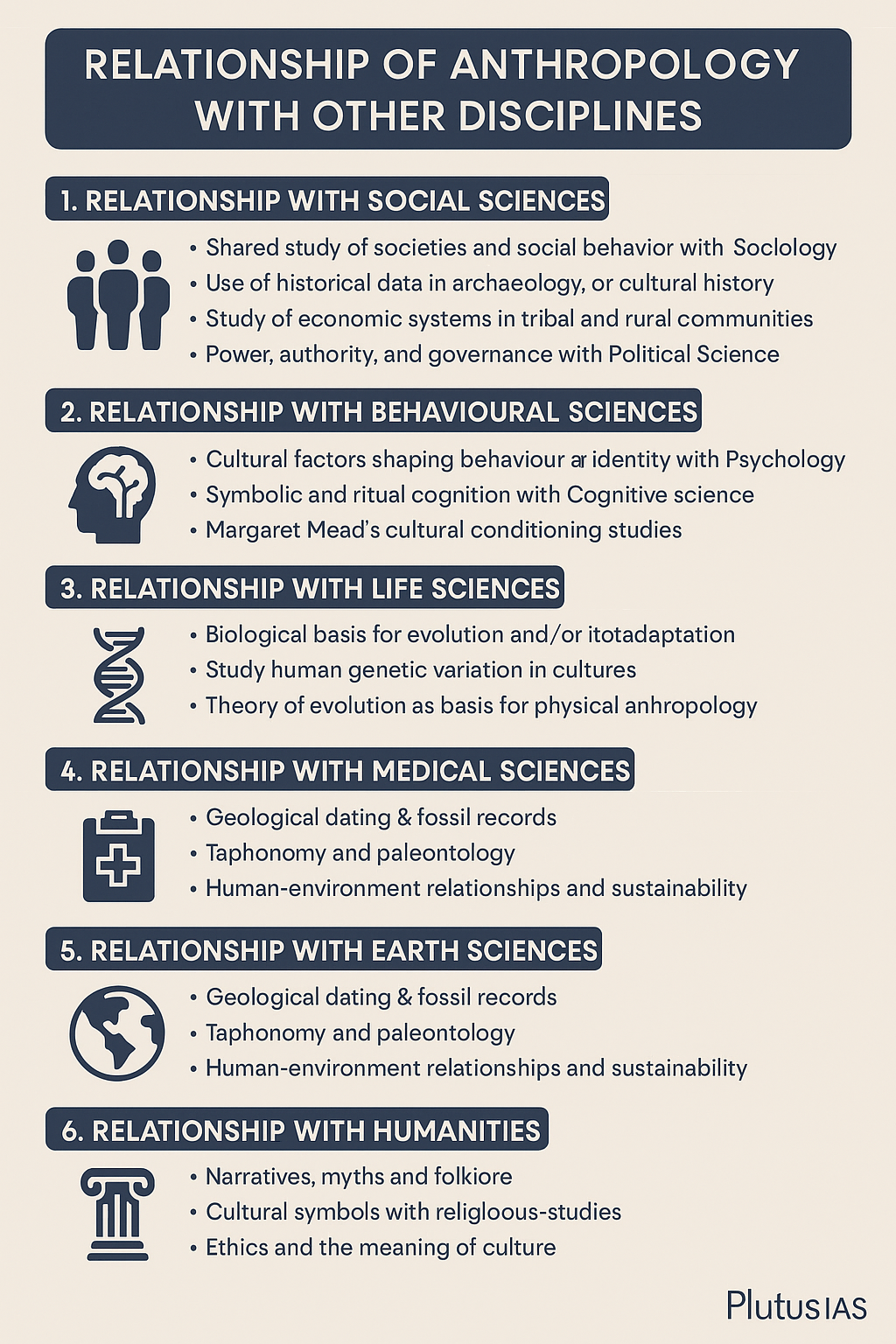
Anthropology stands out because it is a perfect blend of scientific analysis and social understanding. While Physical Anthropology deals with human genetics, evolution, and biological aspects, Social Anthropology explores society, kinship, and culture. This combination makes the subject holistic and interesting.
12. Manageable Preparation Alongside GS
Given its concise syllabus, Anthropology allows aspirants to dedicate enough time to General Studies papers, Essay, and Current Affairs. This balance is critical in UPSC preparation, where time management plays a decisive role in success.
Conclusion
Anthropology is undoubtedly one of the best optional subjects for UPSC. With a compact syllabus, high scoring potential, overlap with GS papers, and relevance to current issues, it offers multiple advantages to aspirants. Its approachable nature, use of diagrams, and practical case studies make it a favorite among both science and non-science background students. For aspirants who want a subject that is scoring, manageable, and relevant, Anthropology is an excellent choice.
Ultimately, success in UPSC depends on consistency, discipline, and smart preparation. Choosing the right optional subject like Anthropology can significantly boost one’s chances of cracking the exam and securing a top rank.

- पीएमजीएसवाई शिविर: ग्रामीण सड़कों में गुणवत्ता और तकनीक पर नया जोर - October 7, 2026
- NCSC Intervention Mandates SC Beneficiary Reporting in Key Schemes - October 7, 2026
- हिमाचल में ई-ग्राम स्वराज पोर्टल पर पंचायत विकास योजना अपलोड करने की समय सीमा बढ़ी - October 7, 2026

No Comments