


03 Apr Women Safety: A Critical Concern
This article covers “Daily Current Affairs” and the Topic of Women Safety: A Critical Concern.
SYLLABUS MAPPING:
GS-02- Social Justice: Women Safety: A Critical Concern
FOR PRELIMS
Nirbhaya Fund, Constitutional provisions related to women’s safety in India.
FOR MAINS
key trends in crimes against women in India, Significance of gender-sensitive, major challenges in implementing laws for women’s safety.
Why in the News?
Women Safety in India
Women’s safety remains a pressing issue in India, despite legal frameworks and policy interventions. According to the National Crime Records Bureau (NCRB) report, crimes against women have shown an increasing trend. In 2021 alone, over 4.3 lakh cases of crimes against women were reported, with rape, domestic violence, and sexual harassment being the most prevalent. Shockingly, rape cases were recorded at an alarming rate of 88 per day. Furthermore, workplace harassment, human trafficking, and dowry deaths continue to threaten women’s security. As of April 2025, the most recent data on crimes against women in India is available up to the year 2022. According to the National Crime Records Bureau (NCRB), 445,256 cases of crimes against women were registered in 2022, an increase from 428,278 cases in 2021. The NCRB’s annual ‘Crime in India’ report provides detailed statistics on various forms of crimes against women, including domestic violence, sexual harassment, and dowry deaths. However, specific data for 2023 and 2024 have not yet been published.
Constitutional Mandate for Women Safety
The Indian Constitution provides several provisions to safeguard women’s rights and ensure their safety:
1. Article 14: Guarantees equality before the law.
2. Article 15(3): Empowers the state to make special provisions for women and children.
3. Article 21: Ensures the right to life and personal liberty, interpreted by courts to include the right to dignity and protection from violence.
4. Article 39(a) & 39(d): Mandates equal access to justice and equal pay for equal work.
5. Article 51A(e): Calls for renouncing practices derogatory to women’s dignity.
Several landmark Supreme Court judgments have reinforced women’s safety:
1. Vishaka v. State of Rajasthan (1997): Laid the foundation for workplace harassment laws, leading to the Sexual Harassment of Women at Workplace (Prevention, Prohibition, and Redressal) Act, 2013.
2. Laxmi v. Union of India (2006): Led to stricter regulation of acid sales to curb acid attacks.
3. Nirbhaya Case (2012):Catalyzed amendments in criminal laws, leading to the Criminal Law (Amendment) Act, 2013, which introduced stricter punishments for sexual offenses.
More recently, in We The Women of India v. Union of India (2023), the Supreme Court addressed the implementation of the Sexual Harassment at Workplace (Prevention, Prohibition and Redressal) Act, 2013 (POSH Act). The Court emphasized the need for effective enforcement of the Act and issued directives to ensure its proper implementation.
In another significant case, Bhawna v. Bhay Ram and Ors. (2023), the Supreme Court reiterated that appellate courts cannot impose penalties on appellants for not proceeding with the trial, highlighting the importance of fair trial procedures.
These constitutional provisions and judicial pronouncements collectively aim to create a legal framework that upholds and protects the safety and dignity of women in India
Government Policies and Measures for Women Safety
The Indian government has implemented various policies and schemes aimed at ensuring women’s safety:
Legislative Measures
1. Criminal Law (Amendment) Act, 2013: Strengthened laws against sexual offenses by increasing punishment and fast-tracking cases.
2. Protection of Women from Domestic Violence Act, 2005: Provides legal recourse for domestic violence victims, ensuring protection and shelter.
3.Sexual Harassment of Women at Workplace Act, 2013: Ensures a safe working environment for women and mandates Internal Complaints Committees in organizations.
4. The Juvenile Justice (Care and Protection of Children) Act, 2015: Redefined the treatment of juvenile offenders in heinous crimes, allowing stricter penalties.
5. The Dowry Prohibition Act, 1961: Criminalizes the practice of dowry, with stringent penalties for violations.
6. The Prohibition of Child Marriage Act, 2006: Aims to prevent early and forced marriages by imposing legal consequences on offenders.
Safety Initiatives and Programs
1. One Stop Centre Scheme (2015): Offers integrated support to women facing violence, providing medical, legal, and psychological assistance.
2. Beti Bachao Beti Padhao (2015): Aims to address gender discrimination and improve female welfare by encouraging education and awareness.
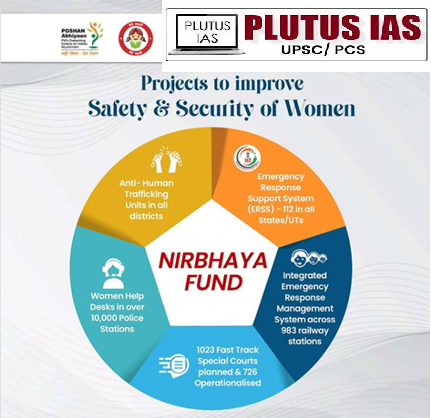
3. Nirbhaya Fund (2013): Allocates resources to implement safety measures such as panic buttons in transport and CCTV surveillance in public spaces.
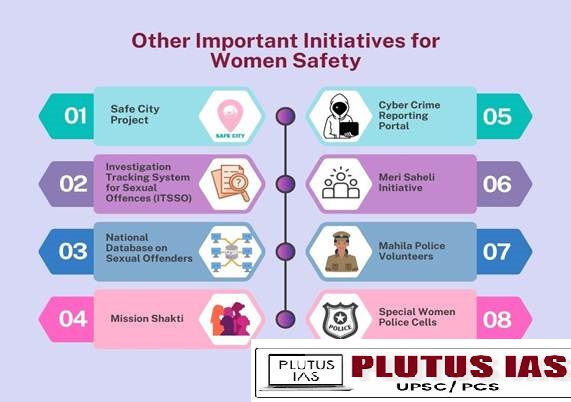
4. Mahila Police Volunteers (MPV) Scheme: Engages community women to act as a bridge between police and society, enhancing safety.
5. Safe City Projects: Implemented in major cities to improve women’s safety through technological interventions such as AI-based monitoring and smart policing.
6. Sakhi Helpline: A dedicated helpline for women in distress, providing immediate assistance, shelter, and counseling services.
7. Cyber Crime Reporting Portal: A platform for reporting online harassment, blackmail, and other cybercrimes against women, ensuring prompt action.
8. Women’s Helpline (181): A nationwide toll-free helpline providing emergency support for women in distress, operating 24/7.
9. She-Box Portal: A government initiative that allows women to file workplace harassment complaints online, ensuring anonymity and faster redressal.
Financial and Economic Empowerment
1. Stand-Up India Scheme: Encourages entrepreneurship among women by providing financial assistance and skill development opportunities.
2. Mahila E-Haat: A digital marketing platform for women entrepreneurs to showcase and sell their products, promoting economic independence.
3. Rashtriya Mahila Kosh: A scheme offering micro-financing options to women to enhance their financial independence and reduce vulnerability.
4. Ujjwala Yojana: Provides free LPG connections to empower women and improve their health and safety by reducing indoor pollution and fire hazards.
Capacity Building and Sensitization
1. Gender Sensitization Programs: Conducted in schools, colleges, and workplaces to promote gender equality and eliminate biases.
2. Self-Defense Training Programs: Organized for women in schools and community centers to empower them against physical attacks and threats.
3. Police Training on Gender Sensitivity: Law enforcement officers are regularly trained to handle women’s complaints with empathy and efficiency, ensuring justice.
By implementing these policies and measures, the government aims to create a safer and more inclusive environment for women in India. However, continuous monitoring, awareness campaigns, and public participation are crucial to ensuring their effective implementation.
Legislative Measures
1. Criminal Law (Amendment) Act, 2013: Strengthened laws against sexual offenses.
2. Protection of Women from Domestic Violence Act, 2005: Provides legal recourse for domestic violence victims.
3. Sexual Harassment of Women at Workplace Act, 2013: Ensures a safe working environment for women.
4. The Juvenile Justice (Care and Protection of Children) Act, 2015: Redefined the treatment of juvenile offenders in heinous crimes.
Safety Initiatives and Programs
1. One Stop Centre Scheme (2015): Offers integrated support to women facing violence.
2. Beti Bachao Beti Padhao (2015): Aims to address gender discrimination and improve female welfare.
3. Nirbhaya Fund (2013): Allocates resources to implement safety measures such as panic buttons in transport and CCTV surveillance.
4. Mahila Police Volunteers (MPV) Scheme:Engages community women to act as a bridge between police and society.
5. Safe City Projects: Implemented in major cities to improve women’s safety through technological interventions.
Challenges Related to Women Safety
1. Underreporting of Crimes: Fear of stigma and lack of trust in law enforcement prevents victims from reporting crimes, leading to a justice gap. Many cases remain unreported due to family and societal pressures.
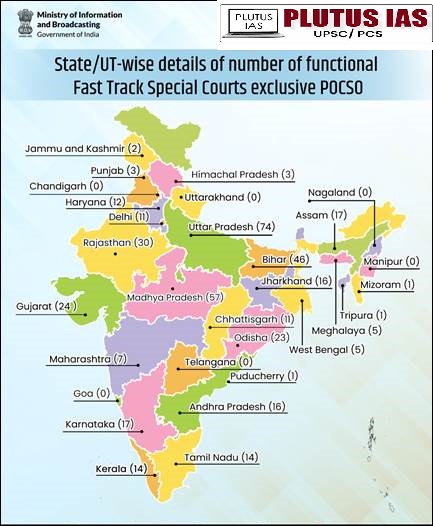
2. Delays in Justice Delivery: Prolonged trials discourage victims from seeking legal recourse, reducing confidence in the legal system. Fast-track courts are often overburdened, delaying verdicts.
3. Insufficient Policing: Inadequate representation of women in police forces (only about 10% of total personnel) affects the sensitivity of investigations and response times. Many police stations lack dedicated women help desks or female officers.
4. Societal Mindset and Patriarchy: Deep-rooted gender biases hinder the effectiveness of laws and policies, perpetuating discrimination. Victim-blaming attitudes and honor-based restrictions worsen the situation.
5. Lack of Proper Implementation: Many government schemes fail due to poor execution and lack of awareness, reducing their impact. Corruption and bureaucratic inefficiencies further hinder the effective utilization of funds.
6. Cyber Harassment: Increasing cases of online stalking, revenge porn, and cyberbullying pose a new-age challenge, requiring stronger digital security measures. The anonymity of the internet emboldens perpetrators and makes enforcement difficult.
7. Workplace Discrimination and Harassment: Despite legal frameworks, many women still face harassment at workplaces. Fear of retaliation discourages complaints, and internal committees often fail to act promptly.
8. Lack of Safe Public Spaces: Poor urban planning, dimly lit streets, and insufficient public transport security make women vulnerable to street crimes. Many cities lack sufficient women-friendly infrastructure, such as well-monitored bus stops and emergency response systems.
9. Economic Vulnerability: Financial dependence makes women more susceptible to abuse, as they often lack the resources to leave abusive situations. Gender pay gaps and employment biases further restrict their autonomy.
Recommendations to Boost Women Safety
To ensure a safer environment for women, the following measures can be undertaken:
1. Strengthening Law Enforcement: Increasing the number of women personnel in police forces. Implementing fast-track courts for speedy trials of gender-based crimes. Ensuring proper training of law enforcement personnel on gender sensitivity.
2. Enhancing Public Infrastructure: Installing better lighting and surveillance in public areas.Ensuring safe and reliable public transport with female security personnel. Establishing help desks in police stations dedicated to women’s issues.
3. Education and Awareness: Conducting gender sensitization programs in schools and colleges. Encouraging bystander intervention training for the public to help prevent crimes. Running awareness campaigns on legal rights and support mechanisms.
4. Cybersecurity and Digital Safety: Strengthening cyber laws and enforcement against online harassment. Providing digital literacy training to women for self-protection.
5. Community Engagement and Support Systems: Strengthening neighborhood watch programs and self-defense training for women. Encouraging the role of NGOs and women’s groups in supporting victims.
Conclusion
Women’s safety is an issue that requires a multi-pronged approach encompassing legal, social, economic, and technological interventions. While India has made progress in enacting laws and policies, challenges in implementation and societal attitudes continue to hinder women’s security. A collaborative effort involving the government, law enforcement, civil society, and individuals is essential to create a society where women feel safe, empowered, and equal. Only through continued vigilance and commitment can we ensure a future where women’s safety is not just a concern but a guaranteed right.
a) Laxmi v. Union of India
b) Nirbhaya Case
c) Vishaka v. State of Rajasthan
d) Shah Bano Case
ANSWER: C
Mains Questions
Q. What are the major challenges hindering the implementation of women’s safety laws and policies? Provide real-life examples or case studies to support your answer.
(250 words, 15marks)


No Comments