


31 Aug Tata-Raytheon-Lockheed Javelin Missile Deal Boosts India’s Defence Self-Reliance
✎ The Javelin ATGM co-production initiative with Tata Advanced Systems Limited represents a critical step in India’s defence indigenisation, aligning with the Strategic Partnership Model under DAP 2020 and reinforcing the country’s…
Subject Relevance — Where This Topic Fits
- GS Paper II — International Relations: India-US strategic partnership, defence technology transfers, Indo-Pacific security architecture | GS Paper III — Economy: Defence indigenisation, Make in India, technology absorption, supply chain resilience | GS Paper III — Science and Technology: Defence manufacturing, technology transfer, R&D collaboration
- Prelims: Javelin ATGM, Defence Acquisition Procedure (DAP) 2020, Strategic Partnership Model, Defence Industrial Base, Indo-Pacific Strategy, Offset Policy, Technology Transfer Agreement, Make in India, Defence Procurement Organisation (DPO), Integrated Guided Missile Development Programme (IGMDP), Defence Research and Development Organisation (DRDO), Atmanirbhar Bharat in Defence
- Essay: The interplay between national security imperatives and economic self-reliance in India’s defence modernisation, Global supply chain resilience and the strategic autonomy of nations in the 21st century
Quick Revision: The Javelin ATGM co-production initiative with Tata Advanced Systems Limited represents a critical step in India’s defence indigenisation, aligning with the Strategic Partnership Model under DAP 2020 and reinforcing the country’s commitment to self-reliance in defence manufacturing.
Why is this in the news?
The recent Memorandum of Understanding (MoU) between Tata Advanced Systems Limited (TASL) and the Javelin Joint Venture (JJV)—a partnership between Raytheon Technologies and Lockheed Martin—for the co-production of the Javelin anti-tank guided missile (ATGM) in India marks a significant stride in India’s defence indigenisation efforts. This collaboration aligns with India’s broader strategic objectives of enhancing domestic defence manufacturing capabilities, reducing import dependence, and fostering technological collaboration with key partners such as the United States. The initiative also underscores the growing convergence between India’s ‘Atmanirbhar Bharat’ initiative and global defence supply chain dynamics, particularly in the Indo-Pacific region.
Background
- It is widely regarded as one of the most advanced and effective anti-tank weapons in the world, with a proven combat record in multiple conflicts.
- India’s defence procurement landscape has undergone a paradigm shift in the last decade, with a renewed focus on indigenisation and reducing import dependence. The Defence Acquisition Procedure (DAP) 2020 introduced the Strategic Partnership Model (SPM) to facilitate the participation of Indian private sector entities in high-technology defence manufacturing, including aircraft, helicopters, submarines, and armoured vehicles.
- The ‘Make in India’ initiative, launched in 2014, has been a cornerstone of India’s defence modernisation strategy, aiming to transform the country into a global defence manufacturing hub. The initiative has been complemented by policy reforms such as the liberalisation of foreign direct investment (FDI) in the defence sector, simplification of licensing procedures, and the establishment of Defence Industrial Corridors in Uttar Pradesh and Tamil Nadu.
- India’s defence ties with the United States have deepened significantly over the past two decades, driven by shared strategic interests in the Indo-Pacific region. The Defence Technology and Trade Initiative (DTTI), launched in 2012, has facilitated high-level discussions on defence technology cooperation, co-development, and co-production between the two countries.
- The Javelin missile system has been identified by the Indian Army as a critical capability gap in its anti-tank warfare arsenal. The Indian Army’s recent procurement of Javelin ATGMs from the US, followed by the agreement for co-production in India, reflects a pragmatic approach to balancing immediate operational needs with long-term indigenous capability-building.
- The global defence supply chain has faced significant disruptions in recent years, including the COVID-19 pandemic and geopolitical tensions. This has prompted countries to prioritise supply chain resilience and reduce dependence on single-source suppliers, particularly in critical defence technologies.
What is the Javelin Anti-Tank Guided Missile (ATGM) System?
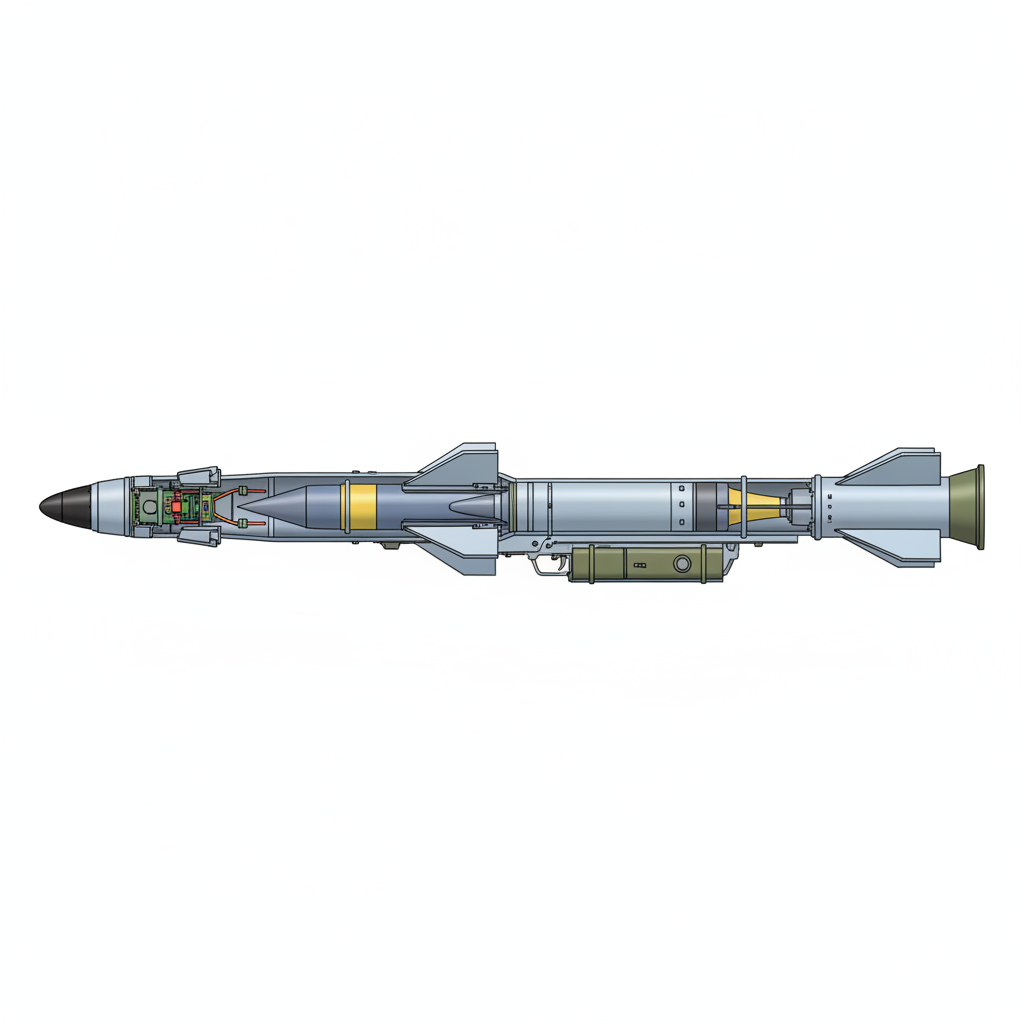
- The Javelin ATGM is a man-portable, fire-and-forget anti-tank missile system designed for use by infantry units. It is capable of engaging and destroying modern main battle tanks, fortified positions, and other armoured vehicles from beyond direct-fire range.
- The system consists of a reusable Command Launch Unit (CLU) and disposable missile rounds. The CLU includes a thermal imager for target acquisition and tracking, while the missile is equipped with an imaging infrared (IIR) seeker for autonomous guidance after launch.
- The Javelin missile employs a tandem-charge warhead to defeat reactive armour, making it highly effective against contemporary armoured threats. It has a maximum effective range of approximately 2,500 metres and can be deployed in both top-attack and direct-attack modes.
- The Javelin ATGM is a product of the Javelin Joint Venture (JJV), a partnership between Raytheon Technologies (formerly Raytheon Company) and Lockheed Martin. The JJV was established in the 1980s to develop and produce the missile system for the US Army and allied forces.
- The Javelin system has been widely exported to allied nations, including NATO members and partners in the Indo-Pacific, such as Australia, Japan, and South Korea. Its combat-proven performance in conflicts such as the Gulf War, the Iraq War, and the 2022 Russia-Ukraine war has cemented its reputation as a premier anti-tank weapon.
- The co-production agreement with Tata Advanced Systems Limited (TASL) involves the establishment of a final assembly and integration facility in India for the Javelin All Up Round (AUR), which includes the complete missile system enclosed in its tactical launch container.
- Under the MoU, sub-assembly kits and guidance electronics units (GEUs) will be manufactured at Lockheed Martin’s facility in Troy, Alabama, and Raytheon’s facility in Tucson, Arizona, respectively, before being shipped to India for final assembly and integration.
- The initiative is expected to create high-skilled employment opportunities in India, enhance local manufacturing expertise, and strengthen the country’s defence industrial base by integrating Indian suppliers into the global supply chain.
Key Features
| Feature | Significance |
|---|---|
| Co-production MoU between Tata Advanced Systems Ltd and Javelin Joint Venture (JJV) | Establishes India as a key node in the global defence supply chain for anti-tank guided missiles, aligning with India’s defence indigenisation goals. |
| Final Assembly and Integration Facility in India | Enables in-country manufacturing of complete Javelin All Up Round (AUR) systems, reducing import dependency and enhancing operational readiness. |
| Component Production Capabilities | Fosters local development of missile sub-systems, contributing to India’s defence industrial base and technological self-reliance. |
| Supply Chain Resiliency | Strengthens global supply chains by integrating Indian manufacturing into the Javelin production ecosystem, mitigating geopolitical and logistical risks. |
| High-Tech Employment Generation | Creates skilled jobs in advanced manufacturing, electronics, and systems integration, supporting India’s demographic dividend. |
Why it Matters
Strategic Security
- Enhances India’s conventional deterrence capabilities by ensuring a reliable, locally produced supply of proven Javelin anti-tank guided missile systems for the armed forces.
- Supports regional stability in the Indo-Pacific by enabling faster fielding and sustained readiness for partner nations, reinforcing interoperability with allied forces.
- Reduces reliance on foreign imports for critical defence systems, mitigating supply chain disruptions in conflict scenarios.
Economic Impact
- Promotes high-value manufacturing in India, contributing to GDP growth and reducing defence import bills through import substitution.
- Facilitates technology transfer and knowledge-sharing, accelerating India’s transition to a self-sustaining defence manufacturing ecosystem.
- Leverages India’s cost-competitive manufacturing base to improve affordability for global buyers, including the US government.
Industrial and Technological Development
- Strengthens India’s defence industrial base by integrating domestic suppliers into the Javelin production chain, from sub-assemblies to final integration.
- Advances indigenous capabilities in precision-guided munitions, electronics, and systems integration, aligning with the ‘Aatmanirbhar Bharat’ initiative.
- Encourages private sector participation in defence manufacturing, diversifying the ecosystem beyond public sector undertakings.
Diplomatic and Geopolitical Implications
- Deepens strategic collaboration between India and the US, reinforcing the Indo-Pacific Partnership and defence technology cooperation.
- Demonstrates India’s commitment to global supply chain diversification, reducing over-reliance on single-source suppliers.
- Supports allied nations in the Indo-Pacific by ensuring a stable, diversified supply of critical defence systems.
Challenges
1. Technology Transfer and IPR Concerns
- Ensuring equitable access to critical technologies while protecting intellectual property rights of foreign partners.
- Balancing indigenous innovation with reliance on proven foreign systems to meet immediate operational requirements.
- Mitigating risks of technology leakage or unauthorised replication by third parties.
UPSC Link: GS3: IPR, Defence Procurement
2. Supply Chain Dependencies
- Managing reliance on imported sub-assemblies and components from US facilities, which may face geopolitical or logistical disruptions.
- Developing domestic alternatives for critical inputs to reduce long-term import dependency.
- Ensuring timely delivery of kits to Indian facilities to avoid production bottlenecks.
UPSC Link: GS3: Supply Chain Resilience
3. Regulatory and Compliance Hurdles
- Navigating India’s defence procurement regulations, including the Defence Procurement Procedure (DPP) and offsets policy.
- Complying with export control regimes (e.g., ITAR) for components sourced from the US.
- Aligning Indian manufacturing standards with international benchmarks for defence systems.
UPSC Link: GS2: Regulatory Frameworks
4. Skill Development and Workforce Readiness
- Addressing the shortage of skilled labour in advanced manufacturing, electronics, and systems integration for defence applications.
- Ensuring continuous upskilling of the workforce to meet evolving technological demands.
- Attracting and retaining talent in a competitive global job market.
UPSC Link: GS3: Skill Development
5. Cost Competitiveness and Affordability
- Balancing high initial investments in infrastructure and technology with long-term cost savings through indigenisation.
- Ensuring affordability for the Indian armed forces while maintaining global competitiveness in defence exports.
- Managing price volatility in raw materials and components.
UPSC Link: GS3: Defence Economics
6. Geopolitical and Strategic Alignment
- Ensuring that co-production aligns with India’s broader foreign policy objectives and strategic partnerships.
- Managing perceptions of alignment with specific defence alliances while maintaining strategic autonomy.
- Navigating potential conflicts of interest in technology sharing with allied nations.
UPSC Link: GS2: Foreign Policy
Challenges — UPSC Perspective
| Issue | Concern |
|---|---|
| Technology Transfer | Risk of over-dependence on foreign IP, with limited indigenous innovation in core technologies. |
| Supply Chain Disruptions | Potential delays in kit deliveries from US facilities due to geopolitical or logistical factors. |
| Regulatory Compliance | Complexity in aligning Indian defence procurement norms with international standards and export controls. |
| Skill Gap | Shortage of specialised workforce for advanced defence manufacturing and systems integration. |
| Cost Management | High initial capital expenditure for infrastructure vs. long-term cost savings through indigenisation. |
| Strategic Autonomy | Balancing co-production with India’s policy of strategic independence in defence capabilities. |
Way Forward
- Accelerate the establishment of the final assembly and integration facility in India, prioritising timelines for operationalisation.
- Develop a phased roadmap for indigenous production of critical sub-systems to reduce import dependency over 5-10 years.
- Invest in skill development programmes in collaboration with technical institutions to build a workforce for defence manufacturing.
- Strengthen public-private partnerships to leverage private sector expertise in advanced manufacturing and supply chain management.
- Enhance regulatory frameworks to streamline defence procurement, technology transfer, and compliance with international standards.
- Conduct periodic reviews of the co-production model to assess cost-effectiveness, technological advancements, and strategic alignment.
- Promote defence exports by positioning India as a reliable supplier of Javelin systems to allied nations in the Indo-Pacific.
- Integrate the Javelin co-production effort with broader initiatives like ‘Aatmanirbhar Bharat’ and the ‘Defence Production and Export Promotion Policy (DPEPP) 2020’.
UPSC Value Addition
Keywords for Mains Answer-Writing
Defence Production in India · Make in India in Defence Sector · Strategic Partnership Model · Defence Industrial Base · Indo-US Defence Cooperation · Javelin Anti-Tank Guided Missile (ATGM) · Defence Procurement Procedure (DPP) · Defence Offset Policy · Atmanirbhar Bharat in Defence · Final Assembly and Integration (FA&I) Facility · Defence Technology Absorption · Indo-Pacific Security Architecture · Defence Manufacturing Ecosystem
Concept Flow
India’s defence indigenisation policy → Focus on reducing import dependency in critical systems → Strategic collaboration with US defence industry → MoU for Javelin co-production in India → Establishment of final assembly and integration facility → Technology transfer and skill development → Enhanced domestic defence manufacturing base → Strengthened Indo-Pacific security partnerships.
Prelims Practice Questions
Q1. Consider the following statements regarding the Javelin Anti-Tank Guided Missile (ATGM):
1. The Javelin ATGM is a man-portable fire-and-forget missile system.
2. It is jointly developed by the United States and Israel.
3. The missile uses imaging infrared guidance to track and hit its target.
How many of the above statements are correct?
- Only one
- Only two
- All three
- None
Answer: All three — Statements 1 and 3 are correct. Statement 2 is incorrect as the Javelin ATGM is a joint development between the United States (Raytheon and Lockheed Martin) and not Israel.
Q2. Assertion (A): The Defence Procurement Procedure (DPP) 2020 introduced the ‘Make in India’ initiative to promote indigenous defence manufacturing.
Reason (R): The DPP 2020 mandates a minimum 50% indigenous content for all defence procurements under the ‘Buy (Indian-IDDM)’ category.
In the context of the above two statements, which one of the following is correct?
- Both A and R are true, and R is the correct explanation of A
- Both A and R are true, but R is not the correct explanation of A
- A is true, but R is false
- A is false, but R is true
Answer: Both A and R are true, but R is not the correct explanation of A — Both Assertion (A) and Reason (R) are true. The DPP 2020 indeed promotes ‘Make in India’ and mandates a minimum 50% indigenous content for procurements under the ‘Buy (Indian-IDDM)’ category, making R the correct explanation of A.
Q3. Match the following defence procurement categories with their correct descriptions:
Column I (Category) | Column II (Description)
1. Buy (Indian – IDDM) | A. Procurement of systems designed, developed, and manufactured by Indian vendors
2. Buy (Global – Manufacture in India) | B. Procurement of foreign systems with a minimum 50% indigenous content
3. Buy and Make (Indian) | C. Procurement of foreign systems with an Indian vendor as the main integrator
4. Make | D. Indigenous design, development, and production by Indian vendors
Select the correct match:
- 1-A, 2-B, 3-C, 4-D
- 1-B, 2-A, 3-D, 4-C
- 1-D, 2-C, 3-B, 4-A
- 1-C, 2-D, 3-A, 4-B
Answer: 1-A, 2-B, 3-C, 4-D — The correct matches are: 1-A (Buy (Indian – IDDM) focuses on Indian-designed, developed, and manufactured systems), 2-B (Buy (Global – Manufacture in India) involves foreign systems with 50% indigenous content), 3-C (Buy and Make (Indian) involves foreign systems with an Indian integrator), and 4-D (Make category involves indigenous design, development, and production).
Mains Practice Question
✍ The Government of India’s emphasis on ‘Atmanirbhar Bharat’ in the defence sector has led to a paradigm shift from ‘import dependence’ to ‘self-reliance’. In this context, critically analyse the role of the Strategic Partnership Model (SPM) in achieving self-reliance in defence manufacturing. Also, examine how the recent co-production agreement for the Javelin Anti-Tank Guided Missile (ATGM) with Tata Advanced Systems Ltd aligns with the objectives of the SPM. (15 Marks)
Approach: MODEL-ANSWER SKELETON:
1. **Introduction (2 marks)**
– Define ‘Atmanirbhar Bharat’ in the defence sector: reducing import dependence, enhancing indigenous manufacturing, and promoting R&D.
– Briefly introduce the Strategic Partnership Model (SPM) under the Defence Procurement Procedure (DPP) 2020 as a key policy instrument.
2. **Strategic Partnership Model (SPM): Objectives and Framework (4 marks)**
– **Objective**: To promote indigenous manufacturing in high-tech defence systems by selecting Indian private sector firms as ‘Strategic Partners’ for large-scale projects (e.g., fighter aircraft, helicopters, submarines, armoured vehicles).
– **Framework**:
– Selection of Strategic Partners through a transparent bidding process.
– Transfer of technology (ToT) from foreign Original Equipment Manufacturers (OEMs) to Indian partners.
– Indigenous production with a minimum 50% indigenous content (for ‘Buy (Indian-IDDM)’ category).
– Focus on ‘Make’ category projects for indigenous design and development.
– **Key Features**: Long-term partnership, capacity building, and integration of Indian industry into global supply chains.
3. **Alignment with Javelin ATGM Co-production Agreement (4 marks)**
– **Context**: The recent MoU between Tata Advanced Systems Ltd (TASL) and the Javelin Joint Venture (JJV) for co-production of Javelin ATGM in India.
– **SPM Alignment**:
– **Technology Transfer**: TASL will establish a final assembly and integration facility in India, with sub-assembly kits and guidance electronics units shipped from the US.
– **Indigenous Content**: The agreement supports the ‘Buy (Global – Manufacture in India)’ category, where foreign systems are manufactured in India with significant indigenous participation.
– **Capacity Building**: Creation of high-tech jobs and development of a defence manufacturing ecosystem in India.
– **Supply Chain Resilience**: Enhances India’s role in the global defence supply chain, particularly for the Indo-Pacific region.
– **Strategic Significance**: Strengthens Indo-US defence ties while advancing India’s self-reliance goals.
4. **Challenges and Way Forward (3 marks)**
– **Challenges**:
– Ensuring timely technology transfer and absorption.
– Balancing cost-effectiveness with indigenisation.
– Addressing bureaucratic hurdles in procurement and approvals.
– Developing a robust R&D ecosystem to reduce reliance on foreign designs.
– **Way Forward**:
– Strengthening the ‘Make’ category to incentivise indigenous design and development.
– Promoting public-private partnerships (PPPs) for defence R&D.
– Leveraging the Defence Research and Development Organisation (DRDO) and academia for innovation.
– Ensuring consistent policy support and funding for defence manufacturing.
5. **Conclusion (2 marks)**
– The SPM, when effectively implemented, can significantly reduce import dependence and enhance India’s defence manufacturing capabilities.
– The Javelin ATGM co-production agreement is a step forward in aligning with the SPM’s objectives, but sustained efforts are required to achieve true self-reliance in defence.
Source: orissapost.com
Generated by AanyaAi for educational purpose.

- विशेष अभियान 6: जल संसाधन विभाग की उपलब्धियाँ, गंगा पुनरुद्धार सहित - October 23, 2026
- Shivraj Singh Chouhan launches ‘Khet Bachao Abhiyan’ to save farmland - October 23, 2026
- उत्तराखंड राज्यपाल की पीएम मोदी से महत्वपूर्ण बैठक: जानिए मुख्य बिंदु - October 23, 2026

No Comments